Ramen Jiro Sagami oono ten

Ramen Jiro Sagami oono ten puts Sagamihara’s ramen culture in its plainest, most demanding form: counter seating, ticket-machine ordering, no reservations, and a portion grammar that rewards attention. Its Tabelog Ramen KANAGAWA “Tabelog 100” selections in 2024 and 2025 place it among Kanagawa’s serious ramen addresses rather than casual station-side filler.
Pearl is the En Primeur Club membership app — saves, bookings, and concierge access live there. Same editors, same standards.
- Address
- 神奈川県相模原市南区相模大野6-14-9
- Website
- sumoji.jp
 Saves & bookings on Pearl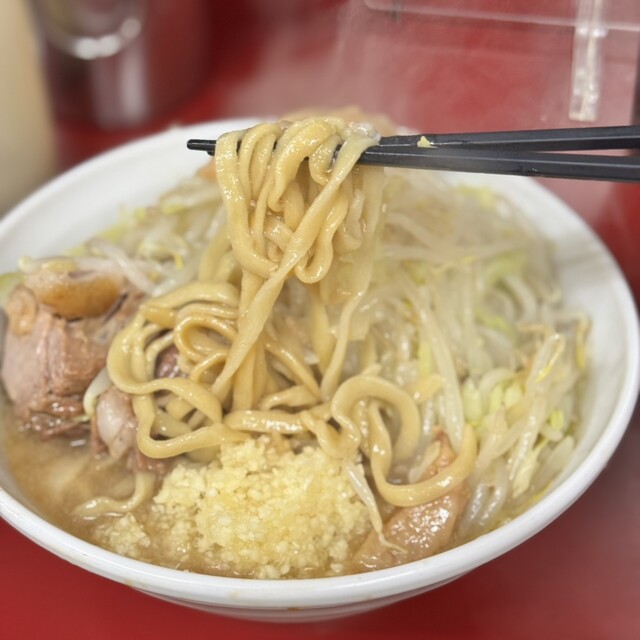
A Jiro-style ramen shop is rarely theatrical. The drama is in queue discipline, counter rhythm, and the moment a bowl lands with noodles measured by house logic rather than restaurant polish. In Sagamihara, that matters because ramen is not a side category to Tokyo dining; it is how the city expresses appetite, price sensitivity, and neighborhood allegiance. Ramen Jiro Sagami oono ten belongs to the Jiro lineage of large-format bowls and clipped ordering etiquette, where wheat, pork, vegetables, garlic, and fat are not decorative but the meal’s architecture.
Kanagawa ramen has enough range for comparison. Iekei shops such as Iekei Ramen Kukkura use the Yokohama-born grammar of pork-soy broth, chicken oil, and rice-friendly concentration. Niboshi-led bowls, represented locally by Nikuniboshi Chuka Soba Suzuki Ramen Ten, put dried fish at the center. Curry specialists such as Curry no Mise Maboroshi and the out-of-metro Rich na Curry no Mise Asano work in another comfort-food register. Jiro sits apart: less subtle regional seasoning than volume, fat management, noodle chew, and knowing the house rules before the counter.
Jiro-style ramen makes ingredients a question of scale, not ornament
Ingredient sourcing is often framed in fine-dining terms: provenance, small producers, seasonal restraint. Jiro-style ramen uses another value system. The question is not whether components are explained tableside, but how staples behave under pressure. Thick noodles need structure because the bowl carries weight. Vegetables provide bulk and contrast rather than garnish. Garlic and fat are not timid accents; they are part of the call system defining the final bowl. Pork matters less as a named farm claim than as a textural and caloric anchor in a style designed for appetite, not ceremony.
The posted portion system is therefore central. The shop lists noodle amounts of 210g for a smaller bowl, 300g for a small bowl, and 450g for a large bowl. Those numbers explain the cuisine better than adjectives: value is measured through mass, timing, and stamina, and the diner is expected to choose accurately. At a counter-only ramen shop, over-ordering is not charming; it slows the room and breaks the compact social contract that lets a low-priced, high-demand format work.
Local recognition gives that discipline context. Selection for Tabelog Ramen KANAGAWA “Tabelog 100” in both 2024 and 2025 places the shop inside Kanagawa’s competitive ramen tier, where the benchmark is repeatable intensity, not luxury. A Tabelog score of 3.72 says the same: this is not trading on scenery, service theater, or beverage depth. In a crowded category, the bowl has to justify the line.
The counter rewards diners who understand the code
Ramen in Japan often runs on efficiency: buy the ticket, wait properly, sit when directed, eat with focus, and leave space for the next diner. Here the code is explicit. Meal tickets are purchased after entering. Spoons are available. Preferences use the Jiro call system around garlic, vegetables, oil, and caramelized seasoning. With no preference, the expected answer is “as is.” The phrase “more more” is specifically taboo, telling experienced diners the tone: abundance is available, imprecision is not.
The counter-only room has 12 seats, making etiquette part of the experience. Reservations are unavailable, payment is cash-only in practical terms, and private rooms are not part of the format. This is casual dining, not loose dining. A guest can arrive without a jacket, but not without attention. Special requests such as firm noodles, no pork, or no fat are not accommodated, keeping the kitchen inside its intended structure. That rigidity is not hostility; it is the operating system of a ramen style built on speed, volume, and consistency.
The address near Sagami-Ono station also shapes the visit. Sagamihara is not tourist-dining shorthand like central Tokyo, which helps its ramen. The city’s better casual addresses tend to serve residents first, not travelers collecting trophies. For a wider local map, Our full Sagamihara restaurants guide is the next stop; broader trip planning can branch into Our full Sagamihara hotels guide, Our full Sagamihara bars guide, Our full Sagamihara wineries guide, and Our full Sagamihara experiences guide.
Where it fits in a Kanagawa eating itinerary
Read this not as a polished special-occasion restaurant, but as a high-signal ramen counter in a prefecture that takes noodles seriously. Against Sagamihara Keyaki, in a similar JPY 1,000 to JPY 1,999 bracket, the Jiro address asks for a different appetite and stronger tolerance for rules. Against Jikaseimen Nichome Ramen, Kaigara Ya, and Ganso Ichijoryu Ganko Sohonke Bunten, it shows ramen culture splitting between house-made noodle identity, shellfish or specialty broth focus, old-school severity, and Jiro-scale abundance.
Travelers building a Japan food route should not flatten every meal into “restaurant.” This counter is closer to a food ritual than a leisurely dinner. It pairs poorly with a packed schedule and well with a day planned around appetite. Elsewhere in Japan, the contrast is useful: -Grilled beef Sukiyaki- KAMAKURA TANUKIAN 鎌倉 たぬき庵 in Kamakura frames beef through a regional set-piece; 鮪と炭火焼き うお炭 秋葉原店 in Tokyo points toward tuna and charcoal;.cafe in Osaka.know in Kumamoto, (Shoku) Vietnam in Kawasaki, and [Curry Senmon Ten] Maruyama Kyoju. in Sapporo show casual formats carrying local identity without tasting menus or formality. Even outside Japan, small-format specialization has parallels at Jōdo Saké Bar in Los Angeles and Onigiri Time in Pasadena.
The editorial call is clear: come for a disciplined, ingredient-heavy ramen format, not customization or comfort. The reward is understanding a branch of Japanese noodle culture where the sourcing story is embedded in staple materials and portion logic, and where the room expects the diner to meet the bowl on its own terms.
Quick Comparison
Nearby venues at a similar price tier for orientation.
| Venue | Cuisine | Price | Notes |
|---|---|---|---|
| Ramen Jiro Sagami oono tenThis venue — the venue you are viewing | Jiro-style Ramen | $ | Not listed |
| Iekei Ramen Kukkura | Iekei (Yokohama-style) Ramen | $ | Sagami Ono |
| Nikuniboshi Chuka Soba Suzuki Ramen Ten | Japanese Ramen | $ | Minami Ward, Sagamihara City |
| Taisho Ken Fuchinobe ten | Classic Taishoken-style ramen | $ | Chuo Ward, Sagamihara (Fuchinobe) |
| Kaigara Ya | Shellfish-focused ramen shop | $ | Fuchinobe |
| Menya Ayumu | Jiro-style ramen shop | $ | Fuchinobe |
Recognition history
Dated appearances from independent guides and award organizations, with the underlying list record or original source where available.
Tabelog 100 #71 · No. 71
Tabelog · Tabelog 100 - Ramen - KANAGAWA - 2025
Continue exploring
More in Sagamihara
Restaurants in Sagamihara
Browse all →


Bars in Sagamihara
Browse all →


Hotels in Sagamihara
Browse all →



Wineries in Sagamihara
Browse all →
At a Glance
- Well Known
- Energetic
- Classic
- Cozy
- Solo
- Casual Hangout
- Group Dining
- Late Night
- Standalone
- Open Kitchen
Spartan, high-energy, and utilitarian, with a fast-moving counter-service feel centered on the meal rather than decor.