.png)


A 12-seat yakitori counter in Osaka's Fukushima ward, Ishii has earned Tabelog Bronze recognition in both 2025 and 2026, alongside consecutive appearances on the Tabelog Yakitori 100 list since 2022. The format is course-based, the price sits at ¥15,000–¥19,999 per head at dinner, and the room operates at the register where grilled chicken becomes a considered, structured meal rather than casual drinking food.
 Discover on Pearl
Pearl is the En Primeur Club membership app — saves, bookings, and concierge access live there. Same editors, same standards.
- Address
- 7-chōme-17-11 Fukushima, Fukushima Ward, Osaka, 553-0003, Japan
- Phone
- +81 6-7708-4692
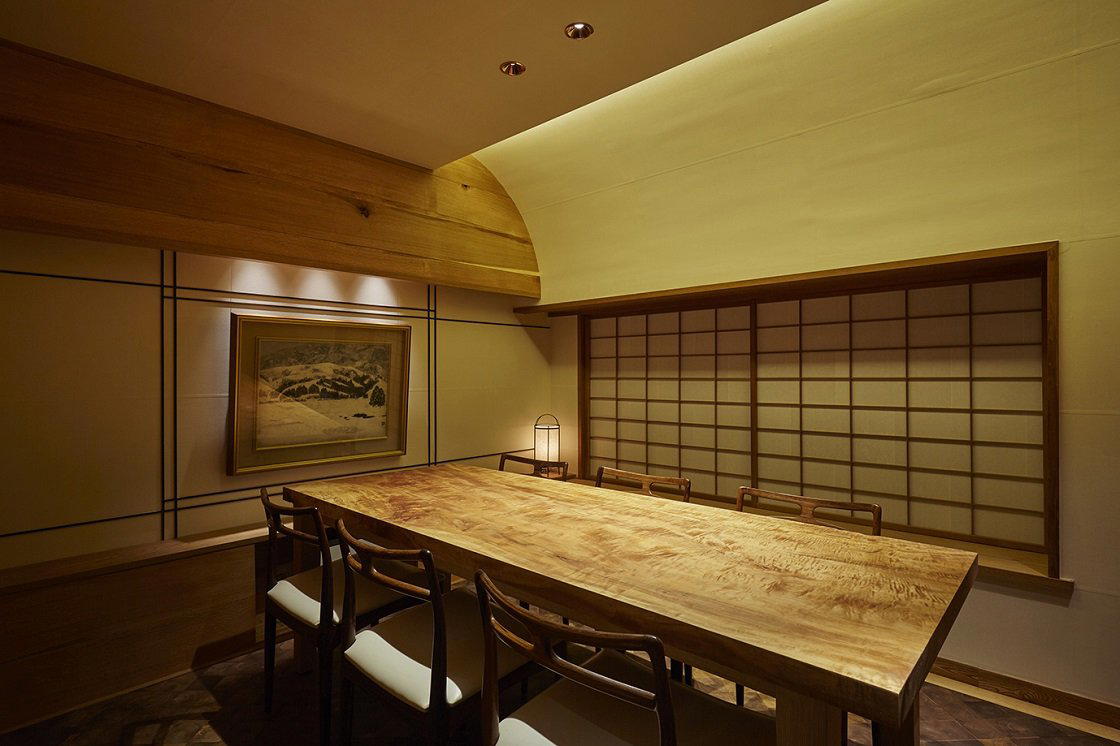
Where Grilled Chicken Becomes a Formal Act
In Japan, yakitori occupies a peculiar cultural position. It begins life as democratic food, skewers turned over charcoal at izakayas and street stalls, eaten standing up or over a beer after work. But over the past two decades, a small number of counters have separated from that tradition not by rejecting it, but by pressing it further than the casual format ever required. The result is a category of yakitori restaurants where the cooking still centres entirely on chicken and the grill, yet the experience aligns more closely with a kaiseki sitting than with a night at the yakitori-ya around the corner.
Ishii is a restaurant in Osaka's Fukushima Ward serving Premium Yakitori Omakase at a price tier of ¥165 per person. The 12-seat counter format and the course structure signal a restaurant that treats skewered chicken as primary subject matter, not supporting act. Chef Yoshitomo Ishii runs the kitchen.
The Cultural Weight of Yakitori Done Seriously
To understand why a 12-seat yakitori counter in Fukushima warrants serious attention, it helps to understand how the format evolved. Yakitori's roots are in post-war Japan, when whole-bird utilisation became both practical and necessary. Every part of the chicken, liver, heart, gizzard, skin, cartilage, tail, found its way onto a skewer and over hot binchotan charcoal. The discipline required to cook each cut correctly, accounting for fat content, texture, and the narrow window between underdone and overdone, is genuinely demanding. At casual counters, this passes unnoticed. At restaurants like Ishii, it becomes the entire point.
The shift from yakitori as drinking food to yakitori as fine dining course happened gradually across Tokyo and Kyoto before reaching Osaka's west-side neighbourhoods. Fukushima has become a credible address for serious eating in the city, a ward that now holds several counters and restaurants operating well above the casual register, and Ishii fits that trajectory. For comparison, Osaka's most decorated dining addresses in the current era tend toward French or kaiseki formats: Hajime holds three Michelin stars in the French-innovative category, as does Kashiwaya, and La Cime and Fujiya 1935 each carry two. Yakitori of Ishii's calibre occupies a different but increasingly respected position in that conversation.
The Counter Format and What It Demands
Twelve seats arranged along a counter is the standard configuration for serious yakitori, close enough to the grill that the smell of binchotan charcoal and rendered chicken fat is part of the meal from the first minute. The format has no room for drift. Every seat faces the same action, and the pace of a course is set collectively rather than individually. This is structurally different from a kaiseki dinner where separate rooms or tables allow individual timing; here, the group moves together, and arrival discipline matters.
The course format also puts the sourcing and sequencing of cuts at the centre of the experience. A considered yakitori course moves through different parts of the bird in a deliberate order, balancing lean and fatty cuts, mild and mineral flavours, alongside supplementary chicken dishes that frame the skewers.
Recognition and Peer Context
The Tabelog Yakitori 100 list is one of the more reliable signals of sustained quality in Japanese restaurant culture. Tabelog's review base is large, domestically weighted, and difficult to game over multiple years. Consecutive appearances across 2022, 2023, 2024, and 2025 indicate consistent execution rather than a single strong year. The Bronze award designation for 2025 and 2026 adds a second credentialing layer.
Within Osaka's yakitori scene specifically, Ishii occupies the upper end of a category that remains smaller and less internationally known than the city's kaiseki or French fine dining. Comparable counters worth understanding in relation to Ishii include Torisho Ishii and Yakitori Torisen, while Ichimatsu and Ayamuya represent adjacent styles in the broader Osaka grilled-food tradition. For a sense of how the yakitori counter format plays out in other Japanese cities, Torisaki in Kyoto and Yakitori Omino in Tokyo offer useful reference points.
Opinionated About Dining ranked Ishii at number 169 nationally in 2025.
Fukushima as a Dining Address
Fukushima ward sits immediately west of Umeda and the central Osaka rail cluster, and its dining concentration has grown steadily over the past decade. The ward is not primarily a tourist zone; it functions more as a local dining district where price-to-quality ratios tend to run sharper than in Namba or Shinsaibashi, and where counter restaurants can build loyal repeat clienteles without depending on foot traffic. This character suits serious yakitori well: the format rewards return visits, regulars understand the rhythm of the course, and the neighbourhood does not impose the noise and distraction of Osaka's more saturated entertainment zones.
For visitors building a broader Osaka itinerary, the ward connects easily to the rest of the city. Our full Osaka restaurants guide maps the city's dining by neighbourhood and category, and our Osaka bars guide covers the after-dinner options in Fukushima and adjacent areas. Those planning accommodation alongside a serious dining programme should consult our Osaka hotels guide. Broader Kansai travel context, including Gion Sasaki in Kyoto and akordu in Nara, fills out a multi-day itinerary for those moving between cities. Elsewhere in Japan, Harutaka in Tokyo, Goh in Fukuoka, 1000 in Yokohama, and 6 in Okinawa represent reference points in their respective cities. Kitashinchi Shien is worth noting for those interested in Osaka's broader yakitori and grilled-food tier. Our Osaka wineries guide and experiences guide round out the platform's Osaka coverage.
Planning Your Visit
Ishii requires reservations. The counter seats 12, which makes this a small room by any measure; booking lead time matters, and the no-phone reservation policy means enquiries need to go through written channels. The restaurant is non-smoking throughout. Major credit cards are accepted (Visa, Mastercard, JCB, Amex, Diners), though electronic money and QR code payments are not. A 10% service charge applies to the bill. Guests are asked to arrive without heavy fragrance, a practical consideration in a 12-seat counter where proximity is close and the room's atmosphere depends on the charcoal and chicken rather than competing scents.
What Regulars Order
At a counter like Ishii, the course structure largely answers this question: the kitchen sets the sequence, and guests move through it together. That said, the distinction regulars understand is the difference between trusting the full course and attempting to redirect it. In a course-format yakitori counter, the chef's ordering of cuts, from milder to more intense, from lean to fatty, with interstitial dishes pacing the progression, is itself the argument the restaurant is making. Regulars at this tier tend to order the full programme, engage with the sake and wine pairing options the sommelier can guide, and arrive early enough to be settled before the session begins. The award record and OAD trajectory suggest that the kitchen's judgement on sequencing has been consistently rewarded by repeat visitors.
Side-by-Side Snapshot
Comparable venues nearby, for context on price, style, and recognition.
| Venue | Cuisine | Price | Awards | Notes |
|---|---|---|---|---|
| IshiiThis venue — the venue you are viewing | Premium Yakitori Omakase | $$$$ | Bib Gourmand | |
| Ajikitcho Bumbuan | Traditional Japanese Kaiseki | $$$$ | Michelin 1 Star | Chūō |
| Nikomi Kimura | Japanese Nikomi Izakaya | $$$ | Bib Gourmand | Chūō |
| Sobakiri Gaku | Artisanal Soba | $$$ | Bib Gourmand | Chūō |
| Oimatsu Kitagawa | Traditional Kaiseki Omakase | $$$$ | Michelin 1 Star | Kita |
| Sakamoto Sushi | Kansai-style Omakase Sushi | $$$ | Bib Gourmand | Konohana |
Continue exploring
More in Osaka
Restaurants in Osaka
Browse all →

Bars in Osaka
Browse all →



Hotels in Osaka
Browse all →




Wineries in Osaka
Browse all →
At a Glance
- Intimate
- Elegant
- Sophisticated
- Quiet
- Special Occasion
- Date Night
- Chefs Counter
- Open Kitchen
- Sake Program
- Sommelier Led
- Local Sourcing
Intimate 10-seat hinoki wood counter in a refined, adult hideaway-like space with front-row view of the meticulous grilling process.