
1 Michelin Star
Our verdict
A Michelin-starred Japanese counter in Osaka's Nishitenma district, Oimatsu Kitagawa sits in the city's mid-to-upper tier of traditional Japanese dining. The chef's dual apprenticeship lineage shapes a style grounded in classical technique and counterside hospitality. The restaurant's name carries characters for 'many' and 'joy', a framing that holds in practice.

Pearl is the En Primeur Club membership app, where members save venues, book tables and use the concierge.
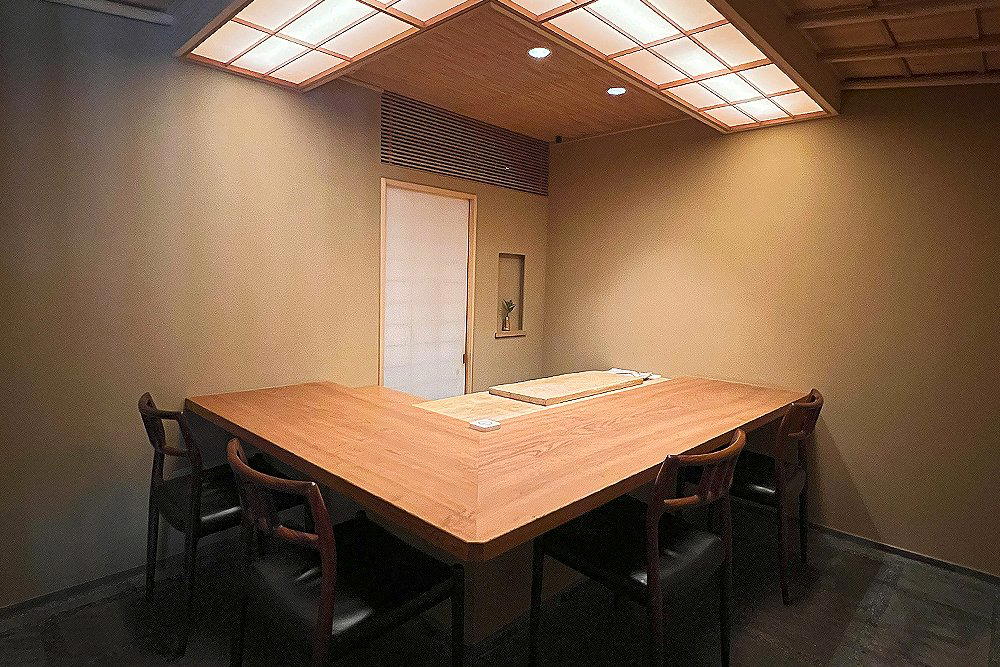
Counter Culture in Nishitenma: Where Osaka's Traditional Japanese Dining Has Landed
Nishitenma occupies a particular register in Osaka's dining geography. The neighbourhood sits north of the Tosabori River, close enough to the corporate density of Nakanoshima to draw a professional clientele, but with a residential grain that keeps it from the tourist circuits of Dotonbori or Shinsaibashi. The Japanese restaurants that have taken root here tend toward the counter-focused, chef-led format that defines serious traditional dining in the Kansai region: small rooms, deliberate pacing, and a tacit understanding between guest and kitchen that neither is in a hurry. Oimatsu Kitagawa, at 4 Chome-12-27 Nishitenma, operates within that framework and holds a Michelin star as of 2024 to confirm its position inside the upper tier of that local bracket.
Osaka's Michelin-starred Japanese restaurants now cover a wide range of price and format. At the very leading sit kaiseki operations like Kashiwaya Osaka Senriyama and counter specialists closer to the ¥¥¥¥ mark. Kitagawa prices at ¥¥¥¥, the same tier as French-leaning innovators like HAJIME and Fujiya 1935, and a step above the ¥¥¥ range where places like Tenjimbashi Aoki operate. That positioning signals a specific commitment: the kitchen is not competing on volume or accessibility but on the quality of ingredients and the depth of the chef's classical preparation. For visitors already familiar with Miyamoto or Yugen in Osaka's broader Japanese dining circuit, Kitagawa represents a counter-and-grill format that is more intimate than kaiseki but no less technically demanding.
The Sourcing Logic Behind the Counter
Japanese cuisine at this price point lives or dies on ingredient provenance, and the counter-and-grill format that Kitagawa employs is one of the most transparent possible settings for that argument. When a chef works at open counter and grill in front of seated guests, the quality of raw materials becomes immediately legible. There is no reduction sauce to compensate for mediocre protein, no plating theatre to distract from an indifferent vegetable. The format demands sourcing discipline.
The broader context for this in Osaka is significant. The city sits at the centre of a procurement network that stretches from the fishing ports of the Sea of Japan to the mountain vegetable producers of Wakayama and the beef farms of Hyogo Prefecture. Wagyu from the Tajima cattle lineage, seasonal fish landed at Tsuruhashi and Osaka's own wholesale markets, Kyoto vegetables (kyo-yasai) carried down by distributors, these supply lines are what allow a single-starred counter in Nishitenma to maintain a credible ¥¥¥¥ offer without importing exotica. At Kitagawa, the Michelin citation frames the chef's work around the transmission of classical Japanese technique learned from two mentors, which in practice means a kitchen that respects the seasonal calendar that underpins Japanese sourcing logic: ingredients appear when they are at their natural peak, not when a supply chain makes them available year-round.
The name itself encodes this orientation. The characters in 'Kitagawa' translate to 'many' and 'joy', a reading that the restaurant's Michelin commentary directly acknowledges, noting a sense of collective accomplishment that no single person could achieve alone. In ingredient terms, that translates to a kitchen that depends on relationships with suppliers built across a chef's career, not on a single house's buying power. For comparison, the affiliated counter Oimatsu Hisano operates within the same broader Oimatsu group, giving the group as a whole a procurement credibility that independent one-location counters can find harder to sustain.
Apprenticeship Lineage as Technical Standard
In traditional Japanese cooking, the provenance of a chef's training carries roughly the same weight as the provenance of ingredients. The Michelin commentary on Kitagawa is explicit on this point: the chef trained under two mentors, and the fundamentals of Japanese cuisine absorbed during that apprenticeship period are visible in the precision of counter and grill work. This is less a biographical detail than a technical guarantee. A chef who completed a rigorous multi-year apprenticeship in classical Japanese kitchens has, by definition, spent years learning how to handle dashi, how to break down fish to a professional standard, and how to read a grill rather than control it by timer.
Osaka's serious Japanese dining scene has always maintained this apprenticeship architecture in parallel with the city's reputation for democratic, accessible eating. The same city that invented takoyaki and kushikatsu also produces counter chefs whose training arcs span a decade or more. Kitagawa's position in that landscape sits closer to the latter tradition: craft-intensive, counter-led, and oriented toward a guest who comes with some baseline of expectation about what formal Japanese service and kitchen discipline actually mean. Comparable depth of classical training can be found at Gion Sasaki in Kyoto or, at the highest end of the Tokyo spectrum, at Azabu Kadowaki and Myojaku, though the Osaka context gives Kitagawa a distinct local character that neither city replicates.
How Kitagawa Sits in the Osaka Tier
A direct comparison against peers clarifies the practical decision for a traveller with limited meals in Osaka.
| Venue | Cuisine | Price | Format | Michelin |
|---|---|---|---|---|
| Oimatsu Kitagawa | Japanese | ¥¥¥¥ | Counter / Grill | 1 Star (2024) |
| Kashiwaya Osaka Senriyama | Japanese | ¥¥¥ | Kaiseki | Starred |
| Tenjimbashi Aoki | Japanese | ¥¥¥ | Counter | |
| HAJIME | French / Innovative | ¥¥¥¥ | Tasting menu | Starred |
| La Cime | French | ¥¥¥¥ | Tasting menu | Starred |
The table illustrates that Kitagawa competes for spend against Osaka's leading French innovators, not just its traditional Japanese peers. That positions it as a deliberate choice: a guest who books here is choosing classical Japanese counter technique over Osaka's internationally recognised French track. For Japanese dining further afield in the region, akordu in Nara offers a contrasting approach that fuses European and Japanese sourcing, while Harutaka in Tokyo represents the capital's equivalent counter-sushi tier. For those extending to Kyushu, Goh in Fukuoka and 6 in Okinawa map the regional range, while 1000 in Yokohama illustrates how the counter format translates to a different Japanese urban context.
Planning a Visit
Nishitenma is accessible from Osaka's central rail network. The Sakaisuji Line (Minami-Morimachi Station) and Tanimachi Line (Minami-Morimachi or Nishi-Tenma) both put the address within a short walk. The neighbourhood is quiet by Osaka standards in the evening, without the Dotonbori noise floor that surrounds many of the city's more visible restaurants.
A Michelin-starred counter at ¥¥¥¥ in a low-profile neighbourhood generally books up several weeks in advance, particularly for weekend seatings. No online booking portal was confirmed at time of writing, which suggests reservations are handled directly. For full planning context across Osaka's dining, drinking, and accommodation options, see our full Osaka restaurants guide, our full Osaka hotels guide, our full Osaka bars guide, our full Osaka wineries guide, and our full Osaka experiences guide.
Frequently asked questions
Where exactly is Oimatsu Kitagawa?
Oimatsu Kitagawa is located at 4 Chome-12-27 Nishitenma, Kita Ward, Osaka, 530-0047, Japan, Osaka.
Should I book Oimatsu Kitagawa in advance?
Yes. At ¥¥¥¥ pricing with a 2024 Michelin star, counter seats at Oimatsu Kitagawa operate in the same demand bracket as Osaka's other recognized one-star addresses. Serious counter seats in Nishitenma fill well ahead of service, and walk-in access at this tier is not a practical assumption. Book as early as your travel dates allow.
What makes Oimatsu Kitagawa worth seeking out?
Three specifics make the case: a 2024 Michelin star confirming kitchen standard, a counter-and-grill format that is less common at this price tier in Osaka than kaiseki table service, and a chef whose training lineage the Michelin guide itself cites as central to the restaurant's identity. The name Kitagawa combines characters meaning 'many' and 'joy', and the guide's commentary frames that as something deliberately built into how the room operates.
Recognition Snapshot
| Venue | Cuisine | Price | Awards | Notes |
|---|---|---|---|---|
| Oimatsu KitagawaThis venue (the venue you are viewing) | Traditional Kaiseki Omakase | $150–200 | 1 Michelin Star | Not listed |
| HAJIME | Avant-Garde Japanese Fine Dining | $300–500 | 3 Michelin Stars · World's 50 Best #83 | French, Innovative |
| La Cime | Modern French with Japanese Ingredients | $150–200 | 2 Michelin Stars · World's 50 Best #13 | French |
| Kashiwaya Osaka Senriyama | Seasonal Kaiseki Omakase | $200–300 | 3 Michelin Stars · La Liste Top Restaurants | Japanese |
| Taian | Traditional Japanese Kaiseki Omakase | $150–200 | 3 Michelin Stars · La Liste Top Restaurants | Kaiseki, Japanese |
| Fujiya 1935 | Modern Japanese with European influences | $100–150 | 2 Michelin Stars · La Liste Top Restaurants | Innovative |
Recognition history
Dated appearances from independent guides and award organizations, with the underlying list record or original source where available.
Michelin 1 Star
Michelin
Full recognition history (2 entries)
Michelin 1 Star
Michelin
Continue exploring
More in Osaka
Restaurants in Osaka
All restaurants in Osaka →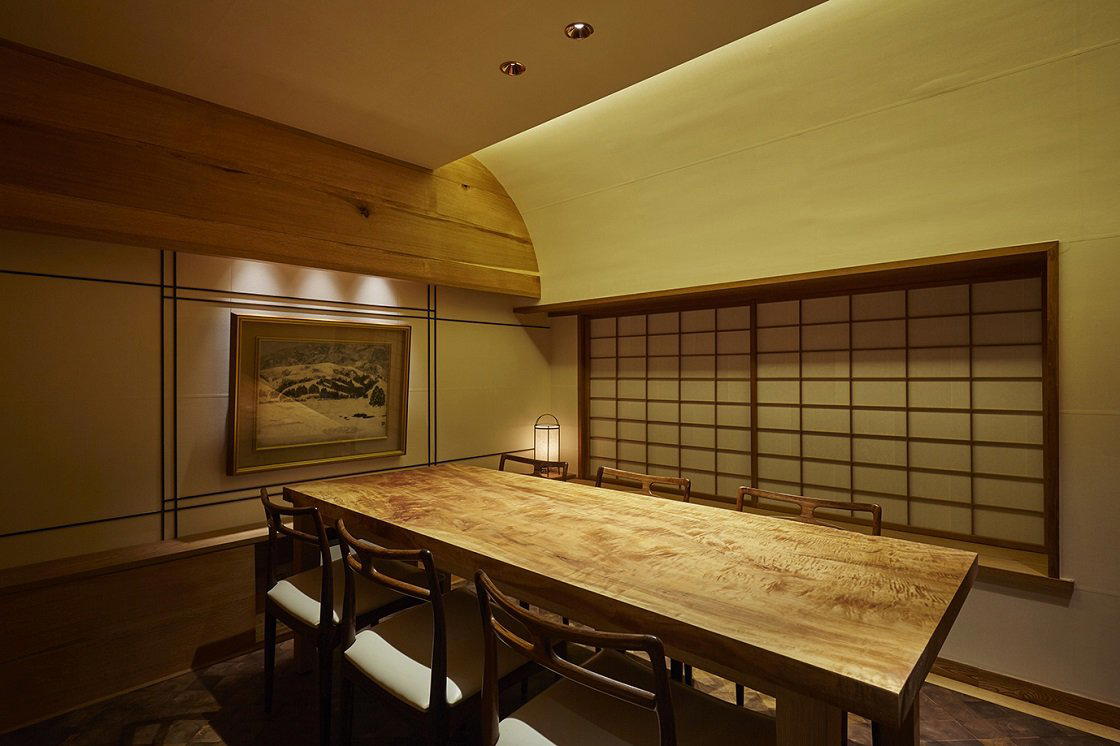


Bars in Osaka
All bars in Osaka →
Hotels in Osaka
All hotels in Osaka →



Wineries in Osaka
Browse all →
Details
- Elegant
- Intimate
- Sophisticated
- Cozy
- Classic
- Special Occasion
- Date Night
- Solo
- Chefs Counter
- Private Dining
- Open Kitchen
- Sake Program
- Omakase
- Counter Dining
- Sake
Current opening hours
- Monday
- 6–8 PM
- Tuesday
- 6–8 PM
- Wednesday
- 6–8 PM
- Thursday
- 6–8 PM
- Friday
- 6–8 PM
- Saturday
- 6–8 PM
- Sunday
- 6–8 PM
Hours can change for holidays and private events. Hours as of .
Serene and refined Japanese atmosphere with a tranquil setting, wooden counter seating, and meticulous attention to cultural details like flower arrangements and antique tableware.