
Yakitori Torisen holds a Michelin star in Osaka's Kita Ward, operating around a single, disciplined concept: the whole bird, Japanese jidori breeds only, no dipping sauces. Reservations require groups of two or more, with rare cuts shared between diners. At the ¥¥¥ price point, it occupies the serious end of Osaka's yakitori tier.
Pearl is the En Primeur Club membership app — saves, bookings, and concierge access live there. Same editors, same standards.
- Address
- Japan, 〒530-0003 Osaka, Kita Ward, Dojima, 1 Chome−4−26 玉家ビル 3階
- Phone
- +81 6-6342-5565
- Website
- instagram.com
- Directions
- Get directions
 Saves & bookings on Pearl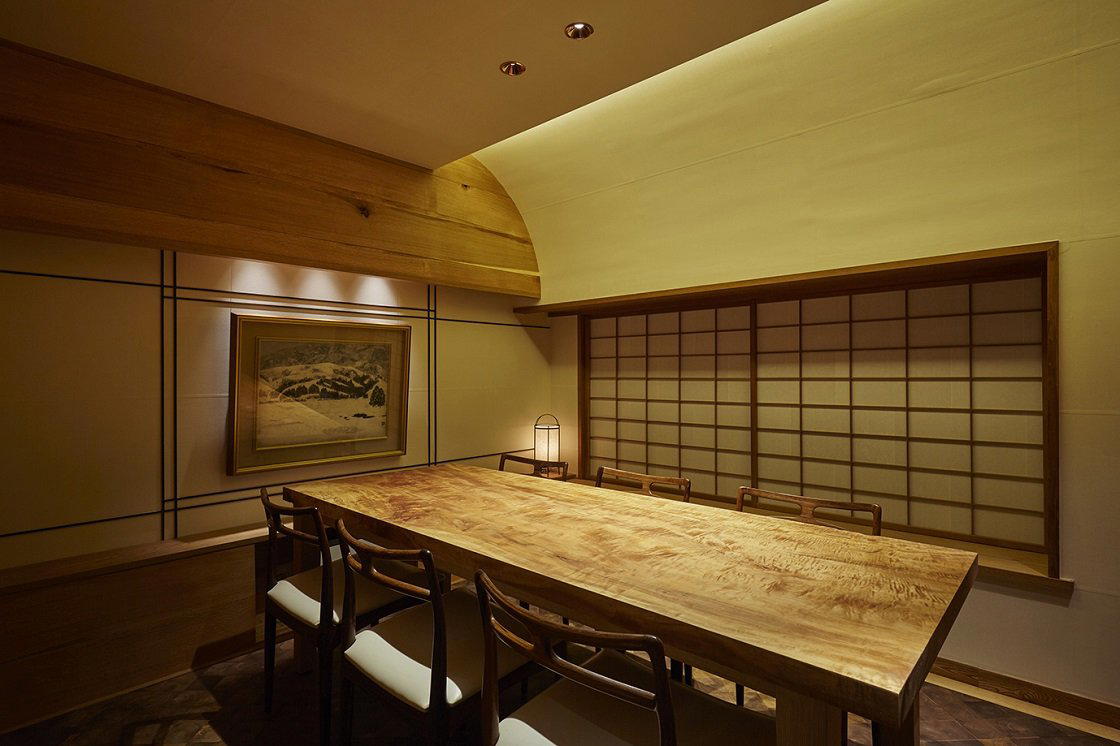
Where Yakitori Becomes a Discipline
Osaka's yakitori scene covers a wide range, from casual standing counters in Shinsekai to refined multi-course formats in Kita Ward that price and present themselves closer to kaiseki than to street food. Torisen is a Michelin 1-star yakitori restaurant in Osaka's Kita Ward, on the third floor of a building in Dojima. It holds a Michelin star, carries a ¥¥¥ price designation, and has accumulated. None of that is what makes it worth understanding. What matters is the philosophical frame the kitchen has built around a single ingredient.
The Whole-Bird Approach
The coasters at Torisen carry the phrase "Japanese Jidori", a signal that every bird served is a native Japanese breed, never crossed with foreign stock. Jidori chickens, raised under strict breed-specific standards, produce meat with a firmer texture and more pronounced flavour than the commodity breeds that supply most yakitori counters. The kitchen's commitment to source purity at that level is less common than it might appear: most yakitori restaurants, even well-regarded ones, blend sourcing according to availability.
The governing idea here goes further than breed selection. The concept is to eat the entire bird, every cut, from the familiar to the anatomically obscure. In practice, that means the menu will include parts that most chicken consumers in any country have never encountered: cartilage, skin sections, organs, and lesser-known muscle cuts alongside the more recognisable thigh and breast preparations. This approach has a direct parallel in the kaiseki tradition's insistence on using a seasonal ingredient fully and without waste, extracting every dimension of flavour rather than cherry-picking the convenient parts.
No-dipping-sauce rule reinforces the same logic. In yakitori restaurants that provide tare or salt as condiment choices, the sauce often compensates for meat of moderate quality or inconsistent grill execution. When the kitchen removes that option entirely, the chicken's flavour and the grill technique carry everything. It is a confident, restrictive move, one that demands the sourcing and the cook to be right every time.
Format and the Two-Diner Rule
Rare cuts are shared between two diners, which is why the restaurant only accepts reservations for parties of two or more. This is not a logistical quirk. It reflects the reality that some parts of a single bird yield a limited quantity, enough for a shared portion, not for individual plates. The format means every guest at the table receives the same progression through the bird, a structure that aligns Torisen with the multi-course omakase tradition rather than the à la carte grill-house model.
That shared-progression format places Torisen in a different competitive set from the casual yakitori bar. In Osaka's broader high-end dining tier, the ¥¥¥ bracket includes kaiseki restaurants like Kashiwaya and Taian, where the progression and pacing are as much the product as any single dish. Torisen applies a comparable structural discipline to a category, grilled chicken, that rarely receives it. For comparison, the city's more maximalist fine dining, such as Hajime or La Cime, operates at ¥¥¥¥ and draws on French technique. Torisen's restraint sits within a different register, and at a lower price point, but the underlying discipline has something in common: a kitchen that has decided what it will and will not do, and built its reputation around that decision.
Yakitori in the Kansai Context
Osaka does not have the same concentration of Michelin-starred yakitori counters as Tokyo, where the category has a longer history at the high end. Nationally, the yakitori restaurants that have earned Michelin recognition tend to share certain characteristics: breed-specific sourcing, counter formats that allow close interaction between kitchen and guest, and menus that move through the bird rather than offering open selection. Torisen fits that profile. For yakitori at a comparable level of commitment in other cities, Torisaki in Kyoto and Yakitori Omino in Tokyo represent the same tier of the category in their respective markets.
Within Osaka specifically, the yakitori category includes a range of serious counters. Torisho Ishii and Ichimatsu both operate in the city's grilled-chicken tier. Ayamuya and Kitashinchi Shien cover adjacent ground in the Kita Ward area. Torisen's Michelin recognition distinguishes it within that peer group, though the star is a credential rather than a complete description: the restaurant's actual character is defined by the structural choices described above, not the award itself.
Torisen Against Japan's Wider Fine-Dining Map
Japan's Michelin-starred restaurant population is unusually dense, and a single star in a major city is a meaningful credential without being the ceiling. At the yakitori category specifically, a starred counter is entering a smaller subset: the total number of yakitori restaurants with Michelin recognition across Japan remains modest relative to sushi, kappo, or kaiseki. That makes Torisen a reference point for the category nationally, not just locally.
Torisen occupies a specific and coherent position within that map: a single-ingredient specialist applying kaiseki-level structural rigour to yakitori.
The restaurant Ishii is another Osaka address worth considering alongside Torisen for a multi-night itinerary in the city.
Planning a Visit
Location: 1 Chome-4-26 Dojima, Kita Ward, Osaka 530-0003 (third floor, Tamaya Building). Price tier: ¥¥¥. Reservations: Required; groups of two or more only, single-diner bookings are not accepted. Format: Omakase-style progression through the whole bird; no dipping sauces provided. Sourcing note: Japanese jidori breeds only; no foreign-breed chicken served. Awards: Michelin 1 Star (2024).7 from 43 reviews.
Price and Recognition
Comparable venues nearby, for context on price, style, and recognition.
| Venue | Cuisine | Price | Awards | Notes |
|---|---|---|---|---|
| Yakitori TorisenThis venue — the venue you are viewing | Kita, Yakitori | $$$ | Michelin 1 Star | Not listed |
| Kamigatachuka SHINTANI | Not listed | $$$$ | Michelin 1 Star | Kita, Kamigata Chinese: Kansai-Chinese Fusion |
| Torisho Ishii | Kita, Michelin-Starred Yakitori Omakase | $$$ | Michelin 1 Star | Not listed |
| Shinchi Yamamoto | Kita, Modern Japanese Kaiseki Omakase | $$$$ | Michelin 1 Star | Not listed |
| ORIGIN | Chūō, Dining | Not listed | Michelin 1 Star | Not listed |
| Nishishinsaibashi Yuno | Chūō, Modern Kaiseki Omakase | $$$ | Michelin 1 Star | Not listed |
Recognition history
Dated appearances from independent guides and award organizations, with the underlying list record or original source where available.
Michelin 1 Star
Michelin
Michelin 1 Star
Michelin
Continue exploring
More in Osaka
Restaurants in Osaka
Browse all →




Bars in Osaka
Browse all →




Hotels in Osaka
Browse all →




Wineries in Osaka
Browse all →
At a Glance
- Sophisticated
- Intimate
- Cozy
- Classic
- Date Night
- Special Occasion
- Business Dinner
- Chefs Counter
- Standalone
- Byob
- Local Sourcing
Current opening hours
- Monday
- 6–11 PM
- Tuesday
- 6–11 PM
- Wednesday
- 6–11 PM
- Thursday
- 6–11 PM
- Friday
- 6–11 PM
- Saturday
- 6–11 PM
- Sunday
- 6–11 PM
Hours can change for holidays and private events. Last verified .
Serene, refined, and intimate, with a cozy counter-style atmosphere.