1 Michelin Star · Tabelog Bronze #88
Our verdict
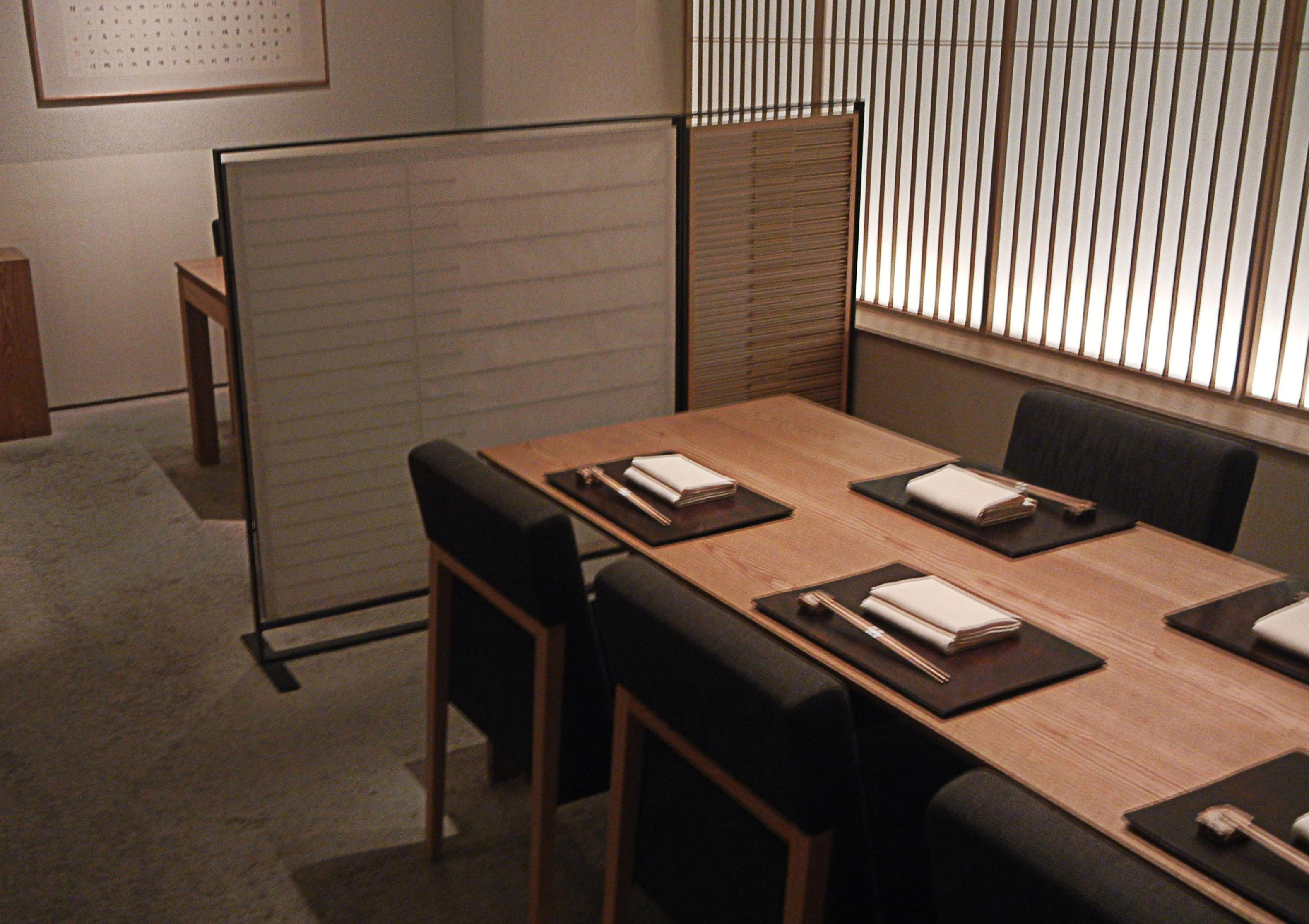
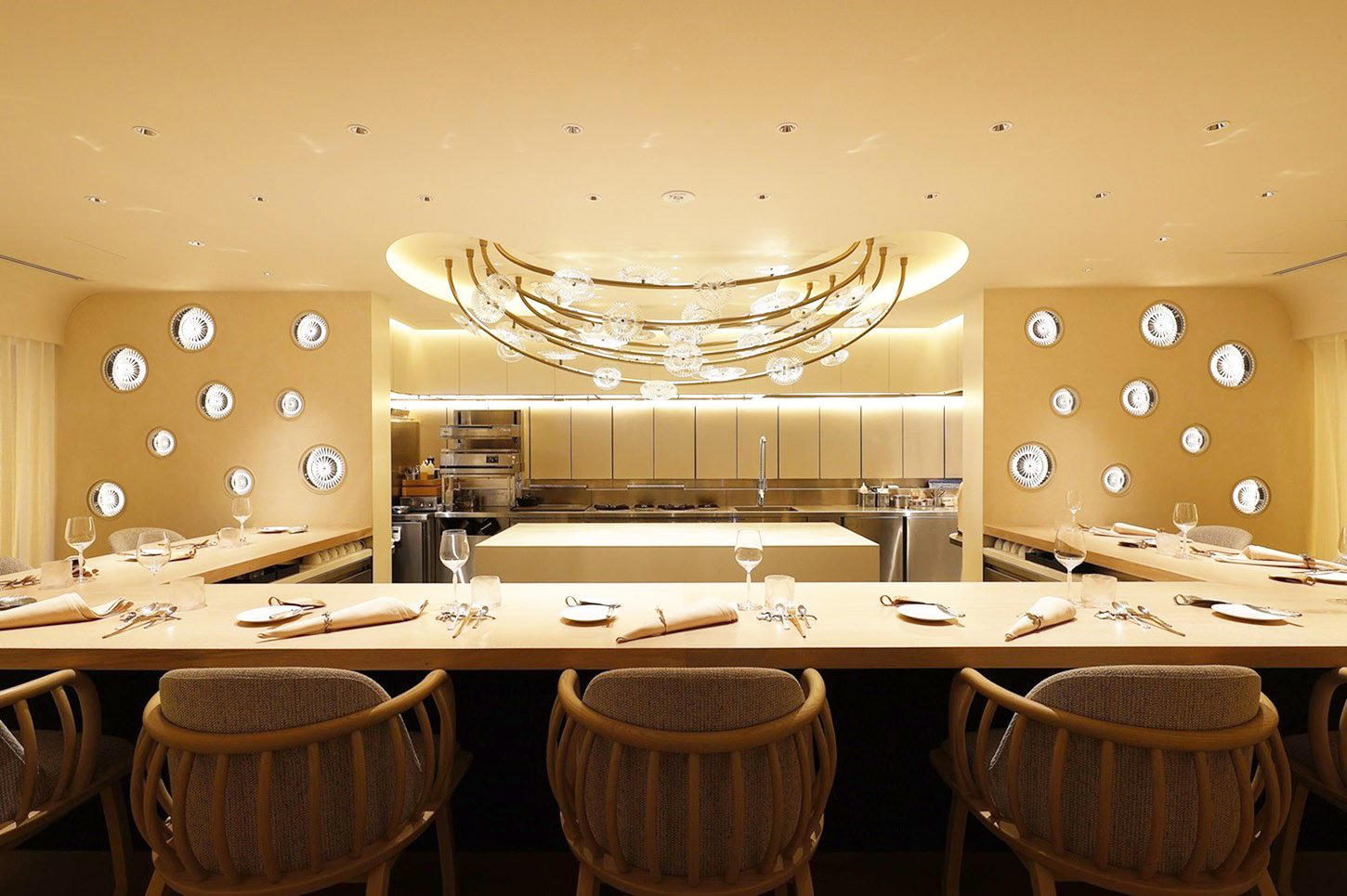
A Tabelog Bronze Award winner tucked into the fourth floor of a Kagurazaka building, Guchokuni operates a 12-seat Japanese cuisine counter under Chef Masato Otsuka. The name translates as 'in simple honesty', and the kitchen holds to that principle across seasonally driven soups, crab preparations, and dashi-forward cooking. Review scores averaging JPY 40,000–49,000 per head place it firmly in Tokyo's upper-tier kaiseki bracket.

Pearl is the En Primeur Club membership app, where members save venues, book tables and use the concierge.
The menu
What to order
- Crab dumplings
- Chargrilled unagi
- Matsutake
- Buri shabu-shabu
- Crab with rice in earthenware pot
Kagurazaka and the Counter Format It Sustains
The fourth floor of an unmarked Kagurazaka building is not where Tokyo's dining press usually points its camera. That neighbourhood calculus is part of what makes the small-counter Japanese cuisine tier in this district worth understanding. Kagurazaka has long operated on a different register from Ginza or Roppongi: narrower streets, a residual French-quarter atmosphere from decades of expat settlement, and a concentration of serious Japanese restaurants that work below the headline noise of the city's most photographed dining addresses. The counter at Guchokuni, twelve seats, eight of them at the bar, four in a semi-private room, fits that format precisely.
Small-counter Japanese cuisine in Tokyo has consolidated around a recognisable model: omakase or semi-fixed menus, evening-only service for most of the week, sake programmes given as much curatorial attention as the food, and price points that signal deliberate positioning rather than volume ambition. Guchokuni, which opened in September 2020, landed inside that model during one of the most difficult periods in the city's restaurant history, and has since accumulated a Tabelog score of 3.88, consecutive Tabelog Bronze Awards in 2025 and 2026, and selection for the Tabelog Japanese Cuisine Tokyo 100 in both 2023 and 2025. By the metrics that count in Tokyo's peer-reviewed dining system, that is a consistent upward trajectory for a restaurant still in its first five years.
What the Kitchen Signals Through Soup
The editorial angle most commonly applied to kaiseki and kaiseki-adjacent restaurants is technique: knife work, aging protocols, sourcing networks. Guchokuni's public-record descriptions point to a different emphasis, the soup course as a signal of broader kitchen philosophy. Across Japanese haute cuisine, soup is often treated as the quietest course, the one where ingredient quality either holds or collapses without the distraction of elaborate plating. At Guchokuni, the soups are described as the clearest expression of the kitchen's approach: crab dumplings made with generous crab ratios rather than filler-heavy proportions, fried elements coated in rice crackers that carry their aroma into the dashi stock, and pureed vegetable soups where seasonal produce is processed to a clarity of flavour rather than complexity of layering.
That approach, restraint in construction, concentration in flavour, places Guchokuni in a lineage of Japanese cooking that prioritises what the ingredient says over what the technique demonstrates. It is a harder sell in review culture than theatrical plating or tableside theatre, but it is also the approach that tends to produce the most durable reputations in Tokyo's competitive Japanese cuisine tier. The restaurant's Opinionated About Dining ranking climbed from a recommended position in 2023 to #363 in Japan in 2024 and #450 in 2025, a range that reflects both the difficulty of the list and the consistency required to stay on it.
Seasonal Sourcing and the Logic of a Closed Kitchen
Tokyo's most credentialled Japanese restaurants share a structural feature that gets underreported in Western coverage: the frequency and deliberateness of closure. Guchokuni closes Sundays, Mondays, public holidays, and during specified periods in early May, mid-August, and year-end. That calendar is not incidental. In seasonal Japanese cooking, those windows align with the transition points between ingredient cycles, the gap between late spring and early summer produce, the shift from summer to autumn in August, and the full reset of the New Year period. A kitchen operating on a seasonal sourcing logic does not gain by staying open through those transitions; it gains by re-engaging the menu when the new ingredients are ready.
The sustainability argument in Japanese cuisine is often framed as a sourcing story, particular fishing communities, heritage vegetable varieties, named producers. That distinction matters in Tokyo's ¥¥¥¥ bracket, where the difference between sourcing-led menus and brand-driven menus is often the most legible quality signal available to a diner making a booking decision.
For comparison: in the same price tier, Michelin three-star counters such as Azabu Kadowaki and three-star kaiseki venues like Kagurazaka Ishikawa operate with similar seasonal closure patterns and comparable counter formats. Guchokuni's Tabelog positioning places it in the tier just below Michelin's starred catalogue, a bracket that in Tokyo often reflects critical consensus as reliably as the Michelin guide itself, given Tabelog's density of reviewing coverage in Japanese. Other strong alternatives in the Japanese cuisine bracket include Myojaku, Ginza Fukuju, and Jingumae Higuchi.
The Sake Programme as a Curatorial Position
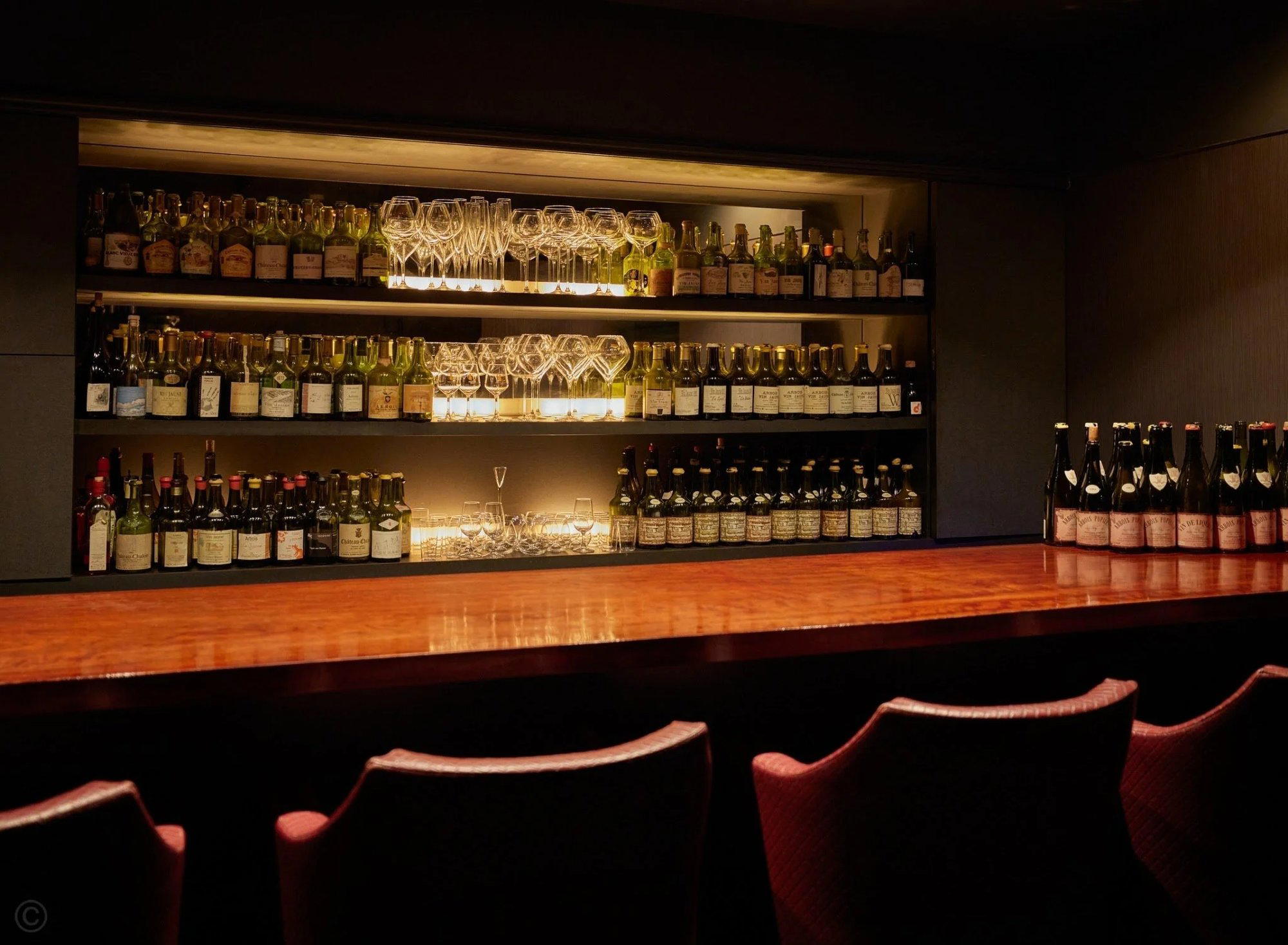
The drink list at Guchokuni, sake (nihonshu), shochu, and wine, with a noted emphasis on sake, reflects a position that is increasingly common at serious Japanese cuisine counters but worth flagging as a selection criterion. Nihonshu-forward programmes in this bracket are typically not generic regional sake lists. They reflect a curatorial stance: which breweries the kitchen considers aligned with its flavour approach, which seasonal releases are worth holding, and how sake is sequenced against courses in the same way a wine programme would be managed at a French restaurant of equivalent seriousness. The option to bring your own wine (BYO is available) adds flexibility for guests with specific wine preferences, but the in-house sake emphasis is the signal to pay attention to. The venue also accepts major credit cards (VISA, Mastercard, JCB, AMEX, Diners), and a 10% service charge applies.
The Name as a Culinary Statement
The name Guchokuni translates from Japanese as 'in simple honesty', a phrase passed down to Chef Masato Otsuka from his two mentors. In a city where restaurant naming frequently trends toward oblique minimalism or heritage citation, a name that is a direct statement of culinary ethics is worth noting. It positions the kitchen before a diner sits down: no excess, no performance, no padding. The cooking at this level in Tokyo either substantiates that kind of declaration or the Tabelog community makes the discrepancy visible within a season. A 3.88 score, consecutive Bronze Awards, and two Tabelog 100 selections across three award cycles suggest the declaration has been substantiated.
Where Guchokuni Sits in Tokyo's Broader Scene
Tokyo's Japanese cuisine tier at ¥¥¥¥ divides broadly between Michelin-starred counters in Ginza and Azabu, neighbourhood specialists in areas like Kagurazaka and Yotsuya, and a smaller set of relative newcomers that have built credibility through Tabelog and OAD rather than through international press. Guchokuni sits in the second and third categories simultaneously. The Kagurazaka address puts it in a neighbourhood with serious culinary precedent; the post-2020 opening date and the OAD trajectory put it in the new-credibility cohort. That combination gives it a different character from a thirty-year institution like the ones it competes against in the Tabelog 100, and a different character from the Michelin-starred counters that dominate Western travel coverage of Tokyo dining.
For readers building a Tokyo itinerary around Japanese cuisine, the full picture benefits from context beyond a single neighbourhood. Our full Tokyo restaurants guide covers the city's Japanese cuisine spectrum in detail. For those extending the trip beyond Tokyo, comparable ambition in Japanese cooking appears at Gion Sasaki in Kyoto, Isshisoden Nakamura in Kyoto, Kashiwaya Osaka Senriyama in Osaka, and HAJIME in Osaka. Further afield, Goh in Fukuoka, akordu in Nara, 1000 in Yokohama, and 6 in Okinawa each represent distinct regional approaches to the same serious-dining bracket.
For planning the rest of a Tokyo trip, our full Tokyo hotels guide, full Tokyo bars guide, full Tokyo wineries guide, and full Tokyo experiences guide provide the same level of critical context across categories.
Planning Your Visit
| Detail | Guchokuni | Kagurazaka Ishikawa | Azabu Kadowaki |
|---|---|---|---|
| Neighbourhood | Kagurazaka, Shinjuku | Kagurazaka, Shinjuku | Azabu, Minato |
| Price range | JPY 30,000–49,999 | ¥¥¥¥ | ¥¥¥¥ |
| Seats | 12 (8 counter, 4 table) | Counter format | Counter format |
| Evenings open | Tue–Sat | Tue–Sun | Tue–Sat (approx.) |
| Saturday lunch | Yes (from 12:00) | No | No |
| Award status | Tabelog Bronze 2025–2026 | Michelin 3 Stars | Michelin 3 Stars |
| Nearest transit | Iidabashi (4 min walk) | Iidabashi area | Hiroo/Azabu-Juban |
Guchokuni is located on the fourth floor of the Omiya Building at 4-3 Kagurazaka, Shinjuku-ku. The closest access is a four-minute walk from Ushigome-Kagurazaka Station (Toei Oedo Line, Exit A3) or a four-minute walk from Iidabashi Station (Exit B3) on the Tokyo Metro Yurakucho, Namboku, and Tozai lines. Reservations are available by phone at 050-3138-5225 or through the restaurant's reservation platform. Saturday service includes a lunch seating from 12:00 in addition to the evening service, a practical option for visitors whose evening schedule is already committed to another booking. Children aged twelve and over are welcome on the adult menu. The venue is non-smoking throughout.
What Regulars Order at Guchokuni
Q: What do regulars order at Guchokuni?
The menu at Guchokuni is structured around the chef's omakase approach, so individual dish selection is not how the kitchen operates. That said, the courses that have generated the most consistent attention in public-record commentary are the soup preparations. Specifically: crab dumplings with high crab content relative to filler, fried elements coated in rice crackers that release their aroma into the dashi stock, and pureed seasonal vegetable soups. These three courses appear repeatedly in Tabelog reviews as the most representative expressions of the kitchen's philosophy, restraint in structure, concentration in flavour, rather than the most theatrical. For guests who want to engage the sake programme most fully, evening seatings on Tuesday through Friday offer more time than the compressed Saturday lunch window, which suits diners with tighter schedules but gives the counter less room to pace.
Frequently asked questions
Which chef is Guchokuni associated with?
The chef associated with Guchokuni is Masato Otsuka.
Is Guchokuni open every day?
Hours at Guchokuni: Hours: Monday Closed Tuesday 5 pm–12 am Wednesday 5 pm–12 am Thursday 5 pm–12 am Friday 5 pm–12 am Saturday 5 pm–12 am Sunday Closed.
What do regulars order at Guchokuni?
Guchokuni's kitchen is known for its soup-led approach: crab dumplings made with generous amounts of crab, fried items coated with rice crackers served alongside dashi stock, and pureed seasonal vegetable soups are all signatures documented in the restaurant's own description. The counter seats eight, so the kitchen's focus tends to arrive consistently across the full room rather than varying by seat. With dinner averaging ¥40,000–¥49,999 per person based on reviewer data, the expectation is a full progression rather than à la carte selection.
How would you describe the cuisine at Guchokuni?
Is Guchokuni expensive?
Pricing at Guchokuni is listed as ¥¥¥¥.
What's Guchokuni's location?
Guchokuni is located at Japan, 〒162-0825 Tokyo, Shinjuku City, Kagurazaka, 4 Chome−3 近江屋ビル 4F, Tokyo.
Is Guchokuni award-winning?
Guchokuni has received recognition including:
Standing Among Peers
Comparable venues nearby, for context on price, style, and recognition.
| Venue | Cuisine | Price | Awards | Notes |
|---|---|---|---|---|
| GuchokuniThis venue (the venue you are viewing) | Traditional Kaiseki | $300–500 | 1 Michelin Star · Tabelog Bronze #88 | Not listed |
| Mutsukari | Modern Japanese Kaiseki with Vegetable Focus | $200–300 | 1 Michelin Star · We're Smart World Top 100 #39 | Chūō |
| Sushi Ryujiro | Traditional Japanese Omakase Sushi | $150–200 | 1 Michelin Star · Tabelog Silver #111 | Minato |
| Sushi Keita | Edomae Omakase Sushi | $150–200 | 1 Michelin Star · Tabelog 100 #28 | Chūō |
| Nishiazabu Noguchi | Kaiseki Omakase | $200–300 | Michelin Plate · Tabelog 100 #34 | Minato |
| Daigo | Shojin Ryori Kaiseki | $150–200 | 1 Michelin Star · La Liste Top Restaurants | Minato |
Recognition history
Dated appearances from independent guides and award organizations, with the underlying list record or original source where available.
Michelin 1 Star
Michelin
Opinionated About Dining Top Restaurants in Japan Recommended
Opinionated About Dining
Tabelog Bronze #88
Tabelog
Full recognition history (9 entries)
Opinionated About Dining Top Restaurants in Japan Ranked #450
Opinionated About Dining
Tabelog 100 #59 · No. 59
Tabelog · Tabelog 100 - Japanese cuisine - TOKYO - 2025
Tabelog Bronze
Tabelog
Michelin 1 Star
Michelin
Opinionated About Dining Top Restaurants in Japan Ranked #363
Opinionated About Dining
Opinionated About Dining Top Restaurants in Japan Recommended
Opinionated About Dining