Our verdict
In the quiet backstreets of Hase, Kamakura TANUKIAN 鎌倉 たぬき庵 occupies a niche that few restaurants in the city attempt: grilled beef sukiyaki, a format that sits between the precision of traditional sukiyaki and the directness of teppan cooking. The address places it a short walk from Kotoku-in, in a neighbourhood where the dining options skew toward temple-town simplicity rather than urban ambition.

Pearl is the En Primeur Club membership app, where members save venues, book tables and use the concierge.
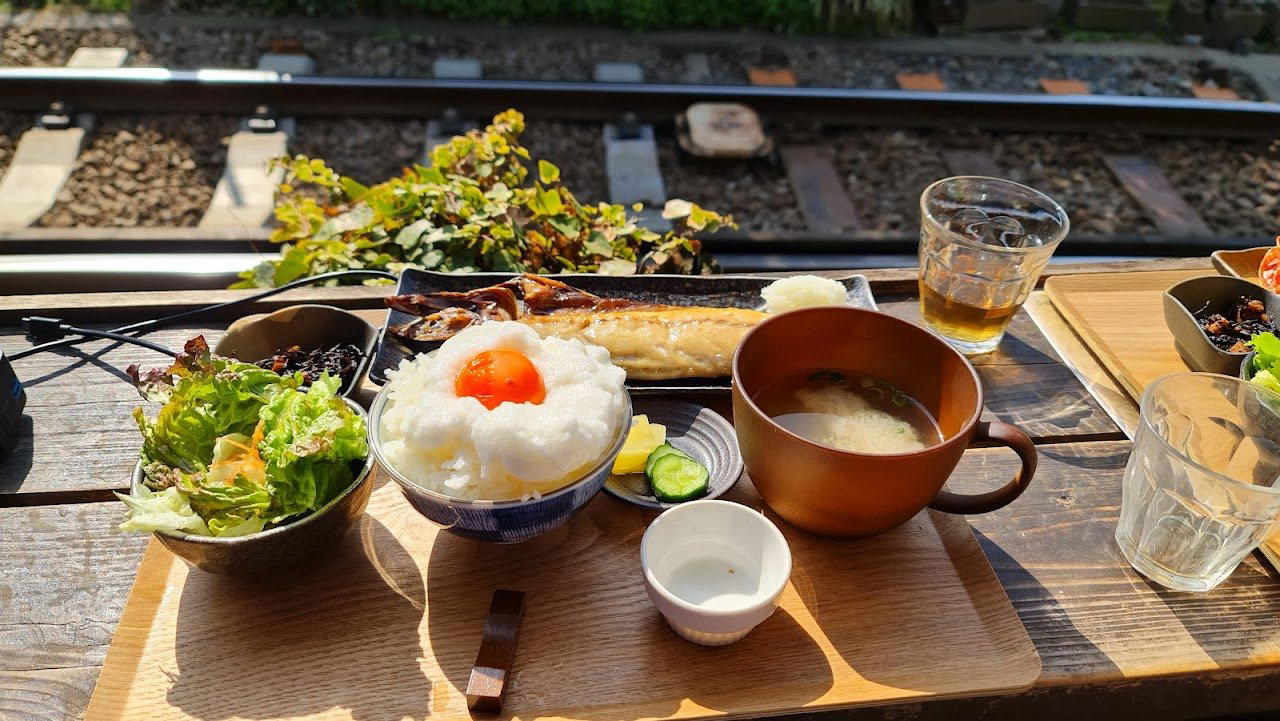
Beef, Fire, and the Kamakura Table
Sukiyaki as a format carries more historical weight in Japan than its popularity might suggest. The dish emerged in the Meiji era as one of the first widely accepted forms of beef consumption in a country that had observed Buddhist dietary restrictions for over a millennium. What began as a pragmatic adaptation, thin-sliced beef cooked in a shallow iron pan with soy, sugar, and mirin, became, over the following century, one of the clearest expressions of how Japanese cuisine absorbs foreign influence and transforms it into something entirely its own. The grilled variation, which introduces direct heat and char alongside the sweet-savoury braise, represents a further refinement: less ceremonial than the table-cooked original, more focused on the quality of the beef itself.
Kamakura TANUKIAN 鎌倉 たぬき庵, situated at 1 Chome-16-25 Hase, brings this format to a neighbourhood better known for its temples and the Great Buddha than for destination dining. The Hase district sits in the western quarter of Kamakura, where the streets narrow and the tourist infrastructure thins out compared to the area around Kamakura Station. The approach to the restaurant carries the texture of old Kamakura: low rooflines, a pace that slows as you move further from the main transit points, an atmosphere shaped as much by the forested hills as by the built environment.
The Sourcing Logic Behind Grilled Beef Sukiyaki
In any sukiyaki context, the beef is the argument. The dish has almost no hiding places: the cut, the grade, the fat distribution, and the way the protein responds to heat are all immediately legible to anyone who eats it attentively. This is why the leading sukiyaki and grilled beef specialists across Japan, from the wagyu-focused houses in Kobe and Matsusaka to the more eclectic programs in Tokyo, orient their entire proposition around provenance. Where the beef comes from, how it was raised, and which cuts the kitchen chooses to feature are not background details but the primary editorial statement of any serious beef restaurant.
The grilled sukiyaki format that Kamakura TANUKIAN 鎌倉 たぬき庵 works within demands a specific kind of sourcing discipline. A heavily marbled wagyu cut that performs well in a braise does not always translate to the grill; the fat renders differently under direct heat, and the window between properly cooked and overcooked narrows considerably. Kitchens that handle both methods simultaneously are making a more complex sourcing and preparation argument than those that commit to one technique. This tension between the braised sukiyaki tradition and the demands of the grill is what gives the format its character, and what separates a kitchen with genuine sourcing intelligence from one simply riding the wagyu premium.
Japan's broader beef sourcing geography is worth understanding as context. Prefectural designations, Kobe, Matsusaka, Omi, Yonezawa, Saga, carry significant market weight and price premiums, but the most thoughtful beef restaurants increasingly look beyond brand recognition toward specific farms, feeding programs, and slaughter age. The conversation in premium beef circles in Japan has moved, over the past decade, in a direction that parallels what happened in natural wine: away from institutional certification and toward producer relationships.
Kamakura's Dining Position and the Hase Address
Kamakura occupies an unusual position in the geography of Japanese fine dining. It is close enough to Tokyo (roughly 50 minutes by train from Shinjuku on the Odakyu line, or under an hour from Tokyo Station via Yokosuka Line) to attract day-trippers and weekend visitors, but it lacks the dining density of Kyoto or the sheer concentration of Osaka's restaurant culture. The city's serious dining scene is spread across a relatively small number of addresses, with the strongest current showing coming from European-influenced kitchens. ETE Kamakura and IL NODO represent the French and Italian ends of that spectrum respectively, while Restaurant Michel Nakajima holds its own particular position in the city's French dining conversation. Ichirin Hanare covers Chinese, and Roastbeef Kamakurayama addresses the beef-focused end of the market from a different angle than TANUKIAN's sukiyaki format.
Within that landscape, a grilled beef sukiyaki specialist in Hase occupies a position that is neither competing with the French-trained kitchens nor duplicating the roast beef format. It draws from a different tradition entirely, the table-centred, ingredient-forward culture of Japanese beef dining, and places it in a neighbourhood that gives the experience a quieter, more residential register than the busier restaurant strips near Kamakura Station. For visitors building a Kamakura itinerary, the Hase address pairs naturally with time at Kotoku-in or Hasedera before or after the meal, making it a logical anchor for an afternoon in the western part of the city.
Those looking to understand where Kamakura's dining sits relative to other Japanese cities can find useful comparisons further afield. The contrast with Osaka's density, where HAJIME in Osaka represents the upper tier, or with Tokyo's layered omakase culture, visible in counters like Harutaka in Tokyo, places Kamakura's smaller, more intimate scene in proper perspective. Gion Sasaki in Kyoto and akordu in Nara represent two different versions of how secondary cities in Japan build distinct dining identities; Kamakura is working through a similar question. For those exploring beef-forward formats across Japan more broadly, the range extends from Goh in Fukuoka to more regional specialists like 一本木 石川牛制 in Nanao and Birdland in Sakai. The full picture of what Japanese cities are doing with premium proteins also includes quieter regional addresses like 夕佳亭山乃 in Sapporo, 湖邸壽庵 in Takashima, and 庭羽屋 in Nishikawa Machi.
Planning a Visit
The restaurant's address in Hase places it within walking distance of the Hase station on the Enoden line, which connects to Kamakura Station and runs along the coast toward Enoshima. For visitors arriving from Tokyo, the Enoden segment of the journey is the slower, more scenic leg, and the Hase stop sits roughly three minutes from the main sightseeing cluster around Kotoku-in. The full Kamakura restaurants guide provides broader context for building an itinerary around this area. For reference points at the international scale, the ingredient-first precision that defines the leading Japanese beef dining shares philosophical ground with the sourcing rigour visible at restaurants like Le Bernardin in New York City and the Korean-inflected precision of Atomix in New York City, even if the traditions and formats are entirely distinct.
Frequently asked questions
Where do I go for -Grilled beef Sukiyaki- KAMAKURA TANUKIAN 鎌倉 たぬき庵?
-Grilled beef Sukiyaki- KAMAKURA TANUKIAN 鎌倉 たぬき庵 is located at 1 Chome-16-25 Hase, Kamakura, Kanagawa 248-0016, Japan, Kamakura.
What should I order at Grilled Beef Sukiyaki KAMAKURA TANUKIAN?
The name says it plainly: grilled beef sukiyaki is the reason to be here. The format is single-focus, which means the kitchen's entire attention sits on the beef, the broth calibration, and the sequencing of the cook. Arriving with a broader menu agenda will leave you at the wrong address, this is a venue built around one dish done with precision.
How hard is it to get a table at -Grilled beef Sukiyaki- KAMAKURA TANUKIAN 鎌倉 たぬき庵?
Reservations are recommended for -Grilled beef Sukiyaki- KAMAKURA TANUKIAN 鎌倉 たぬき庵 in Kamakura. Confirm current policy via the venue's official channels.
How hard is it to get a table at Grilled Beef Sukiyaki KAMAKURA TANUKIAN?
Kamakura draws significant day-trip traffic from Tokyo, roughly 50 minutes from Shinjuku, and Hase is one of its busiest pockets given the proximity to Kotoku-in. That combination tends to compress availability at smaller, focused restaurants. Booking ahead is advisable, particularly for weekend visits or national holidays, walk-ins at single-concept beef counters in high-footfall districts rarely go smoothly.
Side-by-Side Snapshot
Comparable venues nearby, for context on price, style, and recognition.
| Venue | Cuisine | Price | Awards | Notes |
|---|---|---|---|---|
| -Grilled beef Sukiyaki- KAMAKURA TANUKIAN 鎌倉 たぬき庵This venue (the venue you are viewing) | Grilled Wagyu Sukiyaki | Not listed | Not listed | Not listed |
| Moana Makai Sango Sho | Japanese Curry | $10–20 | Tabelog 100 #50 | Kamakura |
| 鎌倉 北じま | Kamakura Seasonal Japanese Omakase | $200–300 | Not listed | Kamakura |
| OXYMORON komachi Komachi | Japanese-style spice curry & café | $10–20 | Tabelog 100 #25 | Kamakura |
| IL NODO | Italian with Local Kamakura Seafood | $100–150 | Tabelog 100 #40 | Kamakura |
| Spanish restaurant Arashida | Refined Spanish & Basque Counter Dining | $50–100 | Tabelog 100 #56 | Kamakura |
Continue exploring
More in Kamakura
Restaurants in Kamakura
All restaurants in Kamakura →



Bars in Kamakura
Browse all →




Details
- Elegant
- Intimate
- Classic
- Date Night
- Special Occasion
- Group Dining
- Open Kitchen
- Local Sourcing
- A La Carte
- Family Style
Current opening hours
- Monday
- 11 AM–6 PM
- Tuesday
- 11 AM–6 PM
- Wednesday
- 11 AM–6 PM
- Thursday
- 11 AM–6 PM
- Friday
- 11 AM–6 PM
- Saturday
- 11 AM–6 PM
- Sunday
- 11 AM–6 PM
Hours can change for holidays and private events. Hours as of .
Elegant and intimate atmosphere with traditional Japanese decor, featuring tableside cooking that creates an engaging and memorable dining experience.