Our verdict
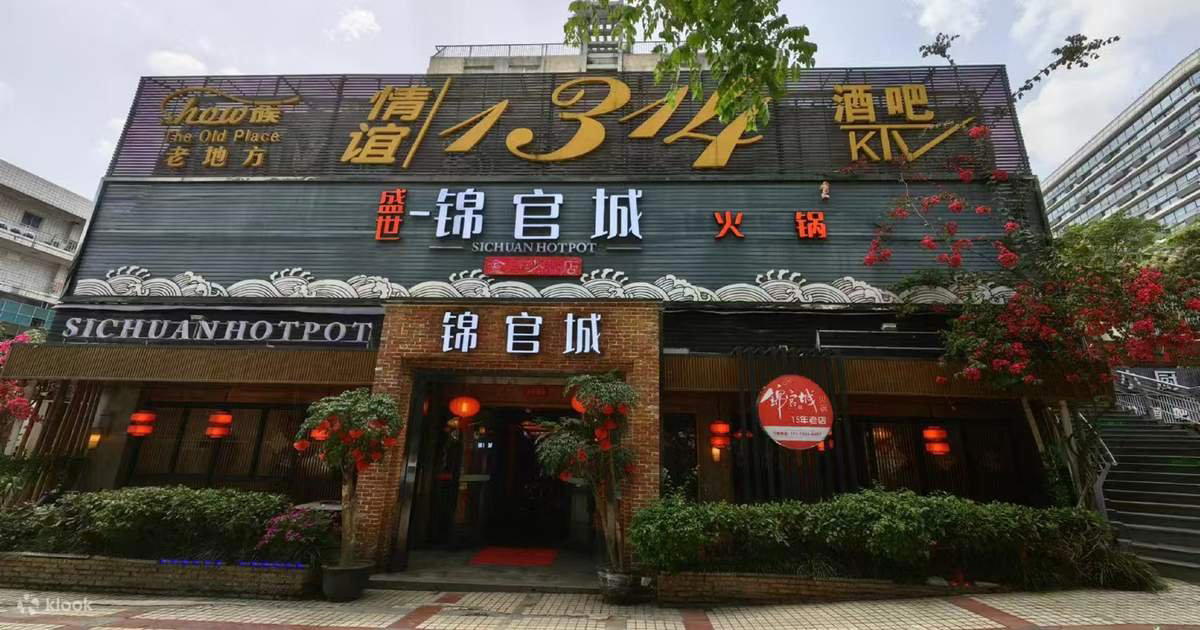
Golden Wheel Auspicious Garden Restaurant sits within Chengdu's richly layered dining scene, where Sichuan culinary tradition and contemporary ambition intersect. Specific menu details and booking arrangements are best confirmed directly, as the restaurant operates in a city that rewards those who seek out its more considered dining addresses. See EP Club's full Chengdu guide for context on where it fits among the city's broader restaurant tier.

Pearl is the En Primeur Club membership app, where members save venues, book tables and use the concierge.
Chengdu's Dining Register and Where Auspicious Garden Fits
Chengdu operates on a different register from China's coastal dining capitals. Where Shanghai rewards novelty and Beijing rewards formality, Chengdu rewards depth: restaurants here are measured by how faithfully they interpret a tradition and how honestly they price it. The city's food culture is one of the most documented in China, with UNESCO recognising Chengdu as a Creative City of Gastronomy in 2010, a designation that reflects the density and seriousness of its culinary ecosystem. Golden Wheel Auspicious Garden Restaurant sits inside that ecosystem, carrying a name that signals ceremonial intent. In Chengdu's naming conventions, "auspicious" is not decorative language; it positions a restaurant within a register of occasion dining, where the meal is understood as a social and cultural act as much as a nutritional one.
For a broader sense of how the city's premium dining tier is structured, EP Club's full Chengdu restaurants guide maps the range from neighbourhood standbys to the addresses that compete on a national level.
The Cultural Weight Behind the Name
Sichuan cuisine is the most discussed regional Chinese cooking tradition outside China, and it is frequently the most misrepresented. The international shorthand, built around ma la (numbing heat), captures one aspect of a tradition that also includes delicate cold dishes, slow-braised preparations, and fermented condiments that take months to develop. Chengdu's senior restaurants understand this complexity, and the more considered among them use their menus to argue for the full range of the tradition rather than the most exportable version of it.
The "Golden Wheel" element of this restaurant's name carries its own cultural weight. Circular symbolism in Chinese culinary contexts often references completeness and continuity, the idea that a meal moves through a considered arc rather than arriving as a collection of unrelated dishes. Whether that philosophy governs the actual sequencing here is something confirmed by those who have eaten there; what the name signals, at minimum, is an awareness of the ceremonial dimension that separates formal Sichuan dining from its casual counterpart.
Comparable addresses in Chengdu's serious dining tier include Yu Zhi Lan, which operates at the top of the Sichuan price bracket (¥¥¥¥), and Fang Xiang Jing, another address working within the Sichuan tradition at a similar tier. Fu Rong Huang rounds out the cluster of restaurants in Chengdu where regional cooking is taken seriously as a formal proposition.
Occasion Dining in a City That Takes Eating Seriously
In Chengdu, the gap between casual and formal eating is culturally meaningful. At the casual end, addresses like Chen Mapo Tofu on Qinghua Road (¥) serve single-dish benchmarks that locals use to calibrate quality across the city. At the formal end, restaurants in the auspicious-occasion register are expected to do something different: compose a meal across multiple courses, manage the progression of flavours, and provide a setting that frames the act of eating as worth dressing for and sitting with.
Chengdu's other regional cuisine perspectives are represented by addresses like Hokkien Cuisine and Xin Rong Ji (the Taizhou iteration), both of which show how far Chengdu's dining market has moved beyond pure Sichuan regionalism. Golden Wheel Auspicious Garden, given its name's ceremonial register, is more likely to sit in the Sichuan-formal category than in the cross-regional bracket, though precise cuisine classification would require confirmation from current visitors or the venue itself.
How This Fits Within China's Broader Premium Chinese Dining Conversation
Across China's tier-one dining cities, the formal Chinese restaurant has undergone significant repositioning over the past decade. In Shanghai, addresses like 102 House demonstrate how Chinese culinary traditions can be reframed through contemporary design and precise technique. In Macau, Chef Tam's Seasons operates in a Michelin-recognised tier that draws on Cantonese foundations. In Hangzhou, Ru Yuan represents the quieter, more contemplative end of refined Chinese dining. Guangzhou's Imperial Treasure Fine Chinese Cuisine anchors a brand with significant pan-Asian reach.
Chengdu's formal dining addresses exist in conversation with all of these, competing not on Cantonese or Shanghainese terms but on the specific credibility of the Sichuan tradition, which carries enough culinary authority to sustain its own premium tier without borrowing prestige from other regional schools. This is the context in which an address with a name like Golden Wheel Auspicious Garden positions itself: within a tradition that does not need to borrow authority because it has enough of its own.
For those tracking the formal Chinese dining conversation across other cities, the range represented by Dai Yuet Heen in Nanjing, Dingshan·Jiangyan in Suzhou, and Shang Palace in Yangzhou shows how different regional traditions maintain distinct formal dining identities. Internationally, the comparison points shift considerably: Le Bernardin in New York and Atomix represent Western cities where the idea of formal, tradition-rooted tasting menus has been refined over decades. The Sichuan equivalent operates in a different cultural register, but the underlying seriousness of intent is comparable.
Planning Your Visit
Chengdu's formal dining addresses typically require advance planning, particularly for groups. Reservations at occasion-register restaurants in the city are generally recommended rather than optional, and some operate on a schedule that favours lunch as the primary meal for ceremonial dining, a pattern common across formal Chinese restaurant culture in China's interior cities. Specific booking arrangements, hours, and current menu formats for Golden Wheel Auspicious Garden are best confirmed through current visitor reports or direct contact, as the venue's operational details are not consolidated in publicly available databases at the time of writing. Visitors in Chengdu for a short stay would also benefit from cross-referencing with Jiangnan Wok·Rong in Fuzhou and Fleurs Et Festin in Xiamen to calibrate what formal Chinese dining looks like at a similar price ambition in other regional contexts, which in turn sharpens expectations for Chengdu's own tier.
Frequently asked questions
How does Golden Wheel Auspicious Garden Restaurant compare to other formal Sichuan restaurants in Chengdu for group banquet dining?
Chengdu supports a distinct tier of occasion-oriented Sichuan restaurants that operate alongside single-dish institutions at the accessible end and modern tasting-menu formats at the other. Addresses with auspicious naming conventions in this city are specifically oriented toward milestone meals, corporate banquets, and ceremonial gatherings, where multi-course ordering and private room availability are expected features. For groups planning formal meals in Chengdu, this positioning is a meaningful differentiator from the city's more casual or tourist-facing Sichuan addresses.
What do people recommend at Golden Wheel Auspicious Garden Restaurant?
The restaurant sits within Chengdu's Sichuan-formal dining tier, where the canon runs from cold-dressed preparations and mala braises to whole-fish and tofu centrepieces that anchor banquet-style meals. In this register, signature ordering tends to follow the full Sichuan register rather than a single dish. Guests planning group occasions typically allow the kitchen to set the progression across multiple courses.
Is Golden Wheel Auspicious Garden Restaurant reservation-only?
Occasion-register restaurants in Chengdu, particularly those with ceremonial name positioning like Auspicious Garden, operate on advance booking as a matter of course, especially for group tables and private rooms. Walk-in availability at this tier is limited on weekends and holiday periods. Contacting the restaurant directly ahead of your visit is the standard approach in Chengdu's formal dining circuit.
What has Golden Wheel Auspicious Garden Restaurant built its reputation on?
The restaurant's name places it squarely in the tradition-rooted, celebration-dining tier of Chengdu's food scene, a category that prioritises the full Sichuan canon over modernist reinterpretation. In a city where eating carries genuine cultural weight, this positioning signals a kitchen oriented around formal-occasion credibility rather than trend cycles. Chengdu's formal Chinese addresses in this tier compete on depth of technique and the coherence of a multi-course meal.
Can Golden Wheel Auspicious Garden Restaurant handle vegetarian requests?
Sichuan cuisine carries a substantial plant-forward tradition, including cold-dressed wood ear mushrooms, mapo tofu, and dry-fried green beans, which means vegetarian guests have genuine options rather than afterthought substitutions. Chengdu's dining culture is generally accommodating of plant-forward meal structures, particularly in the banquet format where dishes are ordered across categories. Communicating dietary requirements when making a reservation is standard practice at formal-register addresses in the city.
Cost and Credentials
| Venue | Cuisine | Price | Awards | Notes |
|---|---|---|---|---|
| Golden Wheel Auspicious Garden RestaurantThis venue (the venue you are viewing) | Sichuan Chinese | Not listed | Not listed | Not listed |
| Xin Rong Ji | Chinese | Not listed | 2 Michelin Stars · World's 50 Best #56 | Taizhou |
| Yu Zhi Lan | Modern Sichuan Fine Dining | $200–300 | 2 Michelin Stars · La Liste Top Restaurants | Sichuan |
| Mi Xun Teahouse | Modern Vegetarian Sichuan Chinese | $30–50 | 1 Michelin Star | Vegetarian |
| Chen Mapo Tofu (Qinghua Road) | Authentic Sichuan Mapo Tofu | $10–20 | Michelin Bib Gourmand | Sichuan |
| Gan Ji Fei Chang Fen (Jinniu) | Sichuan Pork Intestines Glass Noodles | $1–10 | Michelin Bib Gourmand | Noodles |
Continue exploring
More in Chengdu
Restaurants in Chengdu
All restaurants in Chengdu →
Bars in Chengdu
All bars in Chengdu →

Details
- Quiet
- Sophisticated
- Special Occasion
- Celebration
- Standalone
Quiet and casual, with a more considered, occasion-oriented dining atmosphere.