
Tabelog 100 #62
Our verdict
In Kyoto's Gion district, where traditional machiya townhouses line streets still walked by maiko, Gion Tokuya occupies a quieter register than the kaiseki houses that dominate the neighbourhood's high-end dining conversation. The kitchen works in a focused format that positions it as a complement to, rather than a competitor with, the multi-course temples of Gion Sasaki or Kikunoi Honten — a deliberate narrowness that defines its place in Kyoto's dining order.

Pearl is the En Primeur Club membership app — saves, bookings, and concierge access live there. Same editors, same standards.
- Address
- 570-127 Gionmachi Minamigawa, Higashiyama Ward, Kyoto, 605-0074, Japan
- Phone
- +81 75-561-5554
- Hours
- Daily 12–6 pm
- Website
- gion-tokuya.jp
- Directions
- Get directions
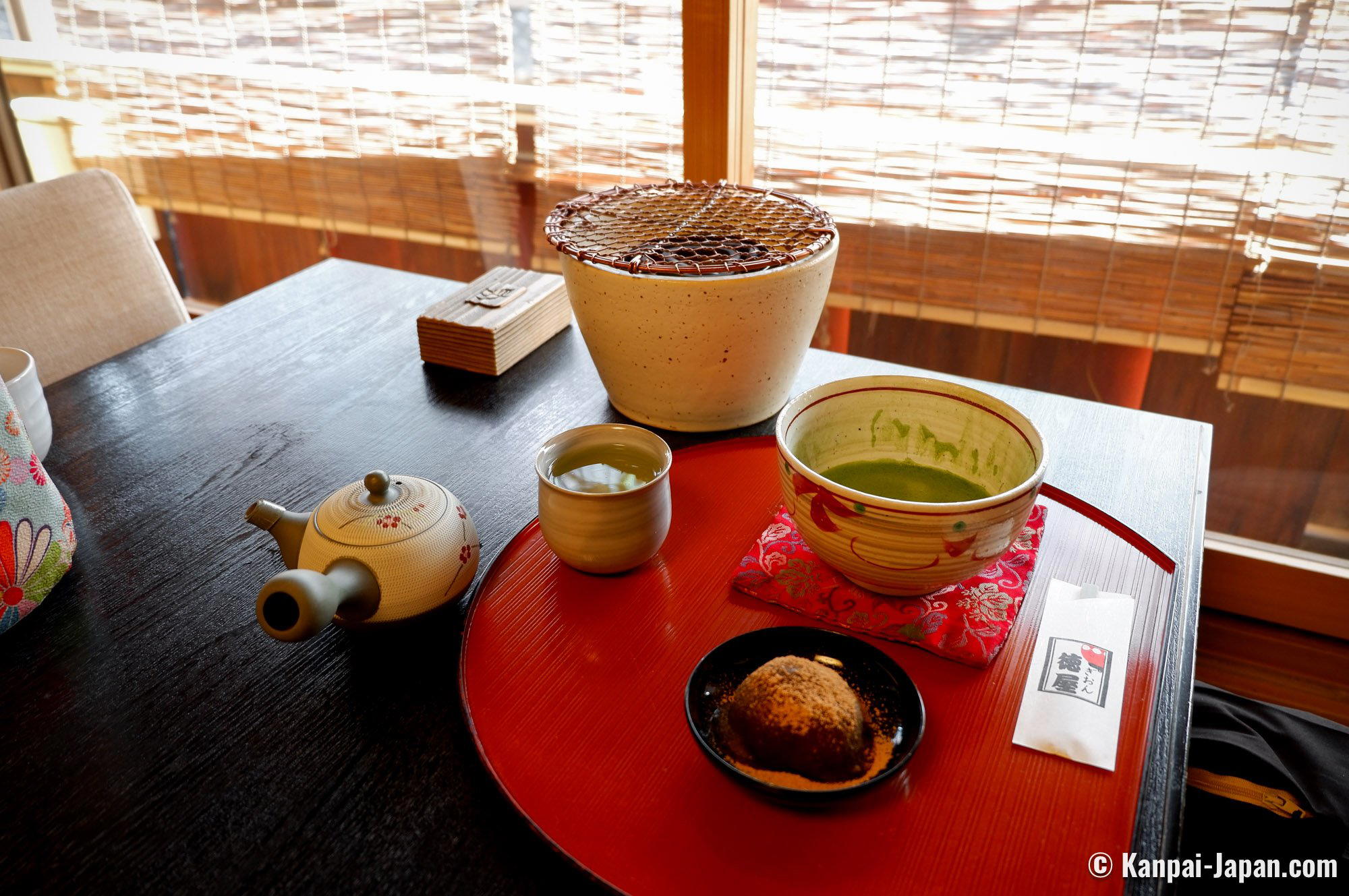
The menu
What to order
- Hon Warabi Mochi
- Kakigori
- Kuzumochi
- Yakimochi
Where Gion Sets the Terms
Arriving in Gion after dark, the shift in atmosphere is immediate. The lantern-lit streets between Shijo and Kennin-ji that draw tourists by day take on a different character once the crowds thin — quieter, more purposeful, the wooden lattice facades of the machiya closing off the outside world. It is in this compressed, historically layered neighbourhood that Gion Tokuya operates, and the location is not incidental. Gion is Kyoto's most architecturally intact geisha district, and the dining that has taken root here over generations reflects that particularity: small, careful, oriented toward a local sense of occasion rather than international spectacle.
That neighbourhood context matters more in Gion than almost anywhere else in Japan. The district sits east of the Kamo River, separated from Kyoto's commercial centre in a way that reinforces its self-contained character. Visitors who make the walk across Shijo Bridge or south from Yasaka Shrine arrive already conditioned by what surrounds them — the sound of wooden geta on stone, the glimpse of an ochaya teahouse door closing. The dining experience begins before anyone sits down.
The Kyoto Sweets Tradition Gion Tokuya Inhabits
Gion Tokuya is not a kaiseki restaurant. It operates in a category that Kyoto has cultivated as seriously as its multi-course dinner formats: the wagashi and traditional sweets counter, where matcha, warabi-mochi, and seasonal confections define the offering rather than dashi-based progressions. This is a meaningful distinction. Kyoto's wagashi tradition runs parallel to its kaiseki heritage, sharing the same commitment to seasonal precision and aesthetic restraint, but serving a different social function. Where kaiseki marks formal dining occasions, the sweets counter serves the quiet afternoon, the post-shrine visit, the moment between temples.
Gion draws a concentration of traditional sweets specialists precisely because the clientele and the cultural setting support them. The area's ochaya culture historically required refined confections for the tea ceremony circuit, and that legacy persists in the density of quality sweets shops operating within a few minutes of each other. Gion Sasaki anchors the formal kaiseki end of the neighbourhood's dining spectrum; Gion Tokuya occupies a different register entirely, accessible without the formality or the reservation lead times of the multi-Michelin-starred houses.
How This Fits the Broader Kyoto Dining Map
Kyoto's dining geography rewards visitors who understand the difference between neighbourhood types. The kaiseki institutions, Kikunoi Honten, Hyotei, and Mizai, operate at price points and formality levels that make them occasional-destination dining. Isshisoden Nakamura sits in a similarly refined register. These are not everyday propositions even for local residents, and they are not designed to be. Gion Tokuya functions at a different frequency, as part of the daily or incidental fabric of what Gion actually is for the people who live in and around it.
This is a pattern that appears across Japan's established culinary cities. In Osaka, high-concept dining at places like HAJIME coexists with deeply specialised single-format operators that serve one thing precisely and leave no room for expansion. In Tokyo, counters like Harutaka represent one pole of the dining spectrum; the afternoon tea and sweets culture represents another, and the two rarely compete. Akordu in Nara and Goh in Fukuoka each demonstrate how Japan's regional cities sustain serious, specific dining propositions that sit outside the formal tasting-menu hierarchy. Gion Tokuya fits within that broader pattern of disciplined specificity.
Further afield, the same principle of focused format applies across Japan's smaller cities and towns. Restaurants like this Nanao counter, this Sapporo kitchen, this Takashima specialist, and this Nishikawa Machi operator each anchor their format to a specific local context rather than chasing broader recognition. Birdland in Sakai and Bistro Ange in Toyohashi reinforce the same point. Internationally, Le Bernardin in New York and Atomix illustrate how the most durable dining institutions tend to be those that hold a clear lane rather than attempting to occupy multiple formats simultaneously.
Seasonality as Operating Principle
In Kyoto's sweets tradition, the calendar governs the menu with a rigour that matches kaiseki's seasonal philosophy. Warabi-mochi, the bracken-starch confection that softens and chills in summer, appears when the heat arrives and recedes when autumn does. Cherry blossom season brings confections designed around the visual language of hanami. Autumn sees chestnuts and persimmon incorporated into the sweets vocabulary. This is not seasonal marketing; it is the operative condition of the craft, a discipline that Kyoto's confectionery culture has maintained across generations.
For visitors calibrating their Kyoto trip around this kind of experience, timing matters. The spring and autumn peaks draw the heaviest foot traffic to Gion, and the most atmospheric late-afternoon window, after the main temple rush but before the evening kaiseki crowd arrives, tends to run from around 3pm to 5pm. Those planning a fuller picture of Kyoto's dining scene, from sweets counters to multi-course kaiseki, should consult our full Kyoto restaurants guide for neighbourhood-level routing.
Planning Your Visit
Gion Tokuya operates within the rhythms of the neighbourhood rather than against them, which means the queue dynamic depends heavily on what season and what time of day you arrive. Walk-in access is generally the format, which places it in a different operational category from the reservation-only kaiseki counters nearby. That accessibility is part of its function in the Gion dining ecosystem: it absorbs the afternoon visitor who wants an encounter with Kyoto's sweets tradition without the lead time and commitment that a formal kaiseki booking requires. The broader Gion area is walkable from Shijo-Kawaramachi station or accessible via taxi from central Kyoto within ten minutes.
Frequently asked questions
How does Gion Tokuya's menu change across the seasons?
Kyoto's wagashi tradition runs on a seasonal calendar that mirrors the rigour of kaiseki, and Gion Tokuya operates within that framework. Specific preparations shift as ingredients reach their peak, meaning a visit in spring will yield different confections than one in autumn or winter. For visitors planning a Kyoto itinerary, this makes the timing of a stop at Gion Tokuya worth considering alongside temple schedules and kaiseki reservations rather than treating it as an afterthought.
What dish is Gion Tokuya famous for?
Warabi-mochi is the confection most closely associated with Gion Tokuya — the bracken-starch preparation that sits at the centre of Kyoto's wagashi tradition. Unlike the rice-based mochi found across Japan, warabi-mochi has a distinct translucent quality and softer texture that Kyoto's sweets specialists treat with the same seasonal seriousness applied to kaiseki menus. The dish places Gion Tokuya firmly within the wagashi category rather than the dessert-café format common elsewhere in the city.
Can I walk in to Gion Tokuya?
Walk-in is the standard format at Gion Tokuya, which puts it in a different operational tier from Kyoto's reservation-required kaiseki counters. Queue length depends heavily on the season and time of day, with afternoons during peak periods — cherry blossom and autumn foliage seasons in particular — drawing the longest waits. Arriving outside those windows, or early in the afternoon on quieter days, typically reduces wait times considerably.
What's the standout thing about Gion Tokuya?
The combination of location and format specificity sets Gion Tokuya apart within Kyoto's sweets scene. Operating in Gion, a district with more accumulated historical weight than almost any other in Japan, means the context reinforces what's in the bowl rather than competing with it. The wagashi format is taken as seriously here as the multi-course dinner formats that draw international attention to Kyoto, without requiring a reservation or a kaiseki-level budget.
A Lean Comparison
Comparable venues nearby, for context on price, style, and recognition.
| Venue | Cuisine | Price | Awards | Notes |
|---|---|---|---|---|
| Gion TokuyaThis venue — the venue you are viewing | Traditional Japanese Desserts & Sweets | $10–20 | Tabelog 100 #62 | Not listed |
| Grill Kodakara (グリル小宝) | Retro Yoshoku (Japanese Western) | $10–20 | Tabelog 100 #49 | Okazaki, Retro Yoshoku (Japanese Western) |
| 德まる | Seasonal À La Carte Japanese | $100–150 | Michelin Plate | 中京区, Japanese Kappo |
| らく山 | Kyoto-style Izakaya Obanzai | $30–50 | Not listed | 下京区, Kyoto-style Izakaya Obanzai |
| Touhichi (らぁ麺 とうひち) | Chicken Shoyu Ramen | $10–20 | Michelin Bib Gourmand · Tabelog 100 #76 | Ichijoji, Chicken Shoyu Ramen |
| Sweets Cafe KYOTO KEIZO | Not listed | $10–20 | Tabelog 100 #87 | Nakagyō, Kyoto-style dessert café specializing in Mont Blanc |
Recognition history
Dated appearances from independent guides and award organizations, with the underlying list record or original source where available.
Tabelog 100 #62 · No. 62
Tabelog · Tabelog 100 - Japanese traditional sweets / Japanese sweets cafe - WEST - 2023
Continue exploring
More in Kyoto
Restaurants in Kyoto
Browse all →
Bars in Kyoto
Browse all →
Hotels in Kyoto
Browse all →
Wineries in Kyoto
Browse all →
Details
- Intimate
- Quiet
- Classic
- Cozy
- Elegant
- Solo
- Casual Hangout
- After Work
- Historic Building
- Standalone
- Sake Program
- Local Sourcing
- Street Scene
- A La Carte
- Counter Dining
- Matcha Tea
- Sake
- Premium Green Tea
- Vegetarian Friendly
Current opening hours
- Monday
- 12–6 pm
- Tuesday
- 12–6 pm
- Wednesday
- 12–6 pm
- Thursday
- 12–6 pm
- Friday
- 12–6 pm
- Saturday
- 12–6 pm
- Sunday
- 12–6 pm
Hours can change for holidays and private events. Last verified .
Peaceful and authentic with traditional Japanese aesthetics; first floor features bamboo shades (sudare) offering discreet views of Hanamikoji street and passing geisha.