
Tabelog 100 #49
Our verdict
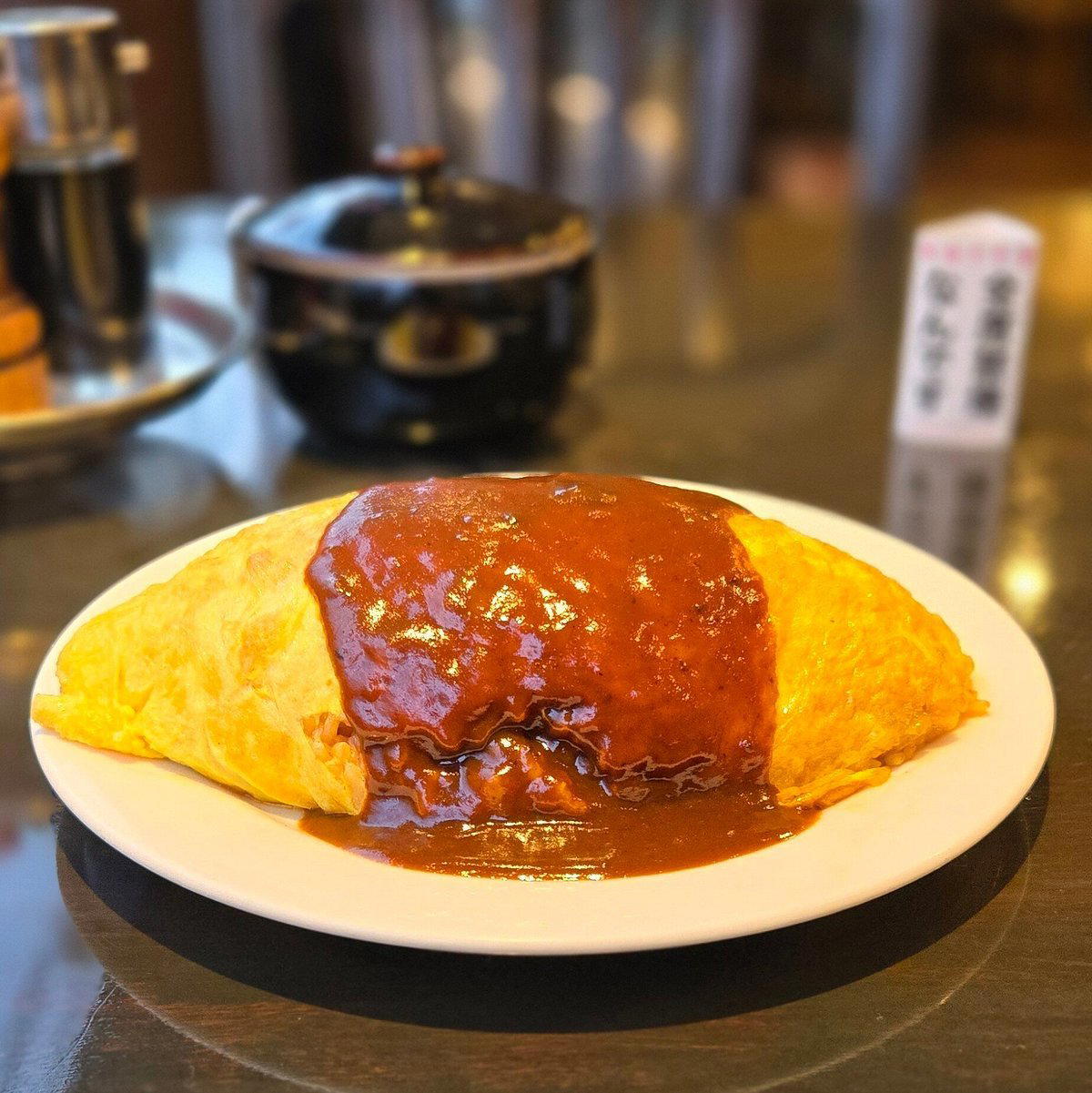
Grill Kodakara occupies a particular place in Kyoto's dining fabric: a Western-style yoshoku restaurant in the Okazaki district, where the grammar of continental cooking was absorbed into Japanese hands over generations. In a city more associated with austere kaiseki tradition, its register is different by design, familiar in form, rooted in local sensibility.

Pearl is the En Primeur Club membership app, where members save venues, book tables and use the concierge.
The menu
What to order
- Omurice
- Hamburg steak
- Fried shrimp
Where Western Cooking Took Root in a Kaiseki City
Kyoto's dining identity is built, above all else, on kaiseki. The city gave the world one of its most demanding culinary formats, seasonally driven, technique-intensive, rooted in temple cuisine and tea ceremony protocol. Venues like Gion Sasaki, Hyotei, and Kikunoi Honten represent that tradition at its most structured, with tasting menus calibrated to seasons, sourcing lineages, and Michelin recognition. That context makes Grill Kodakara's position in the city genuinely interesting. It operates in a different register entirely: the yoshoku tradition, the genre of Western-influenced Japanese cooking that arrived with the Meiji-era opening of Japan and was progressively absorbed, adapted, and made local over more than a century.
Yoshoku is not fusion in any contemporary sense of the word. It is something more historically specific, European techniques and dishes, reinterpreted through Japanese precision and ingredient sensibility until the result belongs fully to Japan. Omurice, hayashi rice, hamburg steak, cream croquettes: these are yoshoku standards, and their cultural weight in Japan is substantial. They carry the memory of the first generation of Western-trained Japanese chefs, of the European-inflected restaurants that once lined Tokyo's Ginza and Kyoto's Kawaramachi, of a moment when adapting foreign cooking was itself a form of national project.
The Okazaki Setting
Grill Kodakara sits in the Okazaki district of Sakyo Ward, one of the more culturally layered parts of Kyoto. The area is home to Heian Shrine, the Kyoto Municipal Museum of Art, and the clusters of galleries and institutions that have accumulated along the Okazaki canal. Visitors moving through this part of the city are doing so at a remove from the tourist compression of Gion or the station-adjacent commercial zones. The address, Okazaki Kitaigoshocho in the Sakyo district, places the restaurant in a neighbourhood where the pace is different, where residential streets intersect with cultural institutions, and where a decades-old Western-style restaurant fits into the fabric without incongruity.
That residential-meets-institutional character is worth noting because it shapes who eats at a place like this. Yoshoku restaurants at this level are not primarily tourist destinations. They are neighbourhood anchors, sustained by regular customers across generations. For visitors, that dynamic is itself part of the interest: a room oriented around local continuity rather than visitor throughput carries a different social texture.
The Yoshoku Tradition in Kyoto's Culinary Hierarchy
It would be easy to frame yoshoku restaurants as a tier below kaiseki in Kyoto's culinary order. That framing misunderstands what yoshoku actually is at its finest. The technical demands of a well-made demi-glace, a properly rested hamburg steak, or a cream croquette with clean, un-greasy breading are not trivial. The category rewards consistency over the kind of seasonal variation that kaiseki demands, and longevity in a yoshoku restaurant is its own form of credential. A kitchen that has been making the same preparations for decades, refining them against the expectations of returning customers rather than the novelty appetite of newcomers, develops a different kind of discipline.
In this sense, Grill Kodakara belongs to a set of Kyoto dining institutions that are understood locally as custodians of a particular form. They exist alongside, not below, the kaiseki tradition, serving a different cultural function. Where venues like Mizai or Isshisoden Nakamura operate within the formal kaiseki grammar, a place like Grill Kodakara maintains a different inheritance: the Western culinary forms that Japan made its own.
That inheritance is not unique to Kyoto. Across Japan, long-running yoshoku restaurants represent a particular strand of dining culture that sits apart from both formal Japanese cuisine and contemporary European fine dining. HAJIME in Osaka operates at a different extreme of the Western-technique-in-Japan spectrum, with three Michelin stars and a deeply contemporary idiom. Yoshoku restaurants like Grill Kodakara are not in that competitive set; they occupy a different cultural register where the value is continuity and craft, not innovation.
Reading Grill Kodakara Against Japan's Broader Restaurant Culture
Japan has a category of restaurant that food culture in other countries rarely produces: the long-established, specialist venue that serves a narrow menu with extraordinary consistency over decades, sustained by regulars and regarded locally as an institution without needing external validation to maintain that status. This category spans sushi counters, soba specialists, tonkatsu houses, and yoshoku restaurants alike. The logic is the same across all of them: depth over breadth, repetition refined into mastery.
That pattern appears across Japan's regional dining scenes. Places like Goh in Fukuoka and akordu in Nara each represent that principle in their own format. Even internationally, the comparison holds: the durability of a Le Bernardin in New York City or the focused discipline of Atomix rests on a similar commitment to sustained identity over time. In Japan, however, this form of institutional longevity carries particular cultural weight, the restaurant that does not change its menu because the menu is already right is a specific archetype with real standing.
Grill Kodakara, in the Okazaki district, reads as that archetype for yoshoku in Kyoto. It is worth understanding it as such before visiting: the expectation should be set around consistency and tradition, not around the kind of seasonal or creative variation that other Kyoto restaurants produce. See the full Kyoto restaurants guide for broader context on where Grill Kodakara sits within the city's dining options across categories and price points.
For those building a Kyoto itinerary that extends beyond kaiseki, the yoshoku category is a genuine addition to the picture. It fills a different appetite, not literally, but culturally. A meal at a place like this, in the Okazaki neighbourhood on a weekday afternoon, surrounded by regular customers rather than fellow tourists, offers access to a part of Kyoto's food culture that the city's international reputation does not foreground. That is, by any measure, a meaningful distinction.
Know Before You Go
- Address: 左京区岡崎北御所町46, 京都市, 京都府, 606-8336
- District: Okazaki, Sakyo Ward, Kyoto
- Category: Yoshoku (Western-style Japanese cuisine)
- Booking: Contact the restaurant directly; walk-in availability not confirmed
- Nearest landmark: Heian Shrine, Okazaki area
- Language: Japanese-language menus are typical at neighbourhood restaurants in this district; bringing a translation tool is advisable
Frequently asked questions
Where exactly is Grill Kodakara (グリル小宝)?
Grill Kodakara (グリル小宝) is located at 左京区岡崎北御所町46, 京都市, 京都府, 606-8336, Kyoto.
How does Grill Kodakara compare to other yoshoku restaurants in Kyoto's Okazaki area?
Grill Kodakara sits in one of Kyoto's more culturally concentrated districts, sharing the Okazaki neighbourhood with Heian Shrine and several of the city's major museums, a setting that brings a steady flow of visitors alongside a local residential base. Yoshoku restaurants in Kyoto occupy a distinct position from the city's kaiseki tradition: they are specialist venues built around Western-influenced Japanese cooking that took root during the Meiji and Taisho periods. Grill Kodakara's address at 岡崎北御所町46 places it within that neighbourhood fabric rather than in the tourist-facing corridors of central Kyoto.
What should I order at Grill Kodakara (グリル小宝)?
Yoshoku menus like the one at Grill Kodakara are typically anchored by a short roster of preparations that have been refined over many years: hamburg steak, omurice, and demi-glace-sauced dishes are the usual pillars. These restaurants earn their reputation not through seasonal rotation but through the consistency of a narrow menu executed repeatedly. Arriving with a clear order in mind is advisable, the kitchen's strength is in its core repertoire, not improvisation.
Is Grill Kodakara (グリル小宝) reservation-only?
No confirmed booking policy has been published for Grill Kodakara. In the Okazaki district of Kyoto's Sakyo Ward, neighbourhood yoshoku restaurants of this type often operate on a walk-in basis during lunch service, with queues forming at peak hours. Arriving at opening time is a reliable strategy for smaller Western-style venues in this part of the city.
Awards and Standing
Comparable venues nearby, for context on price, style, and recognition.
| Venue | Cuisine | Price | Awards | Notes |
|---|---|---|---|---|
| Grill Kodakara (グリル小宝)This venue (the venue you are viewing) | Retro Yoshoku (Japanese Western) | $10–20 | Tabelog 100 #49 | Not listed |
| Coco Hana | Modern Japanese Organic Cafe | $20–30 | Not listed | Kita |
| 3TOKU6MI Shijo karasuma ten | Japanese Izakaya & Oden Standing Bar | $30–50 | Tabelog 100 #30 | Shimogyō |
| Petit Restaurant Naitou | Seasonal yoshoku and tonkatsu | $30–50 | Tabelog 100 #63 | Nakagyō |
| Akagakiya | Classic Kyoto Izakaya | $30–50 | Tabelog 100 #70 | Sakyō |
| Yoshokudo Noro | Japanese Yoshoku (Western-Style Cuisine) | $30–50 | Tabelog 100 #97 | Nakagyō |
Recognition history
Dated appearances from independent guides and award organizations, with the underlying list record or original source where available.
Tabelog 100 #49 · No. 49
Tabelog · Tabelog 100 - Yoshoku - WEST - 2025
Continue exploring
More in Kyoto
Restaurants in Kyoto
All restaurants in Kyoto →
Bars in Kyoto
All bars in Kyoto →
Hotels in Kyoto
All hotels in Kyoto →

Wineries in Kyoto
Browse all →
Details
- Retro
- Classic
- Cozy
- Casual Hangout
- Historic Building
- A La Carte
Old-fashioned retro ambiance with inviting and nice atmosphere as noted in guest reviews.