ìµìºì°ì
Our verdict
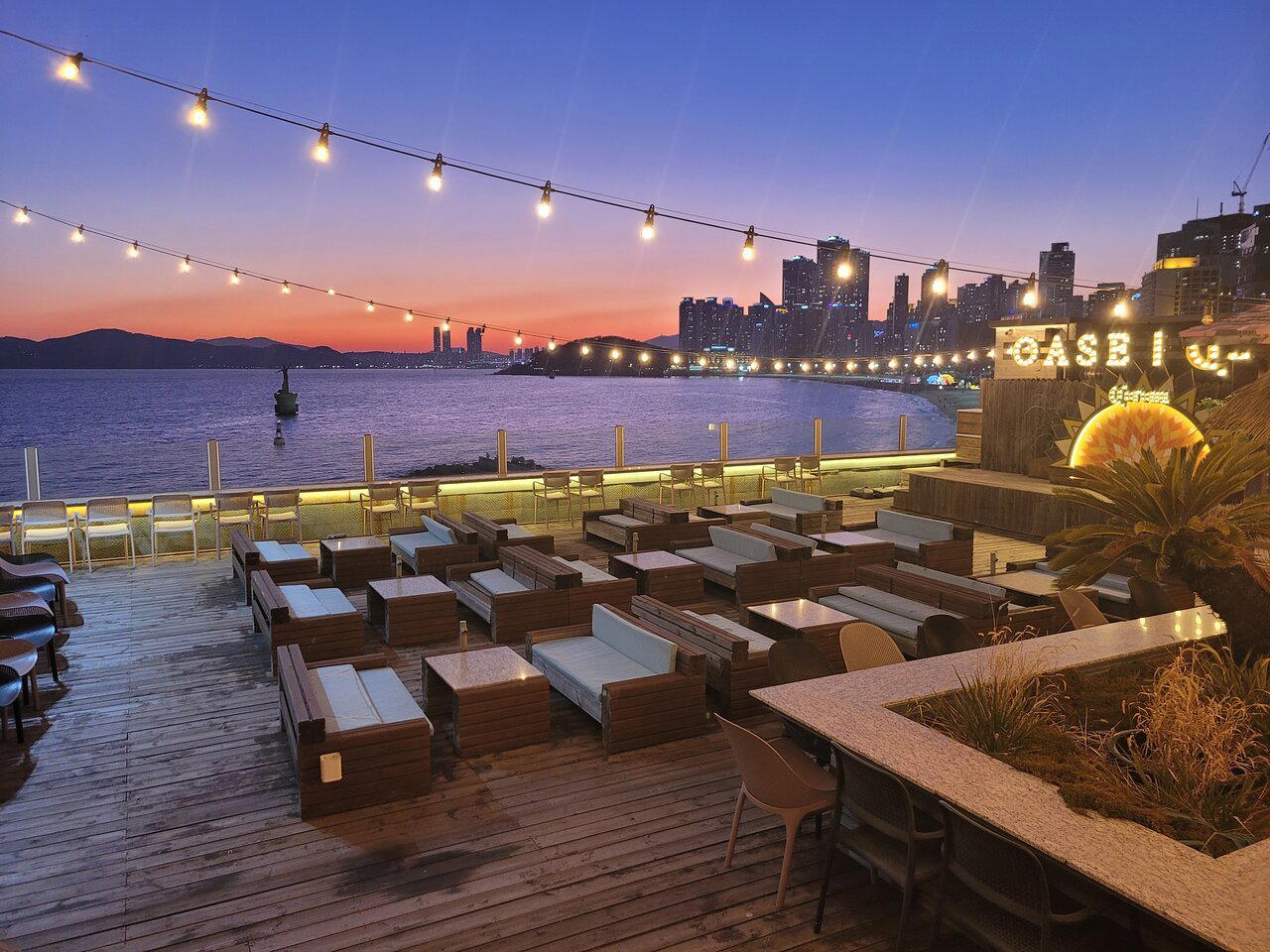
Located along Gwanganhaebyeon-ro in Busan's Suyeong-gu district, 옥캐빈 sits within reach of the Gwangalli waterfront, where the city's more considered dining scene has quietly taken shape. The address alone places it inside a neighbourhood that skews toward atmosphere and intention rather than volume. A visit here is a read on where Busan's restaurant culture is heading.

Pearl is the En Primeur Club membership app, where members save venues, book tables and use the concierge.
Suyeong-gu and the Gwangalli Dining Shift
Busan's dining geography has reorganised steadily over the past decade. Haeundae still draws the headline crowds, but Suyeong-gu, anchored by the Gwangalli waterfront and its low-rise residential grid, has become the address of choice for restaurants that prioritise a considered atmosphere over foot-traffic volume. The stretch of Gwanganhaebyeon-ro where 옥캐빈 sits reflects that reordering: quieter than the beachfront strip, close enough to the water to carry that particular coastal light, and surrounded by the kind of neighbourhood texture that rewards slow exploration rather than a dash between destinations.
This part of the city operates differently from Busan's traditional dining centres. Where Nampo-dong and the areas around Jagalchi have historically traded on density and heritage, Suyeong-gu venues tend to compete on atmosphere and specificity. The physical approach to 옥캐빈, along a street that narrows as it moves away from the main arterial, sets a tone before you reach the door. That quality of arrival, the gradual shift from the city's ambient noise to something more contained, is not incidental in a neighbourhood that has learned to make space do editorial work.
Where This Venue Sits in Busan's Current Tier Structure
Busan's restaurant market has stratified more sharply in recent years. At one end, single-dish specialists like 100.1. Pyeongnaeng and 1969 Buwondong Kalguksu anchor the ₩ tier with deep craft and long queues. At the other end, the ₩₩₩₩ category is represented by venues like Born and Bred, where the proposition is a premium product in a fully resourced environment. The middle tiers, represented by venues like Palate at ₩₩ and Mori at ₩₩₩, are where the most interesting positioning decisions are being made, and where the wine and beverage program increasingly functions as a differentiator rather than an afterthought.
That last point matters for understanding 옥캐빈's Suyeong-gu context. Across South Korea's emerging fine-casual tier, the cellar and glass program has become a signal of institutional seriousness. At venues like Mingles in Seoul and internationally at Atomix in New York City, beverage curation now functions as a primary editorial statement, not a secondary amenity.
The Wine Program as Editorial Statement
South Korea's relationship with wine has matured faster than most markets anticipated. A decade ago, the working assumption was that imported wine in Korean restaurants functioned primarily as a status object; the label mattered more than the vintage or the producer's approach. That has shifted, particularly in cities like Busan and Seoul, where a younger dining demographic has developed genuine fluency in regional European wine, natural and low-intervention producers, and the logic of pairing against Korean flavour profiles rather than defaulting to international conventions.
In this context, how a venue in Suyeong-gu curates its glass and bottle selection carries real weight. The most credible programs in this tier tend to avoid the obvious: heavy Bordeaux-first lists assembled for visual authority rather than drinking pleasure, or safe-by-consensus selections that give diners no particular reason to trust the house's palate. The more interesting approach, and the one that aligns with where the Korean dining public is heading, involves a mix of depth in one or two regions, genuine engagement with producer provenance, and enough range in price-per-glass to allow for both considered pairings and accessible entry points. Venues that get this balance right position themselves differently from those that treat the list as a formality.
For comparative context outside Korea, the wine-as-anchor-program model is well-established at restaurants like Le Bernardin in New York City, where the cellar is treated as a parallel editorial program to the kitchen. The ambition in that model is not necessarily replicable at every price tier, but the underlying principle, that the list should reflect a point of view, not just a procurement decision, travels across markets and price brackets. Busan's more ambitious mid-tier venues are beginning to operate from that same premise.
Busan in the Broader Korean Dining Context
Reading 옥캐빈 against the national picture adds useful calibration. South Korea's regional dining scene has expanded beyond Seoul more deliberately than is sometimes acknowledged outside the country. In Jeju, venues like Badang Lounge and the product-focused BBQ at Black Pork BBQ in Seogwipo show that the island has developed a distinct dining identity that goes beyond its agricultural reputation. In Suwon, Doosoogobang represents a tradition-anchored approach that has found a national audience. And in Gyeongju, the food culture documented at Hwangnam Bread and Busan Steamed Bun is as much about historical continuity as it is about the food itself.
Busan sits in this picture as the second city with the most fully developed restaurant infrastructure outside Seoul. The range runs from casual specialists like 88돼지 and Gobojeong Galbi to more formally structured contemporary venues. Dining Room (다이닝룸) and Hinode (히노데) represent the more structured end of that range. Gyeongju Wonjo Kongguk is a reminder that the most compelling dining in this part of the country sometimes operates entirely outside the formal tier structure. 옥캐빈's Suyeong-gu location places it in a part of Busan that is still defining its restaurant identity, which is precisely why the choices being made there matter. For a fuller picture of where to eat across the city, the EP Club Busan restaurants guide maps the range.
Planning a Visit
The address at 10 Gwanganhaebyeon-ro 277beon-gil, Suyeong-gu places 옥캐빈 within reasonable distance of the Gwangalli area's transport connections, though arriving by taxi or rideshare from central Busan is the most direct option for visitors unfamiliar with the neighbourhood's street layout. No booking data is currently held in the EP Club database, so contacting the venue directly to confirm reservation policy, current hours, and any seasonal adjustments before visiting is advisable.
Frequently asked questions
What part of town is ìµìºì°ì in?
ìµìºì°ì is located at 10 Gwanganhaebyeon-ro 277beon-gil, Suyeong-gu, Busan, South Korea, Busan.
Is ìµìºì°ì reservation-only?
Reservations are recommended for ìµìºì°ì in Busan. Confirm current policy via the venue's official channels.
What's ìµìºì°ì best at?
ìµìºì°ì is best approached by focusing on the core concept and signature offerings.
Side-by-Side Snapshot
A quick snapshot of similar venues for side-by-side context.
| Venue | Cuisine | Price | Awards | Notes |
|---|---|---|---|---|
| ìµìºì°ìThis venue (the venue you are viewing) | Korean BBQ (Samgyeopsal) | $20–30 | Not listed | Not listed |
| Palate | Contemporary French with Korean Fusion | $150–200 | 1 Michelin Star · La Liste Top Restaurants | Contemporary |
| Mori | Japanese Kaiseki | $200–300 | 1 Michelin Star | Japanese |
| Born and Bred | Modern Hanwoo Beef Omakase Steakhouse | $100–150 | Michelin Plate · World's 50 Best #51 | Steakhouse |
| 100.1. Pyeongnaeng | Pyongyang-style Naengmyeon | $10–20 | Michelin Bib Gourmand | Naengmyeon |
| Anmok | Modern Korean Dwaeji-Gukbap | $10–20 | Michelin Bib Gourmand | Dwaeji-gukbap |
Continue exploring
More in Busan
Restaurants in Busan
All restaurants in Busan →
Bars in Busan
All bars in Busan →
Details
- Cozy
- Intimate
- Classic
- Group Dining
- Casual Hangout
- Family
- Beer Program
- Sake Program
- A La Carte
- Soju
- Beer
- Vegetarian Friendly
Warm and inviting with dim lighting, wooden interiors, and the smoky aroma of grilling meats creating a homely Korean BBQ atmosphere.