1969 Buwondong Kalguksu

A Busan institution that has survived multiple relocations without changing a single thing on the menu, 1969 Buwondong Kalguksu serves two dishes: kalguksu and mandu. The house-made noodles carry a firm, chewy texture in a clear, deeply savoury broth, while the bibim kalguksu delivers the bold, tangy heat associated with Busan's street-food tradition. Larger portions are available at no additional charge.
Pearl is the En Primeur Club membership app — saves, bookings, and concierge access live there. Same editors, same standards.
- Address
- 3 Gudeok-ro 22 beon-gil, Jung-gu
- Phone
- +82 51-242-9909
- Directions
- Get directions
 Saves & bookings on Pearl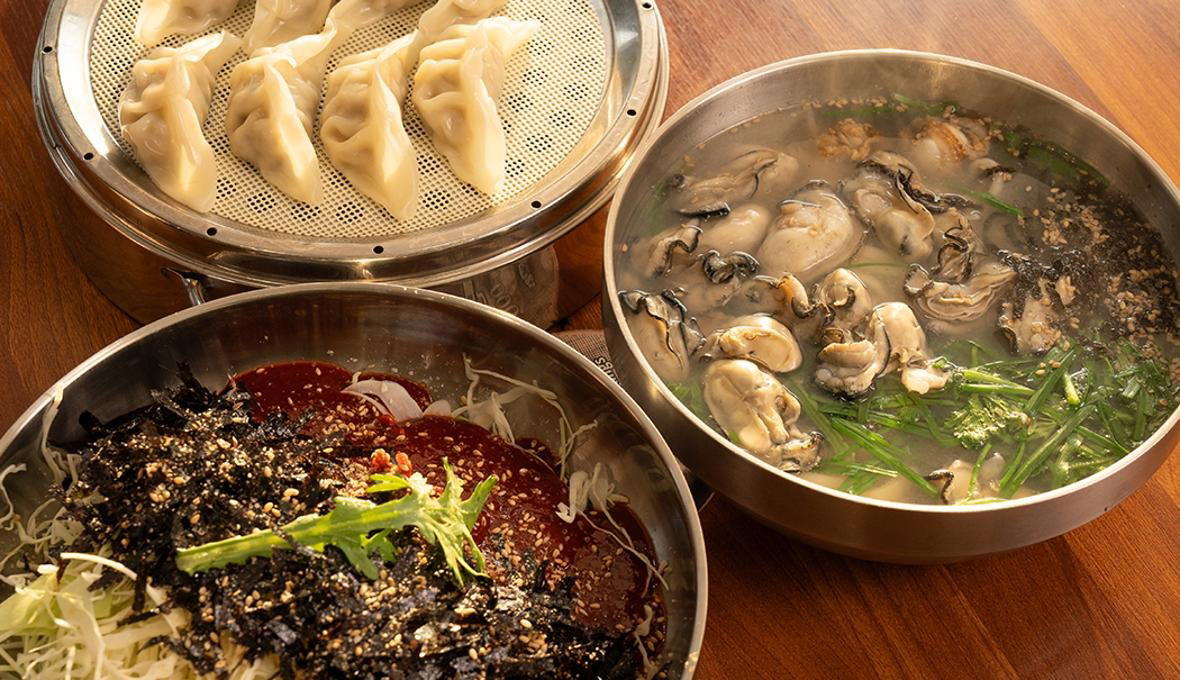
Where Busan's Noodle Tradition Holds Its Ground
Jung-gu sits at the older, hillier core of Busan, where the city's port-era commercial identity is still readable in the compressed street grids and low-rise shopfronts along Gudeok-ro. This is not the Busan of Haeundae's hotel strip or Seomyeon's department-store dining. It is the part of the city where longevity is its own form of credibility, and where restaurants earn their reputation through repetition rather than reinvention. 1969 Buwondong Kalguksu has kept the menu entirely intact across every iteration.
That resistance to change is worth examining in the context of Korean noodle culture. Kalguksu, literally 'knife-cut noodles,' is one of the older preparations in the Korean grain canon, a dish whose quality depends almost entirely on the discipline of the production process: dough hydration, resting time, the thickness and regularity of the cut, and the depth of the broth. There are no herbs to hide behind, no garnish to compensate for a weak stock. The bowl tells you everything immediately. This is why Busan's most credible kalguksu houses tend to be old ones, where the same preparation has been repeated so many thousands of times that consistency is structural rather than aspirational.
The Logic of the Two-Dish Menu
The menu at 1969 Buwondong Kalguksu lists two items: kalguksu and mandu. In the broader context of Korean specialist restaurants, this kind of deliberate narrowness signals something specific. It is the same logic that governs the leading naengmyeon houses (see 100.1. Pyeongnaeng for Busan's cold-noodle equivalent) and the gukbap specialists such as Anmok: depth through restriction. When a kitchen commits to two preparations for several decades, the margin for error collapses, and the standard either rises to meet that pressure or the restaurant does not survive. The fact that this one has survived, through multiple relocations and across generational changes in the city's dining habits, suggests the standard held.
The kalguksu itself is built around house-made noodles, produced in-house rather than sourced pre-cut from a supplier. This distinction matters more than it might appear. Commercial kalguksu noodles are consistent but uniform; they carry a predictable texture that serves the bowl without defining it. Hand-cut noodles produced on-site have slight variations in thickness that change how they absorb broth along their length, and the firmness described in accounts of this restaurant, a chewy resistance that holds through the full bowl rather than softening into the stock, is the characteristic product of dough cut and served on the same day. The broth is clear and deeply savoury, which in Korean cooking terms suggests a long-cooked stock built on dried seafood, anchovy, or a combination of both, clarified through controlled simmering rather than filtered.
Mandu, the restaurant's second offering, functions as a companion order rather than a separate meal, and in most traditional contexts at this type of establishment they would be boiled dumplings sharing the same broth logic as the noodles.
Bibim Kalguksu as a Busan-Specific Register
Bibim version of kalguksu at 1969 Buwondong represents a preparation more particular to Busan's food culture than the broth-based bowl. Where the standard kalguksu draws on a tradition shared broadly across Korea's inland regions, bibim kalguksu, with its bold, tangy heat and dry sauce coating the noodles rather than submerging them, reflects the port city's appetite for aggressive seasoning and its familiarity with fermented and spiced condiments. The flavour profile is described in accounts of this restaurant as distinctly Busan in character, which in practical terms means more chilli presence, a sharper acidic note, and a less delicate structure than the broth bowl.
For diners coming from the upper tiers of Busan's restaurant scene, whether the contemporary programs at Palate, the Japanese precision of Mori, or the premium protein focus at Born and Bred, 1969 Buwondong occupies a categorically different position. This is not a restaurant where technique is displayed or a tasting format creates a narrative arc. It is a specialist production house that has chosen two preparations and repeated them at high volume across six decades. The comparison is not with Busan's contemporary dining set but with establishments like Baegyangsa Temple in Jangseong-gun, where the value is in a preparation carried forward with fidelity.
Portion Sizing and the Guest Logic
A larger portion can be requested at no additional charge. In the context of a restaurant serving a two-dish menu at what is almost certainly a price point comparable to Busan's other traditional specialists, this is a meaningful piece of information for how the kitchen thinks about its guests. It is a practice common in older Korean noodle houses where generosity in portion is understood as part of the value proposition, not a premium add-on.
The Jung-gu address places 1969 Buwondong within reach of the city's older commercial and market quarters.
For a fuller picture of where 1969 Buwondong fits within the city's food geography, the broader Busan dining scene spans neighbourhoods and price tiers. For international reference points in the specialist tradition, the sustained consistency model here has loose parallels with the longevity-defined credibility of institutions like Le Bernardin in New York City or Emeril's in New Orleans, though the format and price tier differ entirely. Closer in spirit to the Korean specialist tradition are the tasting-forward but tradition-rooted programs at Kwon Sook Soo in Gangnam-gu and the regional cooking at The Flying Hog in Seogwipo.
Quick Comparison
Comparable venues nearby, for context on price, style, and recognition.
| Venue | Cuisine | Price | Awards | Notes |
|---|---|---|---|---|
| 1969 Buwondong KalguksuThis venue — the venue you are viewing | Traditional Busan Kalguksu | $ | Michelin Plate | Not listed |
| Pyeongsanok | Traditional Korean Boiled Pork and Noodles | $ | Michelin Plate | Choryang 1(il)-dong |
| Jin Dweji Gomtang | Modern Dwaeji Gomtang | $ | Michelin Plate | Millak-dong |
| Namagjib | Korean Pork Bone Soup Specialist | $ | Not listed | Daeyeon 3(sam)-dong |
| Damiok | Pyeongyang Naengmyeon | $$ | Bib Gourmand | Gaegeum 1(il)-dong |
| Pyeongyangjip | North Korean-style Mandu | $$ | Michelin Plate | Deokcheon 2(i)-dong |
Recognition history
Dated appearances from independent guides and award organizations, with the underlying list record or original source where available.
Michelin Plate
Michelin · 2026 Michelin Plate
Continue exploring
More in Busan
Restaurants in Busan
Browse all →
At a Glance
- Classic
- Cozy
- Casual Hangout
- Family
- Standalone
Current opening hours
- Monday
- 10:50 AM–7:30 PM
- Tuesday
- 10:50 AM–7:30 PM
- Wednesday
- 10:50 AM–7:30 PM
- Thursday
- 10:50 AM–7:30 PM
- Friday
- 10:50 AM–7:30 PM
- Saturday
- 10:50 AM–7:30 PM
- Sunday
- 10:50 AM–7:30 PM
Hours can change for holidays and private events. Last verified .
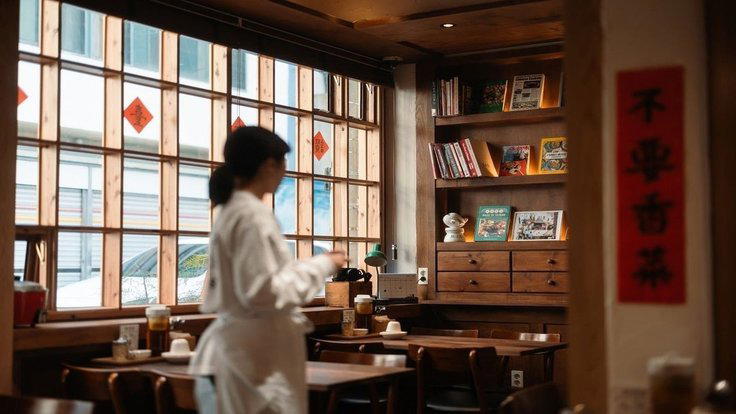
Cozy local eatery preserving traditional flavors with a simple, focused atmosphere.