íì°ì¥
Our verdict
Situated at 26 Choryangjung-ro in Busan's Dong-gu district, 이차장 occupies a neighbourhood where working-class dining traditions run deep. Compared to the contemporary formats at Palate or the premium Japanese counter at Mori, this address belongs to a different register entirely, one rooted in locality, repetition, and the kind of institutional trust that accrues over years rather than press cycles.

Pearl is the En Primeur Club membership app, where members save venues, book tables and use the concierge.
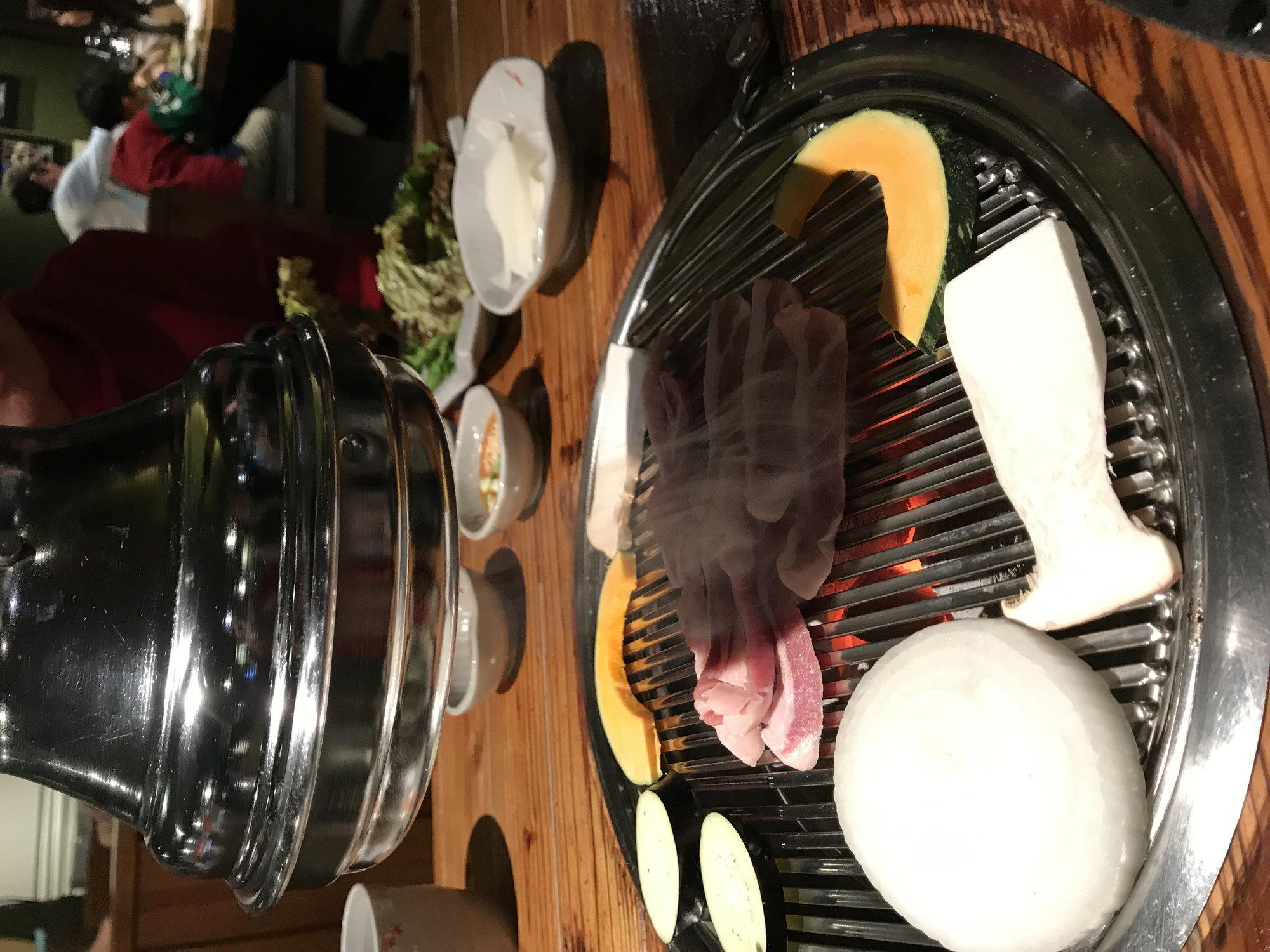
The menu
What to order
- Dongnae pajeon
Dong-gu's Dining Register: Where Choryangjung-ro Sits in Busan's Food Ecosystem
Busan's culinary identity is not singular. The city operates across several distinct registers simultaneously: premium contemporary formats drawing fine-dining visitors, the steakhouse tier anchored by places like Born and Bred, and a deeper stratum of neighbourhood-rooted institutions that sustain local eating culture largely outside the critical conversation. Dong-gu belongs to that third tier. Choryangjung-ro, the address where 이차장 is located, runs through a district that carries the physical and cultural imprint of post-war settlement, labour migration, and the kind of community eating that doesn't need a PR strategy to fill seats. Understanding the street is, in many ways, the prerequisite for understanding what this category of Busan dining represents.
The contrast with Busan's more visible food addresses is instructive. Palate operates at a contemporary mid-range register, while Mori positions itself at the premium Japanese counter end. Both serve a dining public that is, at least partly, seeking novelty or craft performance. Choryangjung-ro addresses, including 이차장, tend to serve a different need: consistency, familiarity, and the social function of a neighbourhood table that has been there long enough to feel structurally necessary.
The Sustainability Logic Built Into Tradition
Korean food culture, particularly in cities like Busan where proximity to the sea shapes ingredient sourcing on a daily basis, has long operated according to principles that more recent sustainability discourse tends to rebrand as progressive. The use of whole ingredients, minimal processing, fermentation-led preservation, and hyper-local procurement aren't choices made in response to environmental fashion, they're the inherited logic of a cuisine that developed under conditions of scarcity and seasonality. Restaurants operating in Dong-gu's traditional dining ecosystem tend to reflect this unselfconsciously.
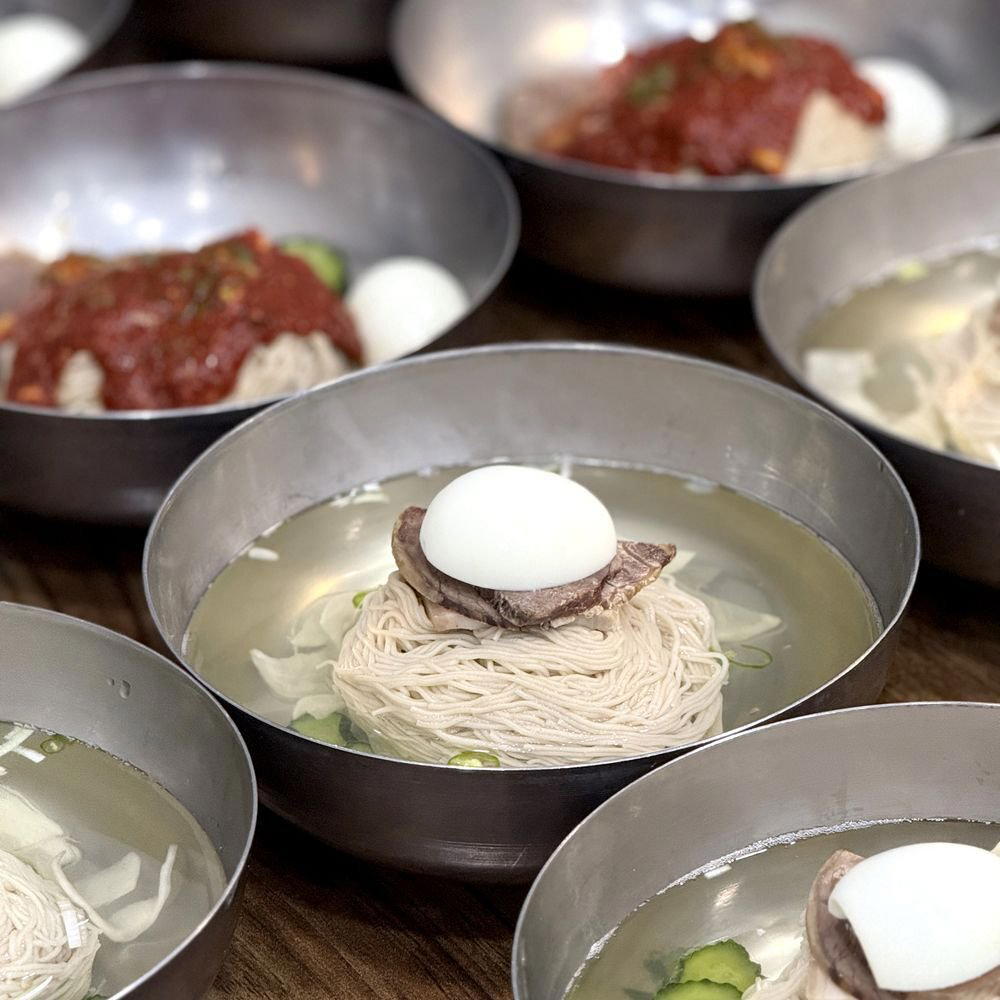
Across Korean food culture, the most ecologically coherent kitchens are often not the ones announcing zero-waste credentials, but the ones running on the same ingredient logic their predecessors used. Dwaeji-gukbap, the pork-and-rice soup tradition that defines much of Busan's breakfast and lunch economy, is structurally a whole-animal dish: the broth is built from bones and offcuts, the toppings from parts of the pig that would otherwise require a deliberate culinary framework to use respectably. The economics and the ethics point in the same direction. Comparable logic applies to naengmyeon, where buckwheat discipline and broth-forward cooking leave minimal waste, a format well represented elsewhere in the Busan scene at places like 100.1. Pyeongnaeng. For the full context of how these traditions layer across the city, our full Busan restaurants guide maps the terrain in detail.
Neighbourhood institutions in this district tend to source from the same suppliers across years or decades, creating supply chain stability that industrial restaurant models rarely achieve. The sustainability argument here is structural rather than performative, an important distinction when assessing what these addresses actually contribute to Busan's food ecosystem.
Dong-gu in the Context of Busan's Broader Korean Dining Conversation
Busan's position within the national dining hierarchy has shifted in the past decade. Seoul remains the reference point for fine-dining ambition, Mingles in Seoul and Atomix in New York City represent the ends of a spectrum where Korean culinary intelligence is repackaged for international recognition. Busan's traditional addresses operate on a different value system: the question is not what credentials the kitchen holds, but whether the food has remained worth returning to. That longevity test is, arguably, a more demanding one over time.
The regional dimension matters here. Busan's food culture shares lineage with Jeju's emphasis on local sourcing, a thread visible at places like 88돼지 in 제주시 and Black Pork BBQ in Seogwipo, and with the market-to-table discipline found in Gyeongju's traditional food economy, where addresses like Gyeongju Wonjo Kongguk and Hwangnam Bread and Busan Steamed Bun reflect the same low-intervention, ingredient-forward ethos. These are not isolated phenomena, they're part of a regional food culture that never required the intervention logic now fashionable in Western sustainability discussions.
The Suwon parallel is also worth noting. Addresses like Gobojeong Galbi #1 in 수원시 and Doosoogobang in Suwon demonstrate how provincial Korean cities sustain food institutions across generations without critical infrastructure support, no Michelin inspectors, no 50 Best nominations, purely through repeat local patronage. Dong-gu's dining addresses, including 이차장, operate in an analogous ecosystem.
At 26 Choryangjung-ro, 이차장 sits within a district where the competitive set is defined not by price tier or critical recognition but by institutional staying power. The comparison point is not Dining Room (다이닝룸) or the contemporary formats reshaping parts of Busan's food scene, but rather addresses like 1969 Buwondong Kalguksu, which has built its reputation on the kind of handmade-noodle consistency that takes years to establish and survives on neighbourhood word of mouth rather than digital visibility. That is the peer register relevant here.
For visitors arriving from outside Busan, the practical approach to Dong-gu addresses is direct: these restaurants are generally accessible by subway to Choryang station, they tend to operate daytime hours aligned with the district's working patterns, and they function without reservation infrastructure, walk-in being the default format. The experience is transactional in the leading sense: you arrive, you eat what the kitchen is built around, and you leave having consumed something that has been refined by repetition rather than reinvention. Addresses like Badang Lounge in Jeju or Hinode in 서귀포시 operate in similarly unpretentious registers within their respective cities, and the format logic is comparable.
The fish market corridor and the port-adjacent neighbourhoods of Dong-gu supply the district's restaurants with the kind of daily procurement cycle that makes ingredient freshness less a marketing claim and more an operational reality. This proximity to source is the structural sustainability asset that no certification process can replicate, and it is what gives Choryangjung-ro addresses a claim on ecological coherence that purpose-built sustainable dining concepts often cannot match in practice. For the wider Korean dining frame, Le Bernardin in New York City represents the opposite end of the sourcing-to-execution spectrum, a useful contrast when calibrating what ingredient-forward discipline looks like across different culinary registers and price tiers.
Practical Notes for Visiting Dong-gu
Choryang station on Busan Metro Line 1 puts visitors within reasonable walking distance of the Choryangjung-ro strip. The district's dining addresses are concentrated enough that a lunch visit can reasonably cover the immediate area without significant transit. Walk-in access is the norm for this category of restaurant; reservations are neither expected nor typically available. Visiting on a weekday aligns better with the district's natural rhythm, which is built around local workers rather than weekend tourism. Dress is entirely informal, this is a neighbourhood eating district, not a dining destination in the performance sense.
Frequently asked questions
Where do I go for íì°ì¥?
íì°ì¥ is located at 26 Choryangjung-ro, Dong-gu, Busan, South Korea, Busan.
What's the best thing to order at 이차장?
What the Choryangjung-ro address in Dong-gu does indicate is proximity to the Jagalchi market supply corridor, which historically shapes Korean port-district kitchens toward seafood-forward preparations and daily-catch sourcing. Arriving and asking what came in that morning is the standard approach in restaurants of this type.
How hard is it to get a table at íì°ì¥?
Reservations are recommended for íì°ì¥ in Busan. Confirm current policy via the venue's official channels.
What do critics highlight about íì°ì¥?
íì°ì¥ is best approached by focusing on the core concept and signature offerings.
A quick peer reference to anchor this venue in its category.
| Venue | Cuisine | Price | Awards | Notes |
|---|---|---|---|---|
| íì°ì¥This venue (the venue you are viewing) | Traditional Korean Pajeon | $10–20 | Not listed | Not listed |
| Palate | Contemporary French with Korean Fusion | $150–200 | 1 Michelin Star · La Liste Top Restaurants | Contemporary |
| Mori | Japanese Kaiseki | $200–300 | 1 Michelin Star | Japanese |
| Born and Bred | Modern Hanwoo Beef Omakase Steakhouse | $100–150 | Michelin Plate · World's 50 Best #51 | Steakhouse |
| 100.1. Pyeongnaeng | Pyongyang-style Naengmyeon | $10–20 | Michelin Bib Gourmand | Naengmyeon |
| Anmok | Modern Korean Dwaeji-Gukbap | $10–20 | Michelin Bib Gourmand | Dwaeji-gukbap |
Continue exploring
More in Busan
Restaurants in Busan
All restaurants in Busan →
Bars in Busan
All bars in Busan →
Details
- Casual Hangout
- Casual Hangout
- Solo
- Family
- A La Carte
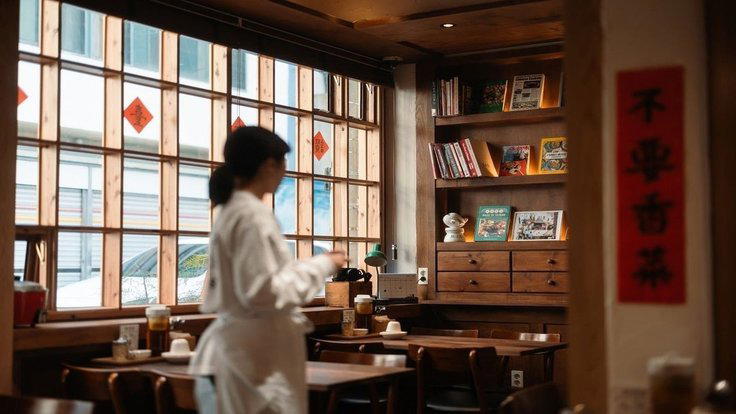
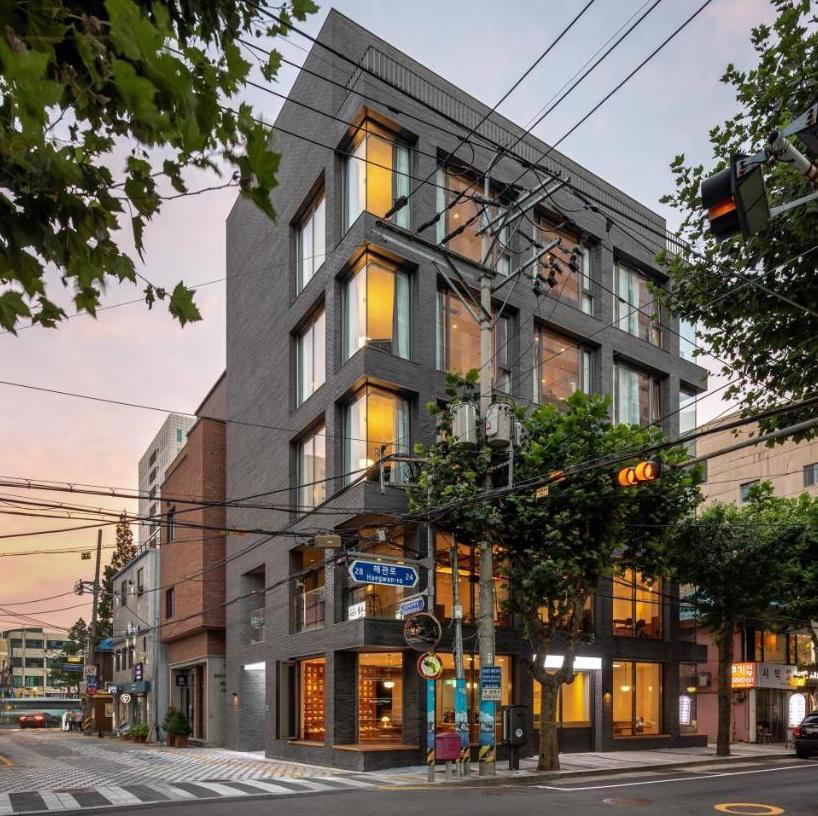
Casual neighborhood atmosphere with warm lighting and traditional Korean decor.