
We're Smart World 2 Radishes
Our verdict
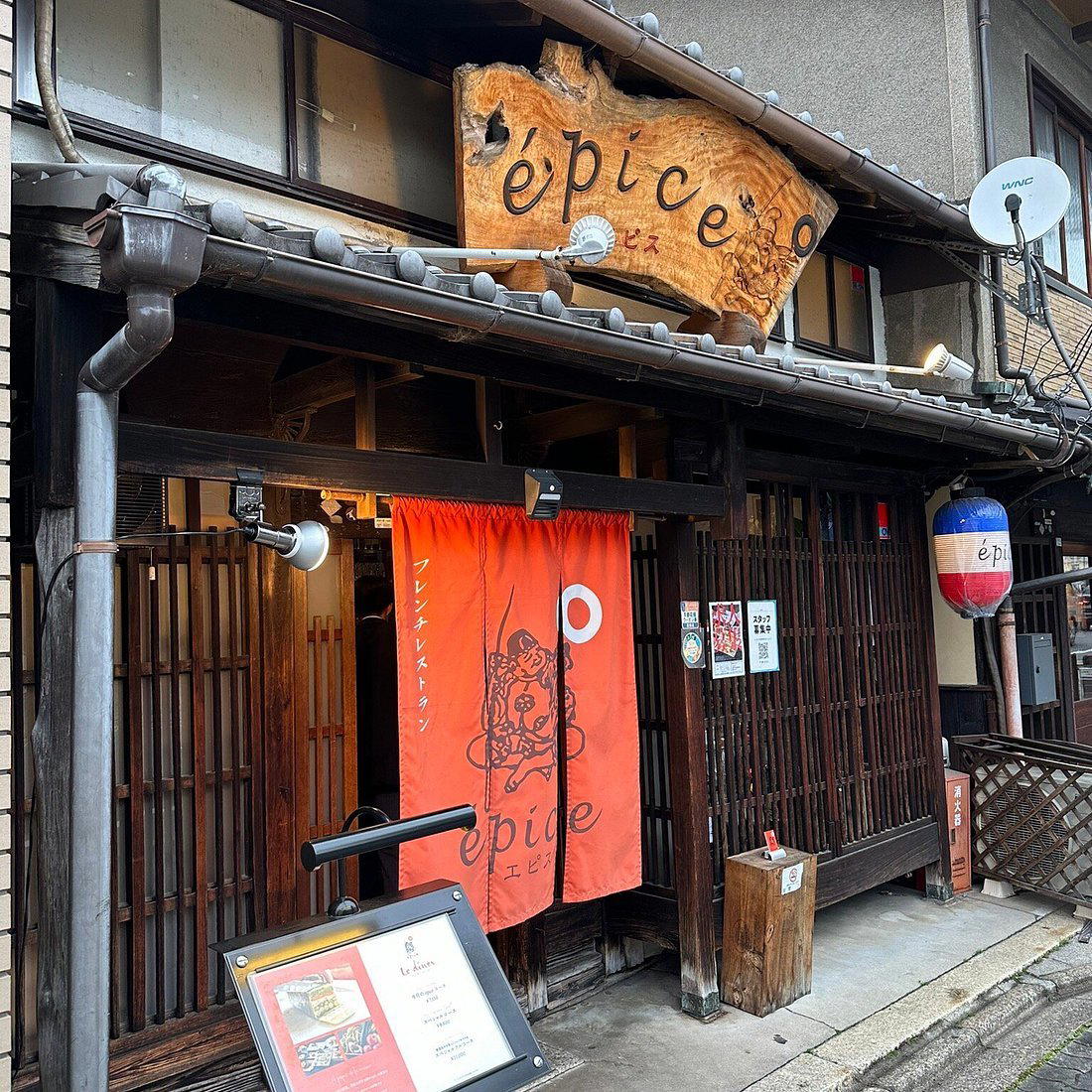
In Kyoto's Kamigyo Ward, Epice operates at the intersection of French technique and regional Japanese produce, with the kitchen placing vegetables at the centre of the menu rather than treating them as support. French wines feature prominently on the list, signalling a house orientation that sits well outside the kaiseki mainstream. For diners seeking something beyond the city's dominant Japanese formats, it reads as a deliberate counterpoint.

Pearl is the En Primeur Club membership app — saves, bookings, and concierge access live there. Same editors, same standards.
- Address
- Japan, 〒602-0845 Kyoto, Kamigyo Ward, Shinnyodomaecho, 105
- Phone
- +81 75-222-2220
- Hours
- Mon–Tue 11:30 AM–3 PM, 5–10 PMWed ClosedThu–Sun 11:30 AM–3 PM, 5–10 PM
- Website
- kyoto-epice.com
- Directions
- Get directions
- Booking
- Book on the venue's website
A French Accent in a Kaiseki City
Kyoto's dining identity is built on restraint, seasonality, and the slow architecture of kaiseki. The city has more Michelin-starred kaiseki rooms per square kilometre than almost anywhere in Japan, and that gravitational pull shapes what visitors expect when they book a table here. Against that backdrop, a kitchen that leads with French technique and a wine list weighted toward Burgundy and Bordeaux occupies genuinely different ground. Epice, in Kamigyo Ward's Shinnyodomaecho district, sits in that gap: a restaurant where the discipline of French cooking meets the ingredient philosophy that Kyoto's farming traditions have long made available to any kitchen paying attention.
The comparison set here is not Gion Sasaki or Kikunoi Honten, whose kaiseki formats follow centuries of Japanese ritual. Nor does it sit alongside Hyotei or Mizai, where the progression of a meal is governed by tea-ceremony pacing and the hierarchies of Japanese course structure. Epice draws from a different lineage, one that has more in common with the produce-driven French restaurants that emerged across Japan in the 1990s and 2000s, where classically trained chefs began insisting that the country's vegetables, fish, and aged proteins were equal to anything sourced from Europe.
The Ritual of a Vegetable-Led Meal
The dining ritual at Epice is framed by its commitment to Kyoto's regional vegetables, known collectively as Kyo-yasai. These are heritage cultivars, some tied to specific districts and farming families, and they carry the kind of provenance that French terroir language was built to describe. The kitchen here, according to its published recognition, places those vegetables at the structural centre of the meal rather than positioning them as garnish or side. Meat and fish appear, but they share the hierarchy rather than dominating it.
This approach has a coherent logic in Kyoto specifically. The city's Buddhist culinary traditions, including shojin ryori, have always insisted on the expressive range of vegetables cooked with care and precision. Applying French technique to that same ingredient pool, rather than importing European produce, creates a reading of French cuisine that is simultaneously orthodox in method and rooted in place. A similar instinct drives kitchens like HAJIME in Osaka, where the intersection of European training and Japanese ingredient philosophy produces something that resists easy categorisation.
The colourful presentation noted in the restaurant's recognition signals an aesthetic sensibility that leans into the visual impact of the vegetables themselves: vivid purples from Kyo-murasaki, deep greens, the particular amber of roasted roots. French plating conventions tend to reward this kind of chromatic variety, and a kitchen confident in its ingredient sourcing will let those colours do structural work on the plate rather than covering them with heavy sauces.
The Wine List as a Statement of Orientation
A French wine list of serious depth in a Kyoto restaurant is not incidental. It functions as a declaration of culinary allegiance and positions the kitchen within a specific tradition. The reported range of French leading wines at Epice places it in a small cohort of Kyoto restaurants that treat the European canon as their primary reference rather than their secondary influence. Among restaurants working the French-Japanese intersection across Japan, this level of wine commitment distinguishes the serious practitioners from those using French vocabulary as surface decoration.
For context, restaurants in Japan that genuinely integrate French wine culture at this level tend to attract a clientele that treats the bottle as part of the dining argument, not an afterthought. The pairing conversation between a Rhône white and roasted Kyo-yasai, or a structured Burgundy alongside aged protein, is a different kind of meal than one ordered from a list assembled for its brand recognition. Comparisons reach as far as Le Bernardin in New York City in terms of the seriousness with which the kitchen's cooking philosophy and the cellar's orientation align, even if the price tier and format are entirely different.
Outside Kyoto, this French-Japanese hybrid format appears at akordu in Nara and Bleston Court Yukawatan in Nagano, both of which apply European technique to regional Japanese produce with similar seriousness. The form has spread beyond the main cities, and Kyoto is a natural home for it given the quality of its ingredient ecosystem.
Kamigyo Ward and How to Approach the Visit
Kamigyo is Kyoto's northern central ward, historically significant as the area surrounding the old imperial palace grounds. It sits away from the concentrated tourist circuits of Gion and Higashiyama, which gives it a different rhythm.
For practical purposes, the address at 105 Shinnyodomaecho places Epice within reach of the central city bus network, with several stops serving the upper Kamigyo district. Visitors combining the meal with a day around the Imperial Palace Park or the Nishijin textile district will find the geography coherent. Those whose Kyoto dining plans include a kaiseki evening at Isshisoden Nakamura or a counter experience elsewhere should consider spacing the meals by at least a full day; the density of a serious French menu and a kaiseki progression in quick succession flattens the distinction between them.
Booking is leading approached through the restaurant directly or via a concierge service familiar with Kyoto's mid-tier French segment. Given the relatively small size typical of this format and the city's overall demand for serious dining tables, advance contact is advisable rather than optional, particularly for visits planned during the spring cherry blossom window or autumn foliage season when all Kyoto reservation slots compress sharply.
Diners with dietary restrictions or allergies should communicate those requirements clearly at the booking stage. A kitchen built around a specific ingredient philosophy, particularly one where vegetables hold structural importance, will generally accommodate substitutions more readily than a fixed kaiseki sequence, but confirming in advance removes ambiguity. If direct contact is difficult without Japanese language support, a hotel concierge in Kyoto can typically make that communication efficiently.
For a broader view of where Epice sits in the city's overall dining picture, our full Kyoto restaurants guide maps the range from kaiseki institutions to the smaller, format-specific kitchens operating in the city's less-visited wards. Supplementary guides cover bars, hotels, wineries, and experiences across the city. For comparable French-influenced cooking in other Japanese cities, Goh in Fukuoka and giueme in Akita offer parallel reference points, as does Harutaka in Tokyo for a sense of how Tokyo's fine dining tier approaches similar ingredient seriousness through a Japanese rather than French frame. And for those curious how American kitchens treat the same produce-led French tradition, Emeril's in New Orleans demonstrates how deeply French technique can embed itself in a non-European food culture.
Frequently asked questions
What's the address for Epice?
Epice is located at Japan, 〒602-0845 Kyoto, Kamigyo Ward, Shinnyodomaecho, 105, Kyoto.
What kind of recognition has Epice received?
Epice has received recognition including: A discovery is definitely the Epice restaurant in Kyoto, especially if you like colorful paintings. The chef proudly shows his love for the beautiful vegetables from the region, and something tells us he would rather focus on the vegetable.….
What's the best thing to order at Epice?
Epice's identity is built around Kyoto's regional vegetables, so dishes where heritage Kyo-yasai cultivars take the lead are the reason to visit. The menu also incorporates meat and fish, but the kitchen's orientation is clearly toward produce. A French wine pairing from the list deepens the experience considerably.
Is Epice reservation-only?
Epice is a small, distinctive restaurant in Kyoto's Kamigyo Ward, a residential area removed from the main tourist corridors. Restaurants of this profile in Kyoto typically require advance booking, and walk-ins carry real risk. Securing a table before arrival is strongly advisable.
What is Epice known for?
Epice is recognized as a discovery-worthy address in Kyoto for its vegetable-forward cooking with clear French influence, notably expressed through a French fine wine list. The restaurant also features colorful paintings that reflect the chef's aesthetic investment in the space. That combination of produce focus, French culinary orientation, and visual character sets it apart within Kyoto's kaiseki-dominated dining scene.
What if I have allergies at Epice?
Dietary accommodations can vary. Flag restrictions in advance via the venue's official channels.
Cuisine and Credentials
Comparable venues nearby, for context on price, style, and recognition.
| Venue | Cuisine | Price | Awards | Notes |
|---|---|---|---|---|
| EpiceThis venue — the venue you are viewing | French with Japanese Influences | $50–100 | We're Smart World 2 Radishes | Not listed |
| Patisserie TATSUHITO SATOI | French Patisserie | $1–10 | Tabelog 100 #92 | Sakyō |
| Le Petitmec Oike ten | Traditional French bakery & café | $10–20 | Tabelog 100 #12 | Nakagyō |
| RESTAURANT hidamarino | Modern French in central Kyoto | $30–50 | Tabelog 100 #8 | Shimogyō |
| L'Oiseau Bleu | Vegan French Bakery | Not listed | Not listed | Kita-ku |
| Chez Moi | French Fine Dining | $50–100 | Tabelog 100 #11 | Nakagyō |
Recognition history
Dated appearances from independent guides and award organizations, with the underlying list record or original source where available.
We're Smart World 2 Radishes
We're Smart World
Continue exploring
More in Kyoto
Restaurants in Kyoto
Browse all →
Bars in Kyoto
Browse all →
Hotels in Kyoto
Browse all →

Wineries in Kyoto
Browse all →
Details
- Elegant
- Relaxed
- Intimate
- Date Night
- Business Dinner
- Open Kitchen
- Sake Program
- Local Sourcing
- Tasting Menu
- A La Carte
- Vegetarian Friendly
Current opening hours
- Monday
- 11:30 AM–3 PM, 5–10 PM
- Tuesday
- 11:30 AM–3 PM, 5–10 PM
- Wednesday
- Closed
- Thursday
- 11:30 AM–3 PM, 5–10 PM
- Friday
- 11:30 AM–3 PM, 5–10 PM
- Saturday
- 11:30 AM–3 PM, 5–10 PM
- Sunday
- 11:30 AM–3 PM, 5–10 PM
Hours can change for holidays and private events. Last verified .
Relaxing atmosphere in a stylish, eclectic decor blending French and Japanese elements with counter seating overlooking the kitchen.