ルイーズ sits in Osaka's Nishi Ward, a district where French-inflected cooking and Kansai seasonal produce have long maintained an unlikely but productive dialogue.
Pearl is the En Primeur Club membership app — saves, bookings, and concierge access live there. Same editors, same standards.
- Address
- 1 Chome-1-5 Itachibori, Nishi Ward, Osaka, 550-0012, Japan
- Phone
- +81665347008
- Website
- louise.jp
- Directions
- Get directions
 Saves & bookings on Pearl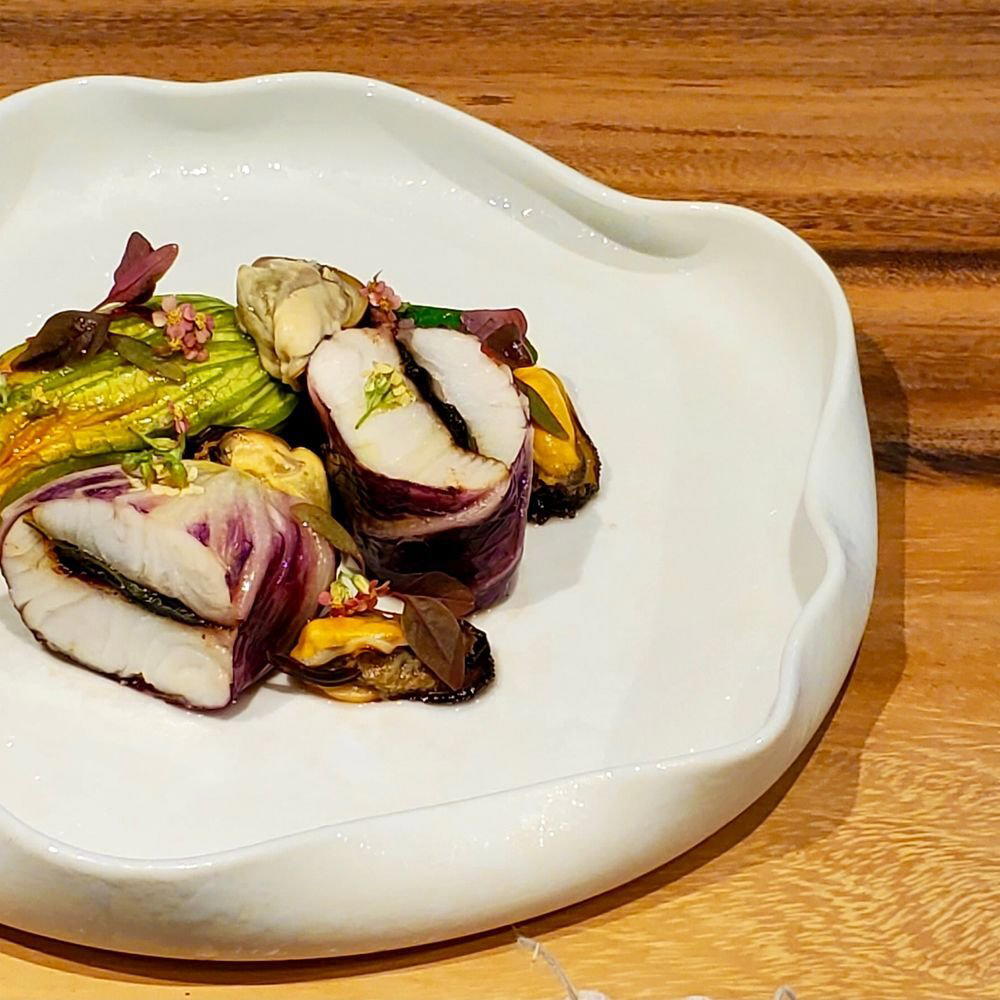
Where Nishi Ward's Quieter Dining Register Begins
Itachibori, the stretch of Nishi Ward where ルイーズ holds its address, sits west of Osaka's central restaurant density. The neighbourhood carries a different tempo from Minami's packed yakitori lanes or Kitashinchi's expense-account French rooms. Streets here are narrower, foot traffic lighter, and the dining rooms that survive in the area tend to do so on repeat custom rather than passing trade. It is the kind of address that filters its audience before a reservation is even made.
That geographic placement matters when reading Osaka's dining map. The city has long operated across distinct registers: the high-volume, tourist-visible circuit of Dotonbori and Shinsaibashi, and a quieter, neighbourhood-embedded layer of restaurants that rarely surface in aggregator rankings but account for much of the city's serious eating. Nishi Ward belongs to the latter register, and a restaurant located at 1 Chome-1-5 Itachibori is making a deliberate choice about which audience it serves.
The Dialogue Between Imported Method and Kansai Produce
Osaka occupies a specific position in Japan's culinary geography. As the historical centre of Kansai commerce, it developed ingredient networks that remain notable: Izumi vegetables from the southern suburbs, seafood drawn through Osaka Bay and the wider Seto Inland Sea, and the kind of tofu and soy infrastructure that underpins kaiseki and its derivatives. When European technique, particularly French brigade discipline and sauce-based architecture, arrived in Osaka's restaurant kitchens, it found a larder already organised around precision and seasonal specificity.
That intersection of imported method and indigenous product is where interesting work in contemporary Osaka dining happens. Restaurants like HAJIME in Osaka have built international reputations precisely at that crossroads, and the broader pattern extends across the city's mid-tier and neighbourhood restaurants, where French training backgrounds are common even in rooms that don't advertise it. The editorial angle at ルイーズ, based on its Itachibori address and the neighbourhood's dining character, places it within this tradition: a room where technique and local sourcing are likely doing more work than the exterior signals.
Across Japan's regional dining circuits, this pairing of European method with prefecture-specific produce has become a reliable quality marker. akordu in Nara applies Spanish technique to Yamato produce. Goh in Fukuoka works through a similar French-Kyushu dialogue. In each case, the credibility of the cooking rests not on the imported method alone but on how precisely it has been adapted to what the surrounding region actually grows and catches.
Osaka's Neighbourhood Restaurant as a Category
The neighbourhood restaurant is a more developed institution in Osaka than in most comparable cities. Part of this is economic: Osaka's dining culture evolved around the kuidaore principle, eating until you drop, which historically spread food spending across many venues rather than concentrating it in a handful of destination rooms. The result is a deep middle tier of serious, unpretentious restaurants operating in residential or semi-residential settings, often with small seat counts and menus that change with supply rather than season.
This format rewards the kind of reader who approaches Osaka differently from Tokyo. In Tokyo, the Michelin-starred omakase counter has become the default format for serious eating, and the booking window for rooms like Harutaka in Tokyo reflects that concentration of demand. Osaka distributes that demand more evenly, and the restaurants that benefit most are exactly the kind of neighbourhood address that ルイーズ appears to represent.
For comparison, Ajihei Sonezaki and Ajikitcho Bunbuan operate in Osaka's more visible dining tier, where credentials and awards are publicly documented. Aka to Shiro and Calendrier represent the city's French-inflected register with documented pedigrees. Az sits in a different experimental bracket. ルイーズ, with its Nishi Ward location and limited public profile, occupies a distinct niche: the reservation-led neighbourhood room that operates outside the documented tier but within the same culinary tradition.
Not all serious restaurants in Japan maintain an online presence proportional to their quality. This is a feature of Japanese restaurant culture rather than an anomaly. Many of the country's most carefully run rooms operate through word of mouth, local press, and repeat custom, with no English-language presence and minimal digital footprint. The restaurant is known for a reservation-led format and regular hours that include lunch and dinner most days.
For restaurants at this level of discretion, direct contact remains the appropriate channel. Japan's regional dining circuits, from Gion Sasaki in Kyoto to addresses in Nanao (一本杉 川嶋) and Sapporo (夕仙山乃), share this characteristic. The process of enquiry is itself a signal of serious intent, and restaurants operating this way tend to respond to it accordingly.
Readers exploring Kansai's wider dining circuit will find useful parallels in 湖畔荘 in Takashima and 庄羽屋 in Nishikawa Machi, where the same model of quiet local authority applies. Further afield, Birdland in Sakai offers another angle on Osaka-adjacent dining that operates outside the city's main tourist circuits.
For international comparison, the model of technically accomplished neighbourhood cooking that prioritises local sourcing over visibility has clear parallels: Le Bernardin in New York City demonstrated for decades how rigorous French technique applied to the leading available product anchors a restaurant's reputation without constant reinvention. Atomix in New York City shows how Korean-American cooking achieves the same through disciplined sourcing. The principle translates directly to Osaka's neighbourhood tier.
Know Before You Go
- Address: 1 Chome-1-5 Itachibori, Nishi Ward, Osaka, 550-0012, Japan
- Booking: Reservation essential
- Hours: Mon: 12–3 PM, 6–10:30 PM; Tue: 12–3 PM, 6–10:30 PM; Wed: 6–10:30 PM; Thu: 12–3 PM, 6–10:30 PM; Fri: 12–3 PM, 6–10:30 PM; Sat: 12–3 PM, 6–10:30 PM; Sun: Closed
- Price tier: 4
- Dress code: Not specified
- Access: 1 Chome-1-5 Itachibori, Nishi Ward, Osaka, 550-0012, Japan
- Note: Limited English-language information is available for this restaurant. Japanese-language enquiry or assistance from a concierge familiar with Osaka's dining circuit is recommended
A Pricing-First Comparison
Comparable venues nearby, for context on price, style, and recognition.
| Venue | Cuisine | Price | Notes |
|---|---|---|---|
| ルイーズThis venue — the venue you are viewing | Not listed | $$$$ | Not listed |
| アドック | Fukushima, Modern French-Japanese Fusion | $$$$ | Not listed |
| IDEAL bistro | Chūō, Michelin-Starred French Bistro | $$$ | Not listed |
| オノウエ | Chūō, Classical French | $$$ | Not listed |
| フナシェフ | Kita, Modern French Tasting Counter | $$$$ | Not listed |
| アニエルドール | Not listed | $$$$ | Nishi, French-Japanese Fusion Fine Dining |
Continue exploring
More in Osaka
Restaurants in Osaka
Browse all →




Bars in Osaka
Browse all →
Hotels in Osaka
Browse all →



Wineries in Osaka
Browse all →
At a Glance
- Elegant
- Sophisticated
- Intimate
- Date Night
- Special Occasion
- Chefs Counter
- Sake Program
Current opening hours
- Monday
- 12–3 PM, 6–10:30 PM
- Tuesday
- 12–3 PM, 6–10:30 PM
- Wednesday
- 6–10:30 PM
- Thursday
- 12–3 PM, 6–10:30 PM
- Friday
- 12–3 PM, 6–10:30 PM
- Saturday
- 12–3 PM, 6–10:30 PM
- Sunday
- Closed
Hours can change for holidays and private events. Last verified .
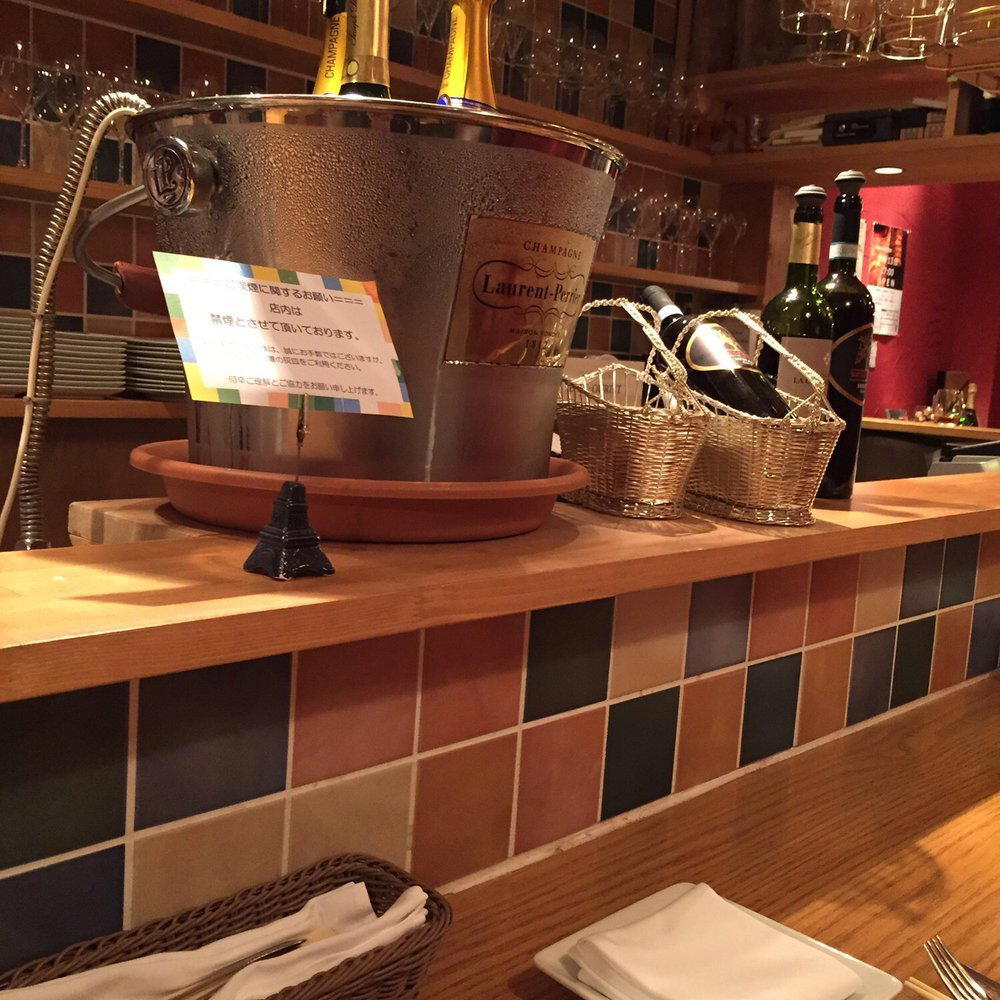
Intimate 8-seat counter dining with sophisticated, quiet atmosphere focused on the culinary experience.