アニエルドール occupies a precise address in Osaka's Nishi Ward, 2 Chome-4-4 Nishihonmachi, placing it within a district where French-influenced dining has long competed alongside the city's kaiseki tradition. Specific menu details and pricing are best confirmed directly with the venue, but its positioning in one of Osaka's more considered dining corridors signals a kitchen with clear culinary intent.
Pearl is the En Primeur Club membership app — saves, bookings, and concierge access live there. Same editors, same standards.
- Address
- 2 Chome-4-4 Nishihonmachi, Nishi Ward, Osaka, 550-0005, Japan
- Phone
- +81649811974
- Website
- agneldor.com
- Directions
- Get directions
 Saves & bookings on Pearl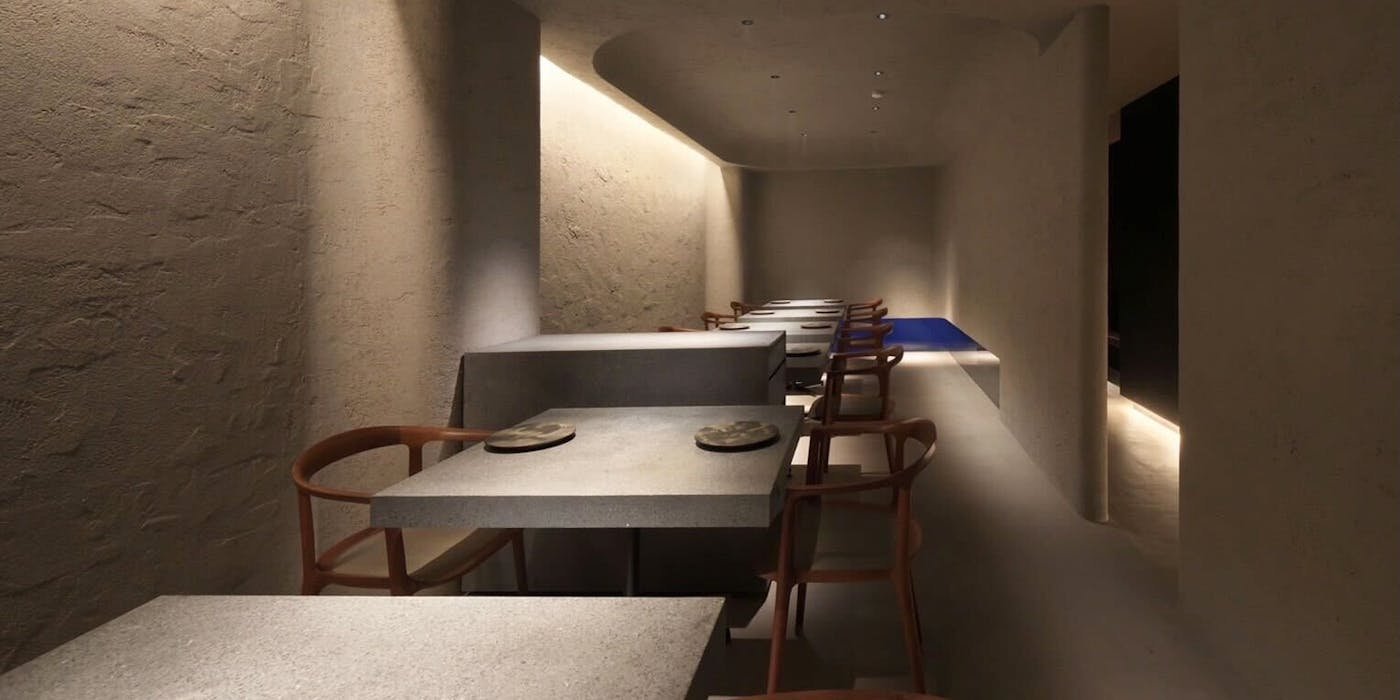
Nishi Ward and the French Table in Osaka
Osaka's relationship with French cuisine is longer and more layered than most visitors expect. While Tokyo absorbs the majority of international press attention, the Kansai region, and Osaka in particular, developed its own strand of French-influenced cooking through the latter half of the twentieth century, shaped by proximity to Kyoto's ingredient culture and a local dining public with high technical expectations. The result is a city where French restaurants are not simply imports but participants in an ongoing conversation with kaiseki discipline, seasonal produce logic, and the Osaka preference for direct, satisfying flavour over theatrical restraint.
Nishihonmachi, in Nishi Ward, sits at a particular intersection of that history. The neighbourhood is neither the tourist-facing energy of Dotonbori nor the purely residential interior of the city; it occupies a mid-register that tends to attract the kind of dining room that serves a local professional audience rather than an overseas one. Restaurants here compete on repetition: the regular customer, not the one-time visitor, is the operating assumption. That context matters when reading a room like アニエルドール, which carries a French name and a Nishi Ward address, and whose presence in this specific corridor implies a kitchen oriented toward sustained local credibility.
Menu Architecture as a Positioning Signal
In French-influenced restaurants across Japan, menu structure tends to reveal more than price alone. The choice between a single long tasting menu, a shorter prix-fixe with optional supplements, and an à la carte format each signals something different about the kitchen's confidence and its intended audience. Tasting-only rooms communicate control and a fixed culinary argument; à la carte rooms communicate flexibility and a trust in the customer's own judgment; hybrid formats attempt to balance both. At the level of French dining that Nishihonmachi supports, the menu format is rarely an accident.
Across Osaka's French tier, which includes HAJIME in Osaka, a three-Michelin-star operation that represents the city's most formally ambitious French expression, and Calendrier, which operates with its own distinct seasonal logic, the range of structural approaches is wide. Some kitchens build menus as essays: a single argument from amuse to mignardise, with each course designed to extend or complicate the course before it. Others treat the menu as a catalogue: a set of well-executed dishes that can be entered at different points. The architecture tells you whether the kitchen is making a statement or offering a service, and both are legitimate positions in a city with Osaka's appetite for dining.
What the address alone confirms is the competitive set: Nishihonmachi French dining is a serious register, one where kitchens are assessed against both their local peers and the broader Kansai French tradition.
Kansai French in the Wider Japan Context
To place アニエルドール within a useful reference frame, it helps to sketch the broader geography of French dining in Japan. Tokyo holds the largest concentration, with counters and dining rooms ranging from bistro-format to three-star operations. Kyoto's French dining is inflected heavily by kaiseki precision, Gion Sasaki in Kyoto represents how the Kansai region produces restaurants that are not easily classified as purely French or purely Japanese but operate in a disciplined space between both. Nara's akordu in Nara demonstrates that even smaller Kansai cities support French-influenced tables with serious culinary ambitions. Further afield, Goh in Fukuoka and Tokyo's Harutaka in Tokyo show how Japan's premium dining culture distributes well beyond the capital.
Within Osaka itself, the French tier sits alongside a strong Japanese dining axis that includes Ajikitcho Bunbuan in the kaiseki tradition and Ajihei Sonezaki at the high end of the city's Japanese dining spectrum. French restaurants in this environment do not exist in isolation; they are measured against the full range of what Osaka dining can offer, which means a kitchen producing French food here is implicitly arguing that its approach is worth choosing over deeply embedded local alternatives. That is not a casual claim.
For international comparisons, Le Bernardin in New York City and Atomix in New York City illustrate how French-influenced dining and Korean-French hybrid formats have each developed their own structural vocabularies in major cities, vocabularies that Japan's own French dining scene has observed and occasionally absorbed, while maintaining its own distinct sensibility around product quality and seasonal discipline.
Elsewhere in the Osaka dining scene, Aka to Shiro and Az represent the city's appetite for dining rooms that operate with clear culinary identities rather than diffuse menus, a broader trend in Osaka's premium tier that favours focused kitchens over generalist ones. See our full Osaka Shi restaurants guide for the complete picture of where アニエルドール sits relative to the city's dining field.
The Nishihonmachi Dining Register
Choosing a restaurant in Nishihonmachi differs from choosing one in Shinsaibashi or Kitashinchi. The latter areas carry higher foot traffic and, with it, a mixed audience of local regulars and passing visitors. Nishihonmachi skews toward the deliberate diner: someone who has sought the address out, rather than arrived by proximity. That self-selecting quality tends to produce restaurants with tighter, more considered menus, since the kitchen can operate on the assumption that its guests have made a purposeful choice. It also tends to produce rooms where the atmosphere is set by the food rather than by ambient noise or visual spectacle.
Other restaurants in Osaka's wider orbit, from Birdland in Sakai to destinations further afield like å¤ä»å±±ä¹ in Sapporo and æ¹é庵 in Takashima, confirm that Japan's premium dining culture distributes across geography and format in ways that reward the traveller willing to move beyond the obvious addresses. アニエルドール's location in Nishi Ward fits that pattern: it is an address for the diner who reads before they book.
Pricing, Compared
Comparable venues nearby, for context on price, style, and recognition.
| Venue | Cuisine | Price | Notes |
|---|---|---|---|
| アニエルドールThis venue — the venue you are viewing | Not listed | $$$$ | Not listed |
| La Baie | Not listed | $$$$ | Kita, Modern French Fine Dining with Seafood Focus |
| ピエール | Kita, Modern French-Japanese Fusion | $$$$ | Not listed |
| ミチノ・ル・トゥールビヨン | Fukushima, Contemporary French | $$$$ | Not listed |
| う越貞 | Not listed | $$$$ | Fukushima, Aged Seafood Japanese Fine Dining |
| ç©ºå¿ ä¼½èå | Kita, Seasonal Kaiseki Omakase | $$$$ | Not listed |
Continue exploring
More in Osaka
Restaurants in Osaka
Browse all →

Bars in Osaka
Browse all →
Hotels in Osaka
Browse all →


Wineries in Osaka
Browse all →
At a Glance
- Elegant
- Minimalist
- Sophisticated
- Intimate
- Date Night
- Special Occasion
- Celebration
- Open Kitchen
- Design Destination
- Standalone
- Extensive Wine List
- Sommelier Led
- Local Sourcing
Current opening hours
- Monday
- Closed
- Tuesday
- 6–10 PM
- Wednesday
- 12–3 PM, 6–10 PM
- Thursday
- 12–3 PM, 6–10 PM
- Friday
- 12–3 PM, 6–10 PM
- Saturday
- 12–3 PM, 6–10 PM
- Sunday
- 12–3 PM, 6–10 PM
Hours can change for holidays and private events. Last verified .
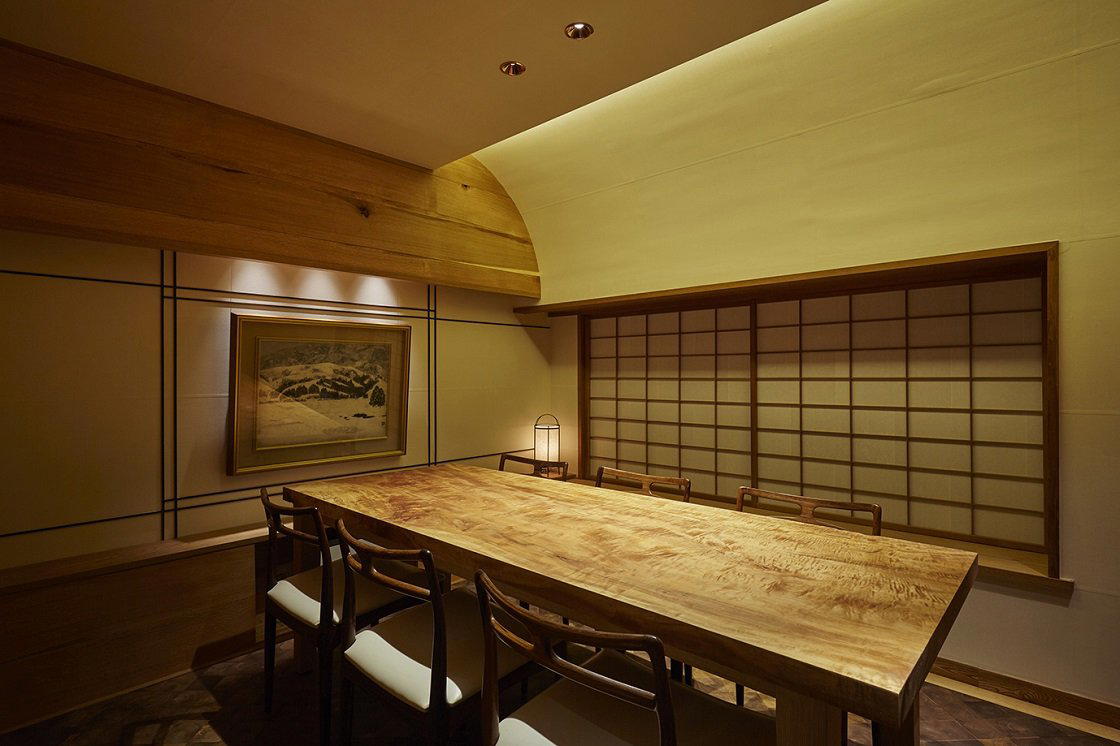
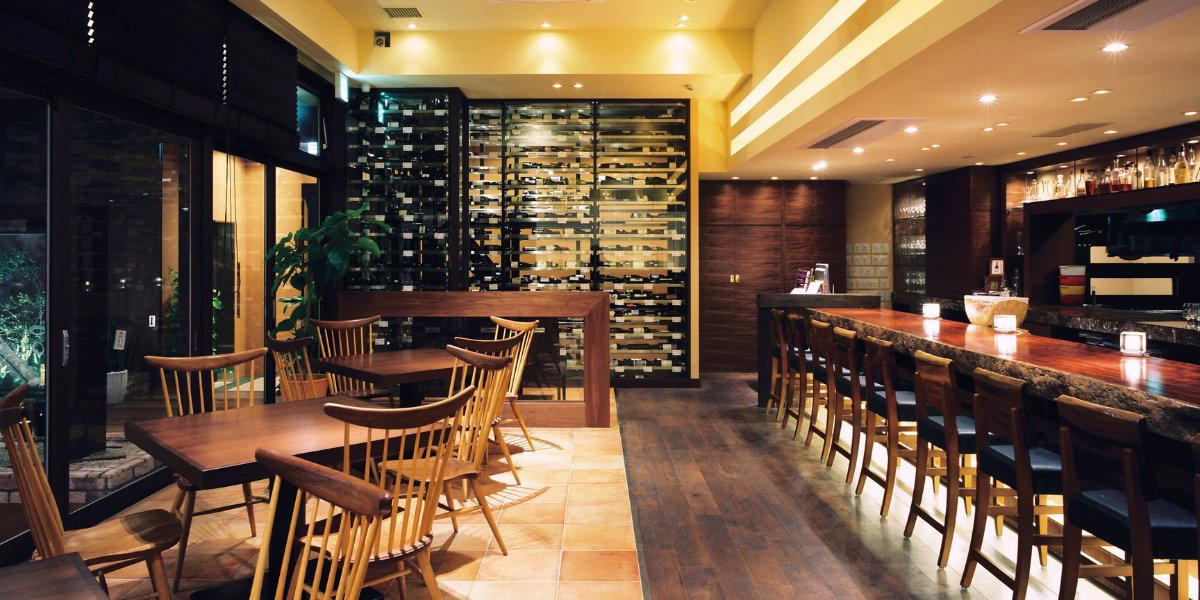
Minimalist modern interior with simple, refined aesthetics; intimate 12-seat dining room designed by artisans to create a serene, sophisticated atmosphere emphasizing culinary artistry.