
Tabelog 100 #39
Our verdict
Situated in the basement of a Chuo Ward address in Osaka's Itoyamachi district, オノウエ occupies a format common to the city's more serious dining rooms: below street level, deliberately low-profile, and reached by those who already know where to look. With almost no public-facing data, it operates on the terms favoured by Osaka's most self-possessed restaurants, reputation over visibility.

Pearl is the En Primeur Club membership app, where members save venues, book tables and use the concierge.
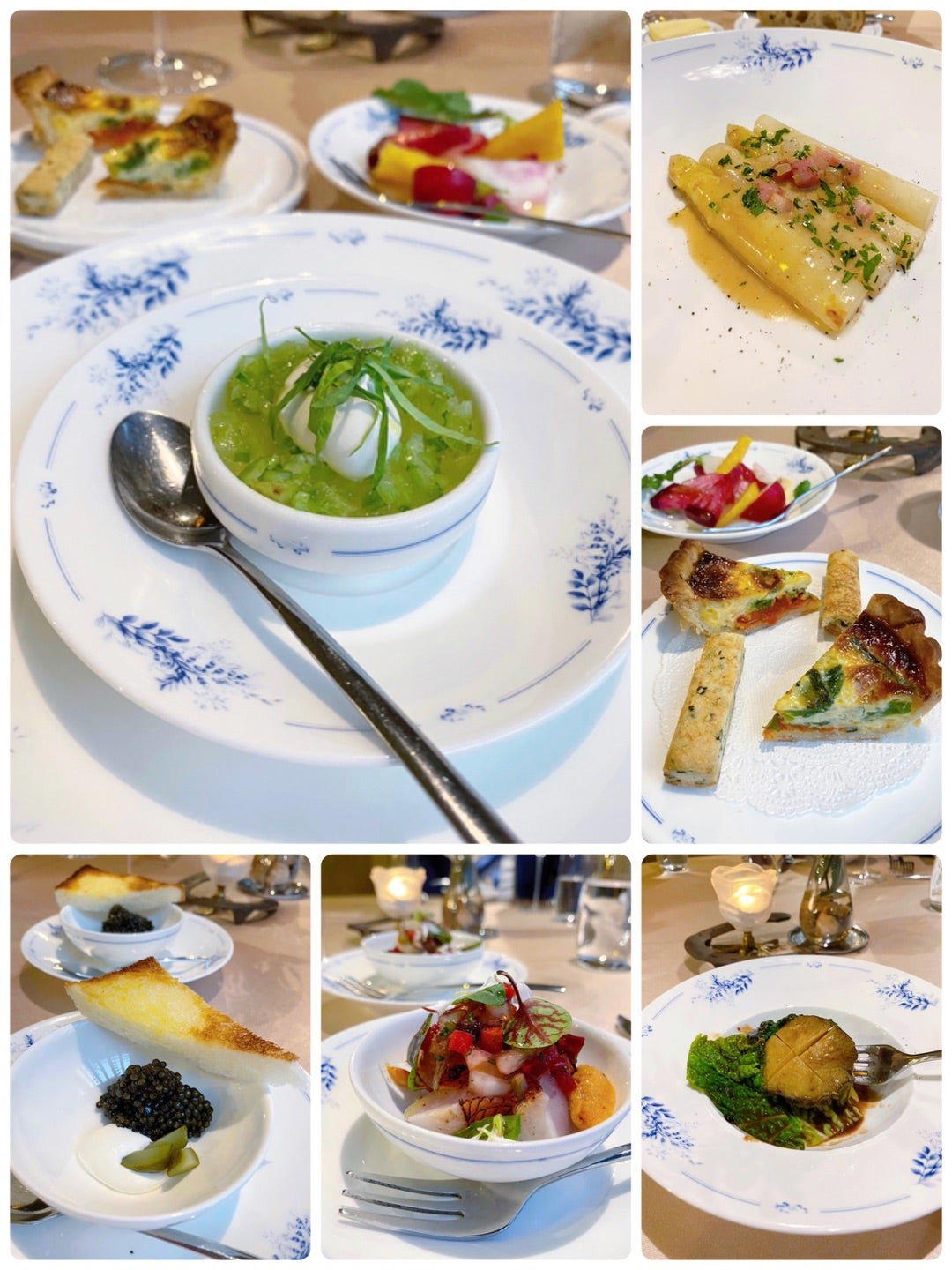
Below Street Level: How Osaka's Basement Dining Rooms Define Serious Eating
In Osaka, the most considered dining rooms tend not to announce themselves. The convention of the basement restaurant, reached by a staircase off an unmarked entrance, is not affectation, it is a spatial philosophy. Without the distraction of foot traffic, ambient noise, or the theatre of being seen arriving, both kitchen and guest orient toward what's on the table. オノウエ, addressed at 1 Chome-1-6 B1 in Itoyamachi, Chuo Ward, belongs to this spatial tradition. The B1 designation in the address is doing real editorial work: it places the restaurant within a specific tier of Osaka dining culture that prizes deliberate obscurity.
Chuo Ward, which contains the commercial density of Shinsaibashi, the administrative weight of the city centre, and older residential pockets like Itoyamachi, is not a neighbourhood where restaurants need to fight for footfall. The addresses that matter here do not depend on passing trade. They depend on accumulated word of mouth, on guests who book because someone else told them to, on a reputation that circulates through the city's dining networks rather than through any public channel. オノウエ, with no public phone listing, no website, and no aggregated review data in the public record, fits that pattern precisely.
The Architecture of Restraint
The physical container of a restaurant shapes dining behaviour in ways that menu design cannot. A basement room in this part of Osaka typically means low ceilings, controlled lighting, and an acoustic intimacy that a ground-floor space with windows cannot replicate. Guests descend into a room that has already filtered out the city. The separation from street level is literal and psychological: the dining experience begins at the foot of the staircase, not at the door.
This spatial logic connects オノウエ to a cohort of Osaka restaurants that share neither cuisine type nor price point but do share a spatial commitment. Across the city's more serious dining rooms, the basement or semi-basement format recurs as a design choice that signals something about how the restaurant wants to be experienced. Ajikitcho Bunbuan and Calendrier represent different cuisine registers within the city, but both operate within an Osaka tradition where the physical setting is understood as part of the hospitality proposition, not merely its backdrop.
The Itoyamachi address itself carries weight. This corner of Chuo Ward sits at some remove from the tourist-facing density of Dotonbori and Namba. Restaurants in this district are not positioned to capture the impulse diner; they are positioned for the planned visit, the repeat guest, the referral. That geographic logic is as much a design decision as any interior finish.
Osaka's Low-Visibility Dining Tier
Osaka has a well-documented parallel dining economy: restaurants that carry significant local prestige without any of the infrastructure of visibility. No website, no social media, reservations managed through personal contact or introduction. This is not unusual in Japan's most serious dining contexts, but Osaka applies it with particular consistency across a broader range of cuisine types and price points than, say, Tokyo, where the high-end omakase model has largely been codified into a recognisable booking and marketing format.
In Tokyo, venues like Harutaka operate within a system where Michelin recognition and structured booking waitlists have created a form of controlled visibility. Osaka's equivalent tier more often resists that codification. The restaurants that matter most to the city's serious diners frequently lack the external markers that would make them legible to an outside observer. This is a feature, not a gap in the market.
Across the Kansai region, this pattern extends. Gion Sasaki in Kyoto and akordu in Nara each represent versions of this low-visibility, high-reputation approach in their respective cities. The shared logic is that the dining room's legitimacy is maintained not through marketing but through the quality of who returns and who refers. オノウエ operates in that same register.
Within Osaka specifically, the comparison set is instructive. Ajihei Sonezaki, Aka to Shiro, and Az each occupy distinct positions in the city's dining hierarchy, but all share the characteristic of rewarding the guest who arrives with prior knowledge rather than the one who walks in on a recommendation from a hotel concierge. For broader context on where these restaurants sit relative to each other, the full Osaka Shi restaurants guide maps the city's dining character with more granularity.
The international reference points are also worth placing. At the level of formal ambition, venues like Atomix in New York City have built global reputations on a similar principle: minimal public-facing information, a reservation process that functions through existing networks, and a dining room designed to reward prior knowledge. The mechanism is different, the cultural context entirely distinct, but the underlying hospitality philosophy rhymes.
What the Absence of Data Signals
The near-total absence of publicly available information about オノウエ, no cuisine classification, no price range, no hours, no chef attribution in the public record, is itself a data point. In Osaka's dining culture, restaurants that have reached a certain threshold of local esteem frequently stop needing the infrastructure of public communication. The guest list becomes self-selecting. Reservations fill through existing relationships. The restaurant's profile, in the sense of what is known about it and by whom, becomes a proxy for its standing.
This creates a practical challenge for the first-time visitor. Unlike HAJIME in Osaka, which carries Michelin recognition and a corresponding public booking process, or Goh in Fukuoka, which has cultivated an international profile, オノウエ requires local contact or specialist knowledge to access. This is not a restaurant you book through a standard reservation platform. It is a restaurant you reach through Osaka's dining networks, which means either developing those networks or working with someone who already has them.
For those comparing approaches across Japan's dining culture, it is worth noting how this pattern plays out in other regional contexts. Venues like 一本杉 川嶋製 in Nanao and 羽黒屋 in Nishikawa Machi demonstrate how deeply the low-visibility, high-trust dining model runs through Japanese regional restaurant culture beyond the major cities. 古仙山乃 in Sapporo and 湖畔荘 in Takashima offer further regional variants on this hospitality logic. Even internationally regarded venues like Le Bernardin in New York City have built their reputations on a version of this principle: the restaurant's authority comes from what happens inside the room, not from how it markets itself outside it.
Know Before You Go
Address: 1 Chome-1-6 B1, Itoyamachi, Chuo Ward, Osaka, 〒540-0022
Access: Chuo Ward, central Osaka. Nearest major transit connections via the Osaka Metro Chuo and Tanimachi lines.
Booking: No public reservation platform listed. Access is most reliably achieved through local dining networks or specialist concierge services with Osaka connections.
Price range: Not publicly listed. Budget for a mid-to-high tier experience given the address type and low-visibility format.
Hours: Not publicly available. Confirm before travel.
Format: Basement dining room, Chuo Ward. Exact seating capacity and cuisine style not in public record.
Frequently asked questions
Is オノウエ child-friendly?
Nothing in the public record for オノウエ addresses children specifically, but the venue's positioning, a basement room in Itoyamachi, Chuo Ward, operating without published hours, menu, or online booking, points toward a format built around quiet, unhurried adult dining. Families with young children would likely find the environment a poor fit, not by explicit policy but by context.
What should I expect atmosphere-wise at オノウエ?
The address places オノウエ in a B1 space off Itoyamachi in Chuo Ward, a basement room reached by staircase, which in Osaka's serious dining culture typically means low ceilings, controlled acoustics, and a room oriented toward the table rather than the street. The complete absence of a public-facing profile reinforces the expectation of deliberate restraint over theatrical presentation.
How do you get a reservation at オノウエ in Osaka?
In Osaka's high-prestige, low-visibility dining tier, access of this kind typically comes through personal introduction or a Japanese-speaking contact with established local knowledge rather than conventional reservation platforms.
What's the must-try dish at オノウエ?
No menu information for オノウエ has been made publicly available, which itself is part of the restaurant's identity within Osaka's low-visibility dining tier. Venues operating this way in Chuo Ward typically leave the sequence of dishes entirely to the kitchen's discretion, arriving without a fixed agenda is the appropriate approach.
What's the address for オノウエ?
オノウエ is located at Japan, 〒540-0022 Osaka, Chuo Ward, Itoyamachi, 1 Chome−1−6 B1, Osaka Shi.
Comparable Venues
Comparable venues nearby, for context on price, style, and recognition.
| Venue | Cuisine | Price | Awards | Notes |
|---|---|---|---|---|
| オノウエThis venue (the venue you are viewing) | Classical French | Not listed | Tabelog 100 #39 | Not listed |
| フナシェフ | Modern French | $150–200 | Tabelog Bronze #79 | Kita |
| Calendrier | Seasonal French Cuisine | Not listed | Not listed | Chūō |
| Teppanyaki THE VILLAGE OSAKA | Teppanyaki | $100–150 | Not listed | Fukushima |
| 旬膳季らく | 浪速割烹 Japanese Kaiseki | $100–150 | Michelin Plate | Chūō |
| アニエルドール | Modern French with Japanese Ingredients | $200–300 | 1 Michelin Star · Tabelog Bronze #7 | Nishi |
Recognition history
Dated appearances from independent guides and award organizations, with the underlying list record or original source where available.
Tabelog 100 #39 · No. 39
Tabelog · Tabelog 100 - French - WEST - 2025
Continue exploring
More in Osaka
Restaurants in Osaka
All restaurants in Osaka →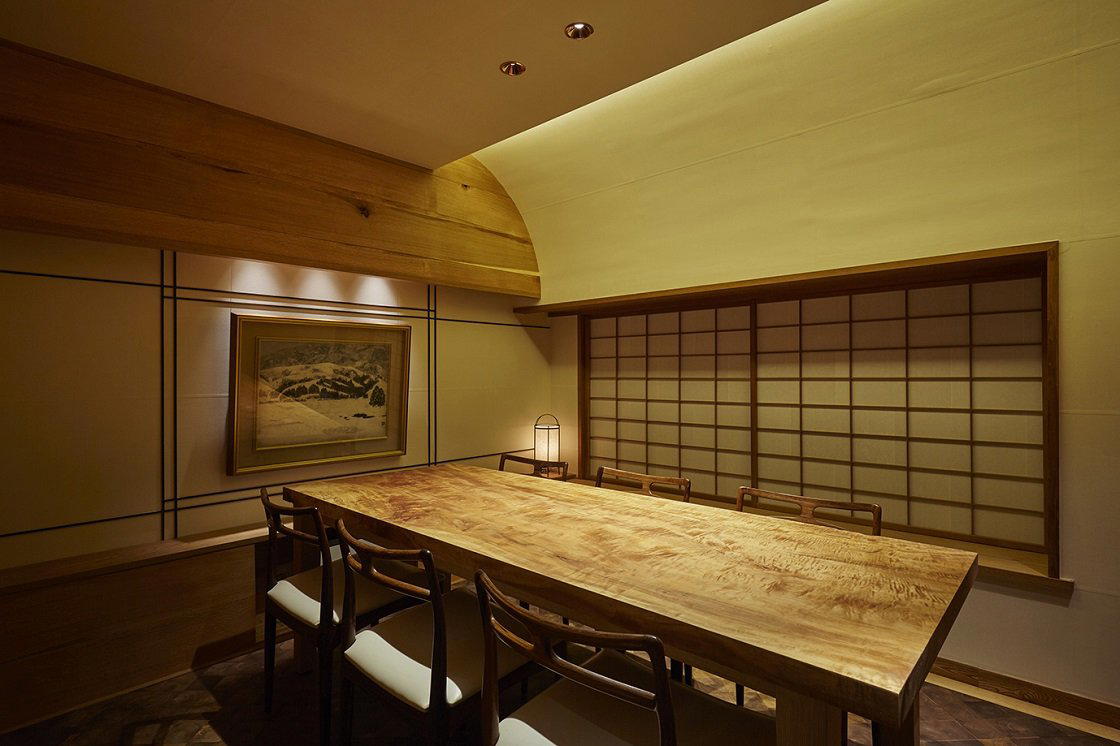




Bars in Osaka
All bars in Osaka →

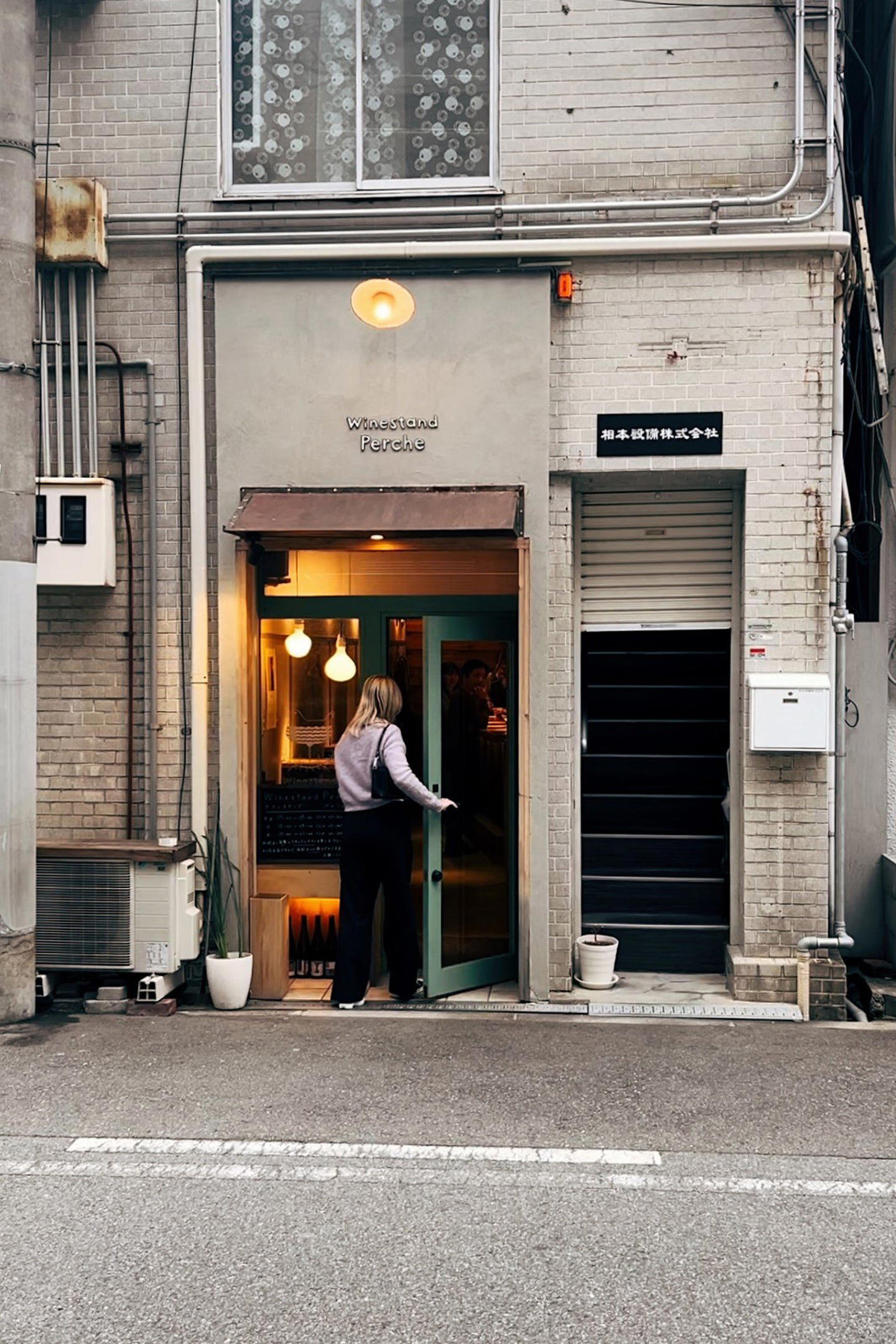

Hotels in Osaka
All hotels in Osaka →


Wineries in Osaka
Browse all →
Details
- Classic
- Elegant
- Intimate
- Date Night
- Special Occasion
- Standalone
- A La Carte
Current opening hours
- Monday
- 12–3 PM, 6–10 PM
- Tuesday
- Closed
- Wednesday
- 12–3 PM, 6–10 PM
- Thursday
- 12–3 PM, 6–10 PM
- Friday
- 12–3 PM, 6–10 PM
- Saturday
- 12–3 PM, 6–10 PM
- Sunday
- 12–3 PM, 6–10 PM
Hours can change for holidays and private events. Hours as of .
classical atmosphere with elegant, subdued lighting.