Our verdict
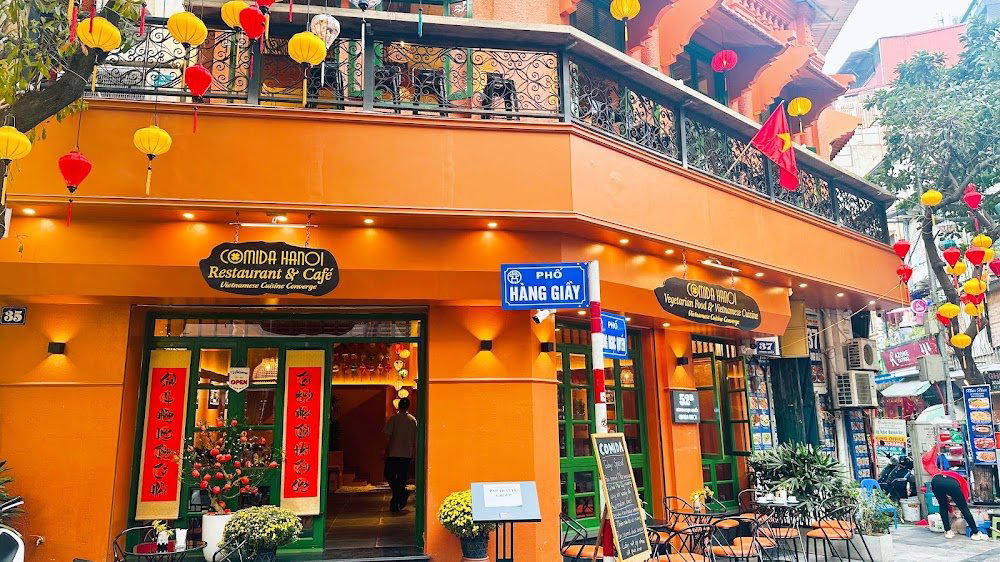
Sitting inside Hanoi's Old Quarter on Lương Ngọc Quyến, Comida Hanoi pairs a restaurant with hands-on cooking classes, placing it at the intersection of two distinct ways of engaging with Vietnamese food. The address alone signals a particular kind of immersion: this is one of the Old Quarter's tightest, most characterful streets, where the cooking tradition and the eating tradition share the same room.

Pearl is the En Primeur Club membership app — saves, bookings, and concierge access live there. Same editors, same standards.
- Address
- 52b P. Lương Ngọc Quyến, Phố cổ Hà Nội, Hoàn Kiếm, Hà Nội 100000, Vietnam
- Phone
- +84919481386
- Hours
- Daily 9:30 AM–10 PM
- Website
- comidahanoirestaurant.com
- Directions
- Get directions
Lương Ngọc Quyến and the Logic of the Old Quarter
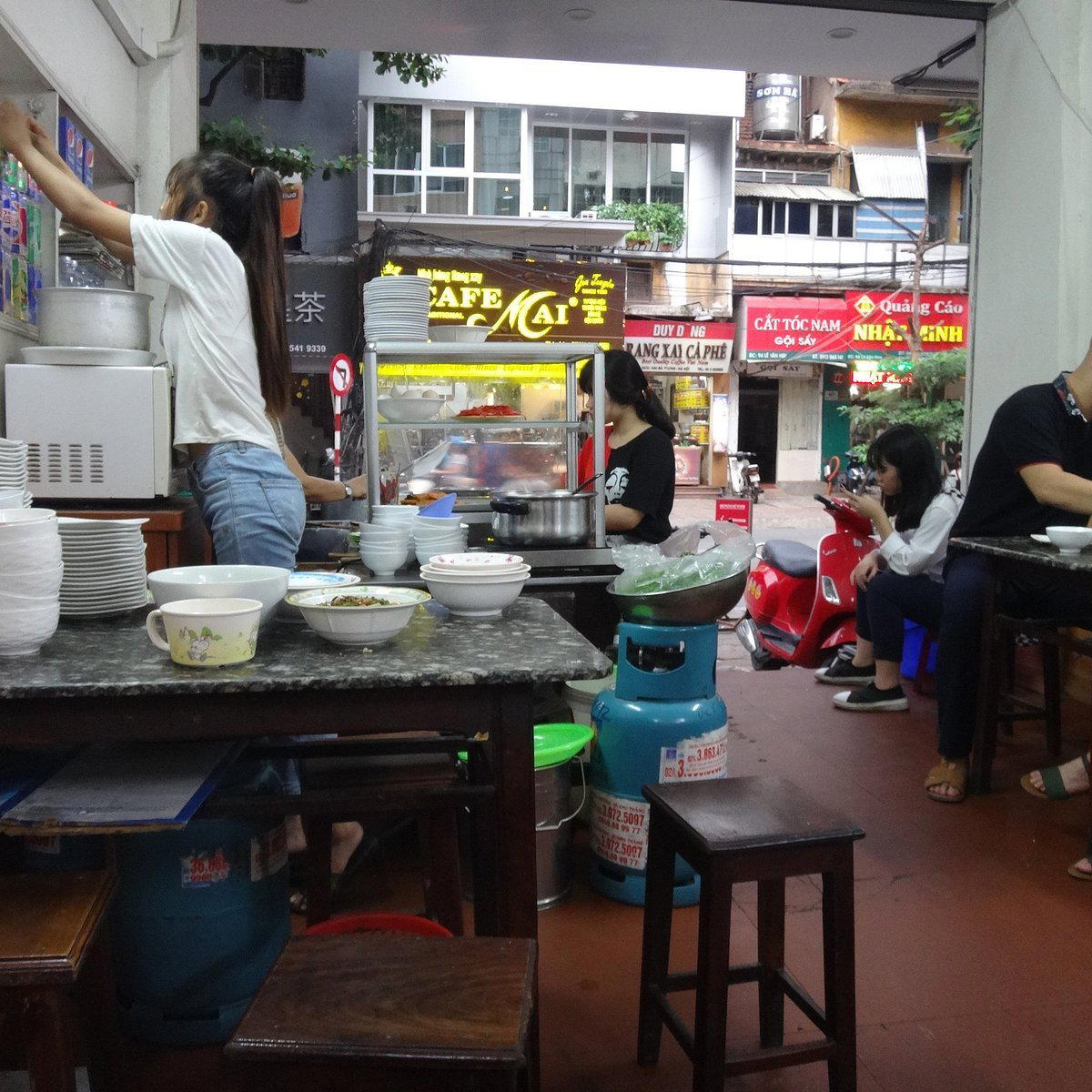
Hanoi's Old Quarter operates on a street-by-street specialisation that dates to the city's guild-era organisation, when each lane corresponded to a trade. That system has eroded over centuries, but the density and the street-level intensity have not. Lương Ngọc Quyến sits near the southeastern edge of the 36 Streets, close enough to Hoàn Kiếm Lake to draw foot traffic, but embedded enough in the residential-commercial weave that it retains a neighbourhood rhythm distinct from the more tourist-saturated lanes to the north. Comida Hanoi occupies number 52b on this street, a placement that says something about the balance the venue is trying to strike: visible enough to be found, positioned in an area where locals and travellers genuinely overlap rather than divide into separate circuits.
The Old Quarter is also the most compressed expression of Hanoi's food culture. Street vendors, family-run pho shops, wine bars, and higher-end Vietnamese kitchens all operate within a few hundred metres of each other. The result is a price and format spectrum that runs from a bowl of bun cha for a few thousand dong to the contemporary Vietnamese tasting menus now appearing at addresses like Gia, which represents the ₫₫₫₫ tier of the same culinary tradition. Comida sits somewhere in that continuum, offering both a restaurant experience and a structured cooking class format under one address.
The Cooking Class Format in Context
Across Southeast Asia, the restaurant-plus-cooking-class model has developed into a distinct hospitality category. It attracts a different traveller from the pure restaurant-goer: someone who wants to leave with transferable knowledge rather than just a meal. In cities with strong culinary identities — Chiang Mai, Hoi An, Hanoi — this format has become one of the more reliable ways for visitors to engage with a cuisine beyond surface-level consumption. Cargo Club Cafe and Restaurant in Hoi An operates in a similar dual register, combining dining and culinary education within the same premises, which reflects how central this format has become to Vietnam's food tourism infrastructure.
What the format demands, structurally, is more than a kitchen demonstration. The leading cooking class programs in this category provide market context, explain the sourcing logic behind Vietnamese ingredients, and give participants enough technique to replicate dishes at home. The Old Quarter's proximity to Đồng Xuân Market, a few minutes north on foot, makes it a plausible launchpad for market-to-kitchen formats that have become standard in this tier of culinary experience.
Where Comida Sits in Hanoi's Broader Dining Map
Hanoi's restaurant scene has diversified sharply over the past decade. The contemporary Vietnamese tier, represented by places like Gia and the Nordic-Vietnamese hybrid approach of Chapter, operates with tasting menu formats, wine pairings, and Michelin-adjacent ambitions. At the other end, the street food and casual Vietnamese tier, exemplified by spots like Tầm Vị at the ₫₫ price point, anchors the city's daily eating culture. Comida occupies a different position from either: it is a venue where the cooking process itself is part of the proposition, which places it in a niche that crosscuts price tiers rather than sitting cleanly within one.
For travellers who want to move between registers, the Old Quarter provides a useful base. 19 P. Ngũ Xã offers another angle on the neighbourhood's food culture, while 1946 Cua Bac represents the more historically rooted Vietnamese dining tradition. For high-end teppanyaki in a different register entirely, Hibana by Koki provides a point of contrast. Comida's role in this map is as an active learning venue rather than a passive one, which gives it a distinct function in a multi-day Hanoi itinerary.
Comparing further across Vietnam, the cooking class and restaurant hybrid appears at several addresses worth cross-referencing: Saffron in Hue City and Akuna in Ho Chi Minh City each operate within distinct regional culinary traditions, while La Maison 1888 in Da Nang represents the high-formality end of Vietnamese fine dining. For coastal perspectives, Le Pont Club in Hai Phong, Phuong Nhung Restaurant in Cat Hai, Bau Troi Do in Son Tra, and Mi Quang Ba Vi in Thanh Khe each illustrate how regional Vietnamese cooking diverges from the Hanoi tradition that Comida works within. Nhà hàng Madame Lân in Hai Chau and Duyên Anh Restaurant in Phu Vang complete the picture of how Vietnam's central region interprets the same culinary inheritance differently.
Planning a Visit
The address, 52b P. Lương Ngọc Quyến in the Hoàn Kiếm district, places Comida within walking distance of the lake and accessible from most Old Quarter accommodation. Cooking classes in this format typically require advance coordination for group sizes and ingredient preparation, so same-day booking is not reliable for the class component, even if walk-in dining may be available. For a broader orientation to eating and drinking across the city, our full Hanoi restaurants guide maps the full range of formats and price tiers.
At the international reference end, venues like Le Bernardin in New York City and Lazy Bear in San Francisco illustrate how the line between structured dining experience and participatory format has blurred even at the highest price tiers. Comida operates at a different scale and in a different culinary tradition, but the underlying logic is comparable: the meal is also a form of instruction, and the instruction is also part of the meal.
Frequently asked questions
Where do I go for Comida Hanoi Restaurant & Cooking Class?
Comida Hanoi Restaurant & Cooking Class is located at 52b P. Lương Ngọc Quyến, Phố cổ Hà Nội, Hoàn Kiếm, Hà Nội 100000, Vietnam, Hanoi.
Is Comida Hanoi suitable for travellers who want both a meal and a hands-on cooking class in the same visit?
Yes — Comida operates the dual-format model where dining and instruction occupy the same address at 52b P. Lương Ngọc Quyến in Hanoi's Old Quarter. This format attracts travellers who want structured engagement with Vietnamese cuisine rather than a passive restaurant visit. The Hoàn Kiếm location makes it accessible from most Old Quarter accommodation, reducing the logistical barrier of attending a standalone cooking school elsewhere in the city.
What do regulars order at Comida Hanoi Restaurant & Cooking Class?
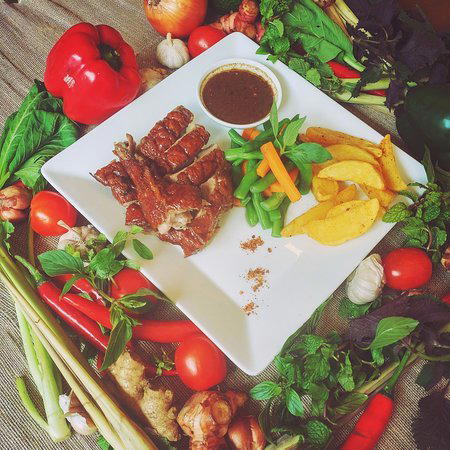
The menu centres on Vietnamese dishes, and the kitchen-to-table format means the food served in the restaurant reflects what participants prepare in class. Given the address on Lương Ngọc Quyến in Hanoi's Old Quarter, expect the menu to draw from northern Vietnamese traditions.
What's the best way to book Comida Hanoi Restaurant & Cooking Class?
The venue is located at 52b P. Lương Ngọc Quyến in Hoàn Kiếm, Hanoi, and sits within walking distance of Hoàn Kiếm Lake. No website or phone number is currently listed in public directories, so arriving in person or asking your accommodation to assist with contact is the most reliable route. Booking ahead is advisable for cooking class slots, which typically operate on fixed schedules across the restaurant-plus-class format common in Southeast Asia.
Cuisine and Credentials
Comparable venues nearby, for context on price, style, and recognition.
| Venue | Cuisine | Price | Awards | Notes |
|---|---|---|---|---|
| Comida Hanoi Restaurant & Cooking ClassThis venue — the venue you are viewing | Vietnamese | Not listed | Not listed | Not listed |
| CHA CA TANG LONG | Hanoi Cha Ca (Turmeric Fish with Dill) | $10–20 | Not listed | Hoan Kiem |
| Cau Go Vietnamese Cuisine | Authentic Regional Vietnamese Cuisine | $10–20 | Michelin Plate | Hoan Kiem |
| The Symphony Restaurant | Vietnamese Fine Dining with Asian-Western Fusion | $30–50 | Not listed | Hoan Kiem |
| Bun Cha Dac Kim | Traditional Hanoi Bun Cha | $1–10 | Not listed | Hoan Kiem |
| Madame Hien - Vietnamese Restaurant Hanoi | Authentic Vietnamese Fine Dining | $20–30 | Not listed | Hoan Kiem |