Our verdict
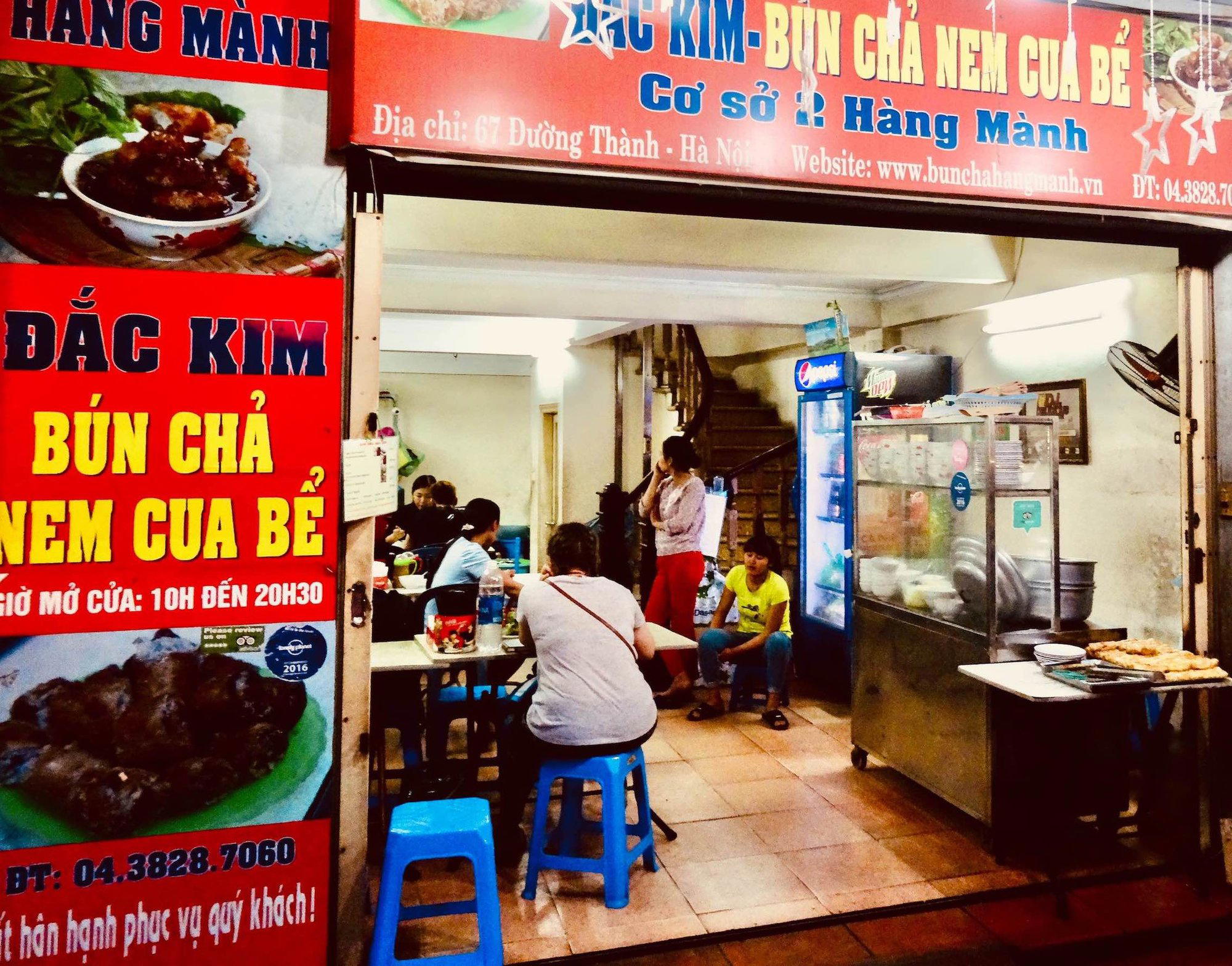
On a narrow lane off Hàng Gai in Hoàn Kiếm, Bun Cha Dac Kim has been serving the Hanoian version of bún chả long enough to function as a reference point for the dish rather than merely an option. The charcoal-grilled pork patties and broth-soaked vermicelli here have drawn steady queues from locals and visitors alike, making it one of the Old Quarter addresses that defines how the city understands its own street-food canon.

Pearl is the En Primeur Club membership app — saves, bookings, and concierge access live there. Same editors, same standards.
- Address
- 1 P. Hàng Mành, Hàng Gai, Hoàn Kiếm, Hà Nội, Vietnam
- Phone
- +842438287060
- Hours
- Daily 9 AM–9 PM
- Website
- bunchahangmanh.vn
- Directions
- Get directions
The menu
What to order
- Bun Cha with grilled pork belly and patties
- Bun Cha with crab spring rolls
A Street Address That Became a Reference Point
In Hanoi's Old Quarter, the commercial density of Hàng Gai — silk shops, lacquerware, tourist foot traffic — gives way to narrower residential lanes where the serious eating tends to happen. Bun Cha Dac Kim sits on Hàng Mành, a side street that has retained more of its working neighbourhood character than the main thoroughfares nearby. The physical approach matters: the smell of charcoal and caramelising pork fat reaches the pavement well before the restaurant itself comes into view. In a city where atmospheric signals often precede any visual confirmation of quality, that olfactory cue carries real weight.
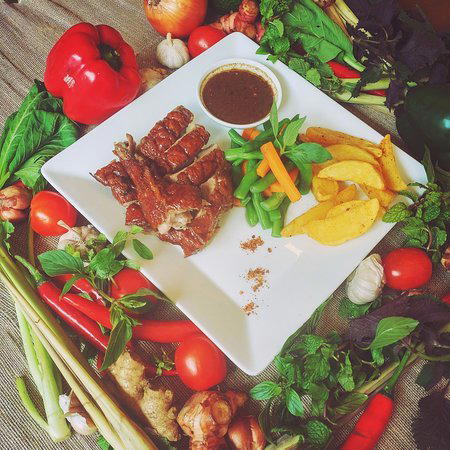
Bún chả is one of the dishes most closely identified with Hanoi specifically, distinct from southern Vietnamese noodle formats, and different in character from the heavily adorned pho that tourists tend to seek first. The format is fixed: a bowl of diluted, slightly sweet fish-sauce broth containing grilled pork patties and sliced belly, served alongside a separate plate of cold rice vermicelli and a tray of fresh herbs. Bun Cha Dac Kim operates within that format without deviation, which is itself an editorial statement in an era when Vietnamese restaurants in the capital increasingly face pressure to modernise, diversify, or repackage traditional dishes for international palates.
The Evolution of a Single-Dish Address
The trajectory of Bun Cha Dac Kim follows a pattern recognisable across Hanoi's older eating establishments: a neighbourhood spot, originally serving a highly local clientele, that accumulated enough of a reputation to attract out-of-district visitors, then foreign tourists, then global press attention. That sequence, local to citywide to international, tends to happen slowly, over decades, and it changes the character of a place in ways that are not always immediately visible in the food itself.
What shifts most visibly at venues that go through this arc is the composition of the room. Bun Cha Dac Kim now draws a mixed crowd where, a generation ago, the customers would have been almost exclusively Hanoian. That change in audience has not, by most accounts, altered the kitchen's approach to the dish. The bún chả format resists adaptation by design: the broth-to-pork ratio, the degree of char on the patties, the balance of sweetness and acidity in the dipping liquid are all matters of local consensus, not individual invention. A restaurant that deviates too far from those parameters stops being a bún chả restaurant and becomes something else. The discipline required to stay within those constraints, decade after decade, is what gives long-standing single-dish addresses their particular authority.
For broader context on how Hanoi's restaurant scene has evolved across price points and formats, the full Hanoi restaurants guide maps the city's dining character from street-food specialists through to contemporary tasting menus.
Where This Sits in the Hanoi Bún Chả Conversation
Hanoi has dozens of bún chả addresses, ranging from pavement-only stools to air-conditioned multi-floor operations. Bun Cha Dac Kim occupies a middle position in that range: more established and better-known than the anonymous neighbourhood options, but priced and formatted in a way that keeps it closer to the street-food end of the spectrum than to the dining-room tier. That positioning is significant. In a city where food credibility is still largely measured by longevity and local patronage rather than by awards or press recognition, the years in operation carry more weight than any formal credential.
Comparison is instructive. Venues like Gia and Hibana by Koki represent Hanoi's upper pricing tier, where contemporary technique and international reference points define the offer. Tầm Vị operates at a mid-range Vietnamese register. Bun Cha Dac Kim exists in a different category altogether: a traditional single-dish specialist whose value is measured in institutional consistency rather than in menu range or kitchen ambition. The two modes, contemporary fine dining and long-form street-food specialism, are not in competition; they serve different readers of the city.
For those tracing Vietnamese culinary tradition across the country, the regional contrasts are worth noting. The bún chả of Hanoi has no real counterpart in the south; visitors moving between cities might compare it against entirely different reference points, from the herb-forward cooking at Saffron in Hue City to the coastal-inflected menus at Cargo Club Cafe & Restaurant in Hoi An or the more contemporary approach taken at Akuna in Ho Chi Minh City. The distance between those modes of eating is, in itself, an argument for treating Vietnamese regional cooking as a genuinely differentiated field rather than a unified category.
Planning a Visit
Bun Cha Dac Kim is located at 1 Hàng Mành, in the Hàng Gai ward of Hoàn Kiếm district, a short walk from Hoàn Kiếm Lake and well within the pedestrian orbit of the Old Quarter's most-visited streets. The area is navigable on foot from most Hoàn Kiếm hotels, and the address sits close enough to the Hàng Gai commercial strip that it integrates naturally into a morning or early-afternoon walk through the district. Lunch service tends to be the primary window for bún chả across Hanoi; the dish is rarely eaten in the evening as a matter of local convention, which sets the practical rhythm of a visit.
No booking infrastructure is typically associated with this style of address. Arrival timing matters more than reservation: mid-morning to early afternoon captures both the kitchen at its most active and the charcoal grill at its most productive. The seating format at street-food specialists of this type tends toward communal or close-packed tables, which affects the pacing and character of the meal. Those travelling in Hoàn Kiếm who want to cross-reference Hanoi's Old Quarter eating options against a wider set might also consider 19 P. Ngũ Xã and 1946 Cua Bac as contextually relevant addresses in the same district. Across the wider Vietnamese north, Le Pont Club in Hai Phong and Phuong Nhung Restaurant in Cat Hai offer points of comparison for how northern Vietnamese dining formats vary by city.
Frequently asked questions
Is Bun Cha Dac Kim okay with children?
The format suits families well. Bún chả is a simple, accessible dish — grilled pork, broth, rice noodles, fresh herbs — with no complex heat or unfamiliar textures that typically challenge younger eaters. The Old Quarter address at 1 Hàng Mành means the surrounding streets are busy and navigable on foot from Hoàn Kiếm Lake, making it a practical stop for families already exploring the area.
What is the atmosphere like at Bun Cha Dac Kim?
Expect a working lunch-room pace: communal tables, quick turnover, and the smell of charcoal-grilled pork that defines the Hoàn Kiếm eating scene. The Hàng Mành address puts it just off the main Hàng Gai commercial strip, so the immediate street is quieter than the silk-shop thoroughfares nearby. Seating is functional rather than designed, which is consistent with how serious single-dish addresses operate across Hanoi's older wards.
How does Bun Cha Dac Kim differ from other bún chả spots in Hanoi?
Bún chả is a dish with dozens of practitioners in Hanoi, but Dac Kim at 1 Hàng Mành in Hoàn Kiếm has operated long enough to become a reference point rather than just a participant in that category. Its position in the Old Quarter places it within walking distance of Hoàn Kiếm Lake and the main tourist corridor, yet it draws a regular local clientele — the reliable marker of an address that has earned standing in the city's bún chả hierarchy on merit rather than location alone.
What do people recommend at Bun Cha Dac Kim?
The venue is a single-dish address, so bún chả is the order — grilled pork patties and belly served in a sweetened dipping broth alongside rice vermicelli and a plate of fresh herbs. In Hanoi's bún chả conversation, the components of that broth and the char on the meat are what separate one address from another. Nem cua bể (crab spring rolls) are a common side order at bún chả establishments of this type across the Old Quarter.
What's the address for Bun Cha Dac Kim?
Bun Cha Dac Kim is located at 1 P. Hàng Mành, Hàng Gai, Hoàn Kiếm, Hà Nội, Vietnam, Hanoi.
Standing Among Peers
Comparable venues nearby, for context on price, style, and recognition.
| Venue | Cuisine | Price | Awards | Notes |
|---|---|---|---|---|
| Bun Cha Dac KimThis venue — the venue you are viewing | Traditional Hanoi Bun Cha | $1–10 | Not listed | Not listed |
| Cafe Giang | Vietnamese Egg Coffee & Traditional Coffee | $1–10 | Not listed | Old Quarter, Hoan Kiem District |
| Phở 10 Lý Quốc Sư | Authentic Hanoi Beef Phở | Not listed | Not listed | Hoan Kiem |
| P. Lý Văn Phức | Vietnamese Grilled Chicken Street Food | $1–10 | Not listed | Ba Dinh |
| Koto Villa | Modern Vietnamese Fusion | Not listed | Not listed | Tay Ho |
| Phở Tiến | Michelin-Selected Chicken Pho | $1–10 | Michelin Plate | Ba Dinh |
Details
- Well Known
- Lively
- Rustic
- Casual Hangout
- Group Dining
- Standalone
- Open Kitchen
- Local Sourcing
- Street Scene
- A La Carte
- Family Style
- Pescatarian Friendly
Current opening hours
- Monday
- 9 AM–9 PM
- Tuesday
- 9 AM–9 PM
- Wednesday
- 9 AM–9 PM
- Thursday
- 9 AM–9 PM
- Friday
- 9 AM–9 PM
- Saturday
- 9 AM–9 PM
- Sunday
- 9 AM–9 PM
Hours can change for holidays and private events. Last verified .
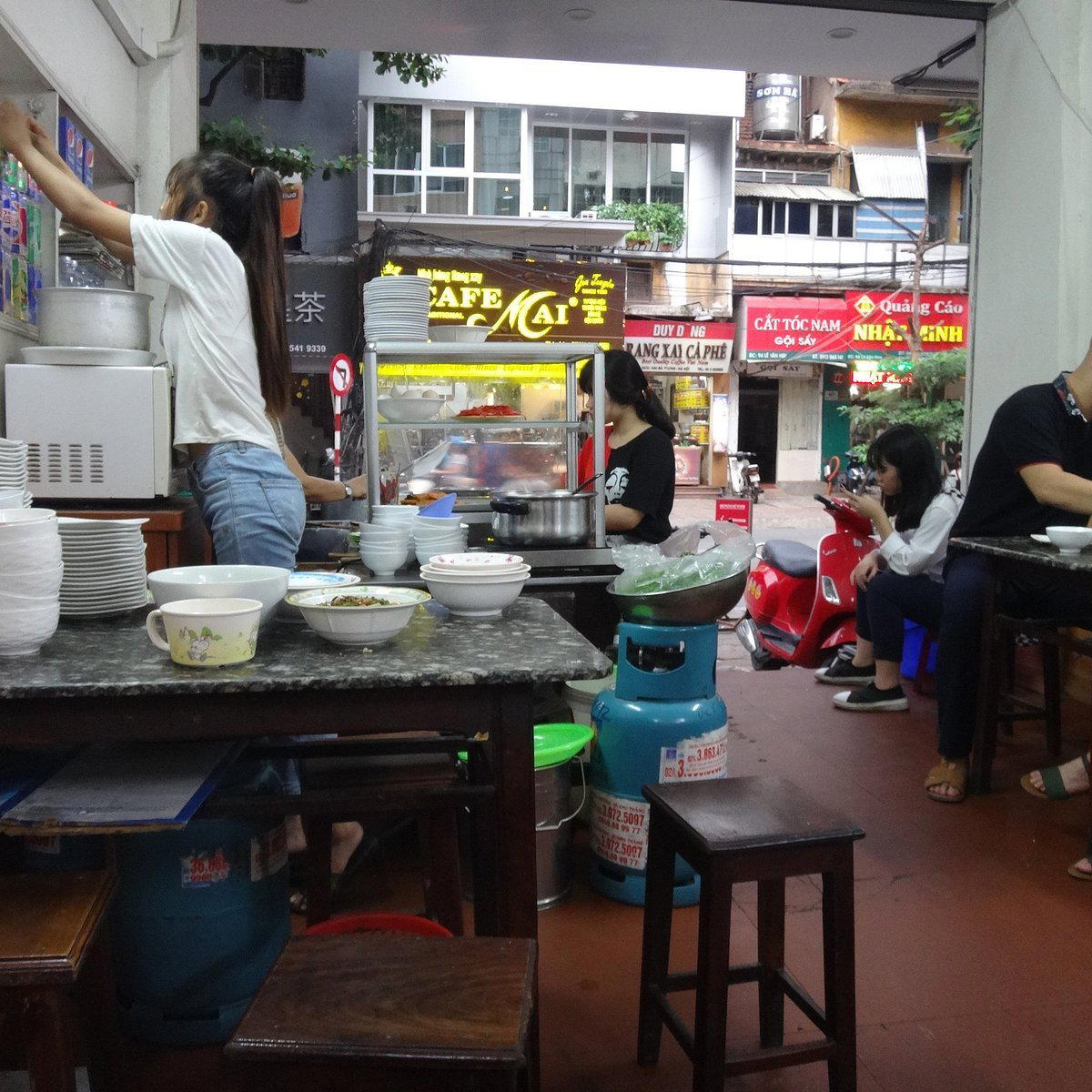
Bustling, casual street-level dining with cramped but energetic atmosphere; overflow seating on sidewalk and second floor during peak hours; authentic Old Quarter charm.