Our verdict
Mi Quang Ba Vi sits on Lê Đình Dương in Da Nang's Hải Châu district, serving the noodle dish that defines central Vietnamese cooking. The format is casual, the prices are local, and the bowl is the point: wide rice noodles in a concentrated broth that tilts toward the regional rather than the generic. For anyone tracing how a single dish evolves across Vietnam's central corridor, this address is a practical starting point.

Pearl is the En Primeur Club membership app, where members save venues, book tables and use the concierge.
The menu
What to order
- Mi Quang with pork and shrimp
What Mi Quang Looks Like in Its Natural Habitat
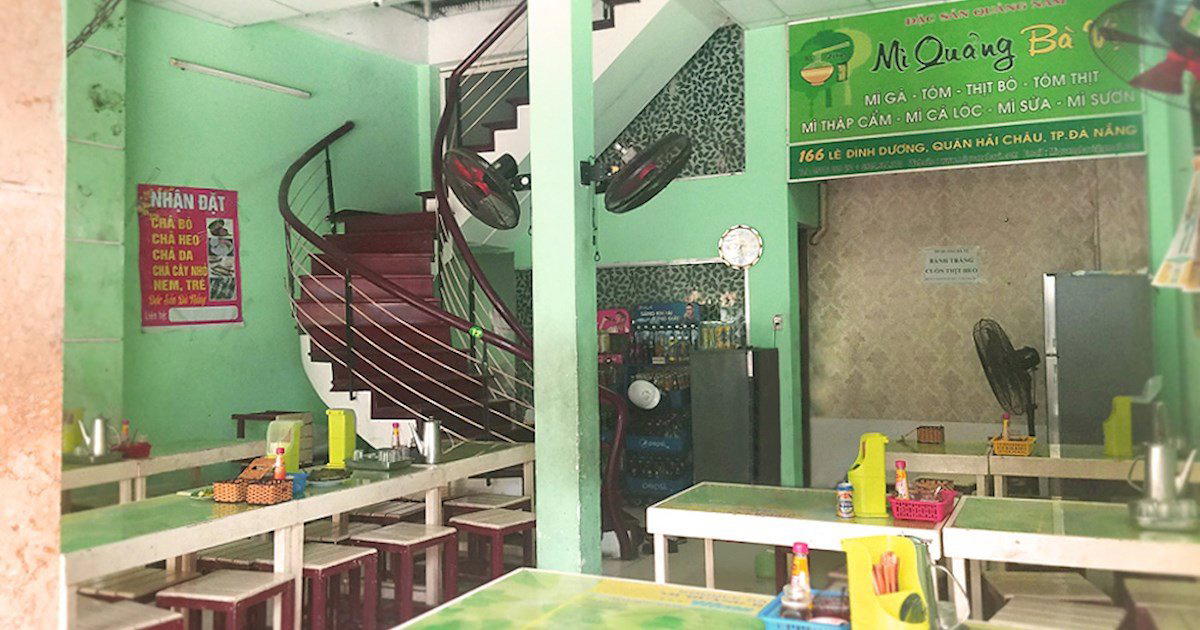
Walk along Lê Đình Dương during a Da Nang morning and the city operates at a register that finer-dining addresses in the country never quite reach: plastic stools pulled close to low tables, the smell of rendered pork fat cutting through humid air, and the kind of transactional speed that signals a regular clientele rather than a tourist rotation. Mi Quang Ba Vi sits inside that rhythm. The address at 166 Lê Đình Dương places it in Hải Châu, Da Nang's commercial and residential core, where the district's density produces exactly the kind of foot-traffic economy that keeps a single-dish specialist viable across years of operation.
The physical space communicates its priorities immediately. This is a room built for throughput and familiarity, not occasion. What that means in practice is that the bowl itself carries the entire editorial weight of the visit, which is precisely how mi quang is supposed to work.
The Dish and Where It Comes From
Mi quang is one of the most geographically specific dishes in Vietnamese cooking. Unlike pho, which has migrated into an internationally legible format, or bun bo Hue, which has developed a recognisable profile abroad, mi quang remains anchored to Quảng Nam province and the surrounding central region. The name says as much: mi quang translates roughly as "Quảng noodles," a regional label attached to a preparation style rather than a single recipe. For context on how the broader Quảng Nam culinary tradition extends into restaurant culture, the editorial team at EP Club has also covered Quảng Nam in Nam Giang.
The noodle itself is a wide, flat rice noodle cut thicker than pho's strands and cooked to a texture that holds its shape under a measured pour of broth. And this is where mi quang diverges most sharply from its northern and southern counterparts: the broth is used sparingly, almost as a seasoning rather than a base. A traditional bowl arrives with just enough liquid to coat the noodles, relying instead on toppings, fresh herbs, and the crunch of roasted rice crackers to build complexity. The result is closer in architecture to a dressed noodle salad than a soup, which explains both its regional distinctiveness and why it has proven harder to translate outside its home territory.
Ingredient Sourcing and Regional Identity
The sourcing logic behind mi quang is inseparable from the dish's character. Central Vietnam's protein traditions lean on whatever the local geography provides: shrimp from the coastal inlets, pork from small-scale inland farming, and in some preparations, chicken or fish from the river systems that run through Quảng Nam. The herbs that finish the bowl, including banana blossom, fresh mint, and Vietnamese coriander, come from the lowland gardens that have supplied Da Nang's market stalls for generations.
This sourcing pattern matters because it is what keeps mi quang from standardising the way pho has. When the proteins and aromatics are tied to a specific geography, the dish resists the kind of industrial scaling that flattens regional character. A bowl of mi quang at a specialist in Hải Châu will reflect the market availability of that week, the particular balance a cook has developed over years with local shrimp varieties, and the herb supply from farms within the province. That specificity is exactly what distinguishes this category of Vietnamese cooking from the more export-ready formats. For comparison, the upper register of Vietnamese dining, where sourcing is curated and documented in detail, can be seen at Gia in Hanoi or at Akuna in Ho Chi Minh City, both of which build ingredient narratives into their editorial identity in ways that a neighbourhood specialist like this one does not need to articulate because the sourcing is simply the daily operating condition.
The roasted rice cracker, bánh đa, deserves particular attention as an ingredient marker. It is not a garnish in the decorative sense but a textural and flavour component that distinguishes an authentic preparation from a shortcut version. Its production involves a specific drying and roasting process that is part of the craft economy surrounding the dish, and its presence in the bowl signals that the kitchen is sourcing from producers who make it properly.
Where Mi Quang Ba Vi Sits in Da Nang's Eating Scene
Da Nang's restaurant landscape covers a wide range. At the premium end, addresses like La Maison 1888 in Da Nang operate in a French contemporary register that has no overlap with a mi quang specialist. At the mid-market level, venues like Waterfront Restaurant and Bar Da Nang and Red Sky Steakhouse serve the city's international visitor base with formats those visitors already understand. Mi Quang Ba Vi operates in neither of those registers. For a broader look at what Thanh Khe and the surrounding districts offer across price points and formats, the full Thanh Khe restaurants guide maps the relevant options.
Within central Vietnam, the mi quang specialist sits in a category alongside Hue's bun bo houses, Hoi An's cao lau counters, and the banh mi operations that have developed their own geographic identities. The Cargo Club Cafe and Restaurant in Hoi An and Saffron in Hue City both operate closer to the mid-market tourist-facing register, which illustrates how differently the central Vietnamese dining category splits depending on who the kitchen is cooking for. Addresses like Bau Troi Do in Son Tra and Nhà hàng Madame Lân in Hai Chau represent other points on the Da Nang spectrum worth understanding before visiting.
Further afield, for reference on how Vietnamese cooking performs at international fine-dining scale, Le Bernardin in New York City and Lazy Bear in San Francisco demonstrate what happens when technique and sourcing documentation become the full programme. Mi Quang Ba Vi operates at the opposite end of that spectrum, where none of that apparatus is necessary because the dish has been doing its own work for decades. Other regional Vietnamese addresses worth cross-referencing include Le Pont Club in Hai Phong, Phuong Nhung Restaurant in Cat Hai, Duyên Anh Restaurant in Phu Vang, Phước Hòa 5 in Cam Le, and Bien 14 Seafood Buffet Restaurant in Hao Long for a fuller picture of how single-focus and regional Vietnamese specialists operate across the country's central and northern zones.
Practical Considerations
Mi Quang Ba Vi is located at 166 Lê Đình Dương in Hải Châu, Da Nang, within walking distance of the district's main commercial streets. The format is street-level casual, which means early morning or late morning visits align with when the kitchen is running at its freshest, as is typical for this category of Vietnamese specialist. No booking infrastructure exists for a venue of this type; arrival is the method. Pricing sits at the local market rate for the dish, consistent with the neighbourhood's eating economy rather than any tourist-facing premium.
Frequently asked questions
Is Mi Quang Ba Vi suitable for children?
Mi quang is a broth-light noodle dish served with toppings such as herbs, peanuts, and protein, making it accessible to most palates including younger diners. The setting at 166 Lê Đình Dương is a casual street-level format with no formal service constraints. Da Nang's local noodle counters of this type are routinely used by families throughout the morning hours.
Is Mi Quang Ba Vi formal or casual?
Mi Quang Ba Vi operates as a casual daytime counter on Lê Đình Dương in Hải Châu, Da Nang. There is no dress code, no reservation system, and no expectation of occasion dining, the format is walk-in, order, and eat. This is the standard operating model for regional noodle specialists across Central Vietnam.
How does Mi Quang Ba Vi compare to other places to eat mi quang in Da Nang?
Da Nang has a range of mi quang options across Hải Châu and the surrounding districts, from pavement stools to air-conditioned shophouses. Mi Quang Ba Vi's address at 166 Lê Đình Dương places it in the commercial centre of Hải Châu, which draws a local working crowd rather than a tourist circuit, a reliable signal that the kitchen is calibrated for repeat regulars rather than one-time visitors. For Central Vietnamese cooking at the premium end, Da Nang also hosts addresses like La Maison 1888, but mi quang itself remains a dish of the streets, not of fine-dining menus.
What dish is Mi Quang Ba Vi famous for?
The venue specialises in mi quang, a Central Vietnamese noodle dish that is specific to the Da Nang and Quang Nam region. Unlike pho, mi quang uses wide, turmeric-tinted rice noodles served with a small amount of concentrated broth rather than a full soup base, finished with roasted peanuts, fresh herbs, and sesame crackers. The dish does not travel as widely as pho, which makes addresses like this one on Lê Đình Dương a primary reference point for visitors seeking the regional original.
Where do I go for Mi Quang Ba Vi?
Mi Quang Ba Vi is located at 166 Lê Đình Dương, Hải Châu, Đà Nẵng 550000, Vietnam, Thanh Khe.
How It Stacks Up
Comparable venues nearby, for context on price, style, and recognition.
| Venue | Cuisine | Price | Notes |
|---|---|---|---|
| Mi Quang Ba ViThis venue (the venue you are viewing) | Authentic Mi Quang Noodles | $1–10 | Not listed |
| Waterfront Restaurant & Bar Da Nang | Western-Oriented International Restaurant & Bar | $20–30 | Hai Chau |
| Red Sky Steakhouse | Premium Steakhouse | Not listed | Thanh Khe |
| Bà Diệu | Traditional Vietnamese Bún Bò Huế | Not listed | Thanh Khe District |
Continue exploring
More in Thanh Khe
Restaurants in Thanh Khe
All restaurants in Thanh Khe →
Bars in Thanh Khe
All bars in Thanh Khe →
Details
- Rustic
- Cozy
- Casual Hangout
- Family
- Standalone
- A La Carte
Current opening hours
- Monday
- 6 AM–11 PM
- Tuesday
- 6 AM–11 PM
- Wednesday
- 6 AM–11 PM
- Thursday
- 6 AM–11 PM
- Friday
- 6 AM–11 PM
- Saturday
- 6 AM–11 PM
- Sunday
- 6 AM–11 PM
Hours can change for holidays and private events. Hours as of .
Casual local noodle shop with simple, no-frills atmosphere focused on the dish.