
Michelin Bib Gourmand
Our verdict
A specialist in chả cá, the turmeric-marinated fish dish that has defined one pocket of Hanoi's Old Quarter for generations, this Đường Thành address holds back-to-back Michelin Bib Gourmand recognition for 2024 and 2025. The format is narrow and focused: a single dish, cooked tableside, at a price point that keeps the tradition accessible.

Pearl is the En Primeur Club membership app, where members save venues, book tables and use the concierge.
The menu
What to order
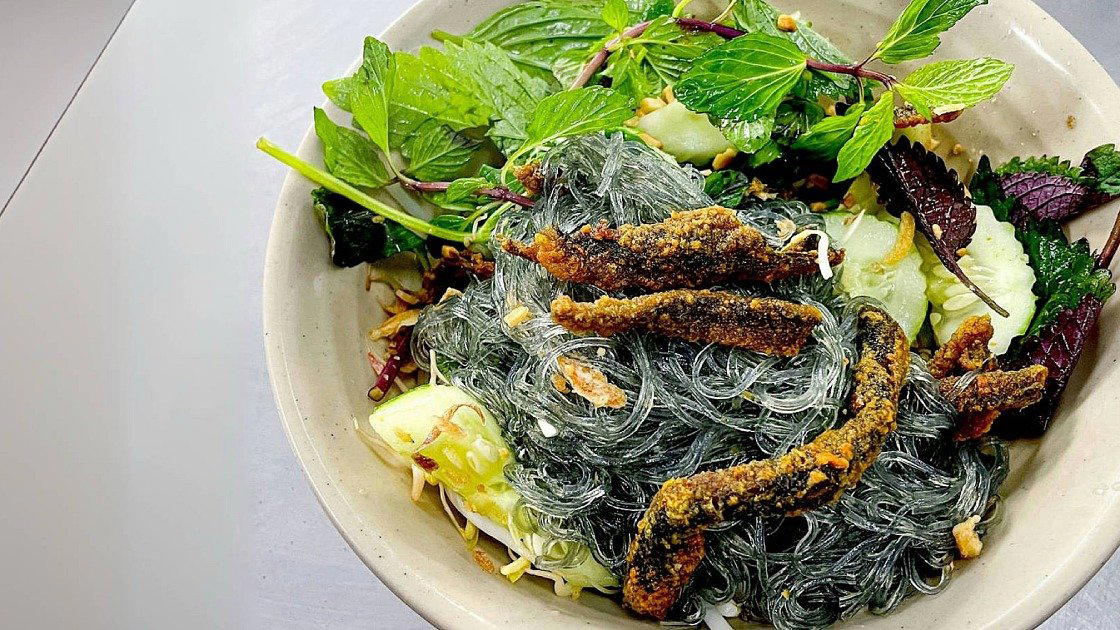
- Cha Ca (turmeric grilled fish with dill and vermicelli)
- Spring rolls
- Fish stomach
Where Đường Thành Meets a Dish That Defines a District
The Old Quarter of Hanoi operates on its own logic. Streets in Hoàn Kiếm were historically organised by trade, each lane associated with a specific craft or commodity, and traces of that system persist today in everything from the architecture to the eating. Đường Thành sits inside that fabric, a narrow corridor in the commercial core where the activity on the pavement is as much part of the meal as anything that arrives at the table. At the address numbered 6B, Chả Cá Thăng Long has staked its reputation not on breadth of menu but on a single dish, prepared in a manner that has remained largely unchanged across the generations this style of cooking has existed in Hanoi.
That dish is chả cá. In its Hanoi form, turmeric-marinated white fish arrives at the table on a sizzling pan alongside dill and spring onion, the herbs wilting into the hot fat as the fish finishes cooking. The format is participatory: diners manage the pan themselves, assembling each bite with rice noodles, roasted peanuts, shrimp paste, and fresh herbs. The result is less a plate delivered to you than a process you complete. This is not a recent innovation in experiential dining; it is simply how the dish has always been served, and the Old Quarter has multiple addresses built around it. What distinguishes the Đường Thành address is the Michelin Bib Gourmand, awarded in both 2024 and 2025, which positions it within a specific peer bracket: high-quality cooking at a price point the guide judges accessible relative to the city's broader range.
The Bib Gourmand Bracket in Hanoi's Current Scene
The Michelin Bib Gourmand is not a consolation prize for restaurants that fell short of a star. It is a separate assessment, targeting places where quality and value intersect in a way the guide considers worth marking. In Hanoi, that bracket covers a range of formats and price points, from modern Vietnamese cooking rooms to single-dish specialists. Chả Cá Thăng Long at 6B Đường Thành occupies the latter category, and back-to-back recognition across 2024 and 2025 confirms that the standard is consistent rather than a one-year anomaly.
For context on how the Hanoi scene is stratified: restaurants like Gia and Hibana by Koki hold single Michelin stars and operate at the ₫₫₫₫ price tier, while Tầm Vị holds a Michelin star at the ₫₫ level, demonstrating that the guide is awarding recognition across the full price range in this city. 1946 Cua Bac operates at the single ₫ tier without award recognition, showing the Bib Gourmand carries genuine selection weight. At ₫, Chả Cá Thăng Long sits at Hanoi's most accessible price tier while holding a credential that places it among the city's editorially validated addresses.
What the Dish Tells You About the Old Quarter
Chả cá as a category has a fixed geography in Hanoi. The dish is so associated with one particular Old Quarter street that the street itself was renamed Chả Cá for a period, and the preparation style spread to nearby addresses as demand grew. What you find today across the district is a cluster of restaurants each claiming lineage to the original tradition, differentiated less by technique than by location, price, and the specific calibration of their marinade. The Đường Thành address enters that competitive set with the distinction of external validation.
The Old Quarter eating experience more broadly involves density and noise. Seating in these rooms tends to be close, tables fill quickly at peak hours, and the kitchens are small. That is not a drawback specific to this address; it is the format of the neighbourhood. The participatory cooking element of chả cá means tables stay occupied for longer than a standard dish service, which has practical implications for timing. Arriving early in a meal session, or outside peak lunch and dinner hours, reduces wait time at addresses that do not take reservations in the conventional sense.
Planning the Visit
The address is 6B P. Đường Thành, in the Phố cổ Hà Nội area of Hoàn Kiếm district. The single-₫ price tier means a full meal for two, with drinks, is comfortably within the range of what visitors to the Old Quarter budget for a local lunch or dinner.
For those building a broader Hanoi eating itinerary, the Old Quarter and surrounding Hoàn Kiếm area connect easily to other Bib Gourmand and starred addresses. The Đường Thành location makes it direct to combine with Hoàn Kiếm Lake area dining and Old Quarter street eating in a single afternoon or evening circuit. Explore the full range of options in our full Hanoi restaurants guide, and find accommodation options in our full Hanoi hotels guide.
Chả Cá Beyond Hanoi
The dish travels less cleanly than pho or banh mi, in part because the tableside format requires specific equipment and because the dill-forward herb profile reads as distinctly northern Vietnamese rather than universal. Outside Vietnam, the format appears occasionally in restaurants working with regional specificity rather than broad Vietnamese-American or Vietnamese-European menus. Berlu in Portland and Camille in Orlando represent the kind of US Vietnamese cooking that takes northern Vietnamese traditions seriously, while Ăn Chơi in Hong Kong and An Nam in Singapore position Hanoi-style dishes for regional audiences. Within Vietnam, Akuna in Ho Chi Minh City and Ăn Thôi in Da Nang show how northern cooking traditions translate southward, and La Maison 1888 in Da Nang anchors the higher end of the national dining conversation. For regional context further afield, Agave in Ubon Ratchathani offers a point of comparison for how Vietnamese cooking is received across the Thai border.
Back in Hanoi, the surrounding neighbourhood offers further depth for anyone spending more than a day in the city. A Bản Mountain Dew, Bếp Prime, and Cau Go each represent a different register of the city's dining scene, from northern Vietnamese regional cooking to more formal Vietnamese dining rooms overlooking Hoàn Kiếm Lake. The full Hanoi bars guide, full Hanoi wineries guide, and full Hanoi experiences guide extend the picture for visitors planning a longer stay.
Frequently asked questions
Who runs the kitchen at Chả Cá Thăng Long (6B Duong Thanh Street)?
The chef associated with Chả Cá Thăng Long (6B Duong Thanh Street) is Chả Cá Thăng Long: NA.
Does Chả Cá Thăng Long (6B Duong Thanh Street) have a Michelin star or similar recognition?
Chả Cá Thăng Long (6B Duong Thanh Street) has received recognition including: Michelin Bib Gourmand (2025); Michelin Bib Gourmand (2024).
What do people recommend at Chả Cá Thăng Long (6B Duong Thanh Street)?
The restaurant is built around a single dish: chả cá, turmeric-marinated fish cooked tableside with dill and spring onions. That focus is the point, this is not a multi-page menu operation. Michelin awarded it the Bib Gourmand in both 2024 and 2025, recognising quality at a price point that sits at the single-₫ tier, meaning a full meal for two remains accessible by any standard in Hanoi.
Cuisine Context
| Venue | Cuisine | Price | Awards | Notes |
|---|---|---|---|---|
| Chả Cá Thăng Long (6B Duong Thanh Street)This venue (the venue you are viewing) | Traditional Hanoi Cha Ca | $1–10 | Michelin Bib Gourmand | Not listed |
| Hibana by Koki | Michelin-Starred Japanese Teppanyaki | $200–300 | 1 Michelin Star · La Liste Top Restaurants | Teppanyaki, ₫₫₫₫ |
| Tầm Vị | Northern Vietnamese Home-Style | $10–20 | 1 Michelin Star | Vietnamese, ₫₫ |
| Gia | Modern Vietnamese Fine Dining | $100–150 | 1 Michelin Star · La Liste Top Restaurants | Vietnamese Contemporary, ₫₫₫₫ |
| 1946 Cua Bac | Northern Vietnamese | $10–20 | Michelin Bib Gourmand | Not listed |
| Bun Cha Ta (Nguyen Huu Huan Street) | Authentic Vietnamese Bun Cha | $1–10 | Michelin Bib Gourmand | Not listed |
Recognition history
Dated appearances from independent guides and award organizations, with the underlying list record or original source where available.
Michelin Bib Gourmand
Michelin
Full recognition history (3 entries)
Michelin Bib Gourmand
Michelin
Michelin Bib Gourmand
Michelin
Continue exploring
More in Hanoi
Restaurants in Hanoi
All restaurants in Hanoi →
Bars in Hanoi
All bars in Hanoi →
Details
- Classic
- Well Known
- Casual Hangout
- Group Dining
- Open Kitchen
- Beer Program
- A La Carte
- Gluten Free Options
Current opening hours
- Monday
- 9 AM–11 PM
- Tuesday
- 9 AM–11 PM
- Wednesday
- 9 AM–11 PM
- Thursday
- 9 AM–11 PM
- Friday
- 9 AM–11 PM
- Saturday
- 9 AM–11 PM
- Sunday
- 9 AM–11 PM
Hours can change for holidays and private events. Hours as of .
Busy and lively atmosphere in a spacious, clean colonial building with sizzling table-side cooking and rapid service.