
Tabelog 100 #32
Our verdict
Shiogama sits on Miyagi Bay as one of Japan's principal fishing ports, and Chimatsushima draws directly from that supply chain. The restaurant occupies an address in Nagasawacho where proximity to the wholesale market is a working advantage, not a marketing claim. For those tracing where serious seafood dining outside Tokyo's premium corridors actually happens, this is a practical starting point.

Pearl is the En Primeur Club membership app, where members save venues, book tables and use the concierge.
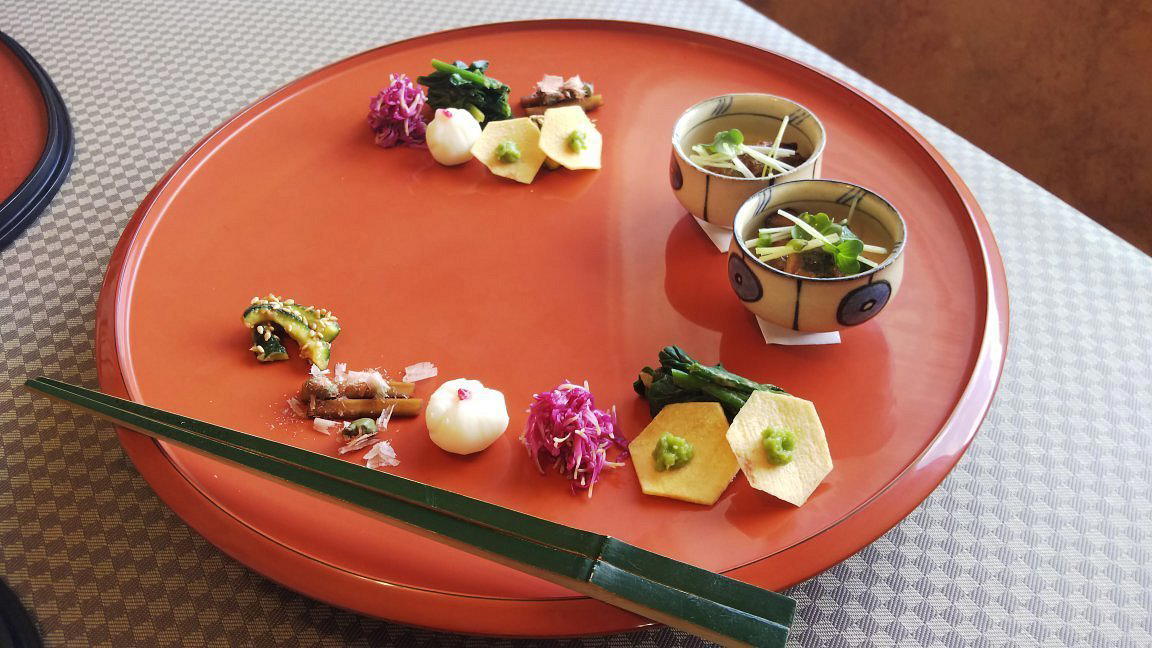
Where the Catch Defines the Kitchen
Shiogama is not a city that announces itself. Approaching from Sendai on the Senseki Line, the port resolves into view incrementally: fishing vessels, wholesale auction houses, the industrial geometry of a working harbour that supplies much of Tohoku's seafood market. The city processes more tuna per capita than almost any port in northern Honshu, and its daily auctions set price benchmarks that ripple outward to restaurant districts in Sendai and beyond. Chimatsushima, at 15-1 Nagasawacho, sits inside this supply geography rather than adjacent to it. That physical fact shapes what ends up on the table.
In Japan's premium dining conversation, ingredient provenance has become a formal credential. Restaurants from Harutaka in Tokyo to Gion Sasaki in Kyoto build menus around documented supplier relationships, treating the fishing boat or the farm as a co-author of the dish. In cities far from the source, that relationship requires active logistics. In Shiogama, it requires proximity. The distance between the morning auction floor and a restaurant kitchen here is measured in minutes, and that compression changes what a kitchen can reasonably promise.
The Port as Pantry
Miyagi Prefecture's coastline produces a specific range of product: Pacific bluefin tuna from offshore waters, oysters and scallops from the bay's aquaculture zones, sea urchin from the rocky reefs of Kinkasan island to the east. These are not generic seafood categories. Miyagi oysters develop a salinity profile distinct from those grown in western Japan, shaped by the cold Oyashio current mixing with warmer Kuroshio-influenced water. The prefecture's sea urchin, particularly murasaki uni harvested in late spring and early summer, carries a sweetness that diverges noticeably from Hokkaido's bafun uni. A kitchen in Shiogama that sources locally is not simply buying fresh product; it is working with a specific flavour register that is partly geological, partly seasonal, and partly the product of cold-water upwelling that concentrates nutrient density.
For context, consider what restaurants working at distance from their source must manage. HAJIME in Osaka and Goh in Fukuoka build supplier networks across prefectural lines, with the logistics overhead that entails. Chimatsushima's position in Shiogama removes that layer. The supply chain argument here is structural, not aspirational.
Shiogama's Place in Japan's Regional Dining Map
Japan's serious dining geography has expanded significantly over the past decade. The Michelin Guide's regional editions, which now cover Miyagi alongside major metropolitan areas, have brought critical attention to restaurants outside the Tokyo-Osaka-Kyoto axis. Venues in Tohoku, Kyushu, and the San'in coast have entered the conversation that was once dominated by urban counters. affetto akita in Akita and aki nagao in Sapporo represent the northern expansion of that critical map, as does Ajidocoro in Yubari District. Shiogama participates in that regional moment from a specific angle: it is a working port city, not a repurposed tourism destination, and the dining character here reflects that difference.
The comparison matters for calibrating expectations. Dining in Shiogama does not replicate the mise-en-scene of a Kyoto machiya kaiseki room or the counter theatre of a Ginza omakase. The frame is more direct. Product quality is the primary claim, and the city's infrastructure, a morning fish market that functions as one of Japan's significant wholesale nodes, is the evidence behind that claim. Restaurants here operate inside that system rather than performing distance from it.
For readers tracking Japanese dining beyond the obvious circuits, the our full Shiogama restaurants guide maps the city's options with that context in mind. The port's wholesale market is also publicly accessible on weekdays for visitors who want to understand the supply side before sitting down to eat. That sequencing, market then meal, is worth considering as a way to read the city's food logic from the ground up.
Positioning Within Japan's Seafood Dining Tier
Japan's seafood restaurant categories are not uniform. At one end, Tokyo counters like Harutaka operate at the top of an omakase price structure where seatings are limited, booking windows extend months ahead, and the premium reflects both ingredient cost and counter prestige. Regional restaurants working with equivalent or superior raw material often price against a different reference point, shaped by local labour costs, lower real estate overhead, and a clientele that includes working professionals and industry buyers rather than destination tourists alone. That asymmetry can advantage the informed visitor. Comparable product in a port city like Shiogama arrives at the kitchen fresher and with less intermediary cost built in.
The dynamic parallels what happens in other seafood-intensive markets globally. Le Bernardin in New York City operates at the apex of a metropolitan premium structure. Port-adjacent restaurants in coastal France or coastal Japan frequently access the same quality tier of product with different economics. The reader who understands this distinction can plan around it.
Planning a Visit
Shiogama is accessible from Sendai via the Senseki Line in under 30 minutes, placing it within practical reach of visitors based in the prefecture's capital. The Shiogama fish market area operates primarily on weekday mornings, and timing a visit to arrive before midday allows access to both the wholesale context and lunch service at restaurants drawing from the morning's catch.
The wider Tohoku region rewards extended itineraries for those interested in ingredient-led dining. akordu in Nara, Abon in Ashiya, Amaki in Aichi, Amegen in Saga, anchoa in Kanagawa, Arakawa in Hyogo, Aji Arai in Oita, and Akakichi in Imabari offer reference points for how regional kitchens across Japan are handling local sourcing with varying degrees of formality and price. Lazy Bear in San Francisco provides an international parallel for how a documented local sourcing commitment translates into a specific dining format. Shiogama fits that broader pattern from its own geographic position: a port city where the argument for eating well is the harbour itself.
Frequently asked questions
Is Chimatsushima okay with children?
No specific family policy is confirmed in available documentation for Chimatsushima. Given that the restaurant sits within Shiogama's working port district at 15-1 Nagasawacho, and the city's dining culture tends toward focused, seafood-led formats, prospective guests with young children should check the venue's official channels before booking to confirm suitability.
What kind of setting is Chimatsushima?
Chimatsushima is in Shiogama, a port city in Miyagi Prefecture that functions as one of Japan's primary tuna landing hubs. The address at 15-1 Nagasawacho places it within the port-adjacent neighbourhood rather than a commercial dining strip, which signals a restaurant oriented around product sourcing rather than foot traffic.
How does Chimatsushima's location in Shiogama affect what's on the plate?
Shiogama processes a significant share of Japan's Pacific bluefin tuna catch, and Miyagi Prefecture's aquaculture operations produce oysters and scallops rated among the country's most consistent. A restaurant operating at 15-1 Nagasawacho in that port city has direct proximity to that supply chain in a way that Tokyo or Osaka venues structurally cannot.
What do people recommend at Chimatsushima?
Shiogama's position as a major Pacific bluefin landing port and Miyagi Bay's aquaculture output, oysters and scallops in particular, define what kitchens here build their menus around. Specific dishes or signatures at Chimatsushima are published details are limited, so current recommendations are best sought through recent visitor reviews or by contacting the restaurant directly. Check the venue's official channels for the latest details.
Where is Chimatsushima in Shiogama?
Chimatsushima is located at 15-1 Nagasawacho, Shiogama, Miyagi 985-0076, Japan, Shiogama.
Comparable Spots, Quickly
Comparable venues nearby, for context on price, style, and recognition.
| Venue | Cuisine | Price | Awards | Notes |
|---|---|---|---|---|
| ChimatsushimaThis venue (the venue you are viewing) | Traditional Samurai Kaiseki | $50–100 | Tabelog 100 #32 | Not listed |
| Sushi Tetsu Honten | Traditional Sushi from Shiogama | $50–100 | Tabelog 100 #87 | Shiogama |
| Chez Nous | Port-town French using local seafood | $30–50 | Tabelog 100 #28 | Kaigandori |
| Sumibi Yakiniku Gura Shiogama honten | Charcoal Yakiniku | Not listed | Tabelog 100 #72 | Shiogama |
| Kameki Zushi | Traditional Sushi | $50–100 | Tabelog 100 #78 | Shintomicho |
| Rakuichi | Traditional Hokkaido Soba Kaiseki | $50–100 | Not listed | Niseko Annupuri |
Recognition history
Dated appearances from independent guides and award organizations, with the underlying list record or original source where available.
Tabelog 100 #32 · No. 32
Tabelog · Tabelog 100 - Japanese cuisine - EAST - 2025
Continue exploring
More in Shiogama
Restaurants in Shiogama
All restaurants in Shiogama →
Wineries in Shiogama
Browse all →
Details
- Elegant
- Scenic
- Intimate
- Sophisticated
- Special Occasion
- Date Night
- Private Dining
- Sake Program
- Waterfront
- A La Carte
Cozy traditional Japanese atmosphere with tatami rooms and counter seating, offering serene lighting and far-reaching ocean and night views.