
Sushi Tetsu Honten puts Shiogama’s port identity at the centre of the meal: sushi built around fish, sake and a room large enough for counter seats, tatami and sunken seating. Its Tabelog 100 Sushi EAST 2025 selection places it in a recognized regional sushi tier, with a higher spend than many casual Shiogama dining rooms.
Pearl is the En Primeur Club membership app — saves, bookings, and concierge access live there. Same editors, same standards.
- Address
- 2-22 Kaigandori, Shiogama, Miyagi 985-0002, Japan
- Phone
- +81 22-362-3261
- Website
- shiogama-sushitetsu.com
 Saves & bookings on Pearl
Approaching Kaigandori, Shiogama feels less like a restaurant district than a working port city that happens to eat with unusual seriousness. The sushi culture here is not an imported luxury pose from Tokyo; it is tied to the city’s fish trade, the Sanriku coast and the everyday expectation that freshness is not a slogan but a baseline. Sushi Tetsu Honten belongs to that context: a house restaurant near Hon-Shiogama Station where counter seating, tatami rooms and sunken seating make the room broader and more local in character than the hushed, micro-counter format associated with Ginza.
That distinction matters. Shiogama sushi rewards diners who care about sourcing more than theatre. The city sits close to some of northern Japan’s productive fishing grounds, and its sushi rooms tend to read as practical, fish-led and sake-aware rather than ceremony-heavy. Sushi Tetsu Honten’s public profile reinforces that position: the restaurant is listed for sushi, marked as particular about fish, and selected for Tabelog 100 Sushi EAST 2025, with earlier Tabelog 100 recognition in 2021. In a city where sushi is part of civic identity, that recognition signals consistency within eastern Japan’s crowded sushi field rather than novelty.
Shiogama sushi is about fish first, not counter mythology
The useful comparison is not only with destination omakase counters. In Shiogama, the better question is how a sushi restaurant translates proximity to seafood into a meal that remains accessible to local groups, visiting families and serious eaters. Sushi Tetsu Honten runs at a higher spend than casual local options such as Sumibi Yakiniku Gura Shiogama honten, while sitting in a different category from non-sushi dining such as Chez Nous. Against Shiogama sushi peers, Kameki Zushi gives a useful price-adjacent reference point, while Chimatsushima helps show how compact this city’s serious dining map can be.
The format also says something about Shiogama. An 83-seat sushi restaurant with counter seats, tatami and sunken seating operates differently from an eight-seat chef’s counter built for scarcity. It can absorb families, friends and visitors who want a fish-led meal without turning dinner into a performance of exclusivity. That does not make it casual in ambition. The Tabelog 100 Sushi EAST 2025 selection places it inside a recognized regional sushi bracket, while its listed drinks program, including sake, shochu and wine, points to a room designed for longer meals rather than quick turnover alone.
Cooking should be understood through category rather than invented dish lore. No named signature item is needed to make the point: this is sushi in a port city, with fish treated as the governing argument. In Japan, sushi reputation often turns on details that outsiders can overlook: rice temperature, cut, seasoning, pacing, the relationship between local catch and national expectations. Shiogama adds another layer because diners arrive with a justified assumption that seafood should carry the meal. A restaurant that earns repeat recognition in that setting is being judged against a demanding local standard.
A recognized room in a city where sushi has home advantage
Tokyo sushi often sells compression: fewer seats, stricter booking windows, a tighter ritual around the chef. Shiogama’s appeal is different. The city gives sushi a civic frame, and the restaurant benefits from that geography without needing to mimic capital-city luxury codes. Its house-restaurant setting and mixed seating make it more flexible than the rarified counter model, while the no-smoking policy, children-welcome listing and take-out service indicate a place integrated into local dining life.
For visitors mapping a wider Shiogama trip, the restaurant belongs in the same planning conversation as the city’s broader dining and travel infrastructure. The restaurant sits close to Hon-Shiogama Station, which makes it easier to fold into a day built around the waterfront, the shrine area or a wider Miyagi itinerary. For broader context, see Our full Shiogama restaurants guide, then pair the meal with Our full Shiogama hotels guide, Our full Shiogama bars guide, Our full Shiogama wineries guide and Our full Shiogama experiences guide.
The reservation note is unusually consequential: reservations are listed as unavailable. That shifts the decision from securing a seat weeks ahead to choosing timing carefully and accepting that demand may shape the day. Closed days also matter in a smaller city, where alternatives at the same level may be fewer than in Sendai or Tokyo. The practical reading is simple: treat the meal as a central part of the day rather than a casual add-on, especially for travelers arriving from outside Shiogama.
Where it fits for a serious Japan dining itinerary
The restaurant is not trying to solve the same problem as a metropolitan tasting-menu counter. Its value lies in showing how a port city expresses sushi when fish access, local custom and regional recognition intersect. For travelers comparing Japan dining styles across cities, that makes it a useful counterpoint to broader restaurant types such as -Grilled beef Sukiyaki- KAMAKURA TANUKIAN 鎌倉 たぬき庵 in Kamakura. 鮪と炭火焼き うお炭 秋葉原店 in Tokyo.cafe in Osaka.know in Kumamoto, (Shoku) Vietnam in Kawasaki, [Curry Senmon Ten] Maruyama Kyoju. in Sapporo, [ki:] in Kyoto, Jōdo Saké Bar in Los Angeles and Onigiri Time in Pasadena.
The editorial case is strongest for diners who want sushi with a sense of place rather than a trophy counter divorced from its city. The Tabelog 100 Sushi EAST 2025 selection supplies the external signal; Shiogama supplies the reason to care. This is the kind of address that makes sense when the itinerary is built around northern Japan’s seafood culture, not when dinner is treated as an isolated luxury booking.
Comparison Snapshot
Comparable venues by cuisine and price in the same metro.
| Venue | Cuisine | Price | Notes |
|---|---|---|---|
| Sushi Tetsu HontenThis venue — the venue you are viewing | Traditional Sushi from Shiogama | $$$ | Not listed |
| Chimatsushima | Traditional Samurai Kaiseki | $$$ | Nagasawacho |
| Kameki Zushi | Traditional Sushi | $$ | Shintomicho |
| Chez Nous | Port-town French using local seafood | $$$ | Kaigandori |
| Sumibi Yakiniku Gura Shiogama honten | Charcoal Yakiniku | $$ | Shiogama |
| Robata | Robatayaki Japanese Grill | $$$ | 倶知安町 |
Recognition history
Dated appearances from independent guides and award organizations, with the underlying list record or original source where available.
Tabelog 100 #87 · No. 87
Tabelog · Tabelog 100 - Sushi - EAST - 2025
Continue exploring
More in Shiogama
Restaurants in Shiogama
Browse all →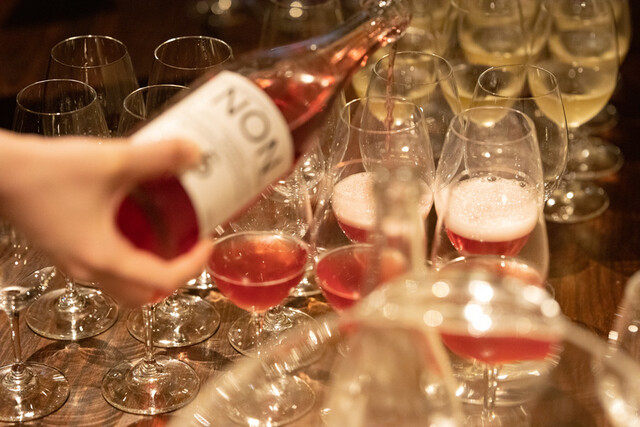
Wineries in Shiogama
Browse all →
At a Glance
- Classic
- Cozy
- Intimate
- Date Night
- Solo
- Family
- Special Occasion
- Chefs Counter
- Standalone
- Sake Program
- Local Sourcing
- Sustainable Seafood
Current opening hours
- Monday
- 11 AM–3 PM, 4:30–9 PM
- Tuesday
- 11 AM–3 PM, 4:30–9 PM
- Wednesday
- Closed
- Thursday
- Closed
- Friday
- 11 AM–3 PM, 4:30–9 PM
- Saturday
- 11 AM–9 PM
- Sunday
- 11 AM–9 PM
Hours can change for holidays and private events. Last verified .
Traditional neighborhood sushi house with a warm, unfussy atmosphere, counter and table seating, and a relaxed, conversational buzz that focuses attention on fresh seafood rather than design theatrics.