

Tabelog Bronze #17
Our verdict
A Tabelog Bronze Award winner every year from 2020 through 2026, Amegen sits in Karatsu, Saga Prefecture, drawing on Edo-period techniques to prepare tsugani, river fish, and wild vegetables served on local Karatsu ware. Ranked among the top 350 restaurants in Japan by Opinionated About Dining, it occupies a quiet but firmly established place in Kyushu's serious dining circuit.

Pearl is the En Primeur Club membership app — saves, bookings, and concierge access live there. Same editors, same standards.
- Address
- 1058-2 Hamatamamachi Gotanda, Karatsu, Saga 849-5102, Japan
- Phone
- +81 50-1724-2537
- Hours
- Mon 11 AM–3:30 PM, 5–9 PMTue ClosedWed 12–3:30 PM, 5–9 PMThu–Sun 11 AM–3:30 PM, 5–9 PM
- Website
- r.goope.jp
- Directions
- Get directions
- Booking
- Book on TableCheck
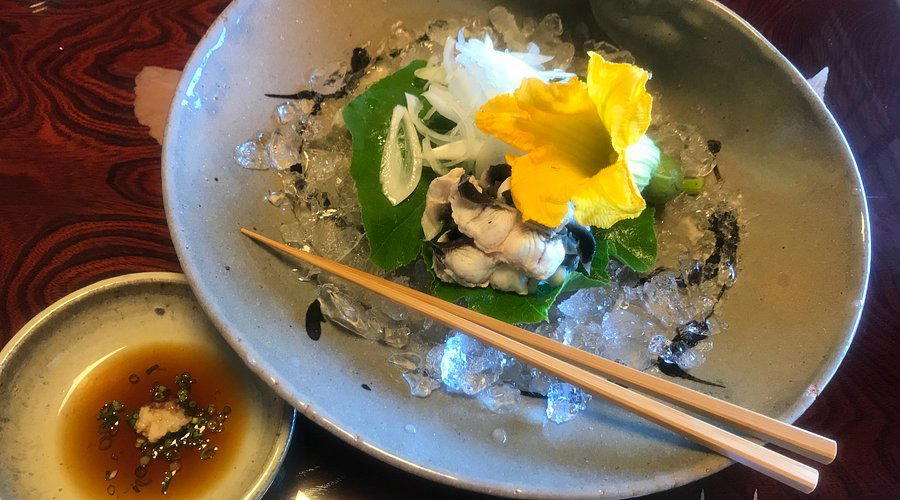
The menu
What to order
- Tsugani crab rice
- Ameyaki sweetfish
- Yamame trout
Where the Ariake Sea Sets the Table
Karatsu, the coastal city on Saga Prefecture's northwest shore, sits at the intersection of two very different bodies of water: the open Genkai Sea to the north and the shallow, nutrient-dense Ariake Sea to the south. That geography is not incidental — it defines the kind of seafood cooking that has developed in this corner of Kyushu over centuries. The tradition here is not the Edo-mae precision of Tokyo's sushi counters, nor the dashi-forward kaiseki refinement of Kyoto. It is something older and more elemental: the preparation of river crabs, wild-caught fish, and foraged mountain vegetables using techniques that the Tabelog description traces back to the Edo period. Amegen, located in Hamatamamachi Gotanda outside Karatsu city proper, operates squarely within that tradition and has been recognized for it continuously, earning the Tabelog Bronze Award every year from 2020 through 2026 and appearing on the Tabelog Japanese Cuisine WEST "Tabelog 100" list in both 2023 and 2025.
For diners arriving from Fukuoka, the route itself is part of the frame. The Nishi-Kyushu Expressway exit at Hamadama IC deposits you into coastal Saga farmland rather than city sprawl. From JR Hamazaki Station, a five-minute taxi ride covers the distance for around 1,180 yen. Showa Bus runs to the Gotanda stop, a one-minute walk from the restaurant. Parking is available directly opposite the building, which matters in a location where the default mode of arrival is by car.
The Sourcing Logic Behind Kyushu Kaiseki
The editorial angle that separates Amegen from comparable kaiseki houses in western Japan is its orientation toward specific, place-bound ingredients rather than a generalised seasonal aesthetic. The Tabelog record notes the kitchen's particular attention to fish and flags tsugani — the local hairy crab harvested from rivers in Saga, as a centerpiece ingredient, alongside river fish and wild vegetables. That combination reflects the dual-watershed character of Karatsu's hinterland, where rivers flowing from the mountains toward the Genkai coast carry both fish and the seasonal produce that grows along their banks.
Tsugani has a defined season, typically autumn, and restaurants that serve it well are shaped by that constraint. The supply is not industrial, these crabs come from specific river systems in Saga and neighboring prefectures, and the window for peak quality is narrow. A kitchen that has built its reputation around this ingredient, as Amegen has, operates on a procurement logic closer to a market-driven fisherman's table than a modern tasting-menu restaurant with a fixed narrative. The same seasonal discipline applies to wild mountain vegetables (sansai), which follow their own spring-to-summer rhythm and are not interchangeable with cultivated alternatives. This is the territory where the Edo-period techniques cited in the restaurant's own description remain genuinely relevant: methods developed to draw out the particular character of wild, fresh, and often delicate ingredients, without obscuring their origin.
For comparison, other well-regarded seafood-focused restaurants operating at serious price points, including Gambero Rosso in Marina di Gioiosa Ionica and Alici Restaurant on the Amalfi Coast, share this same underlying logic: the kitchen's identity is determined by access to a specific coastline or watershed, not by imported technique layered over generic sourcing.
Where Amegen Sits in the Kyushu Dining Circuit
Kyushu has a substantial tier of recognized Japanese cuisine restaurants that operate below the Michelin radar but well above regional obscurity. Opinionated About Dining ranked Amegen at number 307 among all Japan restaurants in 2024 and number 332 in 2025, having listed it as Highly Recommended in 2023. That trajectory, combined with seven consecutive Tabelog Bronze Awards, places it in a stable peer group of serious regional houses. It is not auditioning for the Tokyo fine-dining conversation; it is making an entirely different argument, one about place-specific ingredients and inherited technique, and the rankings suggest that argument has been heard consistently over time.
Within Saga Prefecture itself, the dining field at this price tier is small. Souan Nabeshima and Tsukuta represent other recognized addresses in the prefecture, and Sumiyaki Hamburger Steak Gyusen occupies a very different, lower price bracket. At the national level, the comparison set shifts: Goh in Fukuoka and Gion Sasaki in Kyoto represent the kind of deeply credentialed regional Japanese cooking that earns consistent recognition across multiple platforms. HAJIME in Osaka, Harutaka in Tokyo, and akordu in Nara point toward different culinary traditions entirely. Amegen is not competing in those registers; it is competing on its own terms, within a specific tradition and a specific watershed.
The Room and the Format
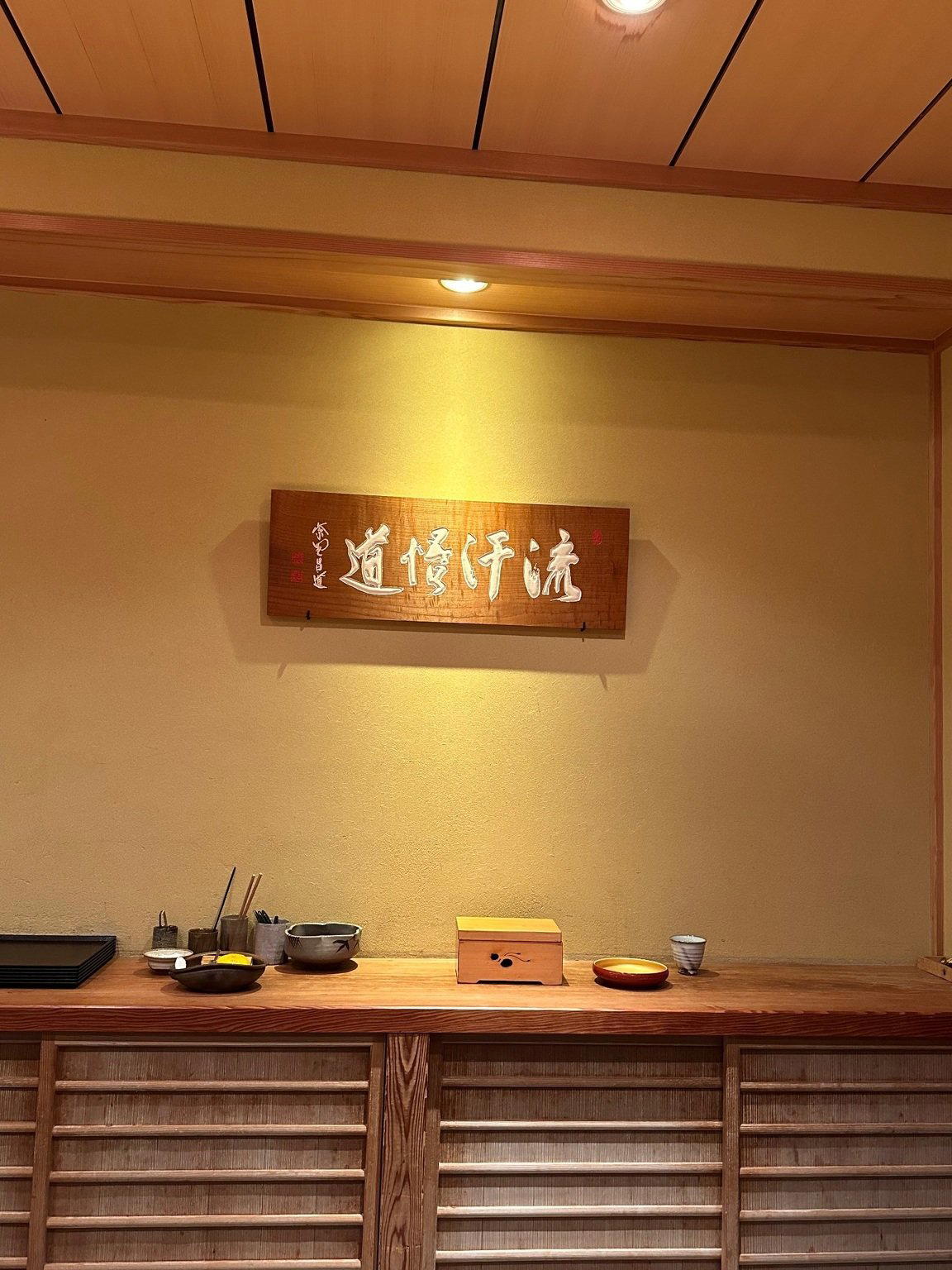
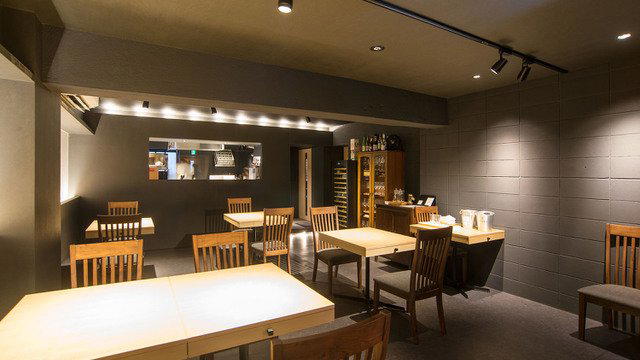
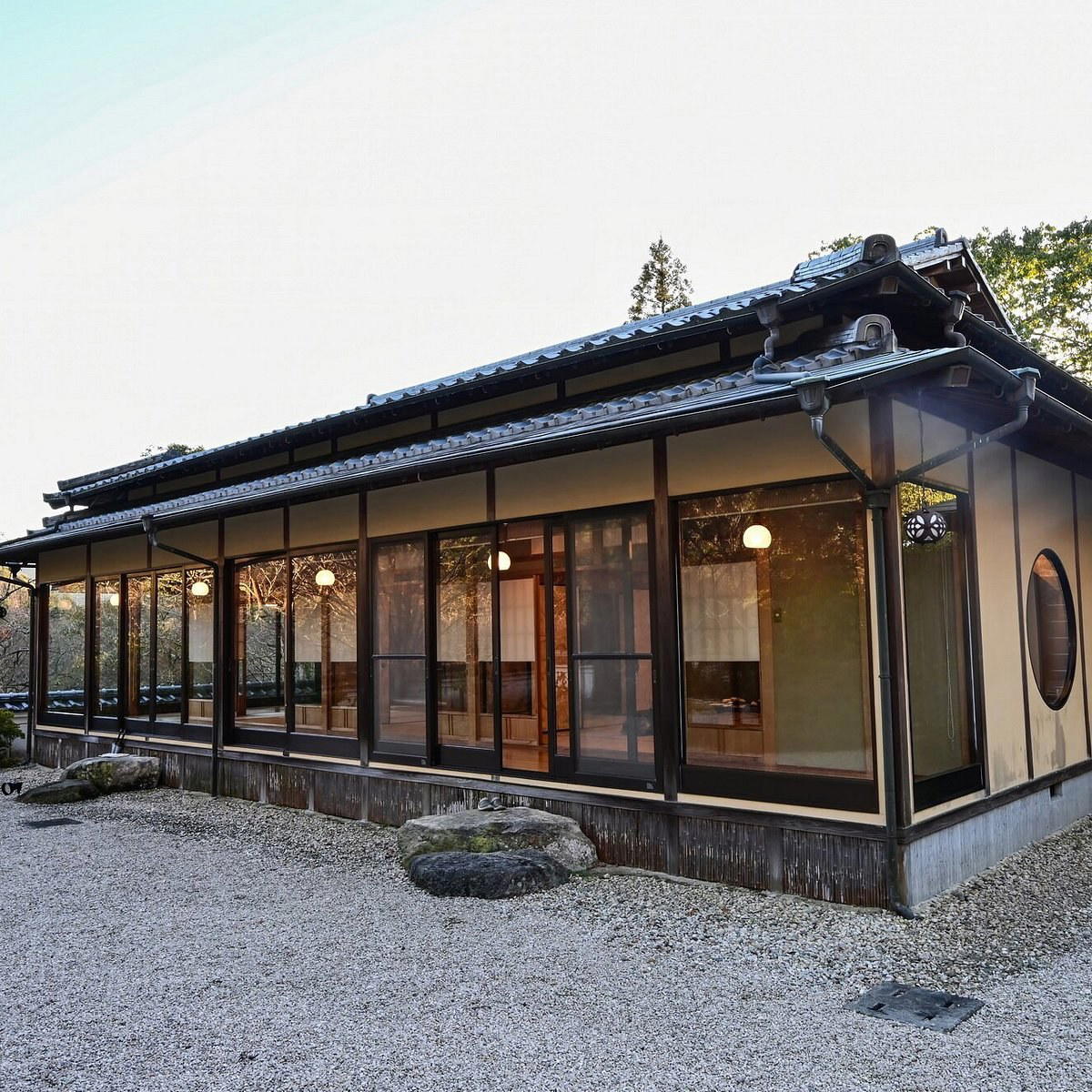
The physical setting reinforces the cooking's orientation. The Tabelog record notes a tatami room, a relaxing space with a beautiful view, and a location described as a hideout. Thirty seats across the dining room, with private rooms available for parties of two or eight, and private use available for groups of 20 to 50 (or above). The drink offering runs to sake (nihonshu) and shochu, both appropriate pairings for the ingredient-forward cooking style. The service format accommodates parties of over 2.5 hours, which at this price point, between 10,000 and 14,999 yen at both lunch and dinner, signals a deliberate meal rather than a quick counter experience. A 10% service charge applies.
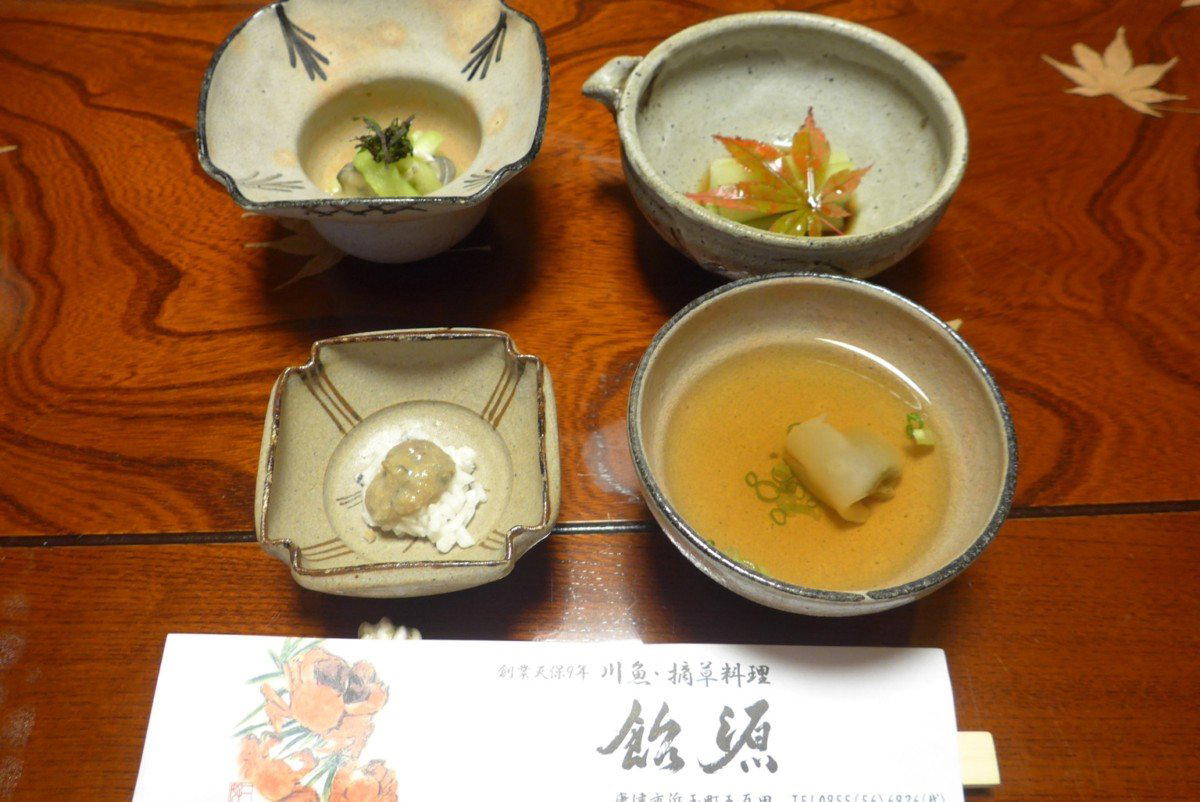
The tatami setting and Karatsu ware presentation are not decorative choices bolted onto a generic kaiseki format. Karatsu ware has a documented history in Japanese tea ceremony and the arts, and its use as tableware in a restaurant that explicitly references the Edo period creates a coherent material context. The food and its vessel come from the same geography. That kind of internal consistency is harder to maintain than it appears and is part of what the Tabelog recognition has tracked over seven years of consecutive awards.
Planning a Visit
Amegen is open for both lunch (from 11:00, or 12:00 on Wednesdays) and dinner (from 17:00), closing at 15:30 and 21:00 respectively. The restaurant is closed on Tuesdays, except when Tuesday falls on a public holiday, in which case the closure shifts to Wednesday. Reservations are available and are necessary for private room bookings, which require at least two weeks of advance notice. Changes to reservation date, time, or party size are subject to a cancellation fee. Credit cards accepted include JCB, AMEX, and Diners; electronic money and QR code payments are not accepted. The restaurant is entirely non-smoking.
Diners traveling specifically for this meal should factor in that Karatsu is manageable as a day trip from Fukuoka (roughly 90 minutes by train via the Chikuhi Line), but the experience of eating in this setting, away from the city and in proximity to the coast and rivers that supply the kitchen, carries weight that a rushed round trip can diminish. Those with more time in the region can refer to our full Saga restaurants guide, our full Saga hotels guide, our full Saga bars guide, our full Saga wineries guide, and our full Saga experiences guide for further context. For those whose Japan itinerary extends to other prefectures, Abon in Ashiya, 1000 in Yokohama, and 6 in Okinawa represent other regional addresses worth tracking on the same trip.
Frequently asked questions
Who is the chef or culinary lead at Amegen?
The chef associated with Amegen is Toyoji Tanaka.
What's Amegen known for in terms of accolades?
Amegen has received recognition including: {"Year":"2026","Award Source":"Tabelog","Award Type":"The Tabelog Award","Award Group":"bronze","Award Group Rank":"17","Restaurant Name":"Ame Gen","Score":"4.24","Budget":"Dinner: JPY 10,000 - JPY 14,999; Lunch: JPY 10,000 - JPY 14,999","B….
What's the must-try dish at Amegen?
Tsugani, the local Saga river crab, is the ingredient most closely associated with the kitchen at Amegen. The Tabelog record specifically identifies it alongside river fish and wild vegetable preparations as the core of what the restaurant does. Availability is seasonal, so its presence on the menu depends on timing your visit accordingly.
What are the opening hours for Amegen?
Hours at Amegen: Hours: Monday 11 am–3 pm, 5–9 pm Tuesday Closed Wednesday 12–3 pm, 5–9 pm Thursday 11 am–3 pm, 5–9 pm Friday 11 am–3 pm, 5–9 pm Saturday 11 am–3 pm, 5–9 pm Sunday 11 am–3 pm, 5–9 pm.
Where exactly is Amegen?
Amegen is located at 1058-2 Hamatamamachi Gotanda, Karatsu, Saga 849-5102, Japan, Saga.
What's Amegen best at?
Amegen's consistency is its most documentable strength: seven consecutive Tabelog Bronze Awards from 2020 through 2026, a score of 4.24, and two selections for the Tabelog Japanese Cuisine WEST 'Tabelog 100' (2023 and 2025) place it firmly among the most recognized Japanese cuisine restaurants in western Japan outside Fukuoka and Osaka. The kitchen's focus on place-specific ingredients — tsugani, river fish, wild vegetables — served on Karatsu ware in a tatami setting reflects a coherent local identity that generalist kaiseki houses rarely sustain at this price point (JPY 10,000–14,999 per person).
Comparable Spots, Quickly
Comparable venues nearby, for context on price, style, and recognition.
| Venue | Cuisine | Price | Awards | Notes |
|---|---|---|---|---|
| AmegenThis venue — the venue you are viewing | Traditional Japanese River Cuisine | $50–100 | Tabelog Bronze #17 | Not listed |
| Tsukuta | Karatsu-mae Edomae Sushi Omakase | $150–200 | Tabelog 100 #89 | Karatsu |
| Restaurant 5 | Seasonal Creative Japanese (Improvisational Course Menu) | $50–100 | Tabelog 100 #52 | .null |
| Kira Honten | Saga Beef Teppanyaki | $50–100 | Not listed | Otakara |
| Sumiyaki Hamburger Steak Gyusen | Charcoal-Grilled Japanese Hamburger Steak | $20–30 | Tabelog Bronze #90 | Kurakami-cho |
| Souan Nabeshima | Seasonal Japanese Kaiseki with Sake Pairing | $300–500 | Tabelog Bronze #420 | Hizen Hamashuku, Kashima City |
Recognition history
Dated appearances from independent guides and award organizations, with the underlying list record or original source where available.
Opinionated About Dining Top Restaurants in Japan Recommended
Opinionated About Dining
Tabelog Bronze #17
Tabelog
Full recognition history (7 entries)
Opinionated About Dining Top Restaurants in Japan Ranked #332
Opinionated About Dining
Tabelog 100 #76 · No. 76
Tabelog · Tabelog 100 - Japanese cuisine - WEST - 2025
Tabelog Bronze
Tabelog
Opinionated About Dining Top Restaurants in Japan Ranked #307
Opinionated About Dining
Opinionated About Dining Top Restaurants in Japan Highly Recommended
Opinionated About Dining
Details
- Classic
- Elegant
- Intimate
- Cozy
- Special Occasion
- Private Dining
- Sake Program
- Local Sourcing
- Waterfront
- A La Carte
- Sake
- Pescatarian Friendly
Current opening hours
- Monday
- 11 AM–3:30 PM, 5–9 PM
- Tuesday
- Closed
- Wednesday
- 12–3:30 PM, 5–9 PM
- Thursday
- 11 AM–3:30 PM, 5–9 PM
- Friday
- 11 AM–3:30 PM, 5–9 PM
- Saturday
- 11 AM–3:30 PM, 5–9 PM
- Sunday
- 11 AM–3:30 PM, 5–9 PM
Hours can change for holidays and private events. Last verified .
Refined tatami private rooms exuding Edo-period history and elegance by the riverbanks.