
Shiogama is a port city, and its sushi culture reads differently from the trophy-counter circuit in Tokyo: provenance matters as much as polish. Kameki Zushi belongs in that conversation through its fish-led sushi and seafood focus, Tabelog Sushi EAST “Tabelog 100” 2025 selection, sake emphasis, and unusually flexible room format for a serious sushi address.
Pearl is the En Primeur Club membership app — saves, bookings, and concierge access live there. Same editors, same standards.
- Address
- 6-12 Shintomicho, Shiogama, Miyagi 985-0022, Japan
- Phone
- +81 22-362-2055
- Website
- kamekisushi.jp
- Directions
- Get directions
 Saves & bookings on Pearl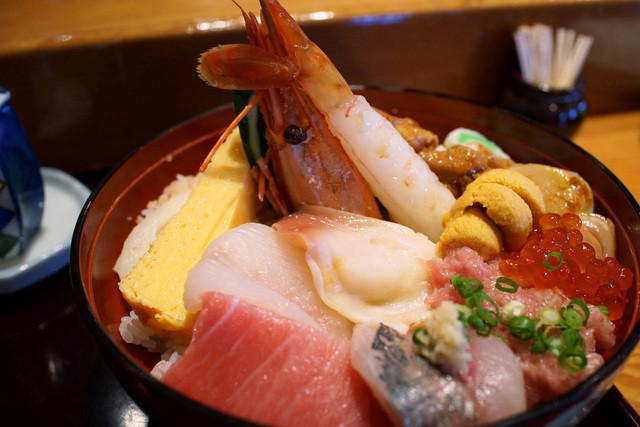
Shiogama’s sushi rooms do not need Ginza theatre to make their case. The city sits beside one of Tohoku’s great fishing cultures, so the strongest meals begin with proximity: seafood moving through local markets, sake from a region that understands cold-water fish, and restaurants built for regular use, not ceremony alone. Kameki Zushi fits that grammar. It is a house-style restaurant, not a hushed urban counter, with counter seating, tables, raised seating, and tatami rooms. The experience is therefore not only the chef-facing seat; it is how a port city makes sushi both occasion and habit.
For travellers mapping Shiogama through food, the city rewards a tighter itinerary than Sendai’s broader dining spread. Sushi is the anchor, but the table is not narrow: Sushi Tetsu Honten frames the higher-spend sushi tier, Chez Nous gives the city a French counterpoint, Sumibi Yakiniku Gura Shiogama honten pulls the evening toward grilled beef, and Chimatsushima adds another local reference point. Together, they show why Shiogama is not a single-meal detour. Plan by category: sushi for port identity, meat or French cooking for contrast, and a slower meal when the city’s scale works in your favour.
Port-city sushi, judged by sourcing rather than spectacle
In Japan, sushi prestige is often flattened into one image: a small counter, a famous chef, and a reservation system that turns dinner into a campaign. Shiogama complicates that hierarchy. Here, fish quality is not an abstract luxury signal; it is part of the city’s working identity. A sushi restaurant described around seafood and a stated focus on fish belongs to a different competitive frame from urban counters trading mainly on scarcity, lineage, or a staged omakase arc.
Kameki Zushi’s recognition on Tabelog Sushi EAST “Tabelog 100” 2025 gives it a clear trust marker without turning it into a trophy hunt. The selection places it among notable sushi addresses in eastern Japan, while its local format keeps it grounded in Shiogama rather than metropolitan sushi theatre. Its Tabelog score of 3.52 is not the point alone; the stronger signal is the combination of category, award selection, and fish-led identity in a city where seafood is the reason to eat sushi.
The sake emphasis also reads as regional logic, not decoration. Nihonshu works especially well with sushi when the meal is built around seafood texture, rice temperature, salt, vinegar, and fat rather than heavy seasoning. In Tohoku, sake culture has the climate and brewing tradition to sit naturally beside cold-water fish. The pairing gives the meal local structure: seafood first, rice as discipline, sake as rhythm. No invented signature roll or branded set is needed.
A serious sushi room that does not force a single mood
The room format separates Kameki Zushi from the tiny-counter model dominating luxury sushi discourse. Seventy-two seats, including 10 counter seats, 10 table seats, 12 raised seats, and 40 tatami mat seats, let it serve different meals without abandoning sushi seriousness. Counter seats suit diners wanting proximity to the work. Tatami seating shifts the meal toward family, friends, and longer conversation. Raised seating and tables widen the audience. In a city where sushi is both local staple and destination meal, that flexibility is not compromise; it is cultural pattern.
This explains why its family-friendly status matters editorially. Many high-end sushi rooms in Japan are structured around quiet adult dining, fixed pacing, and limited seats. Here, children are welcome, private rooms are not offered, and private use is available. The mix points to a restaurant embedded in civic use: suitable for visitors chasing Shiogama’s seafood reputation, and legible for groups and local occasions. Understand the atmosphere through that balance: serious about fish, less rigid about performance.
Compared with the local set, the positioning is useful. Sushi Tetsu Honten sits in a higher dinner spend band, while Chez Nous changes the conversation away from sushi. Sumibi Yakiniku Gura Shiogama honten is the alternative when beef and smoke are the point. The restaurant occupies the port-city middle ground: credible enough for a sushi-focused trip, broad enough in seating and occasion to avoid miniature-counter preciousness.
How to place it in a Shiogama itinerary
Shiogama is small enough that food planning should be deliberate. Start with sushi, then build outward. Our full Shiogama restaurants guide is the practical starting point for comparing local dining styles, while our full Shiogama hotels guide helps decide whether to sleep locally or treat the city as a focused side trip. Drinking options are better checked through our full Shiogama bars guide, and travellers planning beyond restaurants can use our full Shiogama experiences guide. Our full Shiogama wineries guide is less central to the city’s identity than seafood and sake, but keeps the planning map complete.
The broader Japan file is useful when Shiogama is part of a longer route. Travellers moving between regional specialties might pair this port-city sushi lens with beef at -Grilled beef Sukiyaki- KAMAKURA TANUKIAN 鎌倉 たぬき庵 in Kamakura, casual tuna and charcoal cooking at. 鮪と炭火焼き うお炭 秋葉原店 in Tokyo, café culture at.cafe in Osaka, contemporary dining at.know in Kumamoto, Vietnamese cooking at (Shoku) Vietnam in Kawasaki, curry in Sapporo at [Curry Senmon Ten] Maruyama Kyoju. and Kyoto dining at [ki:]. For sake-minded readers in California, Jōdo Saké Bar in Los Angeles and Onigiri Time in Pasadena show how Japanese drinking and rice culture travel outside Japan, though Shiogama’s advantage is simpler: fish has a shorter story when the port is nearby.
The editorial case is clean. This is not for diners who judge sushi only by seat scarcity or chef mythology. It is for travellers who want sushi to explain a city: fish sourcing as the spine, sake as natural partner, and a room that handles serious eating without turning dinner into a museum piece.
A Quick Peer Check
Comparable venues by cuisine and price in the same metro.
| Venue | Cuisine | Price | Notes |
|---|---|---|---|
| Kameki Zushi | Traditional Sushi | $$ | Shintomicho |
| Sushi Tetsu Honten | Traditional Sushi from Shiogama | $$$ | Shiogama |
| Sumibi Yakiniku Gura Shiogama honten | Charcoal Yakiniku | $$ | Shiogama |
| Chimatsushima | Traditional Samurai Kaiseki | $$$ | Nagasawacho |
| Chez Nous | Port-town French using local seafood | $$$ | Kaigandori |
| ごころ | Handmade Sanuki Udon | $$ | Niseko Hirafu |
Recognition history
Dated appearances from independent guides and award organizations, with the underlying list record or original source where available.
Tabelog 100 #78 · No. 78
Tabelog · Tabelog 100 - Sushi - EAST - 2025
Continue exploring
More in Shiogama
Restaurants in Shiogama
Browse all →
Wineries in Shiogama
Browse all →
At a Glance
- Classic
- Cozy
- Group Dining
- Family
- Casual Hangout
- Solo
- Business Dinner
- Standalone
- Sake Program
- Local Sourcing
- Sustainable Seafood
Current opening hours
- Monday
- 11 AM–3 PM, 5:30–9 PM
- Tuesday
- Closed
- Wednesday
- 11 AM–3 PM, 5:30–9 PM
- Thursday
- 11 AM–3 PM, 5:30–9 PM
- Friday
- 11 AM–3 PM, 5:30–9 PM
- Saturday
- 11 AM–3 PM, 5:30–9 PM
- Sunday
- 11 AM–3 PM, 5:30–9 PM
Hours can change for holidays and private events. Last verified .
Traditional house-style sushi restaurant with a relaxed, cozy atmosphere, counter seating, tatami space, and a calm, family-friendly feel.