Our verdict
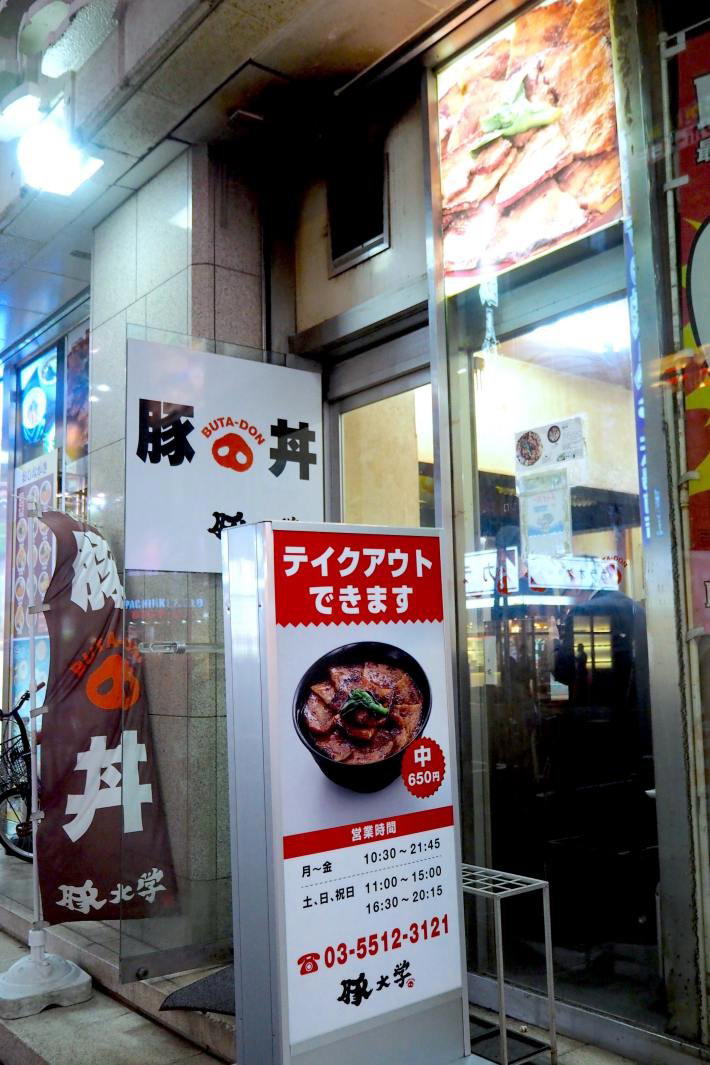
Buta Daigaku sits inside the New Shimbashi Building, one of Tokyo's most persistently old-school salaryman complexes, where the lunch hour runs on tonkatsu and habit rather than reservation systems. The format is built for speed and repetition: pork, rice, and a queue that forms before the shutters go up. It occupies a specific niche in Shimbashi's working-lunch circuit that higher-end alternatives in the neighbourhood do not touch.

Pearl is the En Primeur Club membership app — saves, bookings, and concierge access live there. Same editors, same standards.
- Address
- 新橋2-16-1 (ニュー新橋ビル 1F), 港区, 東京都, 105-0004
- Directions
- Get directions
The menu
What to order
- Butadon - Extra Large (1kg pork)
- Butadon - Large
- Butadon - Medium
- Butadon - Small
Shimbashi at Ground Level
Tokyo's dining hierarchy is well documented at the leading end. The counter omakase seats at Harutaka, the tasting menus at L'Effervescence and Sézanne, the kaiseki progression at RyuGin — these represent one axis of the city's food culture, the formal and the prize-laden. But Tokyo runs on a parallel axis just as precisely calibrated: the lunch-hour specialist that serves a single category of food, at low cost, to the same crowd every working day. Buta Daigaku (豚大学) operates on that second axis, inside the New Shimbashi Building in Minato, a complex that has maintained its bubble-era identity with near-total indifference to the decades that followed.
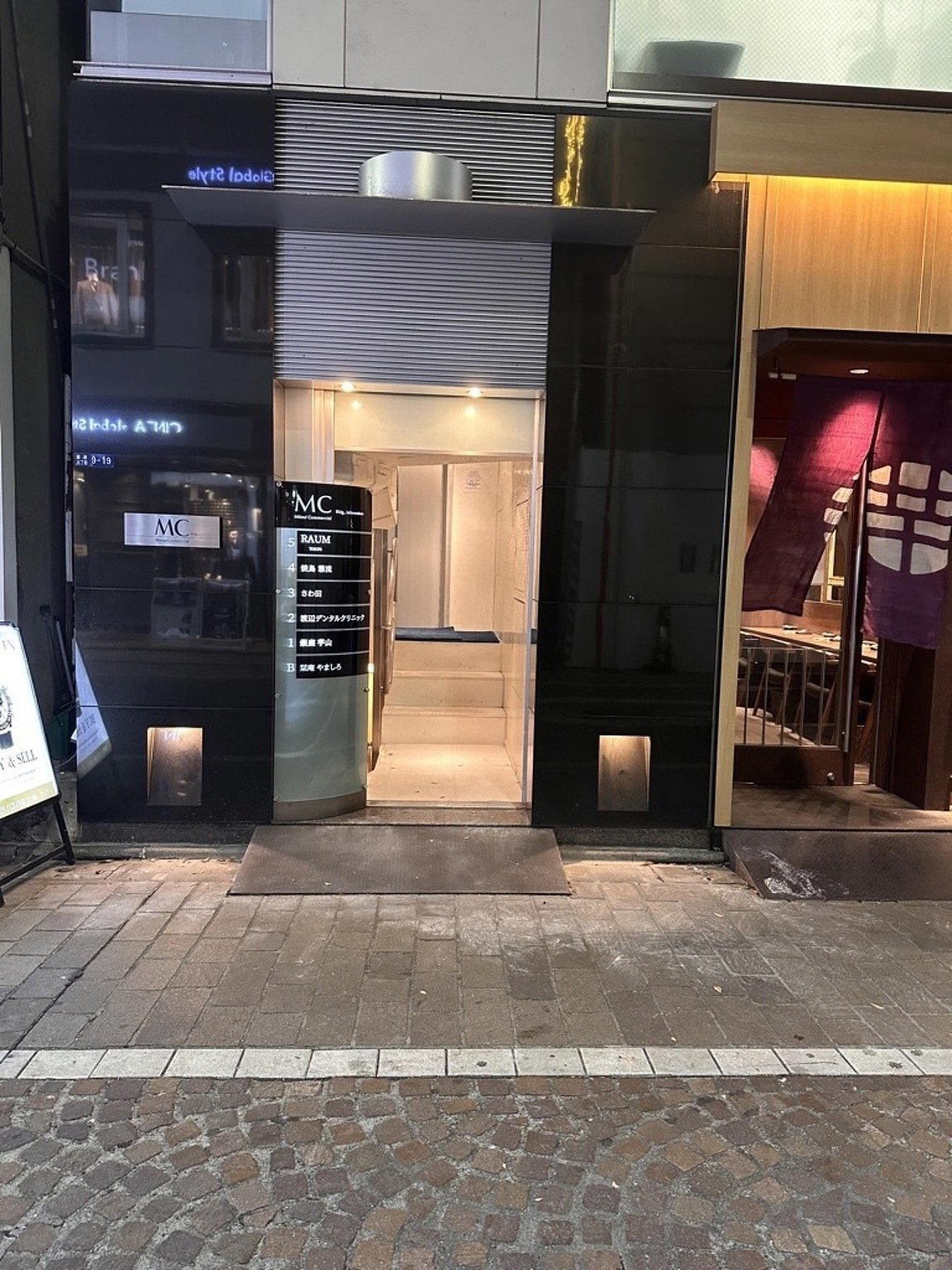
The New Shimbashi Building is itself worth understanding before you approach Buta Daigaku. Built in the early 1970s and largely unchanged since, it houses a dense cluster of cheap lunch counters, izakayas, and small retail shops that exist almost entirely to serve the surrounding office population. It is not a food destination in the sense that Ginza, a short walk away, has become. It is a working building with working-hour rhythms, and Buta Daigaku fits that rhythm rather than fighting it.
The Lunch Hour as the Main Event
The lunch-versus-dinner divide is sharper at a place like Buta Daigaku than at almost any other category of Tokyo restaurant. At high-end venues, evening tasting menus often command significantly more time and money than lunch sets, but the kitchen's core technique is the same across both services. Here, the calculus is different: lunch is the service, and everything about the operation is structured around that window.
Shimbashi's office density is among the highest in Tokyo. The ward sits between Ginza and Hamamatsucho, and on weekday lunchtimes the streets and building corridors fill quickly with workers on a fixed break. The restaurants that survive long-term in this environment do so by offering something consistent, fast, and priced for daily repetition rather than occasional celebration. Buta Daigaku's name — roughly translatable as "Pork University", signals the format immediately: this is a place with a subject it has studied in depth, not a general-purpose canteen.
The evening picture at spots like this in Shimbashi shifts considerably. The office crowd thins out after 6pm, and what remains tends to be smaller groups, slower pacing, and often a different menu structure oriented toward drinking rather than eating as the primary purpose. For Buta Daigaku specifically, the lunch window is where the concept lands most coherently. Arriving in the evening to a venue of this type, in a building of this type, in this particular neighbourhood, produces a different experience, quieter, less kinetic, and potentially without the cues that give the lunch service its character.
For visitors from outside the city who want a reference point for how this compares across Japan, the working-lunch specialist format appears in other forms at places like Goh in Fukuoka and, at a more formal register, at Gion Sasaki in Kyoto, where the lunch menu is a deliberate entry point to a kaiseki tradition. Buta Daigaku operates without that kind of formal scaffolding; the entry point and the exit point are the same dish.
Tonkatsu in Tokyo's Broader Context
Tonkatsu as a category has its own internal hierarchy in Tokyo. At the leading sit specialist houses charging several thousand yen for a single fillet of carefully sourced pork, breaded to order and served with multiple grades of house-made sauce. At the functional end sits what Shimbashi's working buildings have always housed: fast, affordable, consistent pork cutlet operations where the point is lunch on time and at a price that doesn't require a second thought.
The gap between those two tiers is instructive. The premium end of Tokyo's tonkatsu market, like the premium ends of its sushi and kaiseki scenes, has moved upward on price and toward appointment-only formats over the past decade. What remains at the accessible end is a set of venues largely unchanged by those trends, serving the same food at similar prices to the same audience. Buta Daigaku is positioned in that latter group: not a venue testing what tonkatsu can become, but one that has identified what its neighbourhood needs and provides it without elaboration.
For those whose Tokyo itinerary spans the full range of the city's food register, the contrast is part of the value. A visit to Crony for innovative French cooking in the evening and Buta Daigaku for a working lunch on the same trip illustrates the range Tokyo holds without needing to explain itself. The city's food culture is not a single thing; it runs from akordu in Nara to hole-in-the-wall pork counters in Shimbashi, and both ends are taken seriously on their own terms. See our full Tokyo restaurants guide for coverage across the range, including high-end alternatives like HAJIME in Osaka for those extending their trip. Further afield, affetto akita in Akita, Aji Arai in Oita, Ajidocoro in Yubari District, Akakichi in Imabari, aki nagao in Sapporo, and Abon in Ashiya each represent the regional depth Japanese dining carries outside Tokyo. And for reference points beyond Japan entirely, the working-lunch-specialist model has analogues in Le Bernardin in New York City and Lazy Bear in San Francisco, though at entirely different price tiers and with entirely different audience expectations.
Know Before You Go
- Address: 新橋2-16-1, ニュー新橋ビル 1F, 港区, 東京都 105-0004
- Building: New Shimbashi Building (ニュー新橋ビル), 1st floor, a large, multi-tenant complex; allow time to locate the specific unit
- Ideal time to visit: Weekday lunch service; the neighbourhood operates on office hours and the experience is shaped by that rhythm
- Booking:, assume walk-in only, consistent with the format
- Getting there: Shimbashi Station (JR Yamanote, Tokaido lines; Tokyo Metro Ginza Line; Asakusa Line) is the primary access point; the New Shimbashi Building is a short walk from the station's Karasumori exit
- Price expectations:
- How far ahead should I plan for Buta Daigaku (豚大学)?
- This is the opposite end of the planning spectrum from Michelin-level counters in the city that book weeks or months in advance. The practical implication: arrive at or before the lunch service opens on weekdays, when Shimbashi's office population moves fast and the leading seats go quickly.
- What's Buta Daigaku (豚大学) leading at?
- The venue's positioning inside the New Shimbashi Building, a complex that has served Tokyo's salaryman office culture since the early 1970s, points toward a single, well-practised format: affordable pork cutlet at lunch pace. It is not a venue that spans categories or services; it is a specialist in a specific niche.
- Is Buta Daigaku (豚大学) good for vegetarians?
- The venue name and its positioning within Tokyo's tonkatsu specialist category make clear that pork is the central subject. Tokyo has a growing number of plant-forward venues, but Shimbashi's working-lunch counters are generally not among them.
- Does Buta Daigaku (豚大学) represent a different experience from Tokyo's well-known Shimbashi izakayas?
- Shimbashi is more closely associated in the food press with its izakaya culture, the after-work drinking-and-eating format that defines the district's evening identity. For visitors specifically interested in the izakaya side of Shimbashi, the evening hours and a different set of venues in the same building and surrounding streets would be the appropriate focus.
Frequently asked questions
What's the address for Buta Daigaku (豚大学)?
Buta Daigaku (豚大学) is located at 新橋2-16-1 (ニュー新橋ビル 1F), 港区, 東京都, 105-0004, Tokyo.
What kind of restaurant is Buta Daigaku (豚大学) inside the New Shimbashi Building?
Buta Daigaku occupies ground-floor (1F) space inside the New Shimbashi Building (ニュー新橋ビル), a mid-century commercial block in Minato ward that functions as one of Tokyo's more concentrated clusters of casual lunch counters. The format is counter-oriented, lunch-led, and positioned within the affordable bracket of Tokyo's tonkatsu category — a distinct contrast to the premium specialist houses elsewhere in the city.
What's the must-try dish at Buta Daigaku (豚大学)?
The name translates directly as 'Pork University,' which signals the focus plainly: tonkatsu is the reason to visit. The core order at a specialist counter like this is the standard pork cutlet set, served with rice, shredded cabbage, and miso soup — the format that defines Tokyo's lunch-counter tonkatsu tradition. There is no elaborate menu to parse.
How far ahead should I plan for Buta Daigaku (豚大学)?
Buta Daigaku sits inside the New Shimbashi Building (新橋2-16-1, 1F) in Minato ward, a district dense with office workers who treat lunch as a timed sprint. Arriving close to noon on a weekday means joining a queue — the lunch rush at counters in this building can extend onto the corridor. Arriving at opening or after 13:30 reduces wait time considerably. No advance reservation is typically part of the format for this category of venue.
What's Buta Daigaku (豚大学) best at?
Speed and value within the Shimbashi lunch circuit. In a neighbourhood where the midday break is short and options range from ramen to soba to curry, Buta Daigaku holds a specific position as a pork-cutlet specialist operating at the accessible end of Tokyo's tonkatsu spectrum. That is a different proposition from the premium heritage houses charging several thousand yen per fillet — this is the working-lunch end of the category, executed with focus.
Is Buta Daigaku (豚大学) good for vegetarians?
No. The venue name — Pork University — describes the offering precisely. Tonkatsu is a pork-based dish, and a counter built around it will have nothing substantive for vegetarians. Tokyo's Shimbashi area offers nearby alternatives across multiple cuisines, but Buta Daigaku is not one of them.
Standing Among Peers
| Venue | Cuisine | Price | Awards | Notes |
|---|---|---|---|---|
| Buta Daigaku (豚大学)This venue — the venue you are viewing | Grilled Pork Bowl (Butadon) | $1–10 | Not listed | Not listed |
| Harutaka | Edo-Style Omakase Sushi | $200–300 | 3 Michelin Stars · World's 50 Best #76 | Sushi |
| L'Effervescence | Modern French with Japanese Influences | $200–300 | 3 Michelin Stars · World's 50 Best #69 | French |
| RyuGin | Modern Kaiseki | $500+ | 3 Michelin Stars · World's 50 Best #41 | Kaiseki, Japanese |
| Crony | Modern French with Japanese Influences | $150–200 | 2 Michelin Stars · World's 50 Best #34 | Innovative, French |
| Den | Modern Japanese Kaiseki | $150–200 | 2 Michelin Stars · World's 50 Best #51 | Innovative, Japanese |