
Yushima’s wagashi culture works on a different register from Tokyo’s high-price dining rooms: short visits, small purchases, and seasonal sweets tied to shrine-going and family rituals. Tsuruse Yushima honten sits in that tradition with Tabelog 100 recognition for Tokyo Japanese sweets in 2023, take-out service, a 28-seat table room, and pricing under JPY 999.
Pearl is the En Primeur Club membership app — saves, bookings, and concierge access live there. Same editors, same standards.
- Address
- 東京都文京区湯島3-35-8 コア湯島 1F
- Phone
- +81338338516
- Website
- tsuruse.jp
 Saves & bookings on Pearl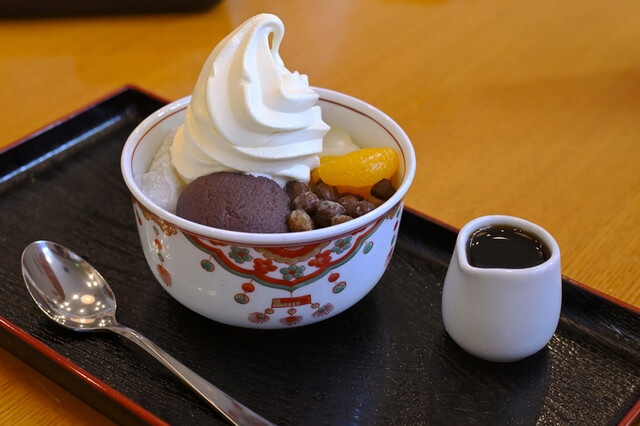
Approaching Yushima, the mood shifts from central Tokyo’s retail glare to an older rhythm of side streets, shrine traffic, and small shops built around repeat local habits. Japanese sweets belong naturally to that setting. They are not only dessert; they mark school admissions, family visits, seasonal greetings, temple and shrine days, and the quieter end of a meal when coffee would feel too blunt. Tsuruse Yushima honten belongs to this register: compact, practical, and rooted in wagashi rather than in the ceremony of a long tasting menu.
Tokyo’s serious dining conversation often overreaches for omakase counters and French-influenced kitchens, but the city’s sweets culture has its own hierarchy. Recognition in Tabelog’s 2023 Tokyo Japanese traditional sweets and sweets cafe selection places Tsuruse Yushima honten in a curated field where craft is measured by consistency, local confidence, and category fluency rather than theatre. The useful comparison is not with luxury dining rooms; it is with other low-ticket specialists around Ueno and Yushima, including Kanmidokoro Mitsubachi Honten and Karinto Yushima Kagetsu, where a modest bill can still carry a strong sense of place.
Wagashi for shrine days, family calls, and small Tokyo celebrations
Wagashi functions differently from Western patisserie in Tokyo. The purchase is often tied to timing and obligation: something to take to a relative, something to eat after a shrine visit, something small enough to feel habitual rather than ceremonial. That makes the Yushima address important. The area sits close to Yushima Tenjin, a shrine associated with scholarship and exam-season visits, and the shop’s seasonal sales within the shrine grounds connect the sweets to a civic calendar rather than to restaurant fashion.
The listed categories tell the story plainly: Japanese traditional sweets, daifuku, and a cafe featuring Japanese sweets. Daifuku, with red bean paste enclosed in soft rice cake, is one of those formats where small differences matter: the balance between chew and filling, the sweetness level, the way the sweet travels if bought for someone else. Those details cannot be reduced to a tasting-menu vocabulary. The appeal is repeatable pleasure, not novelty.
For milestone dining, this is not the place to stage a formal anniversary dinner. It is better understood as the before-or-after piece of an occasion: a family stop around Yushima, a modest celebratory gift, or a low-key sweets course after a meal elsewhere in Ueno, Okachimachi, or Akihabara. That matters for travellers because Tokyo celebrations are not always built around one large booking. They often unfold through several small, well-chosen stops, each with a clear role.
A low-price specialist in a city where small formats carry weight
The price band, under JPY 999, puts the shop in a democratic tier that Tokyo does unusually well. This is not a consolation category below fine dining. It is a separate ecosystem where counter service, take-out windows, cafe seating, and neighbourhood loyalty can carry as much credibility as a reservation ledger. In that sense, Tsuruse Yushima honten sits closer to DELHI Ueno ten in price discipline than to a dinner venue such as Shinsuke or a higher-spend room such as da GIORGIO, though the occasion and cuisine are completely different.
The format reinforces the point. Take-out is part of the offer, while the cafe room has 28 table seats. Reservations are unavailable, which keeps the experience closer to an everyday Tokyo sweets stop than a planned restaurant performance. For visitors building a day around the north and east side of central Tokyo, that flexibility is useful: Yushima, Ueno-Hirokoji, Ueno-Okachimachi, and JR Okachimachi all sit within an easy walking network, so the shop can be paired with museum time, shrine visits, or a later dinner without distorting the day.
Practical texture is also distinctly local. The room is non-smoking, table-seated, and listed as child-friendly, with wheelchair access. Payment includes credit cards and QR code options such as PayPay, Rakuten Pay, and au PAY, while electronic money is not accepted. Parking is unavailable, which is typical for this part of Tokyo and largely irrelevant if the day is planned around rail stations. The cafe operates within daytime hours, so it rewards mid-morning to afternoon planning rather than late-night improvisation.
How to place it within a Tokyo itinerary
Strongest use case is as a small celebration rather than a destination dinner. A family visiting Yushima Tenjin, a couple marking a quiet anniversary afternoon, or a traveller assembling edible gifts will get more from this format than someone expecting a long seated meal. The Tabelog 100 selection gives a useful trust signal, but the deeper reason to go is category literacy: Tokyo’s food culture is built as much on focused shops like this as on headline restaurants.
Readers comparing across the city can treat this as a contrast point. For cooked seafood and charcoal-led dining, see . 鮪と炭火焼き うお炭 秋葉原店. For another Shinjuku address, 12/10 Shinjuku ten sits in a different urban register, while 124. KAGURAZAKA (Yakitori) points toward grilled counter culture. Sweets and cafe-minded planning can extend to 2D Cafe, while curry routes might include 3 Chome no Curry Ya San.
For wider planning, use Our full Tokyo restaurants guide alongside Our full Tokyo hotels guide, Our full Tokyo bars guide, Our full Tokyo wineries guide, and Our full Tokyo experiences guide. Travellers extending the same low-key food logic beyond Tokyo might compare -Grilled beef Sukiyaki- KAMAKURA TANUKIAN 鎌倉 たぬき庵 in Kamakura.cafe in Osaka.know in Kumamoto, (Shoku) Vietnam in Kawasaki, [Curry Senmon Ten] Maruyama Kyoju. in Sapporo, [ki:] in Kyoto, Jōdo Saké Bar in Los Angeles, and Onigiri Time in Pasadena.
The editorial value here is proportion. Tokyo can turn a tiny purchase into a serious cultural signal when the format is precise and the neighbourhood context is right. The restaurant is strongest when treated that way: not as a substitute for dinner, but as a compact wagashi stop that gives a Yushima day its proper punctuation.
At a Glance
Comparable venues by cuisine and price in the same metro.
| Venue | Cuisine | Price | Notes |
|---|---|---|---|
| Tsuruse Yushima hontenThis venue — the venue you are viewing | Not listed | $ | Not listed |
| Kitchen Nankai (キッチン南海) | Jimbocho, Classic Yoshoku Katsu Curry | $ | Not listed |
| Soup Curry Kamui | Not listed | $ | Chiyoda, Sapporo-style Japanese soup curry |
| Nezu no Taiyaki | Bunkyō, Traditional Taiyaki Shop | $ | Not listed |
| Kikumaru | Not listed | $ | Taitō, Traditional Japanese sweets café (anmitsu & wagashi) |
| Taishu Sakaba Souya | Not listed | $ | Minato, Traditional Japanese standing bar (taishu sakaba) |
Recognition history
Dated appearances from independent guides and award organizations, with the underlying list record or original source where available.
Tabelog 100 #50 · No. 50
Tabelog · Tabelog 100 - Japanese traditional sweets / Japanese sweets cafe - TOKYO - 2023








At a Glance
- Classic
- Cozy
- Quiet
- Well Known
- Solo
- Family
- Casual Hangout
- After Work
- Historic Building
- Standalone
A small, non‑smoking Japanese sweets parlor with simple table seating and a relaxed, old‑fashioned atmosphere where guests quietly enjoy wagashi and tea near the Yushima Tenjin shrine.