
In Nezu, traditional sweets carry the weight of neighborhood ritual rather than grand-occasion formality. Imojin belongs to that older Tokyo category: a Taisho-era sweet shop turned Japanese sweets café, recognized in the Tabelog 100 for Tokyo wagashi and sweets cafés in 2023, with anmitsu, ice monaka, Ogura ice, and kakigori anchoring the appeal.
Pearl is the En Primeur Club membership app — saves, bookings, and concierge access live there. Same editors, same standards.
- Address
- 2 Chome-30-4 Nezu, Bunkyo City, Tokyo 113-0031, Japan
- Phone
- +81 3-3821-5530
- Website
- instagram.com
 Saves & bookings on Pearl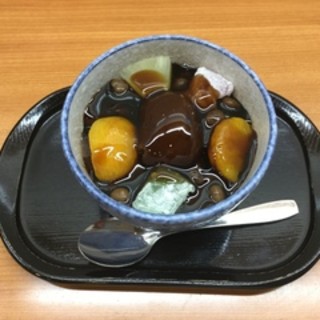
Nezu changes tempo quickly: temple approaches, low shopfronts, residential lanes, and an appetite slower than Tokyo’s station-tower rhythm. Here, a celebratory meal need not mean lacquered private rooms or a tasting menu; it can be anmitsu after a shrine visit, kakigori in humid months, or ice monaka shared before the afternoon thins out.
Tokyo occasion dining is often framed through sushi counters, kaiseki rooms, and hotel restaurants, but wagashi cafés play another role. They mark modest family milestones, keep older neighborhoods’ seasonal habits visible, and separate significance from price. Imojin, selected for the Tabelog 100 Japanese traditional sweets and sweets café list for Tokyo in 2023, sits in that register: not a grand dining room, but a recognized address for the city’s everyday ceremony of sweets.
Nezu's sweets tradition favors memory over spectacle
The area around Nezu has a compact food culture built on repeat use rather than destination theater. Nearby, Nezu no Taiyaki occupies the same low-price sweets bracket, while Teuchi Soba Nezu Takajo and Nezu Kamachiku represent the neighborhood’s soba and udon side at higher spend levels. Tempura Fukutarou belongs to a much more formal price tier. That spread matters: Nezu lets a traveler assemble a day around small rituals rather than one trophy booking.
Japanese sweets cafés sit between confectionery shop, tea stop, and light-meal pause. The category rewards clarity: bean paste, agar, ice, rice wafers, and shaved ice formats that depend less on novelty than balance and temperature. Imojin’s known anchors, anmitsu, ice monaka, Ogura ice, and kakigori, place it squarely in that tradition. The point is continuity, especially in a city where historic food businesses are often pushed toward polish, packaging, or tourism-friendly reinvention.
The Taisho-era origin adds weight without romance. A shop founded in the early 20th century as a sweet potato business, now operating as a traditional sweets café, tells a broader Tokyo story: neighborhood specialists adapting while keeping a narrow identity. That longevity is a stronger credential here than chef biography. It suggests clientele formed over generations, where a family visit can carry as much meaning as a formal anniversary lunch elsewhere.
For celebrations, this is the low-key Tokyo answer
Occasion dining in Japan is not always expensive or reserved months ahead. There is a quieter category built around sequence: shrine, garden, museum, sweets. Nezu suits that pattern, and a sweets café works when the occasion is intergenerational or daylight-based. Children, grandparents, and visitors avoiding a long meal can all participate without formal-restaurant stiffness.
That makes Imojin useful after a morning in Yanesen, before a museum stop in Ueno, or as a pause in a day that values neighborhood texture over spectacle. The café format changes the emotional register: a birthday reads as familial rather than performative; a post-ceremony stop as local rather than staged. For travelers measuring Japan dining by counters and courses, this reminds that Tokyo food culture also lives in sweet shops with long memory and limited fuss.
Its Tabelog 100 recognition in the Japanese traditional sweets and sweets café category gives the address a useful trust signal because the category is crowded and intensely local. In Tokyo, high-profile fine-dining awards often indicate access pressure; wagashi and sweets café recognition tends to indicate category respect, daily demand, and consistency across repeat visits. For this style of outing, that authority is more relevant.
The menu vocabulary is accessible without flattening the experience. Anmitsu structures the classic café order; ice monaka brings contrast without the demands of a plated dessert; Ogura ice signals the red-bean tradition central to many Japanese sweets; kakigori ties the room to seasonal appetite. None needs theatrical explanation. The decision is mood, weather, and whether the stop is a quick reward or the centerpiece of an afternoon.
How to place it in a Tokyo itinerary
For a broader food day, this is not the same decision as choosing dinner in Akihabara, Shinjuku, or Kagurazaka. Compare it with . 鮪と炭火焼き うお炭 秋葉原店 for a savory, evening-led plan, 12/10 Shinjuku ten for a Shinjuku axis, or 124. KAGURAZAKA (Yakitori) when the occasion calls for smoke, skewers, and a longer night. 2D Cafe and 3 Chome no Curry Ya San show Tokyo’s casual range, from graphic café culture to curry specialization.
Treat a Nezu sweets stop as part of a neighborhood circuit, not a standalone cross-city sprint. The café is close to Nezu Station, and the area rewards walking pace. The structured details matter: no reservations, compact seating, no parking, non-smoking, takeout service, wheelchair accessibility, English menu availability, and PayPay among the payment options. Those facts make it more flexible than a formal meal, while arguing for patience at peak snack hours.
Travelers mapping a full Tokyo stay should use the city by category rather than one hit list. For restaurant planning, start with Our full Tokyo restaurants guide; for where to sleep, use Our full Tokyo hotels guide; for after-dark drinking, see Our full Tokyo bars guide. Wider planning can fold in Our full Tokyo wineries guide and Our full Tokyo experiences guide, especially when a sweets stop is one piece of a larger cultural day.
For comparison beyond Tokyo, the category shift is instructive. -Grilled beef Sukiyaki- KAMAKURA TANUKIAN 鎌倉 たぬき庵 in Kamakura frames occasion dining through beef and tradition;.cafe in Osaka and.know in Kumamoto point to Japan’s broader café range; (Shoku) Vietnam in Kawasaki, [Curry Senmon Ten] Maruyama Kyoju. in Sapporo, and [ki:] in Kyoto show how regional dining categories travel and mutate. Abroad, Japanese casual formats take different shapes, from Jōdo Saké Bar in Los Angeles to Onigiri Time in Pasadena.
The editorial case for Imojin is not that it replaces Tokyo’s formal celebration restaurants. It does something narrower and, for the right afternoon, more revealing: it shows how a city with a global appetite for luxury still preserves a neighborhood scale of celebration, with a sweet, a seat, a short walk, and a tradition old enough to make the occasion feel grounded.
Nearby-ish Comparables
Comparable venues for orientation by cuisine and category.
| Venue | Cuisine | Price | Notes |
|---|---|---|---|
| ImojinThis venue — the venue you are viewing | Traditional Japanese sweets & ice cream café | $ | Not listed |
| Stand Hero | Standing Japanese Izakaya & Kushikatsu Bar | $ | Chiyoda |
| Gyokueido Hikokuro | Traditional Japanese Wagashi & Dorayaki | $ | Chūō |
| Teuchi Ren | Handmade ramen shop | $ | Sumida |
| Shiroi Kuro | Modern Japanese sweets & roll cake café | $ | Minato |
| Konpira Chaya | Handmade Udon & Beef Curry Udon | $ | Shinagawa |
Recognition history
Dated appearances from independent guides and award organizations, with the underlying list record or original source where available.
Tabelog 100 #48 · No. 48
Tabelog · Tabelog 100 - Japanese traditional sweets / Japanese sweets cafe - TOKYO - 2023









At a Glance
- Classic
- Cozy
- Solo
- Family
- Casual Hangout
- After Work
- Standalone
- Historic Building
Current opening hours
- Monday
- Closed
- Tuesday
- Closed
- Wednesday
- 11 AM–6 PM
- Thursday
- 11 AM–6 PM
- Friday
- 11 AM–6 PM
- Saturday
- 11 AM–6 PM
- Sunday
- 11 AM–6 PM
Hours can change for holidays and private events. Last verified .