
1 Michelin Star
Our verdict
In the 17th arrondissement, Agapé operates at the upper tier of Paris's modern cuisine scene, where Franco-Japanese precision meets ingredient-led generosity. Chef Yoshi Nagato, trained at Maison Rostang, Le Cinq, and Épicure, constructs menus around premium seasonal produce, while pastry is handled by his partner Asuka Ishiba.

Pearl is the En Primeur Club membership app, where members save venues, book tables and use the concierge.
The menu
What to order
- Brittany lobster salad
- Challans duckling
- Roast sweetbread
A Quieter Corner of Paris's High-Precision Dining Scene
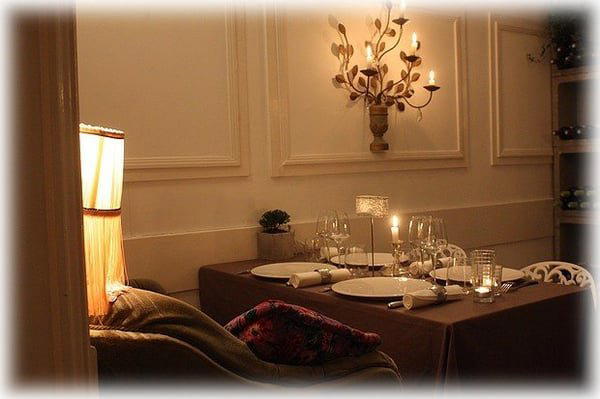
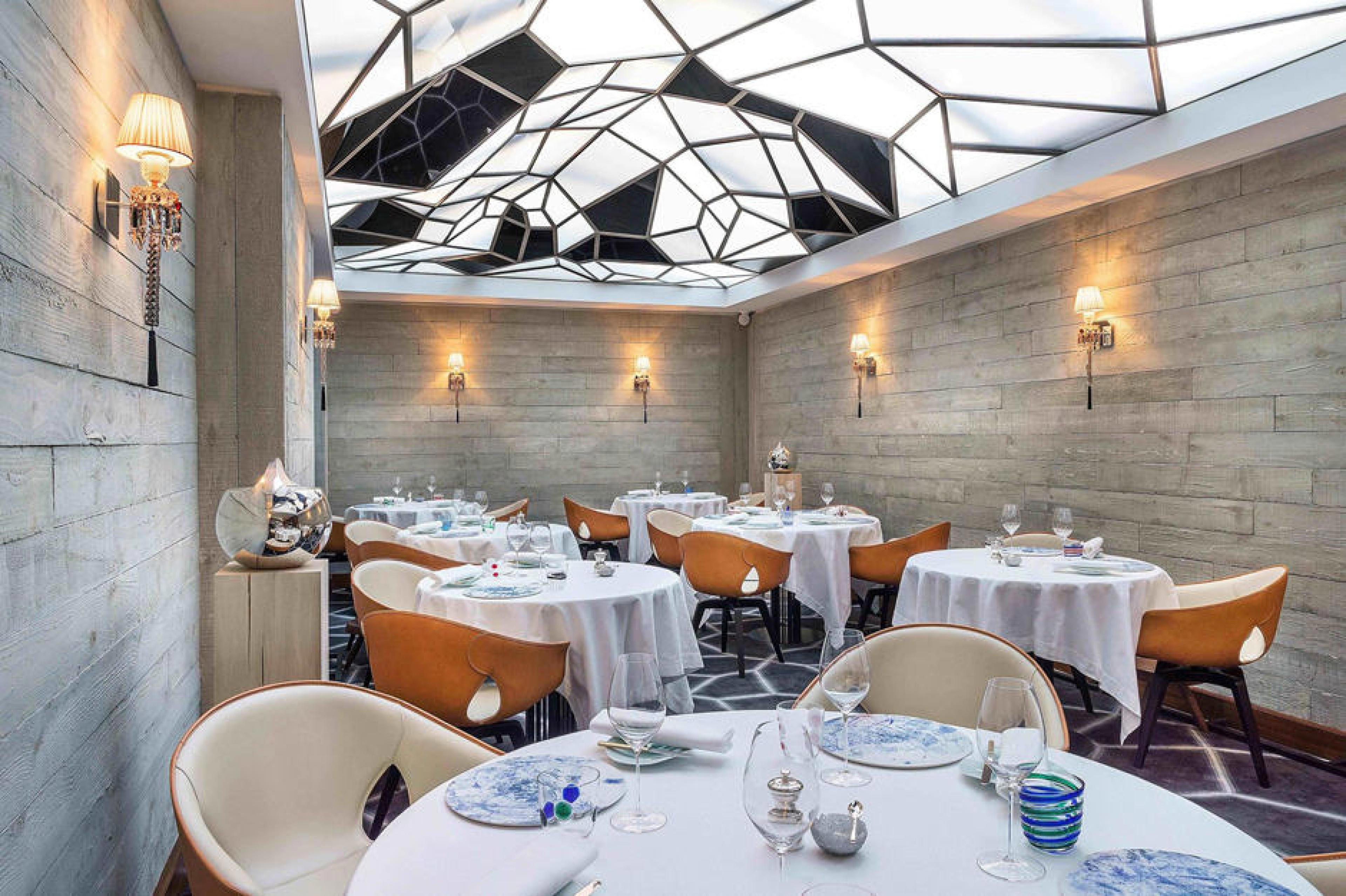
Rue Jouffroy d'Abbans sits in the 17th arrondissement, a neighbourhood that rarely competes for tourist attention against the grands boulevards or the Left Bank's more photographed addresses. That relative obscurity has become a feature of the dining culture here rather than a drawback. The restaurants that have found their footing in this part of Paris tend to do so on the strength of their cooking rather than their postcode, and Agapé belongs firmly in that category. The room is described in consistent terms by those who visit it: soft shades, a cosy scale, an atmosphere that reads as welcoming rather than ceremonial. In a city where the top end of modern cuisine can tip toward formality, that register matters.
The €€€€ price positioning places Agapé in the same bracket as Paris's Michelin-starred and Michelin-adjacent modern cuisine addresses, a tier that in this city includes three-star houses like 114, Faubourg and Accents Table Bourse. At that price level, diners are paying not just for ingredients but for the intelligence behind them, the sourcing decisions, the technique, the internal coherence of a menu. The question Agapé answers, course by course, is whether the cooking justifies that positioning. The Michelin Plate recognition it received in 2024 suggests that the guide's inspectors found the answer broadly affirmative, though the Plate sits below Star level, locating the restaurant in a transitional band: above casual, below the city's gilded tier.
The Kitchen's Logic: Ingredients First, Franco-Japanese Precision Throughout
The menu at Agapé follows a model that has become increasingly legible in Paris's upper-mid tier: premium raw materials, handled with restraint, presented with structural clarity. The Michelin description references Brittany lobster, Challans duckling, sweetbreads and girolles, a selection that reads as a deliberate survey of France's finest regional produce. Brittany's crustaceans are among the country's most prized; Challans duck, raised on the Atlantic marshes, has a specific richness that separates it from generic canard. These are not incidental choices. They reflect a kitchen that begins with sourcing rather than technique.
Chef Yoshi Nagato's training line runs through Maison Rostang, Le Cinq, and Épicure, three addresses that occupy distinct positions within French haute cuisine but share an emphasis on disciplined classical foundations. Le Cinq at the Four Seasons George V, for instance, operates at the three-Michelin-star level and represents the more formal, grand-hotel register of Parisian fine dining. Épicure at Le Bristol carries comparable weight. That formation shapes what the kitchen at Agapé does with its raw materials: high-precision plating, controlled flavour architecture, generous portions that resist the miniaturism sometimes associated with tasting-menu culture. The lacquered duck, honey and Sichuan pepper treatment reported in the Michelin entry is illustrative, a French main, inflected with an East Asian spice note, executed with the structural discipline of classical French technique. For broader context on modern cuisine applying this kind of Franco-Japanese approach across Europe, the format appears in restaurants as varied as Frantzén in Stockholm and FZN by Björn Frantzén in Dubai, suggesting it is a genuinely international movement rather than a Parisian idiosyncrasy.
Asuka Ishiba handles pastry, which at this level is a meaningful structural decision. Kitchens that separate the dessert programme and give it dedicated authorship tend to produce more coherent final courses, the sweet register gets as much creative attention as the savoury. It also signals ambition: at restaurants like Anona or Amâlia, the pastry voice is an editorial one, not an afterthought.
The Wine List: Organic and Natural, Curated Rather Than Encyclopaedic
The editorial angle that most distinguishes Agapé from a generic modern cuisine address at this price point is its wine programme. The Michelin description is specific: a fine range of organic and natural wines. In the context of Paris's high-end dining, that is a genuine positioning statement. The city's three-star houses, Alléno at Pavillon Ledoyen, Pierre Gagnaire, L'Ambroisie, Kei, typically anchor their cellars in classical French regions, with deep vertical stocks of Burgundy and Bordeaux. The organic and natural wine tier operates according to a different logic. Producers are selected on farming philosophy and minimal intervention as much as appellation prestige. Allocations are often small. Vintages are inconsistent by nature.
A list built around these wines requires a different kind of sommelier expertise, less focused on encyclopaedic coverage of grand cru classifications, more attuned to producer relationships, seasonal availability, and the specific conversation between a natural wine's oxidative or reductive character and the flavours on the plate. At Agapé, where the kitchen is working with high-quality, ingredient-led food that doesn't lean on heavy saucing, the pairing logic for natural wines is particularly coherent. A lighter, biodynamic Burgundy or a skin-contact Loire white can hold its own against sweetbreads and girolles in a way that a heavily extracted conventional wine sometimes cannot.
This wine philosophy connects Agapé to a broader shift visible across Paris's upper-mid dining tier. Restaurants like Auberge de Montfleury have demonstrated that a thoughtful natural wine list functions as a differentiator at the €€€€ level, attracting a guest who is as interested in the cellar as the kitchen. The organic and natural wine movement in France draws on a long tradition, the Loire and Beaujolais regions have been producing minimal-intervention wines since at least the 1970s, and producers associated with that lineage now appear on serious lists across the country, from Flocons de Sel in Megève to Mirazur in Menton.
Who Eats Here and When
Agapé operates Tuesday through Friday for both lunch and dinner, with Saturday and Sunday closed. Service runs noon to 2 PM at lunch and 8 PM to 10 PM at dinner. Monday is lunch-only. That schedule is narrower than many Paris restaurants at this price level, which typically offer six or seven evenings per week. The consequence is a booking window that rewards planning: the combination of limited sittings, a loyal local following in the 17th, and growing visibility from the Michelin Plate recognition means that last-minute tables are rarely available.
The 17th arrondissement address is accessible by metro, with several lines serving the neighbourhood, and the surrounding streets carry the character of a residential Paris that feels distinct from the more trafficked dining corridors. Diners who approach Agapé expecting the ambient energy of a Saint-Germain or Marais address will find something quieter and more focused. That is, in context, the point.
For a fuller picture of where Agapé sits within the Paris dining scene, see our full Paris restaurants guide. For context on where to stay nearby, our full Paris hotels guide covers the arrondissement and beyond. Those interested in the broader French fine dining tradition will find useful reference points at Troisgros in Ouches, Auberge de l'Ill in Illhaeusern, Bras in Laguiole, and Paul Bocuse in Collonges-au-Mont-d'Or. Paris's drinking culture is covered in our full Paris bars guide, and wine exploration beyond the restaurant setting is documented in our full Paris wineries guide and our full Paris experiences guide.
Frequently asked questions
What distinctions does Agapé have?
Agapé has received recognition including: In this cosy, welcoming room adorned in soft shades, the menu rolls out a lineup of premium ingredients that depend on the whim of chef Yoshi Nagato (Maison Rostang, Le Cinq, Épicure) and his partner, Asuka Ishiba, in charge of desserts. Br….
What's the best thing to order at Agapé?
The menu rotates around seasonal availability and chef Yoshi Nagato's access to premium ingredients, so no fixed dish anchors the experience. Past Michelin descriptions have cited Brittany lobster salad with wax beans and Piedmont hazelnuts, Challans duckling lacquered in honey and Sichuan pepper, and roast sweetbread with sautéed girolles as representative of the kitchen's range. Desserts are handled separately by Nagato's partner Asuka Ishiba, which gives the sweet courses a distinct authorial voice. At the €€€€ price point, the tasting format rewards ordering across multiple courses rather than treating it as an à la carte selection.
What price level is Agapé?
Pricing at Agapé is listed as €€€€.
When is Agapé open?
Hours at Agapé: Monday 12 PM-2 PM 8 PM-10 PM Tuesday 12 PM-2 PM 8 PM-10 PM Wednesday 12 PM-2 PM 8 PM-10 PM Thursday 12 PM-2 PM 8 PM-10 PM Friday 12 PM-2 PM 8 PM-10 PM Saturday closed Sunday closed.
Cuisine and Awards Snapshot
| Venue | Cuisine | Price | Awards | Notes |
|---|---|---|---|---|
| AgapéThis venue (the venue you are viewing) | Modern French Fine Dining | $200–300 | 1 Michelin Star | Not listed |
| Alléno Paris au Pavillon Ledoyen | Modern French Fine Dining | $150–200 | 3 Michelin Stars · World's 50 Best #79 | Creative |
| Kei | Modern French with Japanese Influences | $300–500 | 3 Michelin Stars · World's 50 Best #93 | Contemporary French, Modern Cuisine |
| L'Ambroisie | Classic French Haute Cuisine | $300–500 | 2 Michelin Stars · World's 50 Best #23 | French, Classic Cuisine |
| Le Cinq - Four Seasons Hôtel George V | Modern French Fine Dining | $300–500 | 3 Michelin Stars · World's 50 Best #24 | French, Modern Cuisine |
| Plénitude | Modern French Sauce-Led Fine Dining | $300–500 | 3 Michelin Stars · World's 50 Best #14 | Contemporary French |
Recognition history
Dated appearances from independent guides and award organizations, with the underlying list record or original source where available.
Michelin 1 Star
Michelin
Full recognition history (3 entries)
Michelin 1 Star
Michelin
Michelin Plate
Michelin
Continue exploring
More in Paris
Restaurants in Paris
All restaurants in Paris →

Bars in Paris
All bars in Paris →
Details
- Elegant
- Intimate
- Sophisticated
- Cozy
- Modern
- Date Night
- Special Occasion
- Business Dinner
- Open Kitchen
- Extensive Wine List
- Natural Wine
- Organic
- Natural Wine
- Tasting Menu
- A La Carte
- Wine Pairing
- Allergy Accommodating
Current opening hours
- Monday
- 12–2 PM, 8–10 PM
- Tuesday
- 12–2 PM, 8–10 PM
- Wednesday
- 12–2 PM, 8–10 PM
- Thursday
- 12–2 PM, 8–10 PM
- Friday
- 12–2 PM, 8–10 PM
- Saturday
- Closed
- Sunday
- Closed
Hours can change for holidays and private events. Hours as of .
Cosy welcoming room in soft shades with stylish modern design, beautiful tableware, and a refined yet relaxed atmosphere.