


1 Michelin Star · La Liste Top Restaurants · Black Pearl 2 Diamond
Our verdict
Xin Rong Ji on Financial Street brings the precise, product-driven cooking of Taizhou cuisine into Beijing's business dining corridor, where expense-account tables and serious regional Chinese food occupy the same room. The menu architecture follows the Xin Rong Ji group's discipline of letting coastal ingredients speak without intervention, placing it firmly in the ¥¥¥¥ tier alongside Beijing's most serious regional Chinese houses.

Pearl is the En Primeur Club membership app, where members save venues, book tables and use the concierge.
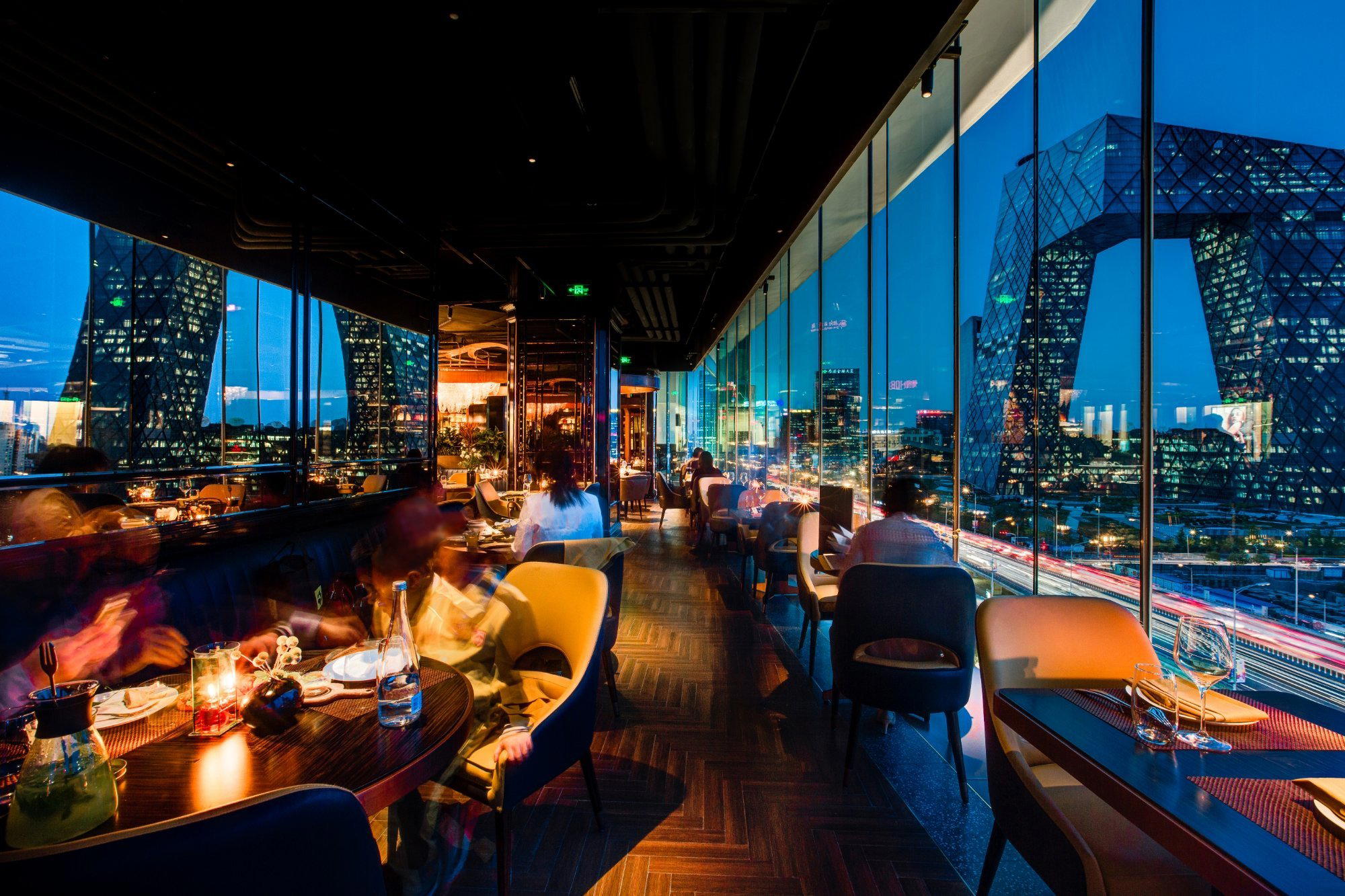
Financial Street and the Geography of Serious Regional Chinese Dining
Beijing's Financial Street corridor has long operated as a parallel dining universe to Sanlitun and Dongcheng, one calibrated less to trend-chasing and more to the rhythms of state enterprise lunches and private banking dinners. The address at 11 Jinrong Avenue, Xicheng District, locates Xin Rong Ji (新荣记) squarely inside that ecosystem, where the room needs to hold its own against the expectations of guests who eat well routinely and notice when something is ordinary. That is a harder brief than it sounds, and it shapes everything about how a restaurant at this address must present itself.
Taizhou cuisine, the coastal Zhejiang tradition that Xin Rong Ji has built its reputation around across multiple Chinese cities, is not the most familiar regional style for visitors arriving with Cantonese or Sichuan as their reference points. It is quieter, more reliant on the quality of the raw material than on layered seasoning, and deeply tied to the seafood and freshwater produce of the Zhejiang coast. Bringing that tradition to a landlocked capital and making it feel credible rather than approximate is the central editorial question the restaurant poses.
How the Menu Is Structured, and What That Structure Argues
The Xin Rong Ji group's approach to menu architecture, consistent across its locations from Shanghai to Chengdu, is built around product hierarchy rather than technique display. The menu does not lead with showmanship. It leads with the sourcing logic: what arrived, where it came from, and how little needs to be done to it. At the Beijing Financial Street location, that philosophy meets a clientele that reads restraint as confidence rather than limitation, which creates an unusual alignment between the room's expectations and the kitchen's instincts.
Taizhou cooking at this level is structured around a sequence that moves from lighter, more delicate preparations toward richer, longer-cooked dishes, a progression that mirrors classical Chinese banquet logic while keeping the focus on the individual ingredient at each stage. Cold dishes establish the quality benchmark early. Seafood preparations, often steamed or minimally sauced, occupy the middle register. Braised and longer-cooked dishes close the sequence. What the menu argues, implicitly, is that the ingredient is always the subject and the kitchen is the medium through which it is transmitted. That is a different argument from the one made by, say, the technically elaborate French contemporary cooking found at Jing, which sits in a lower price bracket but occupies a completely different philosophical position on what a restaurant should foreground.
Each of these restaurants makes a different argument about which regional Chinese tradition deserves a ¥¥¥¥ platform in the capital. Xin Rong Ji's argument is coastal Zhejiang, and it is made with the authority of a group that has refined the same position across multiple major Chinese cities.
The Xin Rong Ji Network as Context
Understanding what the Beijing Financial Street location is requires placing it inside the broader Xin Rong Ji geography. The group operates across China's major dining cities, with each location adapting the same sourcing-first philosophy to its local audience without diluting the Taizhou identity. The Chengdu location navigates a city with strong indigenous food culture; the Xinyuan South Road Beijing location serves a different neighbourhood dynamic within the same capital. The Financial Street address serves the business dining segment specifically, which means the format, pacing, and menu depth are calibrated for a guest who may be entertaining rather than simply eating.
That multi-city consistency is itself a trust signal. When a restaurant group maintains a coherent identity across Chengdu, Beijing, and other major markets, it signals operational discipline that single-location restaurants rarely achieve. For a guest arriving at Financial Street without prior knowledge of the group, the comparable regional Chinese houses operating at this tier across China Ru Yuan in Hangzhou, Shang Palace in Yangzhou, Dai Yuet Heen in Nanjing, offer a useful frame for what premium regional Chinese dining at this price point expects of its kitchen and its guest.
Where It Sits Among Beijing's Serious Tables
Beijing's premium Chinese dining tier has several distinct nodes. Vegetarian fine dining, represented by King's Joy and Lamdre, operates with a different set of values around ingredient and philosophy. Regional seafood-forward traditions, where Xin Rong Ji and Chao Shang Chao sit, compete on sourcing credibility and preparation discipline. What distinguishes the Financial Street location from some of its Beijing peers is the specificity of its regional claim: this is not pan-Chinese cooking dressed up in premium packaging, but a coherent tradition with a defined geography and a consistent set of techniques.
The comparison to restaurants like Fu He Hui in Shanghai or Imperial Treasure Fine Chinese Cuisine in Guangzhou is instructive: each of those operations has built a premium identity around a specific Chinese culinary tradition or approach, and each serves a clientele that reads that specificity as a marker of seriousness. Xin Rong Ji on Financial Street makes the same bet in a neighbourhood where business pragmatism is the default register, which means the food must be good enough to hold the room's attention without any of the theatrical scaffolding that some premium addresses rely on.
Planning a Visit
Financial Street is well-connected by Beijing metro, with Fuchengmen and Financial Street stations both within walking distance of Jinrong Avenue. The address draws a predominantly business lunch and dinner crowd, which means mid-week evenings and standard lunch hours carry the highest demand. Reservations are advisable, particularly for larger tables that require private room arrangements, which are standard expectations at this address and price point. The ¥¥¥¥ price bracket places a full meal per person in the range consistent with Beijing's most serious regional Chinese tables, and the room's business orientation means that expense-account pacing and group dining formats are well accommodated.
Broader Context for the Taizhou Tradition in China
For readers who want to calibrate Taizhou cooking against other premium regional Chinese traditions available across the country, the EP Club network covers a range of comparable addresses: Fleurs Et Festin in Xiamen, Pingjiangsong in Suzhou, and Wenru No.9 in Fuzhou each represent different points on the spectrum of eastern Chinese culinary tradition. For those arriving in Beijing and building a broader restaurant plan, our full Beijing restaurants guide maps the city's dining at every level. And for readers whose interest in precision-driven tasting formats extends beyond regional Chinese cooking, the structural discipline of menus like those at Lazy Bear in San Francisco or Le Bernardin in New York City provides a useful cross-cultural frame for what it means when a kitchen treats sourcing as the primary editorial statement.
Frequently asked questions
Where is æ°è£è®° located?
æ°è£è®° is located at 11 Jinrong Ave, Financial Street, Xicheng District, Beijing, China, 100032, Beijing.
What do people recommend at 新荣记?
The Xin Rong Ji group built its reputation on ingredient-first cooking rooted in the Taizhou tradition, so regulars at the Beijing location tend to focus on whatever the kitchen is sourcing at its peak. The menu is structured around product hierarchy rather than showpiece dishes, which means seasonal seafood and simply prepared proteins typically draw the most consistent attention. Asking staff what has arrived that week is a reliable approach at any Xin Rong Ji address.
Should I book æ°è£è®° in advance?
Reservations are recommended for æ°è£è®° in Beijing. Confirm current policy via the venue's official channels.
What's the defining dish or idea at æ°è£è®°?
æ°è£è®° is best approached by focusing on the core concept and signature offerings.
What if I have allergies at æ°è£è®°?
Dietary accommodations can vary. Flag restrictions in advance via the venue's official channels.
Credentials Lens
Comparable options at a glance, pulled from our tracked venues.
| Venue | Cuisine | Price | Awards | Notes |
|---|---|---|---|---|
| æ°è£è®°This venue (the venue you are viewing) | Taizhou | Not listed | 1 Michelin Star · La Liste Top Restaurants | Not listed |
| Jing | Modern French with Asian Influences | $300–500 | 1 Michelin Star · Black Pearl 1 Diamond | French Contemporary |
| Xin Rong Ji (Xinyuan South Road) | Taizhou Chinese Fine Dining | $300–500 | 3 Michelin Stars · World's 50 Best #84 | Taizhou |
| Chao Shang Chao (Chaoyang) | Modern Teochew (Chaoshan) Fine Dining | $200–300 | Michelin Plate · La Liste Top Restaurants | Chao Zhou |
| Lamdre | Modern Plant-Based Chinese Vegetarian | Not listed | 2 Michelin Stars · World's 50 Best #17 | Vegetarian |
| Jingji | Imperial Beijing Royal Cuisine | $200–300 | 2 Michelin Stars · La Liste Top Restaurants | Beijing Cuisine |
Recognition history
Dated appearances from independent guides and award organizations, with the underlying list record or original source where available.
Michelin 1 Star
Michelin
La Liste Top Restaurants
La Liste
Black Pearl 2 Diamond
Black Pearl
Full recognition history (4 entries)
Michelin 1 Star
Michelin
Continue exploring
More in Beijing
Restaurants in Beijing
All restaurants in Beijing →
Bars in Beijing
All bars in Beijing →



Details
Current opening hours
- Monday
- 11 AM–2 PM, 5–9:30 PM
- Tuesday
- 11 AM–2 PM, 5–9:30 PM
- Wednesday
- 11 AM–2 PM, 5–9:30 PM
- Thursday
- 11 AM–2 PM, 5–9:30 PM
- Friday
- 11 AM–2 PM, 5–9:30 PM
- Saturday
- 11 AM–2 PM, 5–9:30 PM
- Sunday
- 11 AM–2 PM, 5–9:30 PM
Hours can change for holidays and private events. Hours as of .