

The Georg holds a Michelin star and a Black Pearl Diamond in a three-storey hutong complex that doubles as an art gallery, making it one of Beijing's more architecturally considered fine-dining addresses. The kitchen runs Nordic-inflected European Contemporary cuisine, with a single tasting menu at dinner anchored by pickled, smoked, and cured techniques. For a city whose fine-dining scene skews heavily toward Chinese regional traditions, it occupies a distinct niche.
Pearl is the En Primeur Club membership app — saves, bookings, and concierge access live there. Same editors, same standards.
- Address
- China, 45, 桥胡同, 45号CN 北京市 东城区 地安门东大街 东不压 邮政编码: 100009
- Phone
- +86 10 8408 5300
- Directions
- Get directions
 Saves & bookings on Pearl
A Nordic Signal in the Hutong
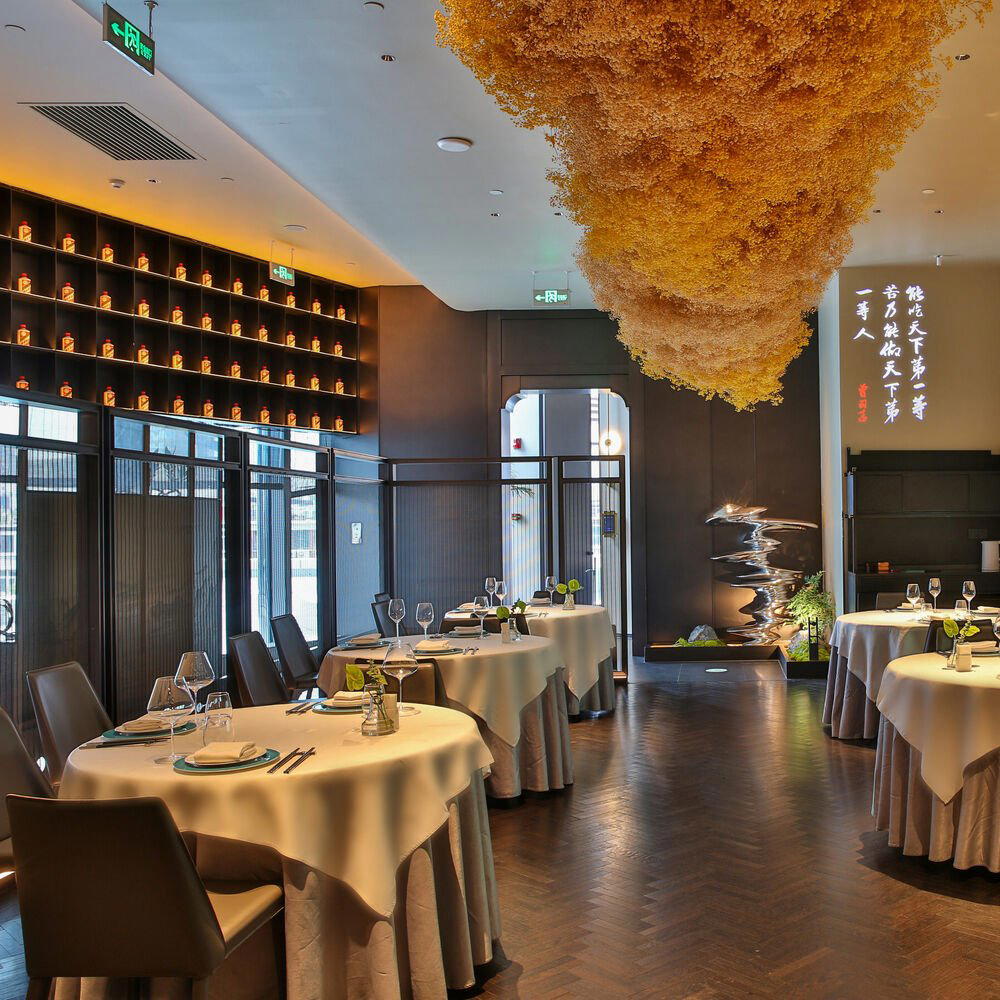
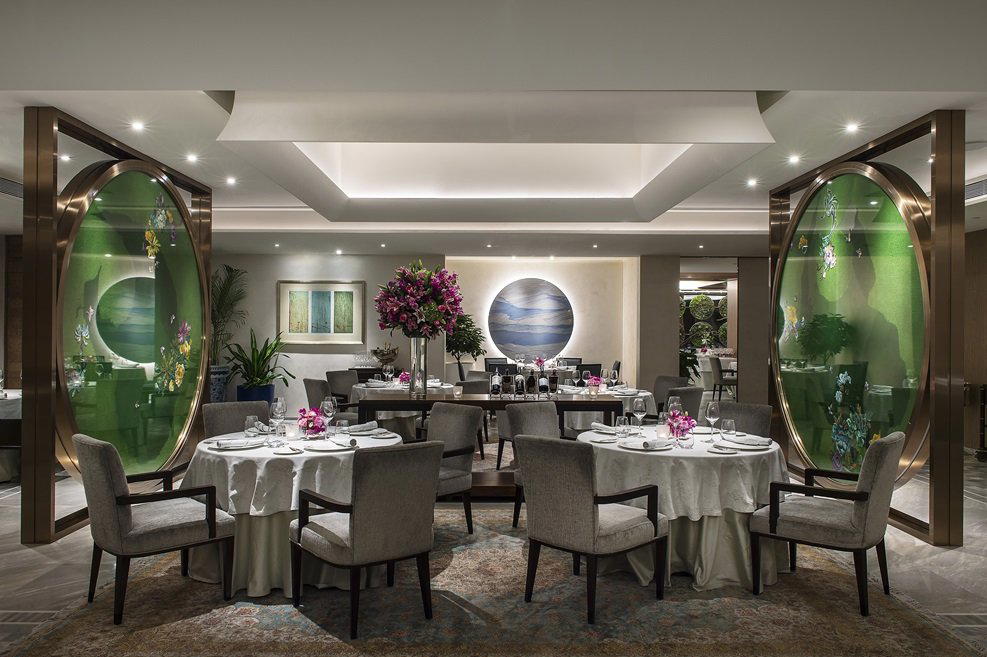
Beijing's hutong neighbourhoods have absorbed a striking range of dining formats over the past decade, from courtyard teahouses to late-night Sichuan parlours, but Modern Scandinavian at the decorated fine-dining tier remains rare territory. The Georg, at 45 Qiaohutong in Dongcheng, occupies a three-storey complex whose white walls carry artworks and greenery rather than the carved timber and red lanterns that define the area's older establishments. The building itself functions as a statement about what fine dining in this part of the city can look like: gallery-adjacent, quietly composed, calibrated for a visitor who knows what Michelin One Star and Black Pearl One Diamond credentials signal about kitchen ambition and format discipline.
Beijing's upper-tier restaurant scene has split between deeply rooted Chinese regional programmes, from the Taizhou seafood tradition at Xin Rong Ji (Xinyuan South Road) to the Chaozhou canon at Chao Shang Chao (Chaoyang), and a smaller cohort of international kitchens holding their own in a market that does not automatically reward foreign culinary frameworks. The Georg belongs to that second, smaller cohort.
How the Format Has Sharpened
The Georg's evolution is most visible in how sharply the evening format has been defined. The current model runs a single tasting menu at dinner, with no à la carte alternative. That shift, from a format with more choice to a committed tasting-menu-only dinner, tracks a wider movement in Chinese fine dining toward the kind of kitchen control that makes consistent decorated-tier performance possible.
Lunch programme retains a lighter register: smørrebrød, the open sandwich tradition from Scandinavia, sits alongside other simpler preparations, creating a two-speed operation that gives the kitchen room to run technically demanding dinner sequences without asking every daytime guest to commit to the full format. This split means lunch and dinner serve different purposes.
Nordic accent runs through both, but at dinner it operates with more precision. Pickling, smoking, and curing are not deployed as decorative gestures; they carry structural roles in how the menu progresses. Ingredients sourced globally, including meat and seafood from outside China, are paired with seasonal Chinese produce, a combination that reflects the practical reality of running a kitchen in Beijing that wants access to both Nordic technique and local agricultural cycles. The result is a menu that reads as European Contemporary but draws on materials that are genuinely regional. This is more than simply importing a Nordic tasting-menu model wholesale.
The Physical Space and What It Signals
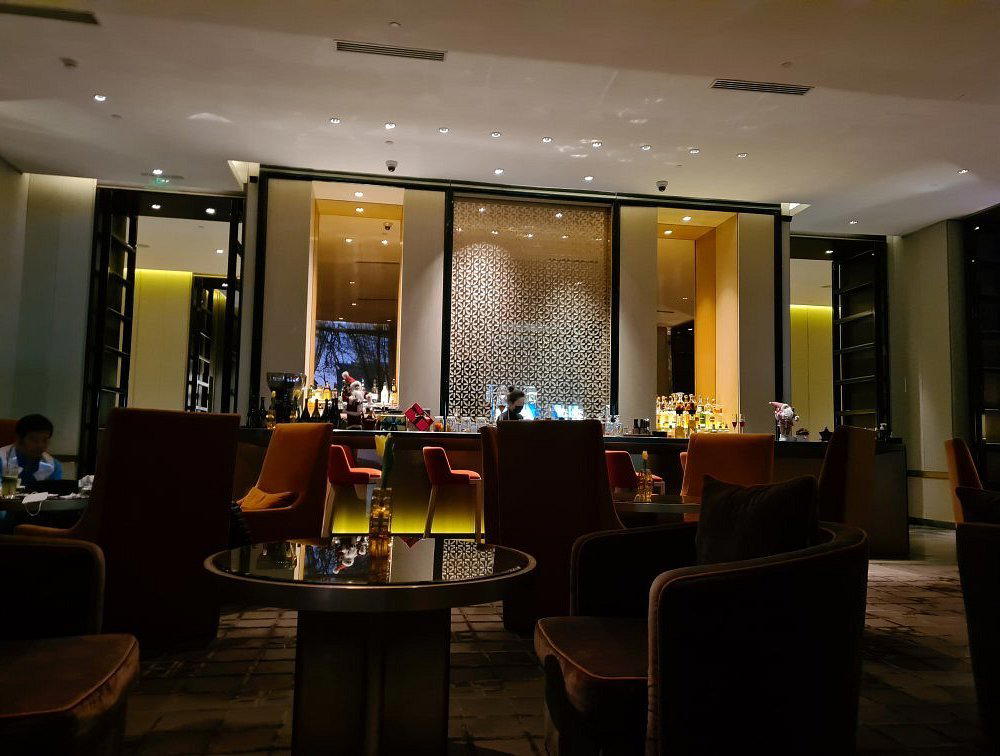
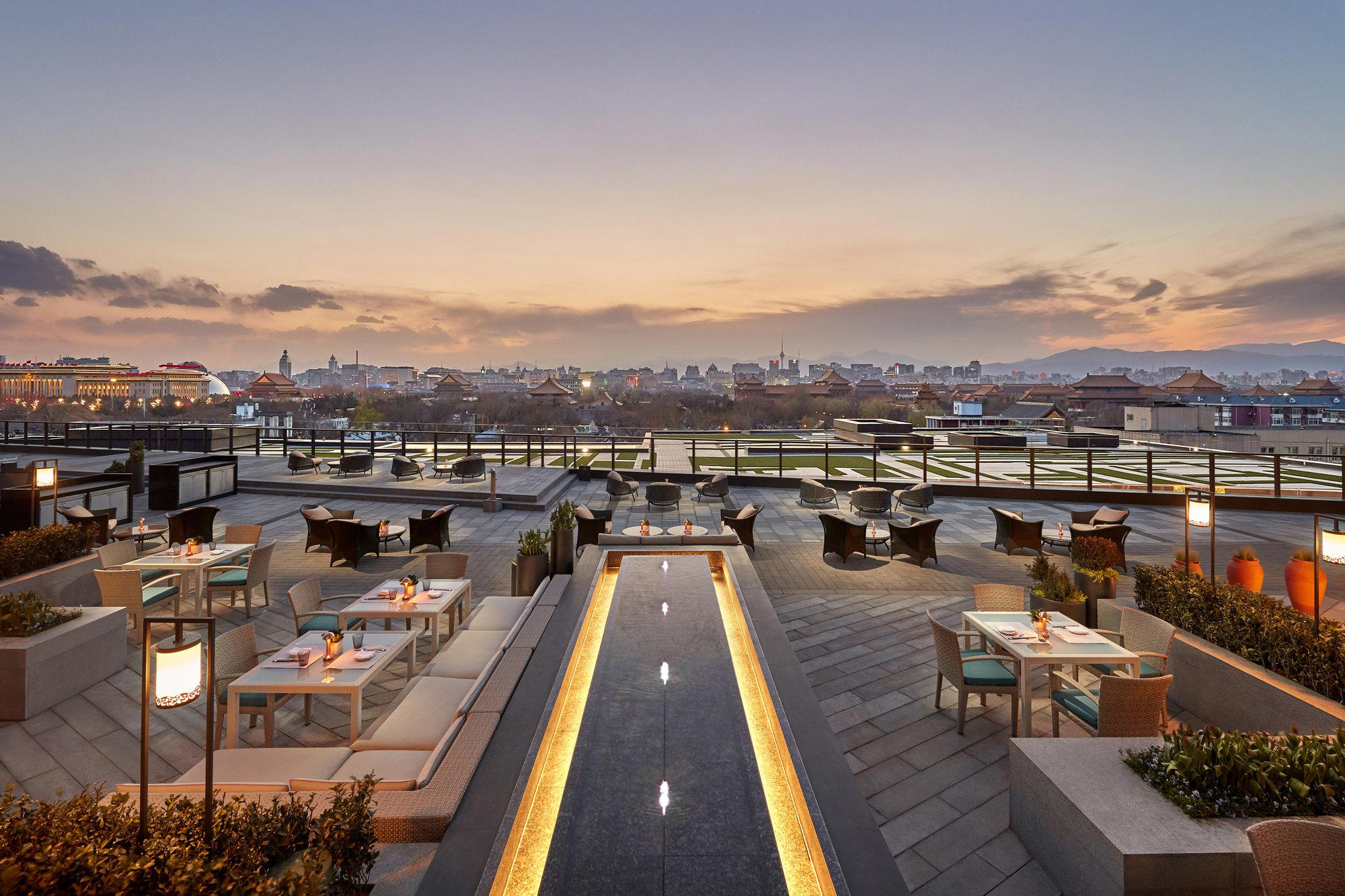
Three floors in a hutong building is a more complex logistical proposition than a single ground-level dining room, and the restaurant has used that complexity to differentiate its offering. The main dining room, the art gallery that runs through the space, and a dedicated private banquet room function as distinct environments within the same address. In Beijing's competitive private dining market, the banquet room is a meaningful asset: private dining at a Michelin-starred table is a format the city's business and cultural communities use actively, and having a purpose-designed space for it rather than a curtained-off section of the main room signals seriousness about that part of the business.
The white-walled, artwork-dotted aesthetic places the restaurant in the design-led tier of Beijing's fine-dining venues rather than the heritage-courtyard tier. Both approaches are valid, but they attract different guests and create different expectations. For a visitor who spends time in cities like Singapore, where European Contemporary at this level can be found at venues such as Zén, the visual register at the restaurant will feel familiar even if the surrounding neighbourhood does not.
Where It Sits in Beijing's Decorated Tier
At the ¥¥¥¥ price point, the restaurant occupies the same bracket as several of Beijing's most recognised Chinese regional tables, including Lamdre and Jingji. The difference is that those kitchens are arguing a case for Chinese culinary traditions, while the restaurant is making an argument for what Nordic-inflected European Contemporary can mean in this city. The competitive logic is different: the restaurant prices against its own category, not against regional Chinese peers, and its comparable set extends beyond Beijing to European Contemporary tables elsewhere in China, including 102 House in Shanghai, and to comparable formats across Asia.
For European Contemporary at the alpine end of the spectrum, the tradition runs through places like Schwarzer Adler in Hall in Tirol, where the commitment to regional produce and preservation technique has its own long history. The restaurant is doing something different geographically but operates within the same intellectual framework: European technique, seasonal produce, and preservation methods as primary flavour tools rather than secondary garnishes.
Other decorated-tier addresses worth knowing for a full Beijing dining itinerary include Amico BJ for a different European angle, and for those extending their China travels, Chef Tam's Seasons in Macau, Ru Yuan in Hangzhou, Xin Rong Ji in Chengdu, Imperial Treasure Fine Chinese Cuisine in Guangzhou, and Dai Yuet Heen in Nanjing give a sense of how the fine-dining tier performs across mainland China.
For broader planning, EP Club maintains full guides to Beijing restaurants, Beijing hotels, Beijing bars, Beijing wineries, and Beijing experiences.
Know Before You Go
- Address: 45 Qiaohutong, Dongcheng District, Beijing 100009
- Cuisine: European Contemporary (Nordic-inflected)
- Price tier: ¥¥¥¥
- Awards: Michelin One Star (2024), Black Pearl One Diamond (2025)
- Dinner format: Single tasting menu only
- Lunch format: Lighter menu including smørrebrød
- Private dining: Dedicated banquet space available
- Booking: Advance reservation strongly advised for dinner given the tasting-menu-only format and decorated-tier demand
Comparable Spots
Comparable venues nearby, for context on price, style, and recognition.
| Venue | Cuisine | Price | Notes |
|---|---|---|---|
| The GeorgThis venue — the venue you are viewing | Modern Scandinavian | $$$$ | Not listed |
| Giada Garden | Modern Northern Italian Fine Dining | $$$$ | Sanlitun |
| The House of Dynasties | Modern Cantonese Dim Sum & Zhanjiang Cuisine | $$$$ | Hujialou |
| Xin Rong Ji (Jinrong Street) | Taizhou Seafood | $$$$ | Fengsheng |
| Xitan Beijing | Modern Chinese Fine Dining | $$$$ | Mentougou District |
| Cai Yi Xuan | Michelin-Starred Cantonese | $$$$ | Hujialou |
Recognition history
Dated appearances from independent guides and award organizations, with the underlying list record or original source where available.
Black Pearl 1 Diamond
Black Pearl
Black Pearl 1 Diamond
Black Pearl
Michelin 1 Star
Michelin
Michelin 1 Star
Michelin

At a Glance
- Elegant
- Modern
- Sophisticated
- Minimalist
- Intimate
- Date Night
- Special Occasion
- Business Dinner
- Private Dining
- Courtyard
- Design Destination
- Open Kitchen
- Extensive Wine List
- Craft Cocktails
- Sommelier Led
- Street Scene
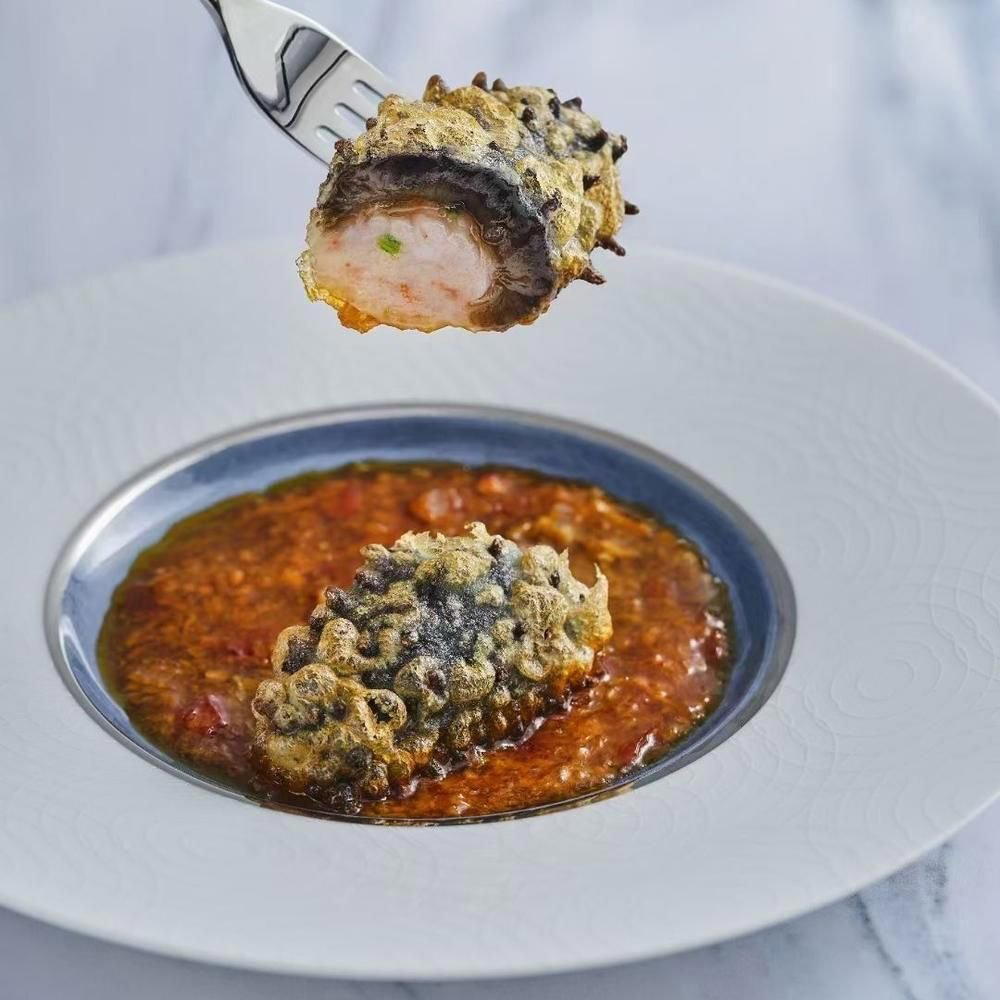
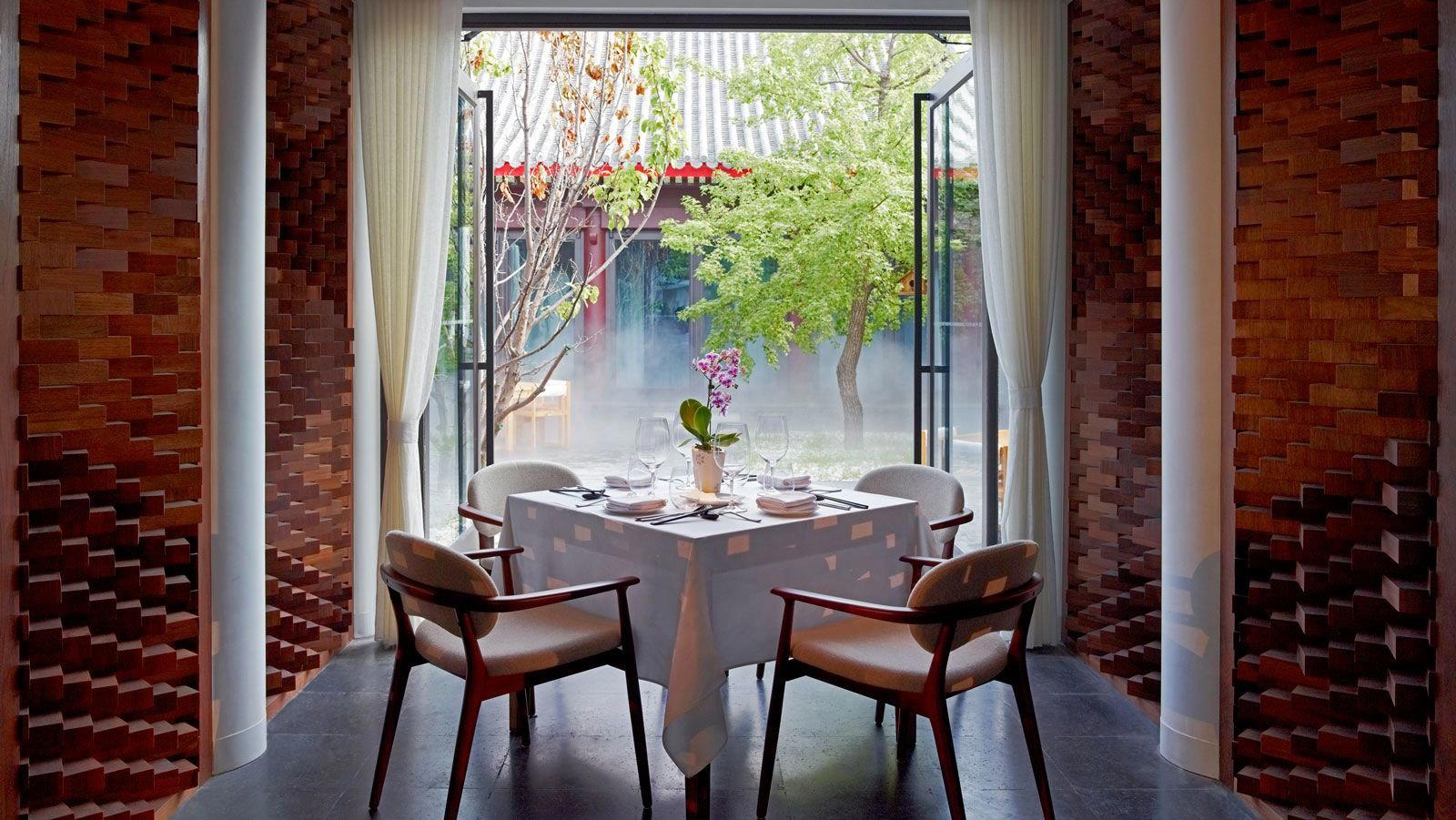
Elegant and serene minimalist interior with pristine white walls, artworks, greenery, mid-century Scandinavian furniture, and a spacious glass atrium courtyard.