Our verdict
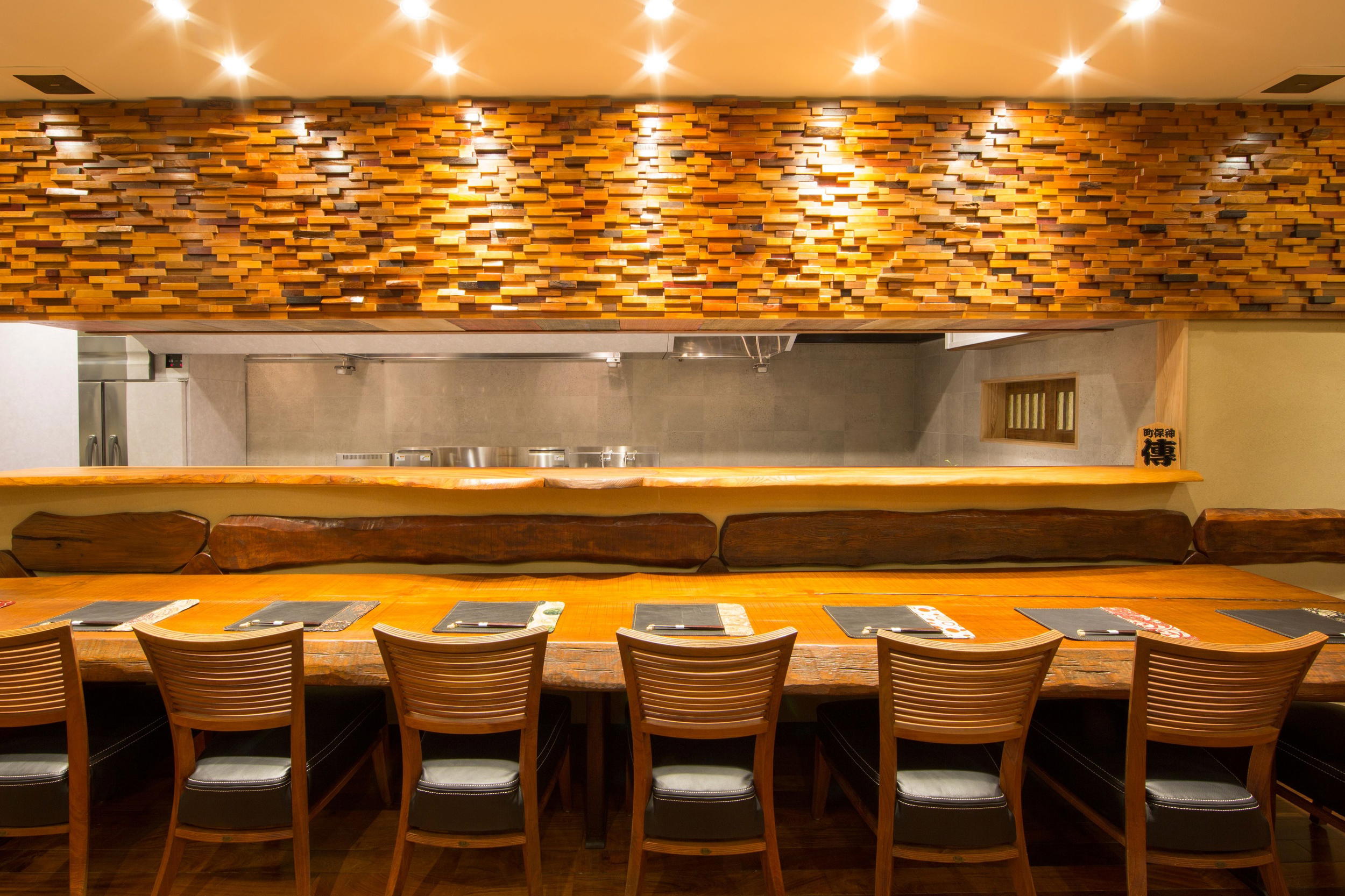
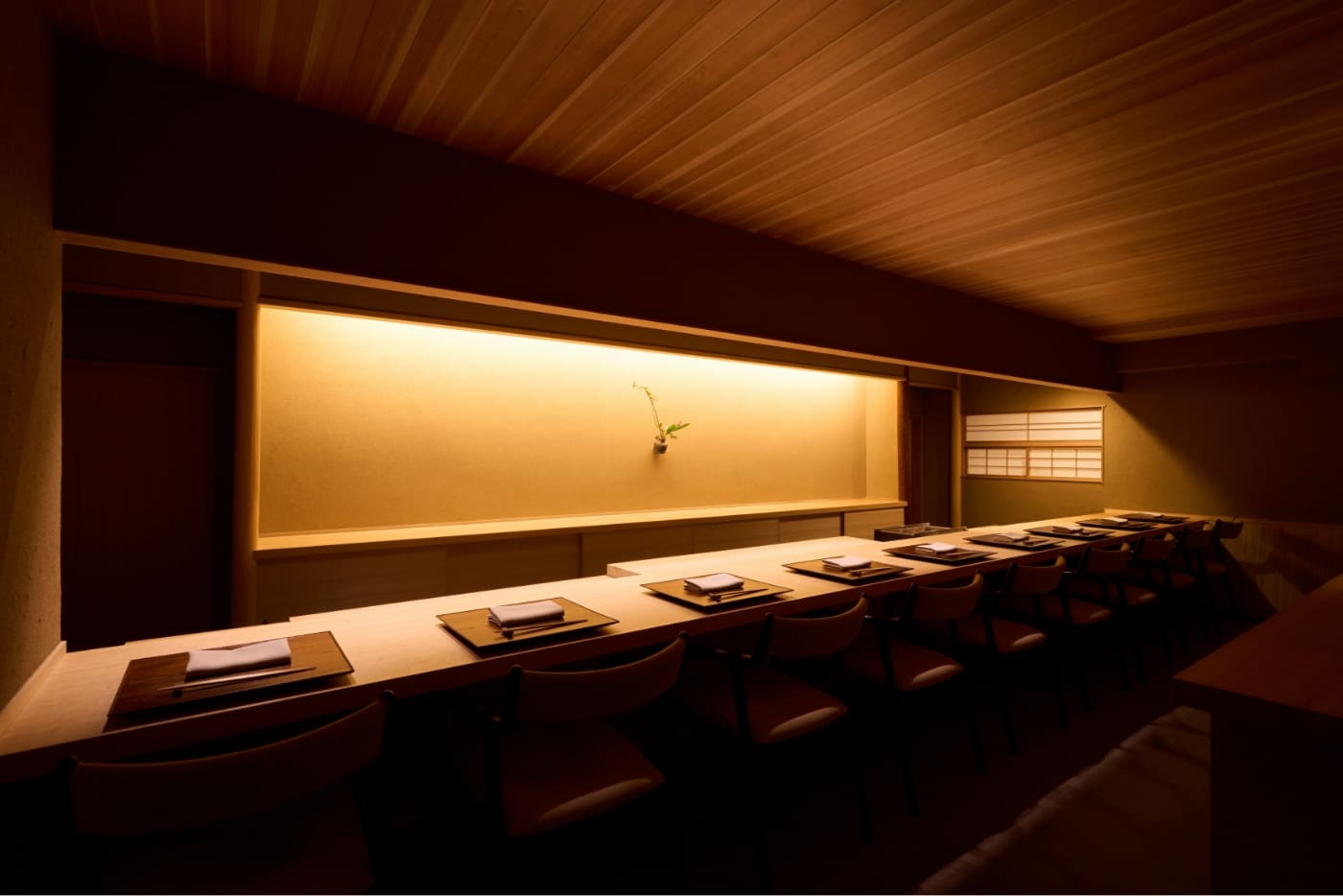
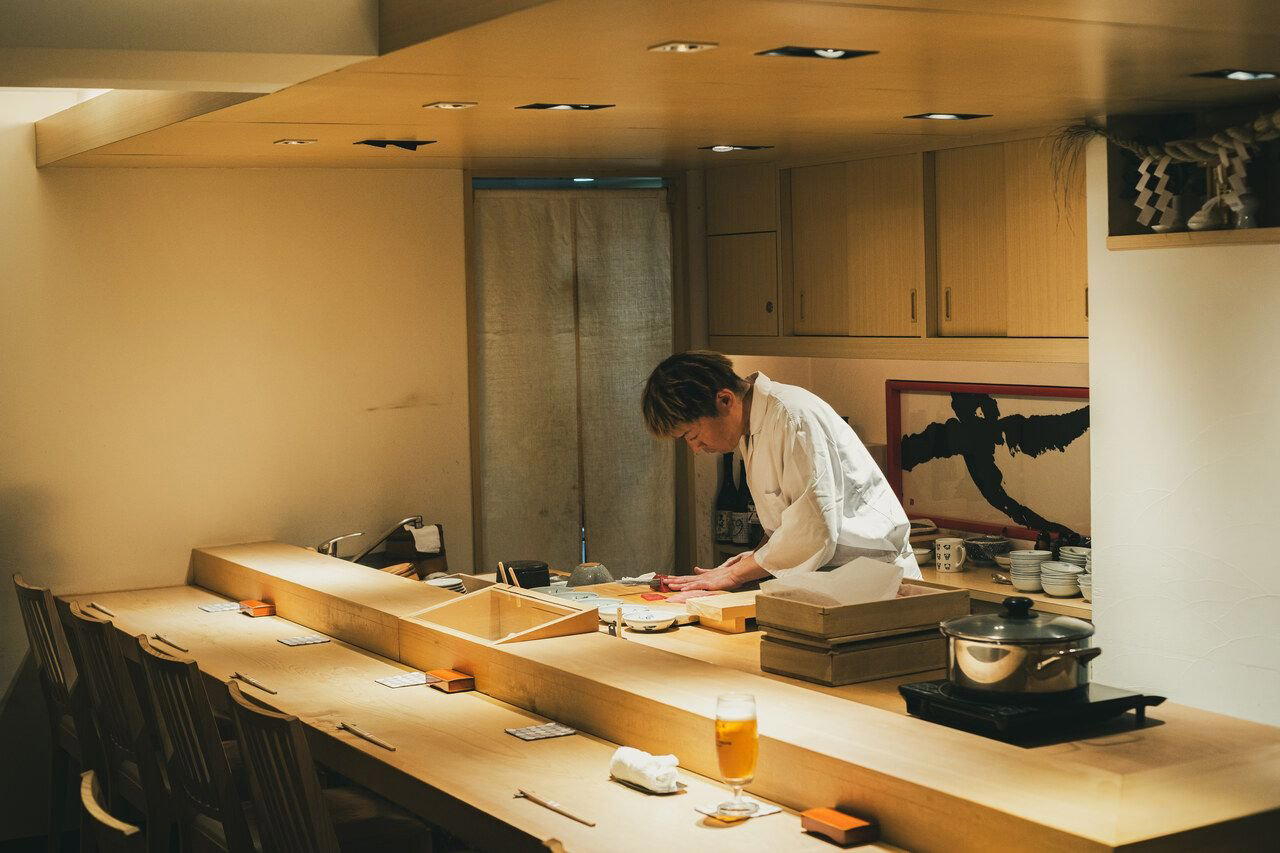
A sushi counter in Shibuya's Udagawacho district, 鮨 あい澤 operates in a neighbourhood more associated with youth culture than omakase tradition, which already tells you something about its positioning. Tokyo's sushi tier has expanded beyond Ginza and Minami-Aoyama, and counters like this one are part of that geographic drift. Advance planning is advised for any serious booking attempt.

Pearl is the En Primeur Club membership app, where members save venues, book tables and use the concierge.
A Counter in the Wrong Neighbourhood, and Why That Matters
Shibuya is not where you expect to find a serious sushi counter. The ward built its reputation on department stores, youth fashion, and the organised chaos of its central crossing. Udagawacho, the sub-district where 鮨 あい澤 occupies the ground floor of the Nakajima Building at 42-15, sits between record shops and side-street izakayas, not the kind of address that signals a ¥¥¥¥ omakase environment. That displacement is, in itself, a data point about where Tokyo's sushi scene is heading.
Over the past decade, the geography of premium sushi in Tokyo has shifted. Ginza and Minami-Aoyama still anchor the highest-price-tier counters, venues like Harutaka operate in that established corridor, where Edomae credentials, Michelin recognition, and a certain neighbourhood gravity reinforce each other. But a younger generation of counters has been opening in less obvious locations, often in smaller buildings, sometimes without published phone numbers or websites, frequently relying on word-of-mouth and reservation platforms rather than traditional PR. 鮨 あい澤 fits that pattern precisely. Its address is verifiable; its online footprint is deliberately thin.
What the Menu Architecture Signals
Counters of this type in Tokyo almost universally operate omakase, a fixed sequence determined by the chef, with no à la carte option. The logic is not arbitrary. Omakase format gives a small counter complete control over sourcing: the chef orders precisely what is needed for that day's seatings, minimising waste and allowing for last-minute upgrades when superior fish arrives at Toyosu Market in the early hours.
Within that format, the architecture of a typical Tokyo sushi progression matters. The sequence usually moves from lighter, more delicate fish, flounder, squid, young amberjack, through fattier, more assertive cuts of tuna (akami, chutoro, otoro) before arriving at shellfish, egg, and rolled pieces that close the meal. The order is not just aesthetic. It is calibrated to build flavour intensity gradually, so that the richer cuts land after the palate has been prepared rather than before it has been opened. This sequencing logic is one of the things that separates a counter operating at this level from a mid-tier conveyor or set-menu format. For context on how that same progression plays out in kaiseki rather than sushi, RyuGin offers a useful parallel, the seasonal structuring principle is comparable even if the cuisine is different.
What distinguishes the upper tier of Tokyo sushi counters from the middle tier is less about individual ingredients and more about the consistency of that architecture across a full sitting. A counter that sources well on Tuesday but inconsistently on Thursday is not operating at the level its prices imply. The fact that 鮨 あい澤 has sustained a low-profile, reservation-dependent model in a high-cost city suggests that the demand side of the equation is functioning, counters at this address level do not continue without repeat clientele.
Shibuya as a Sushi Address
The choice of Shibuya as a location for a serious counter reflects a broader pattern visible across Tokyo's dining geography. As rents in Ginza and Nishi-Azabu have increased, and as the density of competition in those corridors has made differentiation harder, a cohort of chefs and operators has moved into residential or mixed-use wards where overheads are lower and the clientele, once established, tends to be loyal rather than tourist-driven. This same logic has pushed some of Tokyo's more considered French and innovative restaurants into similar off-centre positions. Crony and L'Effervescence both demonstrate that serious cooking in Tokyo does not require a Ginza postcode to build a strong reservation pipeline.
For sushi specifically, neighbourhood positioning also affects the character of the room. Counters in Ginza operate with a degree of formality that the address demands, suited businessmen, corporate entertaining, the occasional international critic. A counter in Udagawacho draws a different crowd: still knowledgeable, still willing to commit to a full omakase, but less interested in the theatre of prestige addressing. That shift in room character often translates into a slightly more relaxed counter experience without any reduction in technical seriousness.
Placing 鮨 あい澤 in the Tokyo Sushi Conversation
Tokyo's sushi offering now spans a wider range of price points, formats, and neighbourhood contexts than at any previous point. At the leading, three-Michelin-star counters set the pricing ceiling and the benchmark for technique. Below that, a large and competitive mid-tier operates across the city. 鮨 あい澤's positioning, Shibuya address, minimal online presence, omakase format implied by the counter model, places it in the segment that serious Tokyo diners and visiting food-focused travellers treat as discovery territory: well-regarded locally, not yet filtered through international review infrastructure.
That positioning is not unique to Tokyo. In Osaka, HAJIME occupies a similar space of local prestige without full international translation. In Kyoto, Gion Sasaki operates with comparable reservation depth and low promotional profile. Across Japan, the most interesting dining experiences at this level share a common characteristic: they are easier to find once you have already been than before you have made the first booking. akordu in Nara and Goh in Fukuoka follow the same pattern in different culinary registers.
For visitors planning a broader Japan itinerary that extends beyond Tokyo, counters like this one serve as a useful calibration point, they represent what the local dining conversation looks like before international media has caught up. See also our coverage of 一本杉 川嶋 in Nanao, 古仲山乃 in Sapporo, 湖畔荘 in Takashima, and 庄羽屋 in Nishikawa Machi for a sense of how regional Japan is developing its own fine dining infrastructure. Birdland in Sakai and Bistro Ange in Toyohashi add further regional context. Internationally, the comparison set for this kind of low-profile, technically serious counter extends to Le Bernardin in New York for sustained reputation without constant self-promotion, and Atomix for the model of deliberate scarcity in a high-demand city. For a full picture of Tokyo's dining options, see our full Tokyo restaurants guide. And Sézanne remains a useful benchmark for understanding how international-facing fine dining in Tokyo differs from locally-oriented counters like 鮨 あい澤.
Planning Your Visit
鮨 あい澤 is located at 42-15 Udagawacho, Shibuya, Tokyo (Nakajima Building, 1st floor). No phone number or website is currently published in public channels, which means the most reliable route to a reservation is through concierge services at a Tokyo hotel, a Japan-specialist booking platform, or a local contact with existing access. This pattern of access, informal, relationship-gated, is common among counters at this tier in Tokyo, and it rewards advance planning. Visitors travelling specifically to dine at this level should treat the booking process as a project to begin weeks, not days, before arrival.
Frequently asked questions
Where exactly is 鮨 あい澤?
鮨 あい澤 is located at Japan, 〒150-0042 Tokyo, Shibuya, Udagawacho, 42−15 中島ビル 1階, Tokyo.
Is 鮨 あい澤 suitable for a first omakase experience in Tokyo?
Shibuya's Udagawacho location makes 鮨 あい澤 more accessible geographically than counters in Ginza or Akasaka, which can help first-time omakase diners who are still orienting around the city. The counter format at venues of this type expects guests to follow the kitchen's pace without modification, no ordering, no swaps, and typically no English-language menu. First-timers comfortable with that structure will find the Shibuya address a practical entry point into Tokyo's counter scene.
What should I order at 鮨 あい澤?
Counter sushi in this format runs as omakase, the kitchen decides the sequence, and substitution requests are rarely accommodated mid-course. Located in Shibuya's Nakajima Building, 鮨 あい澤 operates within the conventions of Edomae-style counters, where the progression from lighter whitefish to richer tuna and aged pieces is the structure. There is no à la carte selection to navigate.
How far ahead should I plan for 鮨 あい澤?
No booking platform or phone number is publicly listed for 鮨 あい澤, which points to a reservation process that runs through direct contact or an intermediary concierge service. Serious counters in Tokyo at this address type typically fill two to four weeks out at minimum. Allow more lead time if visiting during Golden Week, Obon, or year-end periods.
What is 鮨 あい澤 known for?
鮨 あい澤 is a sushi counter operating in Shibuya's Udagawacho district, a neighbourhood more associated with retail and nightlife than with precision counter dining. That positioning, away from the Ginza and Nihonbashi circuits where most high-end Tokyo sushi concentrates, is itself a signal: the counter draws on local reputation rather than foot traffic from the usual tourist or expense-account routes.
Can 鮨 あい澤 handle vegetarian requests?
Omakase sushi counters in Tokyo are built around fish and seafood as the structural core of the meal, and 鮨 あい澤 follows that format. Anyone with dietary restrictions should clarify directly before booking.
A Minimal comparable set
Comparable venues nearby, for context on price, style, and recognition.
| Venue | Cuisine | Price | Awards | Notes |
|---|---|---|---|---|
| 鮨 あい澤This venue (the venue you are viewing) | Edomae Omakase Sushi | $150–200 | Not listed | Not listed |
| Sushi Sho | Traditional Edomae Sushi Omakase | $300–500 | Not listed | Nishiazabu, Traditional Edomae Sushi Omakase |
| Kyoaji (京味) | Traditional Kyoto-Style Kaiseki Omakase | Not listed | Not listed | Shinbashi, Traditional Kyoto-Style Kaiseki Omakase |
| Bohemian Nishiazabu | Secret seasonal Japanese robata omakase | $100–150 | Not listed | Nishiazabu, Secret seasonal Japanese robata omakase |
| Sushi Sugita (日本橋 蛎殻町 すぎた) | Edomae Sushi Omakase | $300–500 | Not listed | Nihonbashi, Traditional Edomae Omakase |
| Matsusaka Ushi Yoshida | Matsusaka beef teppanyaki, sukiyaki & shabu-shabu fine dining | $150–200 | Tabelog 100 #84 | Shinjuku, Matsusaka beef teppanyaki, sukiyaki & shabu-shabu fine dining |