Our verdict
A stand-format bánh mì counter in Meguro's Takaban neighbourhood, スタンドバインミー brings Vietnamese street food culture to a quietly residential pocket of Tokyo. The format is compact and deliberate, positioned within a city where casual international concepts increasingly occupy neighbourhood-level storefronts rather than tourist corridors. An accessible entry point into Meguro's evolving casual dining scene.

Pearl is the En Primeur Club membership app, where members save venues, book tables and use the concierge.
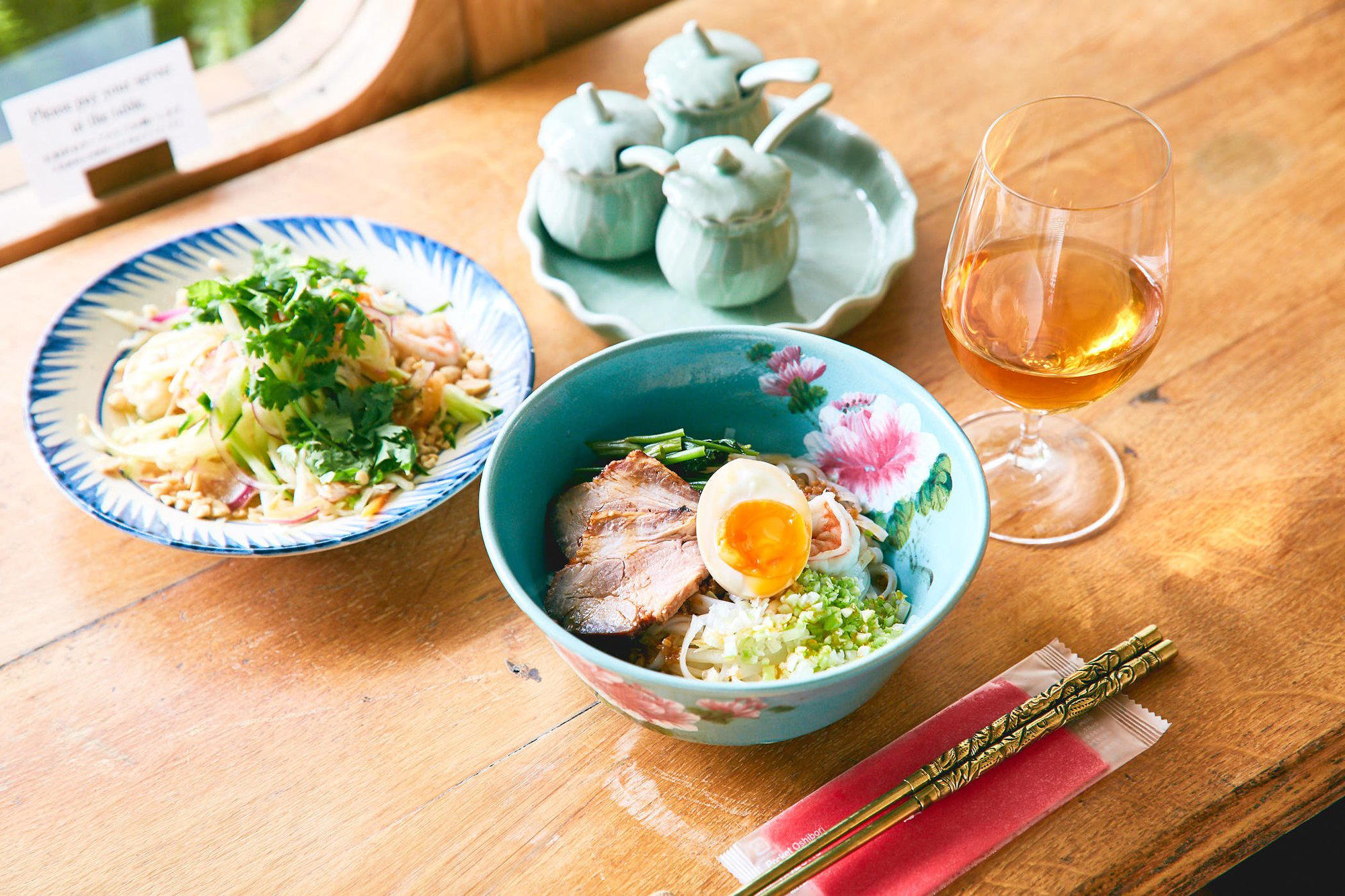
Bánh Mì in Tokyo: The Stand Format and What It Signals
Tokyo's relationship with Vietnamese food has shifted considerably over the past decade. Where the early wave of Vietnamese restaurants in the city clustered around major interchange stations and leaned on pho as their calling card, a more recent cohort has imported the street-snack end of the tradition: bánh mì counters, stand formats, and grab-and-go concepts that reflect how the sandwich actually functions in Ho Chi Minh City or Hanoi. スタンドバインミー, located on the ground floor of a low-rise building in Takaban, Meguro City, belongs to this second wave. The format is the statement: a stand, not a sit-down restaurant, which communicates something specific about how the food is meant to be encountered.
This matters because bánh mì is a sandwich with a precise internal logic. The French colonial period left baguette culture in Vietnam, and the local adaptation produced something structurally different from its European ancestor: a lighter, airier loaf with a thin, shattering crust, filled with combinations of pork preparations, pickled vegetables, fresh herbs, and chilli. In Tokyo, where bread culture runs from artisan sourdough in Daikanyama to convenience-store milk bread, the bánh mì occupies a specific niche, it is at once familiar (bread-based, portable) and genuinely foreign in its flavour architecture. Stand-format venues like this one reinforce that identity by refusing the table-service framing that would soften or domesticate the concept.
Meguro and Takaban: The Neighbourhood Context
Takaban is not a dining destination in the way that Daikanyama or Nakameguro are. It sits south of the more photographed stretches of Meguro River, in the kind of residential grid that Tokyo does quietly well: narrow streets, local shotengai, and a mix of long-established shops alongside newer, smaller concepts that open in ground-floor units of apartment buildings. The address at M&K;鷹番 1F is precisely that kind of space.
This neighbourhood positioning is worth understanding as a pattern rather than a quirk. As rents in Nakameguro and Daikanyama have climbed, and as those areas have become increasingly curated for visitors rather than residents, a secondary tier of food concepts has migrated to the streets just beyond. Takaban, like parts of Musashi-Koyama and Togoshi, is part of this quieter, resident-facing layer of Tokyo's casual dining geography. Venues here are not pitching to walk-in tourist traffic; their audience is the surrounding neighbourhood, which sets a different expectation for consistency and value.
For context, the high-investment end of Tokyo dining is well-documented: Harutaka operates at the top of the omakase tier in Ginza, while L'Effervescence, RyuGin, Sézanne, and Crony anchor the city's serious French and kaiseki circuits. スタンドバインミー is not in conversation with that tier. It belongs to the category of neighbourhood-scale casual concepts, where the competitive set is other quick-service options within walking distance, and where repeat custom from locals matters more than placement in any ranking.
The Stand Format and the Wine List Question
The editorial angle of wine curation may seem mismatched with a bánh mì stand, and that tension is itself instructive. Stand-format street food concepts in Tokyo, including those serving Vietnamese, Korean, and Taiwanese food, almost never carry a wine list. The pairing culture around bánh mì skews toward iced coffee in the Vietnamese tradition, or cold beer in a casual Japanese context. Where natural wine bars and bistros in Nakameguro have built their identity partly around accessible, low-intervention pours alongside snack-format food, the stand concept sits at the opposite end of the beverage axis: functional, fast, and unadorned.
This is not a criticism. It reflects a honest category distinction. Venues like HAJIME in Osaka or Gion Sasaki in Kyoto carry the kind of cellar investment that defines the upper tier of Japanese fine dining. akordu in Nara and Goh in Fukuoka demonstrate how regional Japanese restaurants can build serious beverage programs alongside food that earns international recognition. Even internationally, Le Bernardin in New York City and Atomix represent the kind of beverage-food integration that defines destination dining. The stand format at スタンドバインミー is explicitly not that model, which is a legitimate and coherent choice, one that keeps the concept honest about what it is.
What casual Vietnamese formats in Tokyo do well is demonstrate that the city's appetite for international street food is becoming more granular. A decade ago, Japanese interpretations of Vietnamese food often softened the seasoning and formalized the service. The stand format resists that domestication by design.
Placing スタンドバインミー in the Wider Tokyo Food Map
Tokyo's casual international dining scene increasingly fragments by neighbourhood. Concepts that would have needed a central location to survive now succeed in residential pockets, supported by local regulars rather than destination seekers. This pattern is visible across the city's quieter wards: in Meguro, Setagaya, and Shinagawa, ground-floor spots in apartment buildings operate on the logic of proximity and consistency rather than prestige or discovery. For more on how this plays out across the city's dining categories, see our full Tokyo restaurants guide.
Other regional Japanese venues worth understanding for comparative context include 一本木 名川製 in Nanao, 夕佳亭山乃 in Sapporo, 湖畔荘 in Takashima, 瓦羽屋 in Nishikawa Machi, Birdland in Sakai, and Bistro Ange in Toyohashi, each of which illustrates how Japan's regional dining geography extends well beyond the major city circuits.
Know Before You Go
- Address: 〒152-0004 Tokyo, Meguro City, Takaban, 2 Chome-16-23 M&K鷹番 1F
- Nearest Station: Takaban is served by Gakugeidaigaku Station (Tokyu Toyoko Line), approximately a short walk from the venue
- Format: Stand counter, expect a compact, quick-service model rather than table seating
- Phone / Website: Not publicly listed at time of publication
- Bookings: Stand formats of this type typically operate on a walk-in basis; confirm directly if advance arrangement is required for groups
Frequently asked questions
What is the must-try dish at スタンドバインミー?
The venue's name and stand format point clearly to bánh mì as the core offering. Bánh mì, at its most direct, is a Vietnamese baguette-style sandwich built around contrasting textures and temperatures: soft or grilled fillings, crunchy pickled vegetables, fresh herbs, and chilli heat.
Do I need a reservation at スタンドバインミー?
Stand-format concepts of this type, particularly in residential Tokyo neighbourhoods, almost always operate on a walk-in basis. If you are visiting during a busy lunch period or with a group, arriving slightly off-peak is a reasonable precaution. For the same reason that venues like Gakugeidaigaku-area spots draw consistent neighbourhood traffic, midday queues at well-regarded stands can be brisk.
What is the standout characteristic of スタンドバインミー?
The format is the distinguishing feature. In a city where Vietnamese restaurants have tended to either formalize the experience or concentrate in tourist-adjacent areas, a stand-format bánh mì counter in a residential Meguro neighbourhood represents a more direct import of the street-food logic behind the dish. The concept does not ask the food to perform above its category; it presents bánh mì as it is intended to be eaten.
Can スタンドバインミー accommodate dietary restrictions?
Tokyo's Vietnamese food scene generally uses pork-heavy fillings as a baseline, so those avoiding pork should check the available options in advance. Where possible, visiting in person and asking at the counter is the practical fallback for a stand-format venue of this kind.
Is スタンドバインミー part of a broader trend of Vietnamese street food concepts in Tokyo?
Yes, and the Meguro address is part of a wider pattern. Tokyo's casual Vietnamese dining has been migrating away from pho-centred restaurant formats toward more format-specific concepts, bánh mì counters, cơm tấm spots, and quick-service stands, that reflect how the food actually functions in Vietnam. Stand formats like this one are appearing in residential wards rather than tourist corridors, which signals an audience of local regulars rather than discovery diners. That neighbourhood footing, rather than any award or accolade, is the relevant trust signal here.
Reputation Context
Comparable venues nearby, for context on price, style, and recognition.
| Venue | Cuisine | Price | Awards | Notes |
|---|---|---|---|---|
| スタンドバインミーThis venue (the venue you are viewing) | Modern French-Vietnamese Banh Mi | $20–30 | Not listed | Not listed |
| Mi Rei | Casual Vietnamese restaurant | $30–50 | Tabelog 100 #95 | Ōta |
| ヨヨナム | Modern Vietnamese Bistro | $50–100 | Not listed | Shibuya |
| Phở Thìn Tokyo | Traditional Hanoi-style beef pho | $10–20 | Tabelog 100 #94 | Toshima |
| Nanxiang Steamed Bun Restaurant (南翔饅頭店) | Shanghai Xiaolongbao | $20–30 | Not listed | Roppongi |
| たんたん亭 本店 | Classic Tokyo Shina Soba & Wonton Ramen | $10–20 | Tabelog 100 #84 | Hamadayama |
Continue exploring
More in Tokyo
Restaurants in Tokyo
All restaurants in Tokyo →


Bars in Tokyo
All bars in Tokyo →






Details
- Trendy
- Cozy
- Modern
- Casual Hangout
- Date Night
- Open Kitchen
- Natural Wine
- Organic
- Local Sourcing
- A La Carte
- Small Plates
- Sake Program
- Vegetarian Friendly
Current opening hours
- Monday
- 11 AM–3 PM, 6 PM–2 AM
- Tuesday
- Closed
- Wednesday
- 11 AM–3 PM, 6 PM–2 AM
- Thursday
- 11 AM–3 PM, 6 PM–2 AM
- Friday
- 11 AM–3 PM, 6 PM–2 AM
- Saturday
- 11 AM–3 PM, 6 PM–2 AM
- Sunday
- 11 AM–3 PM, 6 PM–2 AM
Hours can change for holidays and private events. Hours as of .
Stylish French-Vietnamese atmosphere with a focus on fresh herbs and cozy seating, popular for its trendy appeal among women.