Tabelog 100 #94
Our verdict
A basement pho counter in Ikebukuro gives Tokyo’s Vietnamese dining scene a rare direct line to Hanoi rather than a Japan-shaped imitation. Phở Thìn Tokyo is compact, casual, and recognised in Tabelog’s Asian and Ethnic Tokyo 100 selections for 2022, 2023, and 2024, placing it in the city’s serious everyday-food conversation rather than its luxury dining circuit.

Pearl is the En Primeur Club membership app, where members save venues, book tables and use the concierge.
The menu
What to order
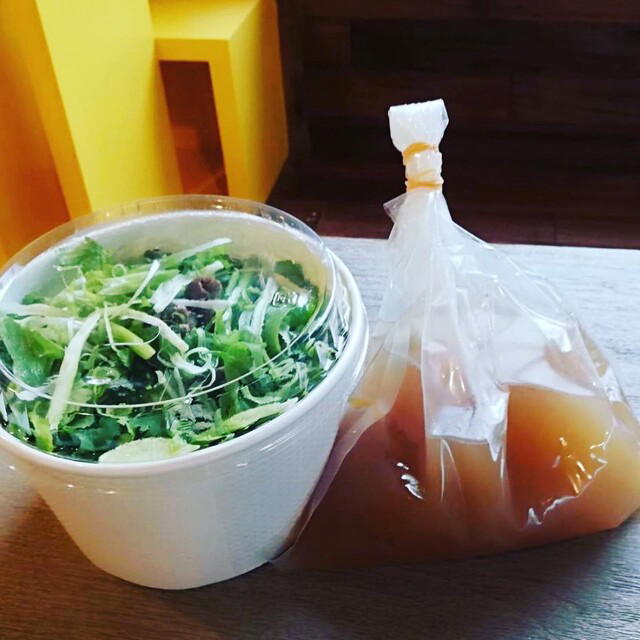
- Beef pho
- Fresh rice-noodle beef pho
- Beef pho with egg
- Beef pho with extra green onion
Tokyo’s casual restaurant rooms have their own rhythm: city traffic outside, compact interiors within, and service built for speed rather than ceremony. In that setting, Vietnamese cooking reads differently from Tokyo’s more polished destination dining. The pleasure is not theatre. It is the concentration of a focused idea, served in a room where the meal becomes part of the city’s working day.
That context matters because Tokyo’s Asian and ethnic dining scene is not a side category anymore. The city has long absorbed a wide range of regional food into everyday eating, but the current tier of recognised casual specialists is more exacting: low prices do not excuse weak identity. Phở Thìn Tokyo sits in that group, with a 2024 Tabelog Hyakumeiten recognition in Vietnamese, Asian, and Ethnic categories, and a Tabelog score of 3.66. For a Vietnamese restaurant in Tokyo, those signals say more than decoration or mythology could.
Vietnamese cooking, translated through Tokyo's fast-casual discipline
The useful way to read this restaurant is through format. Tokyo has an affection for specialised rooms: counters and compact restaurants built around narrow categories, concise menus, and repeatable rhythms. Vietnamese food fits that city logic when it is treated as a focused craft rather than a broad catch-all menu. The Vietnamese association gives the restaurant its cultural anchor; the Tokyo setting gives it operational pressure.
The room’s casual scale changes expectations. Service has to move cleanly, and the front-of-house role becomes less about narration than pacing, clarity, and making a casual space feel usable for repeat diners and quick meals. The kitchen’s collaboration with that service model is the point: this kind of focused restaurant depends on timing, heat, discipline, and quick delivery. In Tokyo, where counter-style dining often turns repetition into a virtue, that team dynamic is what separates a serious casual specialist from a theme restaurant.
There is also a broader city comparison. In Tokyo, beef specialists such as Wagyumafia and YAKINIKUMAFIA IKEBUKURO by WAGYUMAFIA belong to a different spending and occasion category, while casual names such as Coffee Tei, COFFEE VALLEY, and Suzumeya show how the city supports quick, low-friction stops as well as destination meals. Phở Thìn Tokyo belongs closer to the latter habit, but with stronger culinary specificity than a generic café or snack counter. The price tier places it in everyday Tokyo dining; the Tabelog recognition moves it into the serious-curation bracket.
Why the recognition matters for a casual Vietnamese counter
Tabelog’s Hyakumeiten-style lists are useful in Tokyo because they often catch restaurants that do not fit Michelin-era luxury language. A Vietnamese specialist in Tokyo does not need white tablecloths to be meaningful. Its claim is narrower: consistency, identity, and enough local demand to survive in a city where foot traffic is high and tolerance for weak casual food is low.
Tokyo diners are exacting about repetition. A place that asks guests to return for a focused category has to make routine feel intentional. That is where the kitchen-and-service relationship matters more than personality. The kitchen handles the core product; the room has to keep pace, comfort, and practical flow from disrupting it. This is not the slow choreography of omakase, but it is choreography nonetheless.
For readers mapping a Tokyo trip, the restaurant makes sense as a corrective between high-end reservations. A city itinerary can lean too heavily on formal counters, tasting formats, and destination dining; a recognised Vietnamese counter in Tokyo gives the day a different register. It also points to a less discussed Tokyo truth: some of the city’s strongest eating is not Japanese cuisine at all, but imported traditions sharpened by Tokyo’s obsession with process.
Where it fits in a Tokyo eating plan
Use Phở Thìn Tokyo as a Tokyo casual anchor rather than a cross-town trophy stop. The city rewards stacking casual meals, cafés, and browsing into the same afternoon, and this kind of restaurant works because it does not demand a long dining window. It is better read as a precise lunch or early-evening decision than as a grand dinner plan.
Travellers building a wider Tokyo dining map can place it beside other category specialists rather than compare it with luxury rooms. For more restaurant planning, see Our full Tokyo restaurants guide, and for the surrounding trip architecture use Our full Tokyo hotels guide, Our full Tokyo bars guide, Our full Tokyo wineries guide, and Our full Tokyo experiences guide. Within the city’s restaurant spread, useful contrast comes from other Tokyo dining rooms, cafés, grill specialists, and compact casual restaurants.
The same logic extends beyond Tokyo. Regional and overseas comparisons help clarify how tightly Japanese dining culture defines category specialists: across Japan and abroad, narrow-format dining often shows how a restaurant can build identity through repetition, clarity, and restraint. Farther afield, the same point holds in reverse: when a food tradition travels, the serious versions usually become more focused, not broader.
Frequently asked questions
What price level is Phở Thìn Tokyo?
Pricing at Phở Thìn Tokyo is listed as JPY 1,000 - JPY 1,999 JPY 1,000 - JPY 1,999.
Where do I go for Phở Thìn Tokyo?
Tokyo.
Do I need a reservation for Phở Thìn Tokyo?
Use Phở Thìn Tokyo as a focused casual stop in Tokyo; timing matters more than treating it like a long-form destination meal.
What do critics highlight about Phở Thìn Tokyo?
The strongest signal is its Tabelog Hyakumeiten recognition for Tokyo in 2024, with categories listed as Vietnamese, Asian, and Ethnic. Its Tabelog score is 3.66, with prices around JPY 1,000–1,999.
Can Phở Thìn Tokyo handle vegetarian requests?
Expect a focused menu rather than the breadth of a broad à la carte Vietnamese restaurant.
A Credentials Check
Comparable venues at similar price and category levels.
| Venue | Cuisine | Price | Awards | Notes |
|---|---|---|---|---|
| Phở Thìn TokyoThis venue (the venue you are viewing) | Traditional Hanoi-style beef pho | $10–20 | Tabelog 100 #94 | Not listed |
| Baika Tei Kagurazaka honten | Japanese Traditional Sweets | $1–10 | Tabelog 100 #70 | Shinjuku |
| Epitaph Curry | Japanese-Style Curry | $10–20 | Tabelog 100 #41 | Shinjuku |
| Oiwake Dango Honpo Shinjuku honten | Traditional Japanese dango & wagashi cafe | $10–20 | Tabelog 100 #66 | Shinjuku |
| L'AUTOMNE Nakano ten | Patisserie / Cake Shop | $10–20 | Tabelog 100 #44 | Nakano |
| Okashi Dokoro Sasama | Traditional Japanese Wagashi Shop | $1–10 | Tabelog 100 #27 | Chiyoda |
Recognition history
Dated appearances from independent guides and award organizations, with the underlying list record or original source where available.
Tabelog 100 #94 · No. 94
Tabelog · Tabelog 100 - Asian cuisine / Ethnic cuisine - TOKYO - 2024