Our verdict
ヨヨナム sits in Yoyogi, Shibuya, one of Tokyo's most character-rich residential pockets, placing it outside the dense fine-dining corridors of Ginza and Minami-Aoyama. For occasions that call for a meal with neighbourhood texture rather than hotel-district formality, that address alone shapes the experience. Advance planning is advisable for any milestone booking at this address.

Pearl is the En Primeur Club membership app, where members save venues, book tables and use the concierge.
Yoyogi's Place in Tokyo's Dining Geography
Tokyo's fine-dining scene organises itself along a fairly predictable geography. Ginza holds the highest concentration of Michelin-starred counters, with omakase rooms like Harutaka pricing at the top of the city's sushi bracket. Minami-Aoyama and Hiroo anchor the French-leaning contingent, home to places like L'Effervescence and Sézanne, where tasting menus at the ¥¥¥¥ tier have become the default format for celebrating a milestone. Yoyogi sits deliberately outside that corridor. The neighbourhood reads as residential Shibuya rather than destination-dining district, which means the restaurants that do establish themselves here tend to attract locals and purposeful visitors rather than hotel-concierge traffic.
That positioning matters for occasion dining in a specific way. When the venue itself is a destination rather than a district, the meal carries a different social register. You are not just going to Ginza; you are going somewhere with an address that requires a decision. Our full Tokyo restaurants guide maps how these neighbourhood distinctions translate into practical choices for different kinds of celebrations.
Occasion Dining in Tokyo: What the Format Question Actually Means
Tokyo has long divided its special-occasion formats between the kaiseki tradition and the Western tasting menu. RyuGin represents the high-technical end of kaiseki, where seasonal produce and precision technique carry the evening across multiple small courses. On the French side, Crony sits in the innovative-French tier, where the format borrows kaiseki pacing and applies it to European idioms. Both formats assume a shared understanding between kitchen and guest: this is a long evening, the pacing is controlled, and the occasion is built into the structure of the meal itself.
What has shifted in the past decade is the appetite for a third category: restaurants in residential addresses with fewer institutional signals, where the occasion is marked not by the format's rigidity but by its warmth. Across Japan, this pattern appears repeatedly. Gion Sasaki in Kyoto and akordu in Nara both occupy neighbourhood positions that require guests to seek them out, and both have built strong followings for milestone meals precisely because of that intentionality. Goh in Fukuoka demonstrates the same dynamic outside the major metros. The meal becomes the event when the venue is not already an event in itself.
The Yoyogi Address and What It Signals
The address, 5 Chome-66-4 Yoyogi, Shibuya, places ヨヨナム firmly in the residential fabric west of Shinjuku, accessible but without the foot-traffic density of Omotesando or the transient hotel guest flow of Ginza. For a celebration dinner, this geography has real implications. The dining room will not be full of international tourists working through a must-see list; it will draw a more local, more intentional crowd. That changes the room's register considerably.
Across Japan, restaurants in quieter addresses have been building the strongest occasion-dining reputations for this reason. 一本木 高澤製 in Nanao, 夕日ノ丘乃 in Sapporo, and 湖隣庵 in Takashima each represent how a carefully chosen address outside the metropolitan fine-dining grid can itself become a mark of seriousness. The same logic has exported well internationally: Atomix in New York built its reputation partly on the deliberateness required to arrive there, and Le Bernardin has held its position for decades through consistency rather than neighbourhood cachet. In Tokyo, Yoyogi occupies a comparable space: not hidden, but not handed to you.
Planning a Milestone Meal Here
Tokyo's most-sought occasion restaurants, even those without the full institutional recognition of a Michelin-starred room, routinely fill four to eight weeks in advance for weekend dates. For significant celebrations, planning six to eight weeks ahead is a reasonable baseline for any address in Shibuya ward.
For Japan-wide comparison: restaurants like HAJIME in Osaka require multi-month advance booking for peak weekend slots, and even regional destinations such as 羽根屋 in Nishikawa Machi, Birdland in Sakai, and Bistro Ange in Toyohashi fill their occasion-dining slots well in advance. The lesson across all of these is that waiting until the week before a birthday or anniversary to book is almost always too late.
Direct contact through the venue's own channels is the standard approach in Tokyo for restaurants operating at this neighbourhood-specialist level. Third-party booking platforms vary in their coverage of Shibuya's residential restaurant scene, so confirming availability by telephone or through a hotel concierge familiar with the area is the more reliable path.
What the Occasion Actually Needs
The metrics that matter for a celebration dinner in Tokyo are not identical to those that matter for a business lunch or a quick solo counter meal. Occasion dining asks different things of a restaurant: the ability to pace a table without rushing it, attentiveness to the reason for the gathering, some capacity to acknowledge the event without theatre, and a room quiet enough that the people you are with remain the focus. These qualities do not require a Michelin star. They require a restaurant that understands the social function of a meal.
Yoyogi's residential character suggests the latter rather than the former. A neighbourhood that supports a restaurant as part of its daily fabric, rather than as a destination drawing visitors from across the city, tends to produce dining rooms with those qualities. The guests are regulars or the friends of regulars. The pace is local rather than institutional. That is often exactly what a milestone evening needs.
Practical Details
Address: 5 Chome-66-4 Yoyogi, Shibuya, Tokyo 151-0053, Japan. Reservations: Contact directly; advance booking of six to eight weeks is recommended for special occasion dates. Getting There: Yoyogi Station (JR Yamanote Line, Oedo Line) is the closest major access point for this Shibuya address. Note:
Frequently asked questions
Is ヨヨナム child-friendly?
The Yoyogi address in Shibuya places ヨヨナム in a residential neighbourhood context rather than a high-volume tourist district, which often correlates with a quieter room calibrated for adult diners. Confirmed seating configuration and pricing data are not available, so contacting the venue directly before arriving with children is the sensible step. Neighbourhood restaurants in this part of Shibuya do not typically operate as family casual formats.
What's the overall feel of ヨヨナム?
Sitting at 5 Chome-66-4 Yoyogi in the residential fabric west of Shinjuku, ヨヨナム operates away from the foot-traffic density of Ginza or Roppongi. That address signals a venue built for locals and deliberate visitors rather than passing trade, which in Tokyo generally produces a more focused, lower-decibel atmosphere.
Is ヨヨナム worth travelling to from central Tokyo for a first visit?
The Yoyogi, Shibuya address is accessible from central Tokyo, sitting west of Shinjuku without requiring a complicated transfer. Tokyo's residential-quarter restaurants in this corridor do not rely on passing traffic, which typically means a more intentional dining room rather than a venue that survives on volume. A first visit is best approached with a confirmed reservation rather than a walk-in attempt, given how neighbourhood restaurants of this profile tend to operate in the city.
What should I eat at ヨヨナム?
The Yoyogi, Shibuya location suggests proximity to a neighbourhood that rewards return visits and word-of-mouth discovery rather than pre-published tasting menus. Reaching out to the restaurant directly before your booking is the most reliable way to understand the current offering.
What's the address for ヨヨナム?
ヨヨナム is located at 5 Chome-66-4 Yoyogi, Shibuya, Tokyo 151-0053, Japan, Tokyo.
How far ahead should I plan for ヨヨナム?
Milestone occasions or larger groups should sit at the longer end of that window.
Booking and Cost Snapshot
Comparable venues nearby, for context on price, style, and recognition.
| Venue | Cuisine | Price | Awards | Notes |
|---|---|---|---|---|
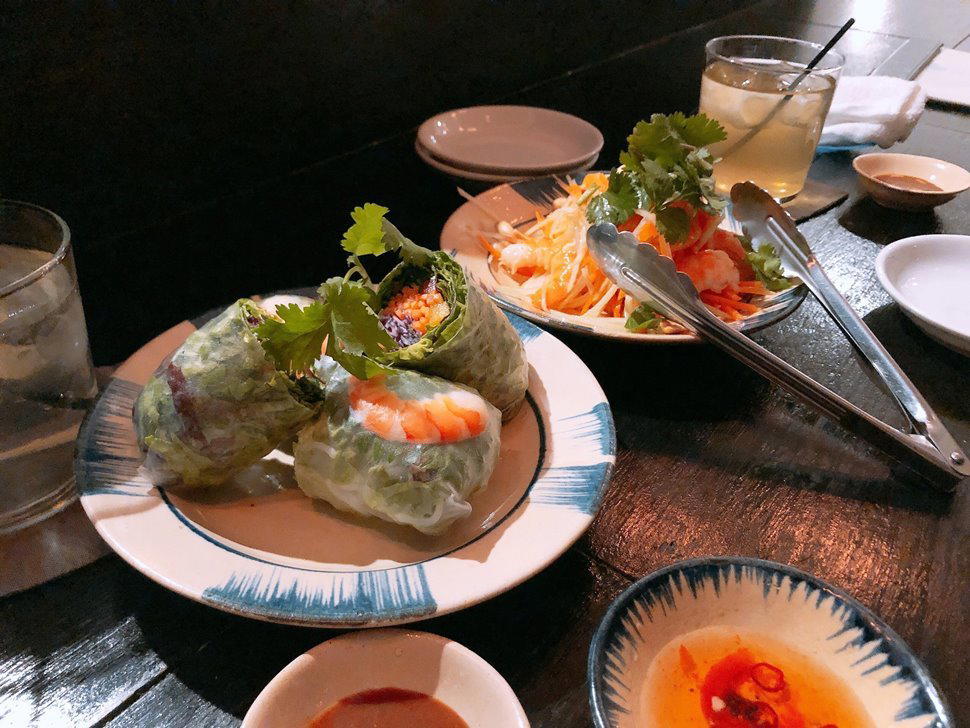
| ヨヨナムThis venue (the venue you are viewing) | Modern Vietnamese Bistro | $50–100 | Not listed | Not listed |
| Bar & Enoteca Implicito | Italian wine bar & enoteca | $20–30 | Gambero Rosso 2 Bottiglie | Shibuya, Italian wine bar & enoteca |
| Toraya An Stand Shinjuku ten | Shibuya, Dining | Not listed | Tabelog 100 #57 | Not listed |
| Paul Bassett Shinjuku | Specialty Coffee & Café | $10–20 | Tabelog 100 #63 | Shinjuku, Specialty Coffee & Café |
| 傳 | Modern Japanese Kaiseki | $150–200 | 2 Michelin Stars · World's 50 Best #51 | Shibuya, japanese |
| Nicolai Bergmann NOMU Aoyama | Scandinavian-inspired flower café with Danish smørrebrød and seasonal salads | $20–30 | Tabelog 100 #79 | Minato, Scandinavian-inspired flower café with Danish smørrebrød and seasonal salads |
Continue exploring
More in Tokyo
Restaurants in Tokyo
All restaurants in Tokyo →



Bars in Tokyo
All bars in Tokyo →




Details
- Cozy
- Trendy
- Modern
- Date Night
- Casual Hangout
- Open Kitchen
- Terrace
- Natural Wine
- Sake Program
- Street Scene
- A La Carte
- Small Plates
- Natural Wine
- Vegetarian Friendly
Current opening hours
- Monday
- 11:30 AM–2 PM, 5–8:30 PM
- Tuesday
- Closed
- Wednesday
- Closed
- Thursday
- 5–8:30 PM
- Friday
- 5–8:30 PM
- Saturday
- 11:30 AM–2 PM, 5–8:30 PM
- Sunday
- 11:30 AM–2 PM, 5–8:30 PM
Hours can change for holidays and private events. Hours as of .
Navy and black toned interior in a traditional house with counter seating overlooking the open kitchen and views of passing Odakyu trains and residential street.