
Tabelog 100 #95
Our verdict
Mi Rei gives Tokyo’s Vietnamese dining conversation a Kamata address rather than a central-city gloss. Its Tabelog 100 selection for Asian and ethnic cuisine in Tokyo in 2024, 32-seat scale, and cash-only operating style place it in a grounded, neighborhood-led tier where food, pacing, and room management matter more than ceremony.

Pearl is the En Primeur Club membership app, where members save venues, book tables and use the concierge.
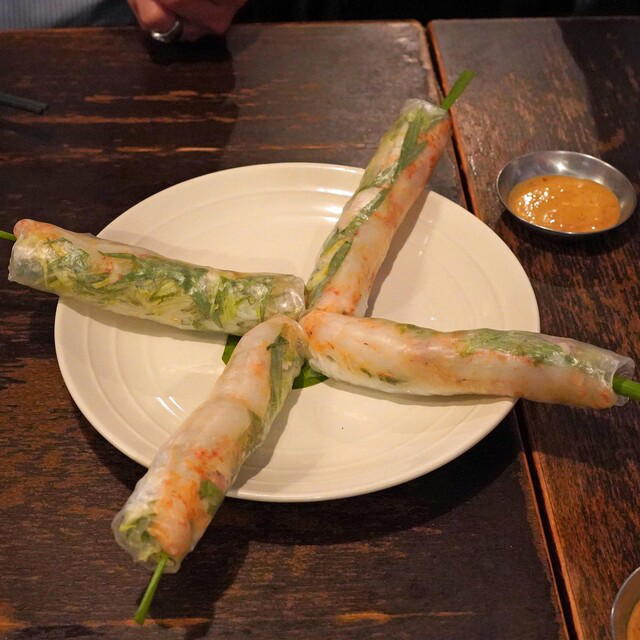
Tokyo sets the mood before dinner. The surrounding city is dense, practical, and lived-in, with evening foot traffic that makes a restaurant feel connected to the capital’s working rhythm rather than staged as a destination reveal. Here, Vietnamese cooking feels different from polished pan-Asian formats around Tokyo hotels and shopping districts. The experience relies on shared tempo: kitchen, drinks, and floor moving together without needing luxury cues.
That rhythm is the point. Tokyo’s stronger Vietnamese restaurants succeed when service can translate a cuisine of freshness, heat, herbs, acidity, rice, and broth into a Japanese dining context without sanding off its edges. Mi Rei fits that category. Its 2024 Tabelog Hyakumeiten recognition gives it a public signal beyond regular local loyalty. The recognition matters because Tokyo dining awards tend to reward consistency across service, seasoning, and repeat appeal, not novelty alone.
Tokyo Vietnamese dining with a team-led pace
Tokyo’s Vietnamese scene is not one story. There are quick pho counters, casual drinking rooms, family-style tables, and more composed restaurants that treat the meal as a sequence rather than a single bowl. Tokyo adds another layer: it is not only a city of international dining theater. It rewards places that serve regulars, friends, and destination diners without changing personality for each audience.
Here, division of labor is part of the appeal. The kitchen carries the cuisine’s structure, while the room’s success depends on coordination and timing. In a Vietnamese restaurant in Tokyo, that matters: the meal can be a casual dinner or stretch into a more social evening. That separates it from budget counters where food is the whole proposition and high-formality restaurants where the beverage program dictates pace.
The price tier clarifies the role. At JPY 3,000 to JPY 3,999 for dinner, Mi Rei sits in an accessible Tokyo bracket while still carrying the credibility of a recognized specialist. It is not competing with sushi counters such as Hatsunezushi on formality or spend. The better comparison is behavioral: where does a diner go in Tokyo for a serious ethnic meal that remains social, compact, and city-rooted?
What the Tabelog 100 signal says about the room
Tabelog’s Hyakumeiten selections surface restaurants that often sit outside the luxury map. A 3.70 score and inclusion in the 2024 recognition place Mi Rei in a competitive bracket noticed by a large domestic dining audience. For visitors, that is more meaningful than a vague claim of popularity: it suggests repeat traction and executional discipline discussed across Tokyo.
The category is Vietnamese, but the broader question is how Tokyo absorbs Southeast Asian dining. In some dining rooms, the cuisine is framed through design, tasting menus, or hybrid drinking formats. At Mi Rei, the emphasis reads more directly: gather a group, order across textures and temperatures, and let the table become the format. Vietnamese dining is rarely strongest as a hushed two-person performance; it benefits from shared plates, quick changes in register, and a room that tolerates conversation.
That reading also explains why the restaurant works best when approached as a social dinner rather than a checklist stop. Larger groups, solo diners, and pairs will all experience the same core question: can the house keep pace while preserving the brightness and contrast that make Vietnamese cooking compelling? Mi Rei’s 2024 recognition suggests that the answer has resonated with Tokyo diners.
How to place it in a Tokyo itinerary
Mi Rei makes most sense for travelers who know Tokyo dining extends beyond the most obvious luxury corridors. The restaurant belongs in an itinerary built around exploring the city’s everyday specialist restaurants, not only its internationally familiar reservation targets. That makes it practical for a night shaped by Tokyo, rather than a rushed detour between central reservations.
The operational takeaway is plain and useful. Budget for the published dinner range of JPY 3,000 to JPY 3,999, and treat the meal as a relaxed Vietnamese dinner with recognized Tokyo standing. The appeal is not ceremony for its own sake, but the balance of accessibility, category focus, and enough public validation to make the choice feel secure.
Tokyo’s restaurant map is wide enough that planning by category helps. For broader restaurant context, see Our full Tokyo restaurants guide, with adjacent city planning through Our full Tokyo hotels guide, Our full Tokyo bars guide, Our full Tokyo wineries guide, and Our full Tokyo experiences guide. Other Tokyo dining shows the city’s casual-to-specialist range, from everyday counters to focused neighborhood rooms and more formal destinations. Wider Japan comparisons can be useful in broad strokes, while unnamed overseas reference points show how Japanese and Asian casual formats travel outside Japan.
The editorial read is simple: choose Mi Rei for a social Vietnamese dinner with Tokyo credibility, not ceremony. The 2024 recognition supplies trust, the Tokyo setting supplies character, and the restaurant’s category focus explains why it stands out within the city’s broad dining field.
Frequently asked questions
What should I budget for a meal at Mi Rei?
Pricing at Mi Rei is listed as JPY 3,000 - JPY 3,999.
How do I find Mi Rei?
Mi Rei is located in Tokyo.
Can I walk in to Mi Rei?
Check directly with Mi Rei for current reservation and walk-in availability. Mi Rei is in Tokyo, and it was selected for Tabelog recognition in 2024.
What is Mi Rei known for?
Mi Rei is known as a Vietnamese restaurant in Tokyo with a 2024 Tabelog recognition and a listed score of 3.70.
At-a-Glance Comparison
Nearby venues at a similar price tier for orientation.
| Venue | Cuisine | Price | Awards | Notes |
|---|---|---|---|---|
| Mi ReiThis venue (the venue you are viewing) | Casual Vietnamese restaurant | $30–50 | Tabelog 100 #95 | Not listed |
| スタンドバインミー | Modern French-Vietnamese Banh Mi | $20–30 | Not listed | Meguro |
| らぁめん家 69'N' ROLL ONE 赤坂本店 | Chicken Clear Soy Ramen | Not listed | Not listed | Akasaka |
| SAVOY Classic (SAVOY クラシック) | Neapolitan Pizza | $20–30 | Not listed | Azabu Juban |
| Muromachi Sunaba (室町砂場) | Traditional Handmade Soba & Tempura | $10–20 | Tabelog 100 #49 | Nihonbashi Muromachi |
| Re:s Cafe Bar & Sweets | Japanese Dessert Cafe | $20–30 | Not listed | Nishi Waseda |
Recognition history
Dated appearances from independent guides and award organizations, with the underlying list record or original source where available.
Tabelog 100 #95 · No. 95
Tabelog · Tabelog 100 - Asian cuisine / Ethnic cuisine - TOKYO - 2024
Continue exploring
More in Tokyo
Restaurants in Tokyo
All restaurants in Tokyo →


Bars in Tokyo
All bars in Tokyo →



Details
- Lively
- Cozy
- Casual Hangout
- Group Dining
- After Work
- Solo
- Standalone
- A La Carte
- Set Menu
- Beer
- Cocktails
- Wine
Casual, cozy neighborhood spot on the second floor of a building near Kamata Station, with a lively, non‑smoking dining room suited to relaxed dinners with friends rather than formal occasions.