
Tabelog 100 #47
Our verdict
In Osaka's Nishitenma district, 奈良きみや -別邸柘榴(ざくろ)- operates as an annexe to the Nara-rooted Kimiya brand, translating the parent house's kaiseki sensibility into a more intimate Osaka setting. The pomegranate (柘榴) name signals something deliberate about the interior character, layered, considered, unhurried. Bookings here sit within a competitive tier of Kita Ward dining that rewards advance planning.

Pearl is the En Primeur Club membership app, where members save venues, book tables and use the concierge.
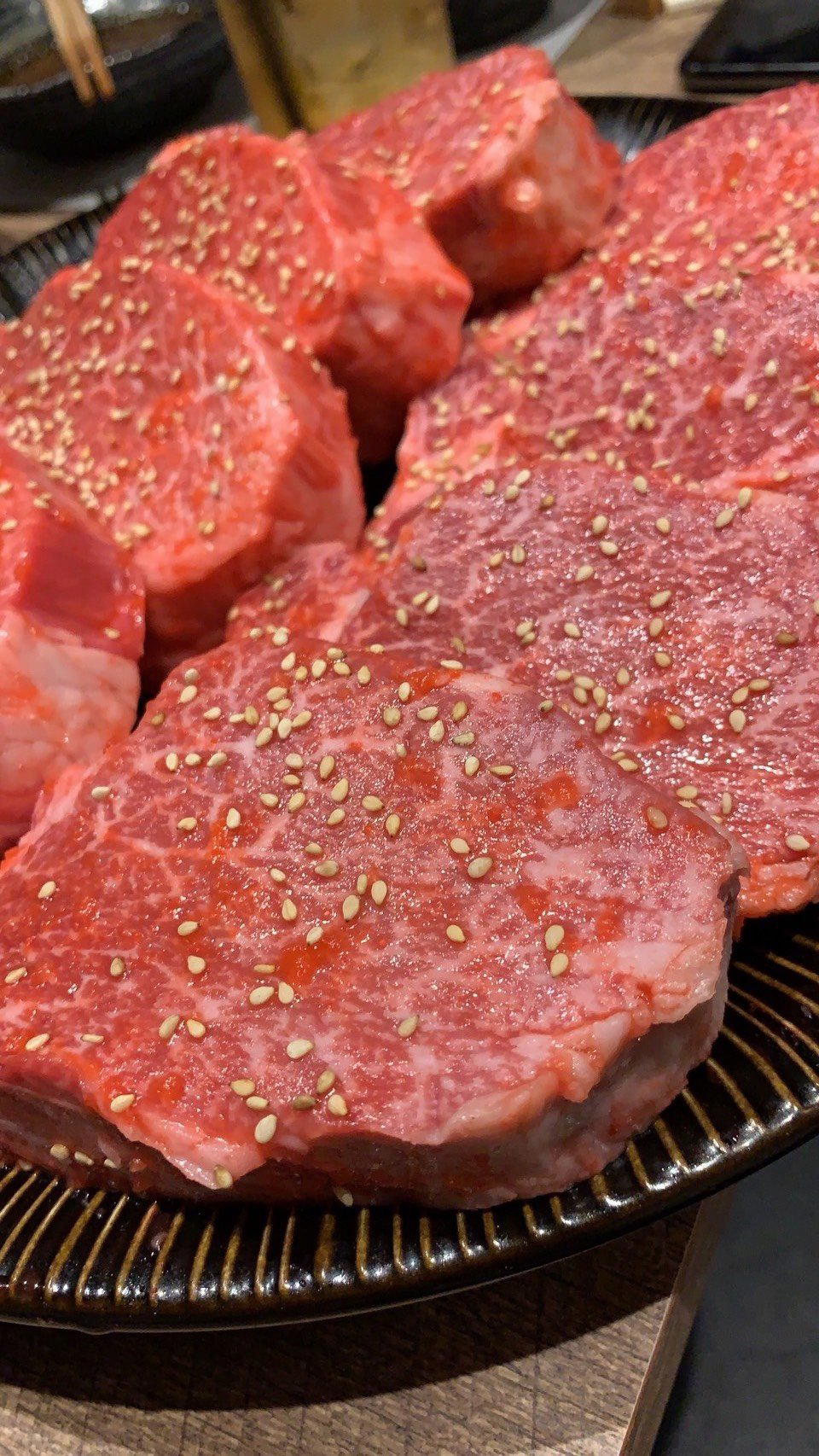
Nishitenma and the Satellite Kaiseki Model
Osaka's Kita Ward has developed a distinct category of dining over the past decade: the satellite annexe, where an established regional house opens a second address calibrated to a different audience without diluting the original. The model appears across Japanese cuisine at various price points, but in Nishitenma it tends to cluster around kaiseki and its adjacent forms, where the physical environment and service rhythm carry as much meaning as the food itself. 奈良きみや -別邸柘榴(ざくろ)-, operating from a building on 2-chome Nishitenma, fits this pattern as the Osaka extension of the Nara-based Kimiya house. The word 別邸 (bettei) means detached villa or secondary residence, and the name is doing real work here: this is not a branch in the chain-restaurant sense, but a deliberate restatement of a culinary identity in a different city context.
Nishitenma sits immediately north of the Nakanoshima business and cultural corridor, close enough to the legal and financial offices of Kita Ward to draw an expense-account dinner crowd, yet far enough from Dotonbori's volume tourism to maintain a quieter register. The street-level address in the Saihō Building is the kind of location that requires knowing where you're going, a detail that, in Osaka's dining culture, carries its own signal about who the room is for. For broader orientation across the city's restaurant tiers, the EP Club Osaka Shi restaurants guide maps the competitive set across neighbourhoods.
The Pomegranate Interior: Reading the Name
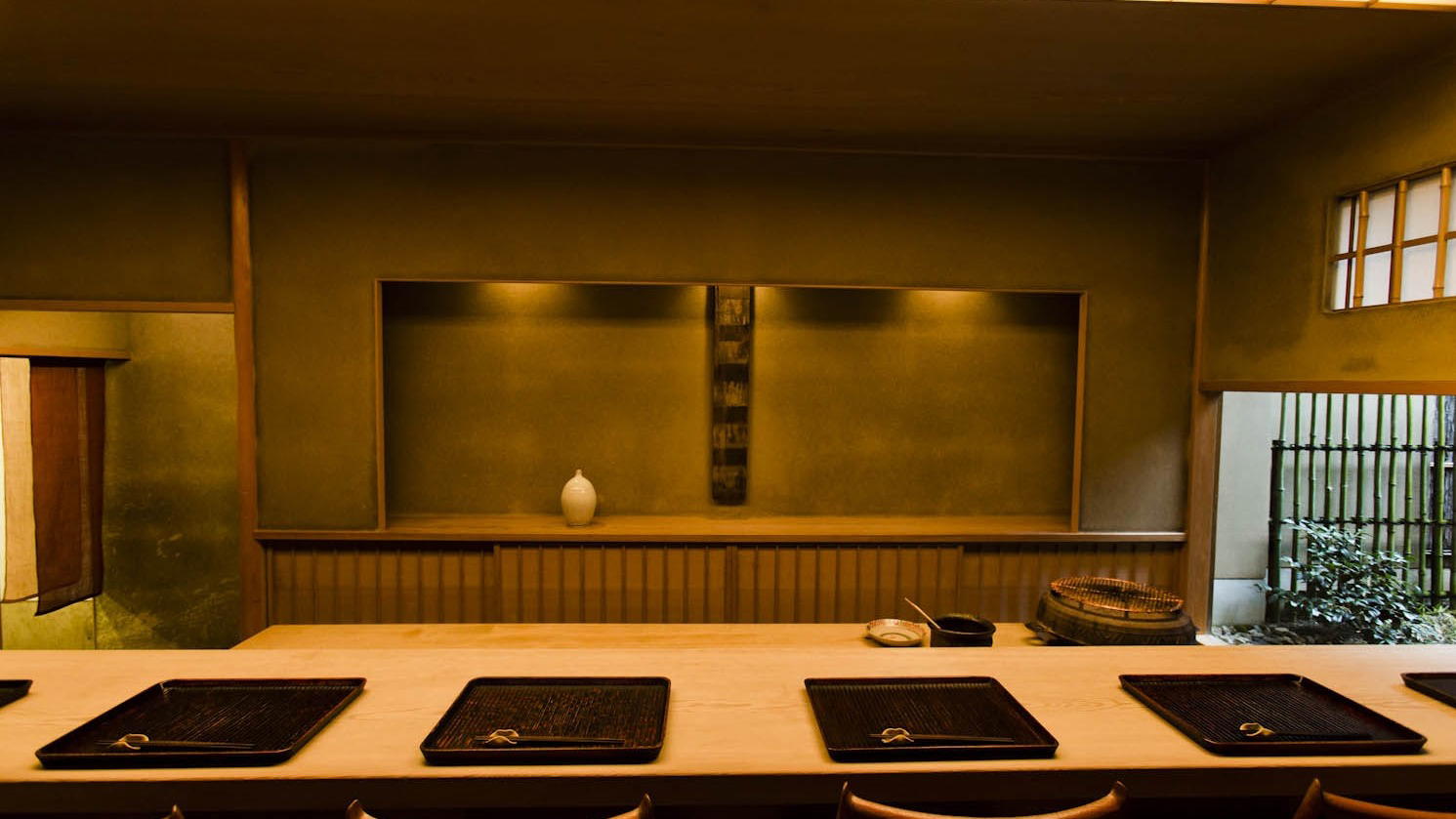
The 柘榴 (zakuro, pomegranate) in the venue name is not decorative. In Japanese aesthetic tradition, the pomegranate carries associations with layered interior complexity, the outer form composed and restrained, the inside dense with detail. That logic tends to govern the design approach at venues in this category: muted materials at threshold, more considered craft revealed as the guest moves through the space.
Ajikitcho Bunbuan operates in a comparable register of Osaka kaiseki, and Ajihei Sonezaki, also in the Sonezaki-Nishitenma corridor, represents the kind of quietly credentialed alternative that serious diners compare directly.
Team Dynamic in Kaiseki Service
The editorial angle that matters most at venues of this type is not the menu alone but the way kitchen, floor, and drinks service operate as a coordinated whole. In kaiseki and its adjacent formats, the sommelier or sake-selection role is not supplementary, it is structurally load-bearing. The progression of a meal depends on the floor team reading the room's pace and adjusting the gaps between courses accordingly, while the drinks lead makes real-time decisions about when to introduce a pairing, when to let the food speak without interruption, and when a guest's preference should override the prescribed sequence.
At venues carrying Nara lineage into Osaka, there is often an additional layer to this dynamic: the need to translate a regional culinary identity, one shaped by the quieter, temple-adjacent dining culture of Nara, for an Osaka audience that tends to engage more directly and is less deferential about expressing preferences mid-service. The leading rooms in this category are the ones where the front-of-house absorbs that tension without either flattening the Nara register or ignoring the Osaka guest's disposition. That mediation is a skill, and it is what separates the better annexe operations from the ones that feel like a diluted version of the original house.
For comparison, HAJIME in Osaka represents what full integration of kitchen ambition and floor precision looks like at the three-Michelin-star level. Gion Sasaki in Kyoto offers a useful reference point for how a Kansai house with deep regional roots manages the chef-floor relationship across a long tasting format. Further afield, akordu in Nara shows how a non-Japanese culinary framework can absorb Nara's quieter hospitality register with equal rigour.
Where This Sits in Osaka's Broader Dining Picture
Osaka's restaurant culture is sometimes reduced to its street-food narrative, takoyaki, kushikatsu, the kuidaore archetype, but the city's serious dining tier is considerably more stratified than that shorthand suggests. Kita Ward alone contains multiple price brackets and service formats, from contemporary French at Calendrier to the natural-wine-adjacent contemporary cooking at Aka to Shiro and the more experimental positioning of Az. 別邸柘榴 occupies a different position in that set: it is not making a statement about modernity or genre-crossing, but about the continued relevance of a Nara-trained kaiseki sensibility delivered through an Osaka-calibrated room.
That is a legitimate and defensible position. Across Japan, the annexe model has produced some of the most consistently executed rooms in the country precisely because the mother house has already done the difficult work of establishing an identity, the satellite can focus on delivery. Harutaka in Tokyo and Goh in Fukuoka represent analogous cases in different cuisine categories, where a single culinary perspective is expressed through a tightly controlled room rather than scaled across formats.
Planning a Visit
The address, 西宝ビル (Saihō Building), 2-7-19 Nishitenma, Kita Ward, Osaka, places the venue within walking distance of Minamimorimachi subway station on the Tanimachi and Sakaisuji lines, making access from central Osaka direct. Nishitenma is not a dining destination in the tourist-circuit sense, which means foot traffic is almost entirely intentional: the people eating in this neighbourhood came specifically to eat in this neighbourhood. Given the Nara parent brand's following and the limited-key nature of bettei operations, advance planning of several weeks is a reasonable baseline.
For guests building a wider Osaka itinerary, the Nishitenma location pairs well with a Nakanoshima afternoon, the Museum of Oriental Ceramics and the surrounding riverside walks provide a useful prelude to an evening in this register. Those cross-referencing the broader Kansai dining circuit might also look at Bistro Ange in Toyohashi for the regional Western-Japan context, or consider how high-precision international rooms like Le Bernardin in New York City and Atomix in New York City handle the same fundamental tension between kitchen ambition and floor coordination that defines 別邸柘榴's operational logic.
Frequently asked questions
Can I bring kids to 奈良きみや -別邸柘榴(ざくろ)-?
The 別邸 (detached villa) format positions this as a formal dining room with a measured, composed service rhythm, the kind of setting where multi-course kaiseki pacing sets the tempo. Young children are unlikely to find that rhythm comfortable, and the atmosphere is calibrated away from casual family dining. Guests travelling with older children who are accustomed to formal Japanese restaurant conventions may find it manageable, but it is worth confirming directly when making a reservation.
What should I expect atmosphere-wise at 奈良きみや -別邸柘榴(ざくろ)-?
The 別邸 designation signals a deliberate remove from the louder energy of central Osaka. Nishitenma, in Kita Ward, is a quieter professional quarter, and the venue occupies the Saihō Building at 2-7-19, a low-key address that makes no concessions to foot-traffic visibility. Expect a register closer to a private dining room than a restaurant floor: composed, unhurried, and built around the rhythms of formal kaiseki-adjacent service.
Is 奈良きみや -別邸柘榴(ざくろ)- connected to a Nara restaurant, and how does that shape the dining experience in Osaka?
The 奈良きみや name directly signals the Nara origin of the parent Kimiya house, and the 別邸 (detached villa) designation confirms this Osaka address is a satellite of that original operation. In practice, that lineage typically means the kitchen philosophy, ingredient sourcing relationships, and service standards are inherited from the Nara flagship rather than developed independently. For diners in Osaka's Kita Ward, it represents access to a regional tradition that rarely travels, the Nishitenma location at 2-7-19 Saihō Building is where that Nara identity is expressed in an urban Osaka context.
What's the must-try dish at 奈良きみや -別邸柘榴(ざくろ)-?
What the Kimiya lineage and bettei format suggest is a structured, seasonally driven menu rooted in the kaiseki tradition of the Nara parent house. The most reliable approach is to trust the course as designed rather than arrive with a single dish in mind.
Where is 奈良きみや -別邸柘榴(ざくろ)- in Osaka Shi?
奈良きみや -別邸柘榴(ざくろ)- is located at Japan, 〒530-0047 Osaka, Kita Ward, Nishitenma, 2 Chome−7−19 西宝ビル, Osaka Shi.
What's the best way to book 奈良きみや -別邸柘榴(ざくろ)-?
No online booking portal appears on current public record and no phone number is listed in verified sources. Venues carrying a named regional lineage in Osaka's Kita Ward, particularly those operating on a bettei model, frequently accept reservations through direct contact or via concierge at higher-grade accommodation in the Umeda and Minamimorimachi area. Reaching out through a hotel concierge or a Japan-based reservation service is the most practical route.
A Pricing-First Comparison
Comparable venues nearby, for context on price, style, and recognition.
| Venue | Cuisine | Price | Awards | Notes |
|---|---|---|---|---|
| 奈良きみや -別邸柘榴(ざくろ)-This venue (the venue you are viewing) | Premium Yakiniku - Filet Specialist | $200–300 | Tabelog 100 #47 | Not listed |
| Naniwa kappo Kigawa | Naniwa Kappo (Osaka-style Kaiseki) | $150–200 | Not listed | Chūō, Naniwa Kappo (Osaka-style Kaiseki) |
| Tenjinbashi Aoki | Michelin-Starred Kaiseki | $200–300 | 2 Michelin Stars | Kita, Michelin-Starred Kaiseki |
| Hanagatami | Michelin-Starred Japanese Tempura & Kaiseki | $150–200 | Michelin Plate | Kita, Multi-Format Japanese Fine Dining |
| Ajikitcho Bunbuan | Traditional Japanese Kaiseki | $100–150 | 1 Michelin Star | Chūō, Traditional Japanese Kaiseki |
| Sushi Kazuma | Traditional Japanese Omakase | $100–150 | Not listed | Kita, Traditional Japanese Omakase |
Recognition history
Dated appearances from independent guides and award organizations, with the underlying list record or original source where available.
Tabelog 100 #47 · No. 47
Tabelog · Tabelog 100 - Yakiniku - WEST - 2025
Continue exploring
More in Osaka
Restaurants in Osaka
All restaurants in Osaka →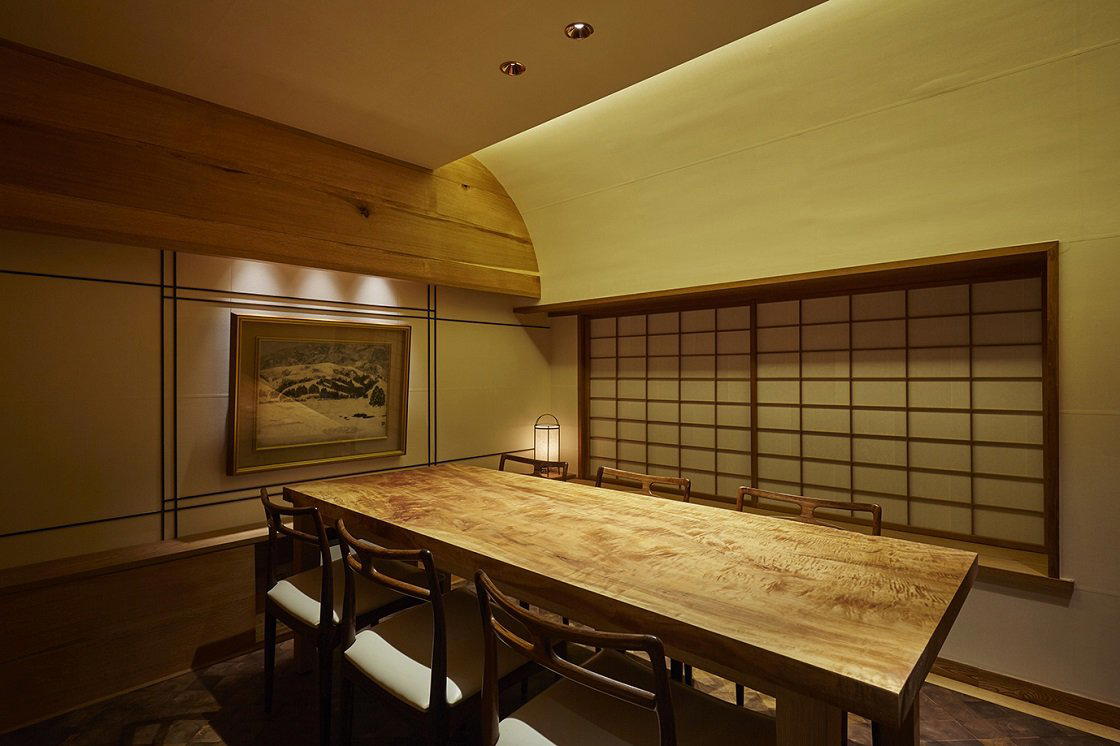


Bars in Osaka
All bars in Osaka →



Hotels in Osaka
All hotels in Osaka →



Wineries in Osaka
Browse all →
Details
- Intimate
- Elegant
- Special Occasion
- Date Night
- Sake Program
- Set Menu
Current opening hours
- Monday
- 5–11 PM
- Tuesday
- 5–11 PM
- Wednesday
- 5–11 PM
- Thursday
- 5–11 PM
- Friday
- 5–11 PM
- Saturday
- 5–11 PM
- Sunday
- 5–11 PM
Hours can change for holidays and private events. Hours as of .
落ち着いた隠れ家的な雰囲気