きたしんち 弓場慎之佑 serves Modern Japanese Kappo at a chef's counter in Sonezakishinchi, with a sake program, quiet room, and leisurely dinner pacing suited to a slower night out.
Pearl is the En Primeur Club membership app — saves, bookings, and concierge access live there. Same editors, same standards.
- Address
- Japan, 〒530-0002 Osaka, Kita Ward, Sonezakishinchi, 1 Chome−5−21 MATSUKI KOSAN B.L.D 7階
- Phone
- +81644009780
- Website
- tablecheck.com
- Directions
- Get directions
 Saves & bookings on Pearl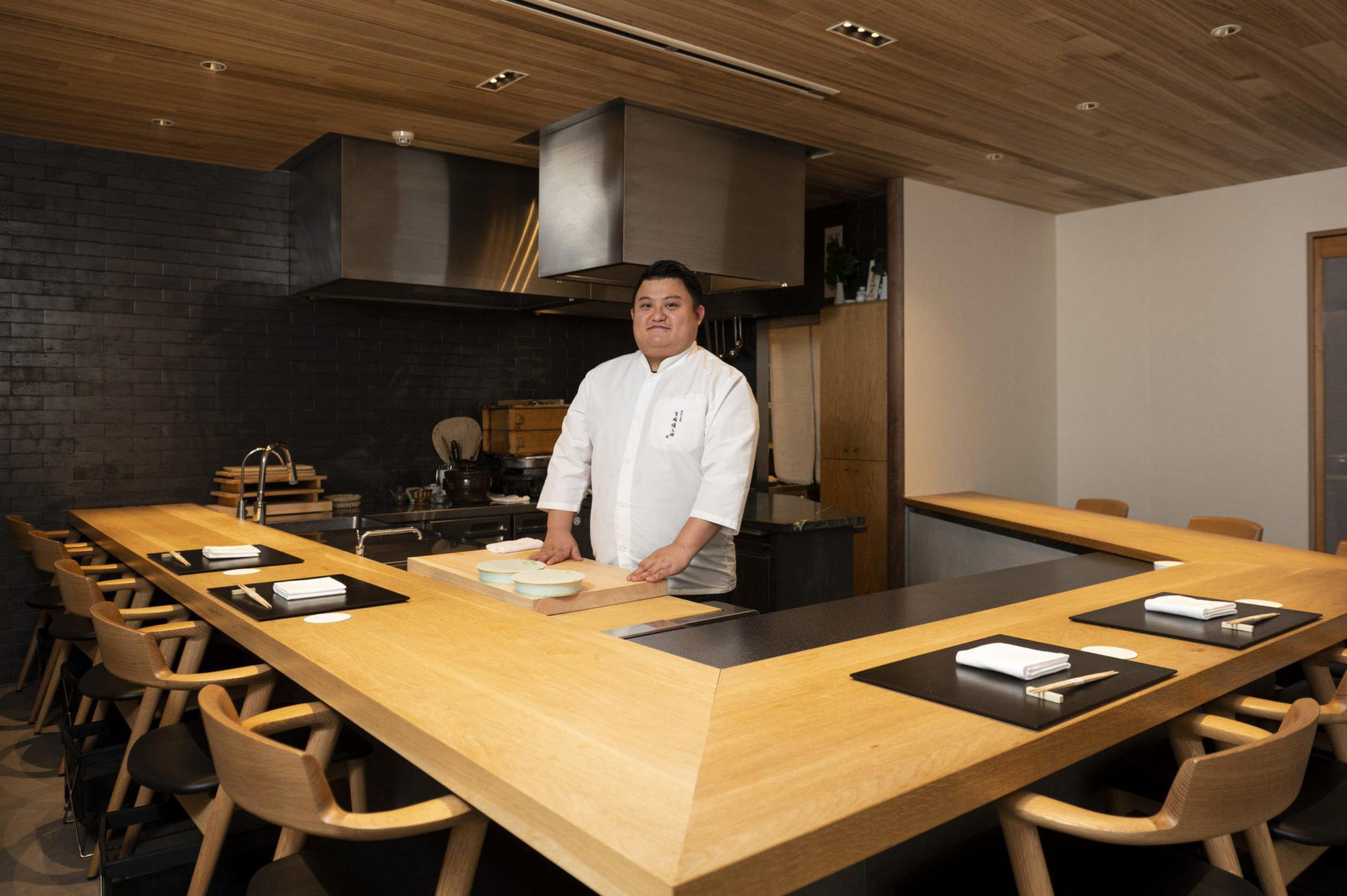
Kitashinchi After Dark, and What Comes Before
By day, the warren of narrow lanes north of Osaka Station reads as a working neighbourhood, deliveries, prep smells drifting from ventilation shafts, the occasional suited regular ducking in for an early lunch. By evening, the same streets transform into one of the country's densest concentrations of counter dining, private rooms, and specialist cuisine. きたしんち 弓場慎之佑, on the seventh floor of a building in Sonezakishinchi 1-chome, occupies a position inside that shift, an address that means something different depending on the hour you arrive.
Kitashinchi's ground-level venues compete on foot traffic and signage. Anything above the third floor in this district is, by convention, operating on reputation and reservation. Guests do not wander in. The address signals a particular kind of deliberateness on the part of both operator and guest, a dynamic that shapes the room's atmosphere before a single dish arrives.
Daytime Versus Evening: How the Gap Works in Kitashinchi
Across Kitashinchi's specialist dining tier, the lunch-versus-dinner divide is sharper than in most comparable districts. Dinner, by contrast, is where the full commitment plays out: longer menus, more deliberate service rhythms, and the social expectation of the extended evening that defines Osaka's entertainment quarter tradition.
That premium reflects not just food costs but the full infrastructure of a Kitashinchi night out, the surrounding bars, the ryotei that dot the same block, the culture of the second and third stop that distinguishes Osaka's dining culture from Tokyo's more contained, course-and-done approach. A counter in this district at dinner is often a starting point, not a conclusion.
In Kitashinchi, counter restaurants at this address tier are benchmarked not only against each other but against the broader evening ecosystem of the district. Lunch offers a different calculus: the same kitchen, the same sourcing, but a different crowd and a different pace. For visitors building a one-day Osaka itinerary around a single meal, the lunch window is frequently the more practical entry point into venues that would otherwise require weeks of lead time for an evening seat.
The Sonezakishinchi Dining Tier
Sonezakishinchi 1-chome is not a restaurant row in the conventional sense. There is no single street with awnings and menus in glass cases. The dining here is embedded in commercial buildings, mixed-use floors where a seventh-storey counter sits above offices or retail. This vertical integration is a distinctly Osaka approach to premium dining density, and it produces a different experience from the street-level kaiseki corridors of Kyoto's Gion or the basement counters of Tokyo's Ginza.
For context, Kyoto's kaiseki tradition at venues like Gion Sasaki in Kyoto operates within a heritage architecture framework that is literally built into the experience. Osaka's Kitashinchi counters, by contrast, tend to emphasise what is on the plate and in the glass over the architectural setting. The room is frequently minimal, the view from an upper floor functional rather than scenic, and the focus lands on the interaction at the counter itself.
This is not a shortcoming. It reflects a different set of priorities that Osaka dining has historically maintained: technique and ingredient quality over theatrical setting. Venues like Ajikitcho Bunbuan and HAJIME in Osaka represent different points on this spectrum, from traditional kaiseki continuity to avant-garde progression, but both operate within a city that demands substance over staging.
Placing the Venue in Its comparable set
Kitashinchi's upper-tier counter restaurants occupy a competitive bracket that extends across Osaka Shi and connects to the broader Kansai dining circuit. A guest planning seriously around this district might cross-reference the kaiseki lineage traceable through Ajikitcho Bunbuan, the contemporary French-Japanese positioning of Calendrier, or the counter formats at Ajihei Sonezaki, all operating within the same district logic of reservation-only, upper-floor, or discreet-entry dining.
Beyond Osaka, the comparison set expands. The counter-dining culture that defines Kitashinchi's premium tier has direct parallels in Tokyo at venues like Harutaka in Tokyo, and in the ryotei-adjacent formats found in Nara at akordu in Nara. Each of these represents a different inflection of the same underlying Japanese fine dining proposition: limited seats, sourcing-led menus, and a format that requires the guest to commit before arriving.
For guests approaching Japan's regional dining circuit from a Western reference point, the structural comparison might reach as far as the tasting-menu formats at Atomix in New York City or the produce-driven precision of Le Bernardin in New York City, different traditions entirely, but the same logic of a kitchen operating at full concentration for a small number of covers per service.
Seasonal Timing and the Kitashinchi Calendar
Ingredient availability in both seasons aligns with Japanese fine dining's heaviest demand: matsutake in October, the first hairy crab from Hokkaido in November, cherry blossom-period kaiseki courses in late March and April. Venues in Kitashinchi that operate at the upper tier of the district tend to book furthest in advance during these windows, and lunch seats, where available, fill earlier than they might at off-peak times of year.
Summer in this district brings its own logic. The evening entertainment culture of Kitashinchi peaks in the warmer months, which pushes dinner reservations toward maximum demand but sometimes opens up less-contested lunch availability for guests who are flexible on timing. Winter, outside of the December year-end entertainment season (bonenkai bookings run from mid-November through late December and compress availability significantly), is often the point in the year where advance planning is least pressured.
Know Before You Go
Comparable Options
Comparable venues nearby, for context on price, style, and recognition.
| Venue | Cuisine | Price | Notes |
|---|---|---|---|
| きたしんち 弓場慎之佑This venue — the venue you are viewing | Modern Japanese Kappo | $$$$ | Not listed |
| Koryu Keishin | Naniwa Kappo | $$$$ | Kita |
| Tenjinbashi Aoki | Michelin-Starred Kaiseki | $$$$ | Kita |
| KURA - Teppanyaki & Sushi | Teppanyaki & Sushi | $$$$ | Kita |
| 靱本町がく | Michelin-Starred Seasonal Kaiseki | $$$$ | Nishi |
| 奈良きみや -別邸柘榴(ざくろ)- | Premium Yakiniku - Filet Specialist | $$$$ | Kita |
Continue exploring
More in Osaka
Restaurants in Osaka
Browse all →




Bars in Osaka
Browse all →




Hotels in Osaka
Browse all →




Wineries in Osaka
Browse all →
At a Glance
- Intimate
- Elegant
- Sophisticated
- Date Night
- Special Occasion
- Chefs Counter
- Sake Program
Current opening hours
- Monday
- 6–11 PM
- Tuesday
- 6–11 PM
- Wednesday
- 6–11 PM
- Thursday
- 6–11 PM
- Friday
- 6–11 PM
- Saturday
- 6–11 PM
- Sunday
- Closed
Hours can change for holidays and private events. Last verified .
Refined and modern Japanese atmosphere in an at-home counter seating space focused on fresh preparation and guest interaction.