
Tabelog 100 #3
Our verdict
フィエルテ occupies a basement-level address in Onarimachi, one of Kamakura's quieter commercial strips, positioning it within the city's growing tier of serious independent restaurants. Sparse data makes a full critical assessment difficult, but its placement in the Ever Village building and its Japanese name, meaning 'pride', signal deliberate intent. Visitors planning a longer Kamakura dining itinerary should verify current hours and format before visiting.

Pearl is the En Primeur Club membership app, where members save venues, book tables and use the concierge.
The menu
What to order
- Aged sea bass poêlé
- Oyster meunière with Madeira sauce
Onarimachi and the Kamakura Independent Restaurant Scene
Kamakura's dining identity has been reshaping over the past decade. The city built its initial reputation on temple-town tourism, quick lunches near Kotoku-in, seasonal sweets around Hase, but a quieter tier of serious, independently operated restaurants has taken root in its residential and low-traffic commercial streets. Onarimachi, which runs between Kamakura Station's west exit and the Enoden line, sits at the edge of that shift. It lacks the foot traffic of Komachi-dori, which is precisely why considered operators have been drawn to it. Rents are lower, foot traffic is self-selecting, and the clientele that does find its way here tends to arrive with purpose.
フィエルテ holds a basement-level position in the Ever Village building at 2-14-2 Onarimachi. That sub-street address is not incidental. In Japanese dining culture, basement and second-floor venues occupy a particular register: they signal that the kitchen is not relying on passing trade. The guests must already know. That logic has produced some of the country's most focused dining rooms, from Ginza basements to the upper-floor counters of Nakameguro, and it frames フィエルテ within a tradition of restaurants that earn their discovery rather than advertise it. For comparison with other restaurants drawing similar deliberate diners in Kamakura, ETE Kamakura and Restaurant Michel Nakajima operate in a comparable register of intention, if not necessarily the same cuisine or format.
What the Name Implies
The name フィエルテ is the French word for pride, fierté, rendered in katakana. That linguistic choice is common shorthand in Japanese restaurant culture for a European, specifically French or French-adjacent, culinary orientation. It does not guarantee classical French technique, but it positions the venue within the broad category of Western-influenced fine dining that has developed a distinct Japanese character over the past forty years. Across Japan, this category now encompasses everything from strict Escoffier orthodoxy to highly personal interpretations that use French structure as a container for Japanese ingredient logic. What the name does confirm is that the kitchen is operating with an identifiable frame of reference, one with deep roots in the country's postwar fine dining development.
That tradition is well-documented in venues like HAJIME in Osaka, which applies French culinary architecture to a deeply personal ingredient philosophy, or Gion Sasaki in Kyoto, which bridges kaiseki and French precision within a single kitchen. フィエルテ, operating at a smaller scale and in a quieter city, likely sits in a less rarefied but arguably more accessible version of that conversation. Kamakura's proximity to Tokyo, roughly 50 minutes by train from Shinjuku on the Shonan-Shinjuku Line, means it can draw both day-trip diners from the capital and a local base of residents who prefer quality without the commute.
The Team Dynamic in Smaller Independent Rooms
One of the consistent characteristics of serious independent restaurants operating below the major award tiers is the degree to which the dining experience depends on team cohesion rather than any single individual. At large restaurants with recognizable chef-names, the kitchen identity is often built around one credited figure. At smaller independent rooms, the relationship between kitchen, floor, and, where relevant, a drinks program shapes the entire register of a meal. A well-calibrated front-of-house in a basement room can make a guest feel found rather than lost. A mismatch in that communication, between what arrives from the kitchen and how it is explained or contextualized at the table, is where smaller rooms frequently fall short.
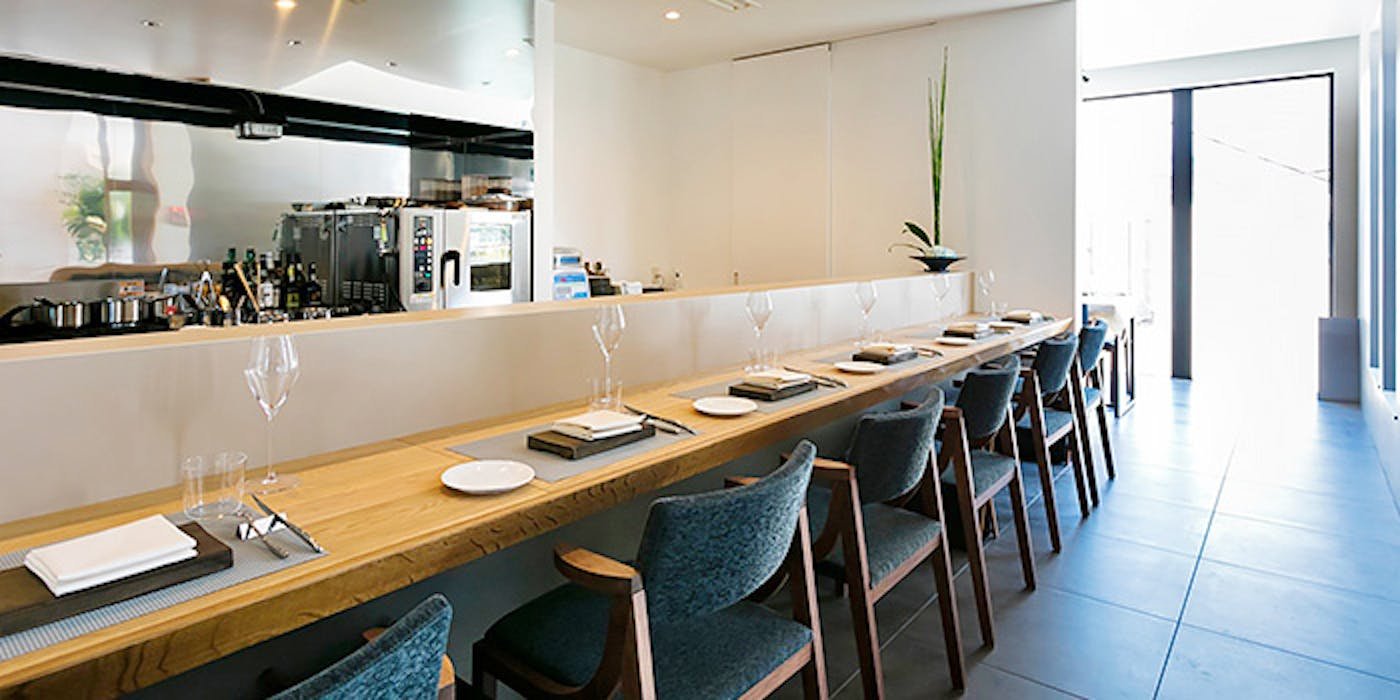
This dynamic is visible at well-functioning small restaurants across Japan. At akordu in Nara, the integration between wine knowledge and tasting menu pacing has been credited as central to its reputation. At Goh in Fukuoka, the floor team's handling of a dense, referential menu adds legibility without diminishing the kitchen's ambition. フィエルテ's basement setting, intimate by structural default, creates the conditions for that kind of interaction if the team capitalizes on them. Rooms that feel like an afterthought acoustically or spatially often produce a disjointed experience; rooms where the physical constraints have been worked with rather than against tend to generate the opposite.
Other Kamakura independent restaurants worth considering alongside フィエルテ include Ichirin Hanare, which occupies a different cuisine register entirely, and IL NODO, which similarly operates as a focused independent in the city. Roastbeef Kamakurayama addresses a narrower, format-specific category but speaks to the same pattern of Kamakura restaurants building around a single, confident idea rather than broad appeal.
Placing フィエルテ in a Wider Japan Context
Japan's regional restaurant scene, outside Tokyo, Osaka, and Kyoto, has been gaining critical attention over the past several years. Cities like Fukuoka, Kanazawa, and Sapporo have produced serious tables that were previously invisible to international audiences. Kamakura's position in that conversation is unusual: it is too close to Tokyo to be classified as a regional destination in the way that Nanao or Sapporo are, yet it has enough independent culinary identity to warrant attention on its own terms. Restaurants in cities like Nanao (一本杉 川嶋制), Sapporo (大作山乃), and Takashima (湖響庄) are drawing diners specifically because of geographic specificity; Kamakura draws diners who can combine cultural tourism with a serious meal on the same day.
That dual-purpose appeal shapes what works in Kamakura dining. Rooms that can absorb a tourist-adjacent crowd without diluting their kitchen focus have an advantage. Rooms that operate more like pure destination dining, where the restaurant is the entire reason for the visit, operate at a slightly higher threshold of commitment from the guest. フィエルテ's basement address and French-signaled name suggest it falls closer to the latter. For broader orientation across Japan's serious independent restaurant tier, venues like Harutaka in Tokyo and Atomix in New York City illustrate how different cities have handled the challenge of building reputation without institutional backing, while Le Bernardin in New York City represents the endpoint of that arc when a focused concept earns full institutional recognition over decades. 鶴羽屋 in Nishikawa Machi and Birdland in Sakai add further texture to how focused, format-specific restaurants develop regional credibility.
Planning a Visit
フィエルテ is located at 2-14-2 Onarimachi, Kamakura, in the Ever Village building on the B2F level. The Onarimachi address is reachable on foot from Kamakura Station's west exit in under ten minutes. For a fuller orientation to what Kamakura's dining scene currently offers, the EP Club Kamakura restaurants guide maps the city's serious independent restaurants across cuisine types and formats.
Frequently asked questions
What part of town is フィエルテ in?
フィエルテ is located at Japan, 〒248-0012 Kanagawa, Kamakura, Onarimachi, 2−14-2 Ever Village(B 2F, Kamakura.
Is フィエルテ worth making a separate trip to Kamakura for, rather than combining it with a day of temple visits?
フィエルテ's sub-street-level address at 2-14-2 Onarimachi places it within walking distance of Kamakura Station, making it a practical anchor for an evening after the temple circuit crowds have thinned. Kamakura's independent restaurant scene has been drawing attention from Tokyo diners over the past decade precisely for rooms like this, smaller, French-inflected, and operating outside the major award tiers. Whether it warrants a standalone trip depends on your dining priorities, but the Onarimachi location pairs efficiently with a late-afternoon arrival from Tokyo.
What's the best thing to order at フィエルテ?
Verified menu data for フィエルテ is not available at publication. The French word fierté in the name signals a European-influenced approach, a common indicator in Japanese independent restaurant culture of structured, course-oriented cooking. Contacting the venue directly before visiting is advisable to confirm the current format and any tasting menu options.
Do they take walk-ins at フィエルテ?
Walk-in policy can change from available data. The B2F location inside Ever Village on Onarimachi suggests a small, deliberate room, the kind of setup in Kamakura's independent scene where covers are limited and reservations tend to be essential, especially on weekends when day-trip traffic from Tokyo peaks. Booking ahead through the venue is the safer approach. Check the venue's official channels for the latest details.
Booking and Cost Snapshot
Comparable venues nearby, for context on price, style, and recognition.
| Venue | Cuisine | Price | Awards | Notes |
|---|---|---|---|---|
| フィエルテThis venue (the venue you are viewing) | French Fine Dining | $100–150 | Tabelog 100 #3 | Not listed |
| Salmanje de Yoshino | French restaurant in Kamakura | $100–150 | Tabelog 100 #86 | Kamakura, French restaurant in Kamakura |
| ナチュール エ サンス Nature et Sens | Seasonal French | $50–100 | Not listed | Kamakura, Seasonal French |
| Spanish restaurant Arashida | Refined Spanish & Basque Counter Dining | $50–100 | Tabelog 100 #56 | Kamakura, Refined Spanish & Basque Counter Dining |
| Kamakura Waku | Seasonal Japanese Kaiseki | $50–100 | Tabelog 100 #56 | Kamakura, Seasonal Japanese Kaiseki |
| CALVA | French-Japanese patisserie & boulangerie | $10–20 | Tabelog 100 #6 | Kamakura, French-Japanese patisserie & boulangerie |
Recognition history
Dated appearances from independent guides and award organizations, with the underlying list record or original source where available.
Tabelog 100 #3 · No. 3
Tabelog · Tabelog 100 - French - EAST - 2025
Continue exploring
More in Kamakura
Restaurants in Kamakura
All restaurants in Kamakura →



Bars in Kamakura
Browse all →

Details
- Elegant
- Intimate
- Sophisticated
- Date Night
- Special Occasion
- Open Kitchen
- Sake Program
- Local Sourcing
- Street Scene
- Prix Fixe
- Allergy Accommodating
Current opening hours
- Monday
- 12–10:30 PM
- Tuesday
- 12–10:30 PM
- Wednesday
- Closed
- Thursday
- 12–10:30 PM
- Friday
- 12–10:30 PM
- Saturday
- 12–10:30 PM
- Sunday
- 12–10:30 PM
Hours can change for holidays and private events. Hours as of .
Calm and meticulously clean interior with a relaxed yet elegant atmosphere.