
Tabelog 100 #43
Our verdict
銀座 よし澤 occupies a quiet address on Chome-13-8 in Ginza, sitting within one of Tokyo's most concentrated corridors of high-end Japanese dining. Positioned alongside counters that command months-long wait lists and Michelin recognition, it represents a particular strain of Ginza restraint, where the physical space and service cadence do as much work as the food. An address for readers already familiar with the upper register of Tokyo's dining circuit.

Pearl is the En Primeur Club membership app, where members save venues, book tables and use the concierge.
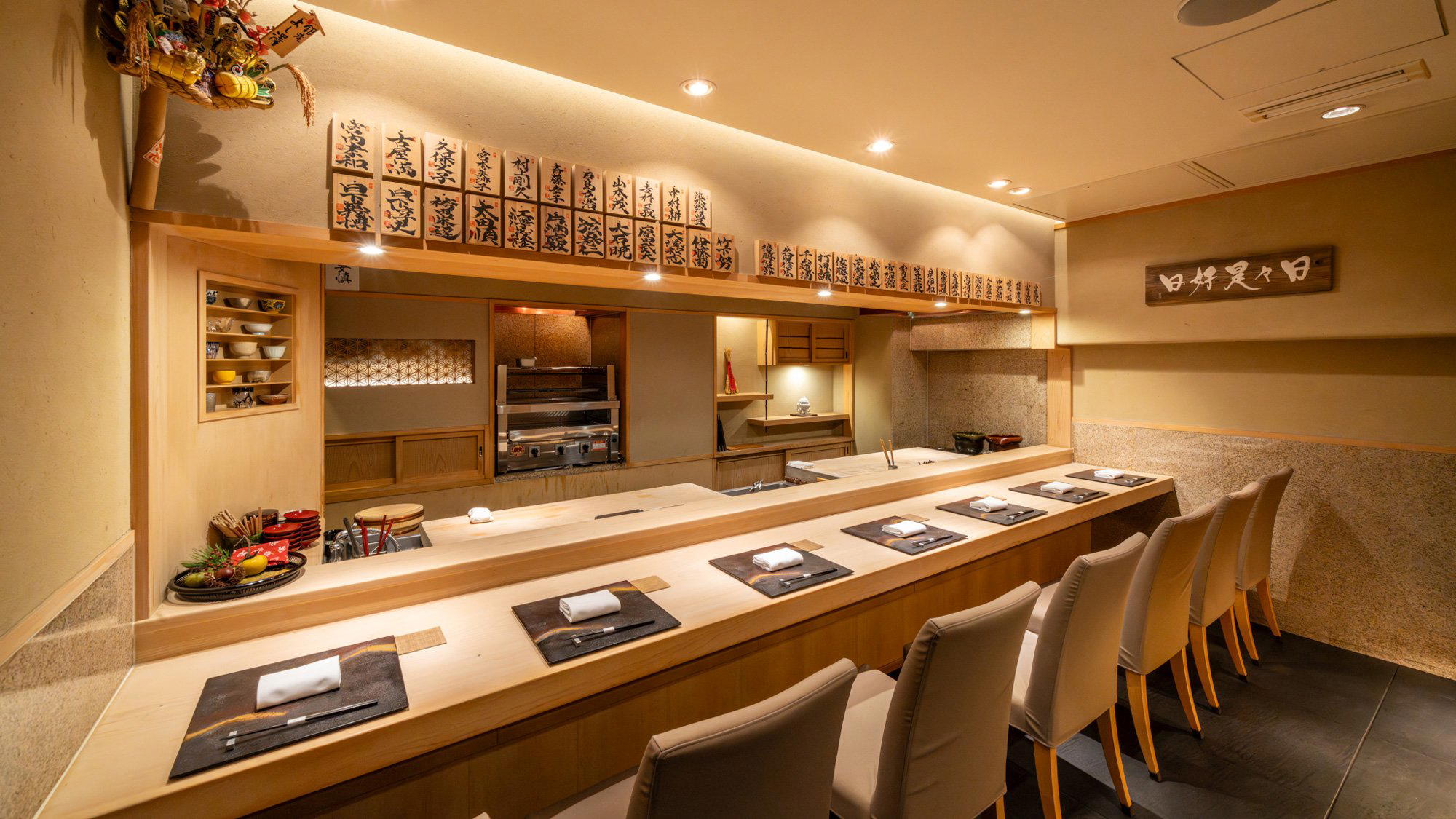
A Room That Earns Its Address
Ginza's dining district has long operated on a principle of deliberate compression. The most serious rooms are rarely the most visible ones: addresses stack vertically in tower buildings, counters seat fewer guests than a neighbourhood izakaya, and the physical container is designed to recede rather than announce. 銀座 よし澤, at 1 Chome-13-8 Ginza in Chuo City, belongs to that spatial logic. The building sits in the southern reach of Ginza, a block pattern that has accumulated a density of high-end Japanese rooms over the past two decades, from omakase sushi to kaiseki to the quieter genre of washoku that resists easy categorisation.
In Tokyo's premium dining tier, the relationship between space and price is unusually direct. Smaller seat counts translate to higher per-head costs and more controlled kitchen pacing; the room itself is a service mechanism. Counters like Harutaka have built their reputations partly on the intimacy that a constrained physical format enforces, where the distance between kitchen and guest is measured in arm's lengths rather than metres. That compression changes how a meal is received: timing, temperature, and sequence are all products of spatial discipline.
The Physical Argument for Restraint
Japanese dining architecture at the serious end of the market tends to work through subtraction. Surfaces are few, materials are considered, and natural light is either precisely controlled or absent altogether. The counter format that dominates Ginza's top tier is not merely practical, it is a philosophical position about the appropriate relationship between a guest and the work being done in front of them. Distractions are removed. The room becomes a frame.
RyuGin, in Roppongi Hills, works at a different scale and with a different visual ambition, its room is a designed object in a way that reflects the neighbourhood's architecture. Ginza rooms tend toward material sobriety: wood, stone, ceramic, and the occasional lacquer surface that catches light without seeking it. The physical environment at 銀座 よし澤 should be understood within that tradition, not as a design statement but as a deliberate absence of statement.
Ginza's Competitive Tier and Where This Address Sits
Ginza now occupies the leading price bracket of Tokyo dining with some consistency. The cluster of rooms operating in this postal code competes for a guest base that is largely international, repeat-visiting, and already familiar with comparable counters in Kyoto, Osaka, and abroad. Gion Sasaki in Kyoto and HAJIME in Osaka serve a similar audience with different regional inflections. The Tokyo version of this dining type tends toward precision over abundance, and toward a particular formality in service that has its own grammar.
The French-inflected rooms that share Ginza's upper bracket, L'Effervescence, Sézanne, and Crony, approach the question of the physical room differently. The French-format dining room in Tokyo typically seats more guests, uses more conventional European service architecture, and treats the table as the primary spatial unit rather than the counter. The Japanese specialist rooms are, by contrast, built around the line of sight between the guest and the chef's hands. That difference in room design is not aesthetic preference but a functional expression of what each format requires from its space.
For a comparative view of how Tokyo's high-end rooms distribute across neighbourhoods and formats, our full Tokyo restaurants guide maps the category in more detail.
Planning a Visit
Ginza addresses in this tier almost universally require advance booking, and the southern end of Ginza, where 銀座 よし澤 is located, is leading approached by Ginza Station on the Tokyo Metro, a short walk from the Chome-13 block. The neighbourhood operates its most serious dining rooms in the evening, with lunch services at many counters running as abbreviated or omitted formats. Given that this address does not publish contact or booking details through third-party platforms, the most reliable approach is to ask hotel concierge services, particularly those at properties with established relationships in the Ginza dining circuit, to make contact on your behalf. This is standard practice for the top tier of Ginza rooms, and concierge intermediation often provides the clearest route to availability information.
Guests arriving from other parts of Japan's dining circuit, from akordu in Nara or Goh in Fukuoka, for example, will find Ginza's spatial register consistent with what the serious end of Japanese dining looks like across the country: controlled, sequential, and oriented toward a quality of attention that larger rooms cannot replicate. Regional counterparts like 一本杉 川島酒造 in Nanao, 大仙ノ山乃 in Sapporo, 湖隣庵 in Takashima, 庄羽屋 in Nishikawa Machi, Birdland in Sakai, and Bistro Ange in Toyohashi each operate within local versions of this same discipline, smaller, more deliberate, less visible than their reputations suggest.
International readers calibrating against the New York dining frame might note the contrast with rooms like Le Bernardin or Atomix, where the dining room is a more prominent part of the overall offer, visually larger, more formally staged, and more explicitly designed as a space. Ginza's leading rooms operate on the inverse logic: the less the room asks for attention, the more the food and service fill the space.
Frequently asked questions
Is 銀座 よし澤 a family-friendly restaurant?
The address, 1 Chome-13-8 Ginza, Chuo City, places this room firmly inside Ginza's most formal dining corridor, a district that skews toward adult clientele and occasion dining. Rooms operating at this tier in Ginza typically maintain a quiet, concentrated atmosphere that does not accommodate young children comfortably. Guests travelling with families should consider alternative Tokyo neighbourhoods with more relaxed dining formats.
What is the atmosphere like at 銀座 よし澤?
Ginza's southern end, where よし澤 sits at 1 Chome-13-8, produces a particular kind of dining room: compact, controlled, and focused on the guest-to-kitchen relationship rather than spectacle. Serious Japanese dining at this postal code tends toward material restraint, considered surfaces, natural light where available, and minimal acoustic interference. The room is built around attention, not ambience.
How far in advance should you book a table at 銀座 よし澤 in Tokyo?
銀座 よし澤 is located in Ginza's most competitive dining corridor at 1 Chome-13-8, Chuo City, a district where rooms of this calibre routinely fill weeks or months ahead. No public booking platform or phone number is listed, which suggests reservations are handled through direct contact or an intermediary, a common arrangement among Tokyo's more private dining addresses. Visitors should allow a minimum of four to six weeks lead time and be prepared to correspond in Japanese.
What do regulars order at 銀座 よし澤?
Specific menu data for よし澤 is not part of the public record, which is itself characteristic of Ginza rooms at this level, menus here typically respond to season and market availability rather than fixed lists. Regular guests at comparable Ginza addresses generally defer to the kitchen's judgement, treating the omakase or chef-led format as the default. Arriving with dietary restrictions communicated in advance is standard practice at this tier.
Compact Comparison
Comparable venues nearby, for context on price, style, and recognition.
| Venue | Cuisine | Price | Awards | Notes |
|---|---|---|---|---|
| 銀座 よし澤This venue (the venue you are viewing) | Traditional Japanese Kaiseki | $200–300 | Tabelog 100 #43 | Not listed |
| Motoyoshi (天ぷら 元吉) | Michelin-Starred Modern Tempura Omakase | $200–300 | Not listed | Ebisu, Michelin-Starred Modern Tempura Omakase |
| 精进料理 醍醐 | Shojin Ryori Kaiseki | $150–200 | 1 Michelin Star · La Liste Top Restaurants | Minato (Atago), Shojin-ryori Buddhist vegetarian kaiseki |
| Kosasa Sushi | Traditional Edomae Sushi Omakase | $500+ | Tabelog 100 #6 | Chūō, Traditional Edomae Sushi Omakase |
| 神戸牛511 | Kobe Beef Kaiseki | $100–150 | Not listed | Minato, Kobe Beef Kaiseki |
| Toribayashi | Modern Yakitori Omakase | $150–200 | Tabelog 100 #63 | Minato, Modern Yakitori Omakase |
Recognition history
Dated appearances from independent guides and award organizations, with the underlying list record or original source where available.
Tabelog 100 #43 · No. 43
Tabelog · Tabelog 100 - Japanese cuisine - TOKYO - 2025
Continue exploring
More in Tokyo
Restaurants in Tokyo
All restaurants in Tokyo →

Bars in Tokyo
All bars in Tokyo →


Details
- Elegant
- Intimate
- Classic
- Business Dinner
- Special Occasion
- Date Night
- Chefs Counter
- Private Dining
- Sake Program
- Garden
- Tasting Menu
- Counter Dining
- Sake Program
Current opening hours
- Monday
- 6–9 PM
- Tuesday
- 6–9 PM
- Wednesday
- 6–9 PM
- Thursday
- 11:30 AM–2:30 PM, 6–9 PM
- Friday
- 11:30 AM–2:30 PM, 6–9 PM
- Saturday
- 11:30 AM–2:30 PM, 6–9 PM
- Sunday
- Closed
Hours can change for holidays and private events. Hours as of .
Kyoto-inspired tea-house atmosphere with garden approach, soft lighting, and serene, intimate dining rooms.