Google: 4.7 · 7 reviews

Shanghai at 15 Gongti South Road holds a Black Pearl 1 Diamond (2025), placing it among Beijing's recognised fine-dining addresses in Chaoyang. The kitchen operates at the intersection where imported culinary techniques meet the ingredients and flavour logic of Chinese cooking — a position that defines the restaurant's appeal within Beijing's competitive upper tier.
 Discover on Pearl
Pearl is the En Primeur Club membership app — saves, bookings, and concierge access live there. Same editors, same standards.
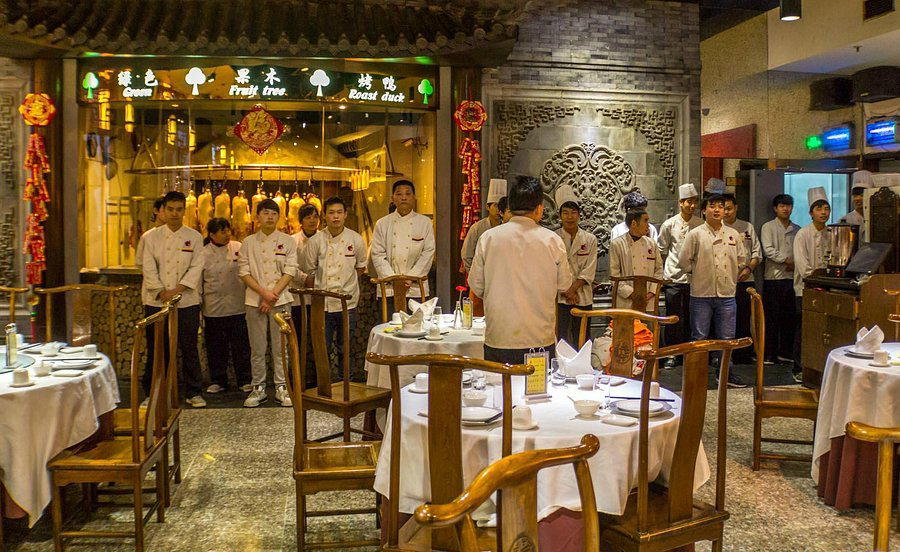
Where Chaoyang's Fine-Dining Circuit Converges
The stretch of Gongti South Road in Chaoyang has become a reliable indicator of where Beijing's premium dining energy concentrates. Embassies, international business hotels, and a cluster of award-recognised restaurants have shaped the neighbourhood into something closer to a self-contained dining district than a simple address — a place where the city's appetite for technically rigorous cooking meets its appetite for a certain kind of after-dark formality. Shanghai, at number 15, sits inside that circuit without being defined by it.
The restaurant's name signals an immediate tension: a city, not a style. Shanghai cuisine — characterised by its sweetness, its preference for slow-braised proteins, its red-cooked pork and hairy crab seasons , lands in Beijing as a transplant tradition rather than a native one. That displacement is, in many ways, the point. Restaurants that carry a regional city's name in a different capital are making an argument about authenticity through origin, and Shanghai in Chaoyang makes that argument in a city where northern cooking instincts run deep.
The Black Pearl Benchmark and What It Signals
Shanghai holds a Black Pearl 1 Diamond for 2025. The Black Pearl Restaurant Guide, operated by Meituan, has positioned itself as the domestic Chinese alternative to Western fine-dining rankings, with its own tier structure and a judging methodology weighted toward Chinese culinary tradition. A 1 Diamond entry signals consistent quality and kitchen reliability , it places Shanghai in the same recognition tier as a number of Beijing's serious regional-cuisine addresses, rather than in the rarefied bracket occupied by multi-diamond holders.
For context, Xin Rong Ji (Xinyuan South Road) and Chao Shang Chao (Chaoyang) both operate at the ¥¥¥¥ price tier in Beijing, occupying the leading of the city's regional Chinese dining category. Lamdre and Jingji round out that bracket from the vegetarian and Beijing-cuisine sides respectively. King's Joy, another vegetarian address in the city, shows how far the fine-dining interpretation of Chinese cooking now extends beyond meat-centred tradition. Shanghai's Black Pearl standing aligns it with that peer set in terms of ambition, even as the specific price tier and format remain unconfirmed in available data.
Local Ingredients, Global Technique: The Defining Tension
Across the last decade, the more interesting development in Chinese fine dining has not been the refinement of classic recipes but the collision between imported technical frameworks and indigenous Chinese ingredients. Kitchens trained in French or Japanese discipline have brought precision fermentation, controlled aging, and plating grammar rooted in European traditions to bear on ingredients , Yunnan mushrooms, Sichuan peppercorns, Zhejiang vinegars, smoked tofu , that carry centuries of their own processing logic.
This is the operating context for a restaurant named after Shanghai in a city like Beijing. Shanghai's culinary identity already traffics in complexity: its cooking absorbed European colonial influence in ways that no other Chinese regional cuisine quite did, and the sweet-savoury balance that defines Shanghainese food has always been more technically demanding to calibrate than it appears. When that tradition moves into a Beijing fine-dining room, the layering continues. Technique imported from outside China meets a regional Chinese tradition that itself absorbed outside influence , the result is a kitchen with multiple palimpsests to work through.
Comparable pressure points appear at restaurants across the wider region. 102 House in Shanghai operates within the source city's own fine-dining evolution. Ru Yuan in Hangzhou and Xin Rong Ji in Chengdu show how the same interrogation of local-versus-imported technique plays out in different regional contexts. Further afield, Chef Tam's Seasons in Macau, Imperial Treasure Fine Chinese Cuisine in Guangzhou, and Dai Yuet Heen in Nanjing each represent a different resolution to the same underlying tension between classical Chinese cooking and the technical vocabulary that premium dining now demands globally.
That global technical vocabulary has its own centres of gravity. Le Bernardin in New York City remains a reference point for what rigorous French technique applied to a single protein category can look like at its most disciplined. Atomix in New York City shows how Korean fine dining has built an internationally recognised grammar by running its own culinary tradition through a precision-technique filter. The parallels with what the better Chinese fine-dining rooms are attempting are direct.
Chaoyang's Position in Beijing's Dining Geography
Beijing's premium restaurant scene does not concentrate in one district the way Tokyo's omakase tier anchors in Ginza or Hong Kong's serious kitchens cluster in Central and Wan Chai. Chaoyang holds a plurality of the city's award-recognised addresses, largely because the combination of corporate money, diplomatic presence, and international hotel infrastructure supports the price points and booking volumes that fine dining requires. The Gongti corridor specifically has become one of the denser nodes within that broader Chaoyang distribution.
For visitors building a multi-restaurant itinerary around this part of the city, the full Beijing restaurants guide covers the range of recognised addresses across categories. The Beijing hotels guide maps proximity to Chaoyang's main dining corridor, the bars guide covers the after-dinner circuit, and the experiences guide adds cultural programming context. The Beijing wineries guide rounds out coverage for those tracking the city's evolving wine culture alongside its restaurant scene.
Know Before You Go
Address: 15 Gongti South Road, Chaoyang, Beijing 100020
Award: Black Pearl 1 Diamond (2025)
Neighbourhood: Gongti corridor, Chaoyang District
Booking: Contact details not publicly confirmed; Chaoyang fine-dining addresses at this tier typically require advance reservation, particularly on weekends
Pricing: Not publicly confirmed in available data; peer restaurants in this Black Pearl tier in Chaoyang generally operate at ¥¥¥ to ¥¥¥¥
Dietary requirements: No confirmed allergy protocol available; advance notice by phone or email at reservation stage is standard practice at Beijing fine-dining addresses
Side-by-Side Snapshot
A compact comparison to help you place this venue among nearby peers.
| Venue | Cuisine | Price | Awards | Notes |
|---|---|---|---|---|
| Shanghai | Black Pearl 1 Diamond (2025) | This venue | ||
| Jing | French Contemporary | ¥¥¥ | Michelin 1 Star | French Contemporary, ¥¥¥ |
| Xin Rong Ji (Xinyuan South Road) | Taizhou | ¥¥¥¥ | Michelin 3 Star | Taizhou, ¥¥¥¥ |
| Chao Shang Chao (Chaoyang) | Chao Zhou | ¥¥¥¥ | Michelin 3 Star | Chao Zhou, ¥¥¥¥ |
| Lamdre | Vegetarian | ¥¥¥¥ | Michelin 1 Star | Vegetarian, ¥¥¥¥ |
| Jingji | Beijing Cuisine | ¥¥¥¥ | Michelin 2 Star | Beijing Cuisine, ¥¥¥¥ |



At a Glance
- Casual Hangout
- Group Dining
- Standalone
Casual and traditional atmosphere typical of local eateries.