

Forbes 4-Star · Virtuoso Luxury Hotel Partner
Occupying floors 64 to 77 of the 330-metre China World Tower in Beijing's Central Business District, China World Summit Wing positions itself at the upper tier of the city's business-district hotel market. Rooms average 65 square metres with floor-to-ceiling windows, white marble bathrooms, and direct sightlines toward the Forbidden City.

Pearl is the En Primeur Club membership app, where members save venues, book tables and use the concierge.
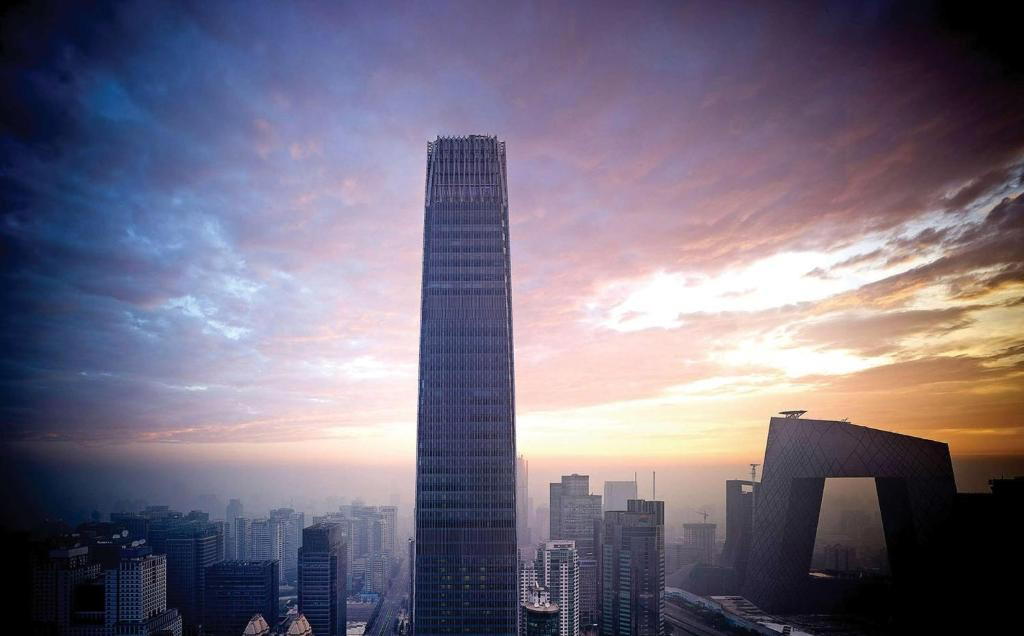
Beijing from the Leading: What the China World Tower Changed
When the China World Tower completed its rise to 330 metres above Chaoyang District, it redrew the reference points for luxury accommodation in Beijing's Central Business District. Hotels had long clustered around the diplomatic quarter and the hutong-adjacent neighbourhoods to the west, competing on heritage access and courtyard atmosphere. The China World Summit Wing, occupying floors 64 to 77 of that tower at 1 Jianguomenwai Avenue, represented a different proposition: altitude as amenity, with the city's historic core visible from above rather than from within it. For context, the Aman Summer Palace places guests inside imperial grounds; the Summit Wing places them above the commercial engine that funds modern Beijing. Both are defensible positions. They are simply answering different questions about what a stay in this city should feel like.
The tower sits within the China World Trade Centre complex, which has functioned as Beijing's most concentrated address for international business since the complex's earlier phases opened in the 1990s. That heritage matters because it shapes the hotel's DNA. This is not a property that retrofitted a business audience onto a leisure concept. The service infrastructure, the floor-plan efficiency, and the speed at which staff resolve requests all reflect decades of serving executives who measure time in increments. Inspector notes specifically flag that requests and issues are resolved within minutes, a claim that business-district hotels make routinely but rarely sustain at the level documented here.
Above the Third Ring Road: The View as a Spatial Argument
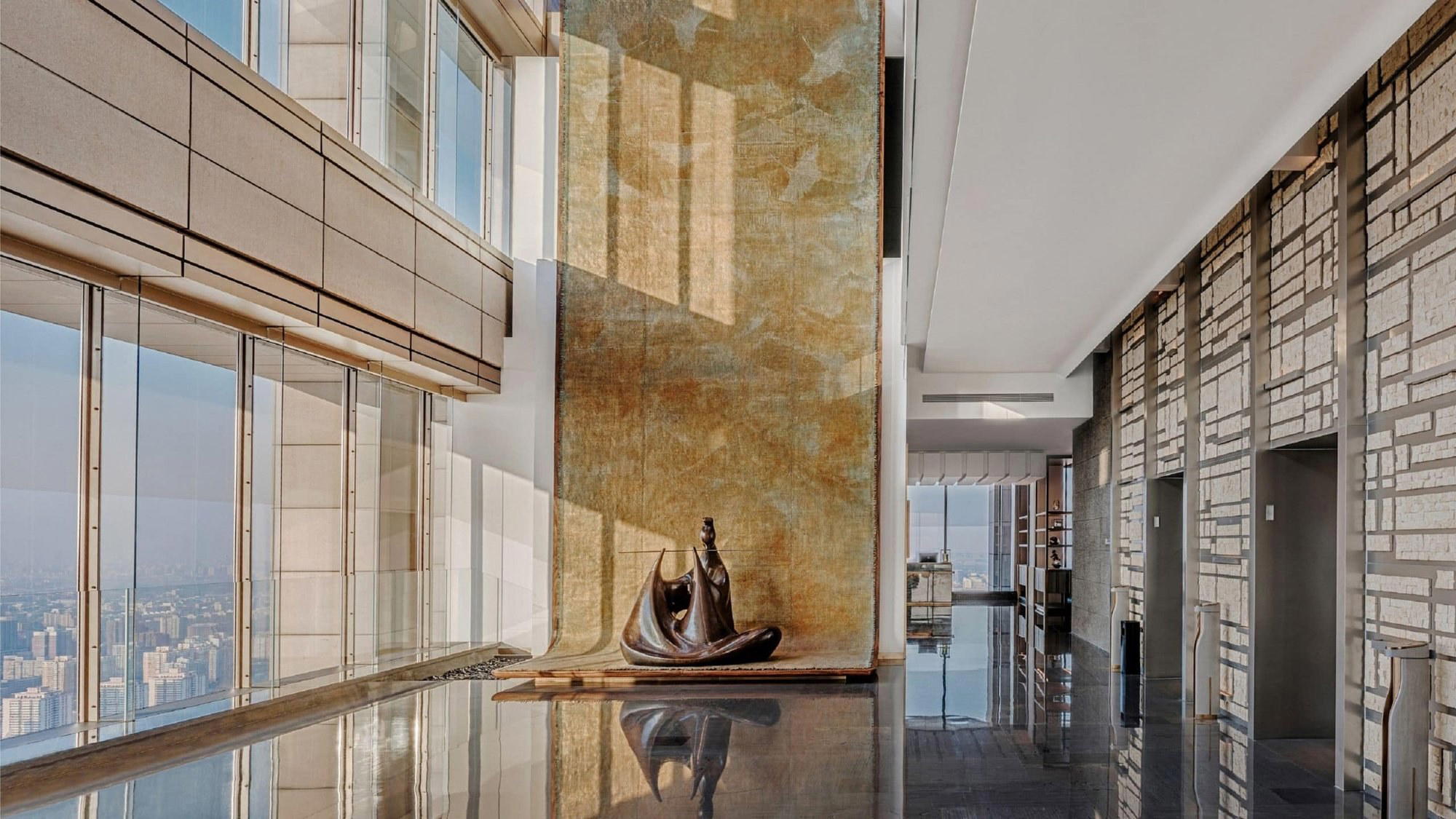
Floor-to-ceiling windows across all 81 occupied floors create a relationship with Beijing that no ground-level property can replicate. The Forbidden City and Tiananmen Square, roughly 15 minutes by cab from the hotel's base, read differently at this altitude: the geometry of the imperial complex becomes legible in a way it rarely is from street level or even from the hutong rooftops to its north. West-facing rooms deliver that specific orientation, and booking one is the single most consequential room-selection decision a guest can make here. The hotel's own guidance supports this: a west-facing allocation brings the ancient city centre into direct frame against the setting sun, a compositional effect that no interior detail can match.
The Residents' Foyer on Level 64 functions as a club lounge extended to all guests, not as a tiered benefit reserved for suite holders. Continental breakfast, soft drinks, coffee, tea, and fresh fruit run through the day; a daily happy hour from 18:00 to 20:00 anchors the evening. In a city where club-lounge access typically requires a room-category upgrade, this structure represents a practical difference in how the hotel prices its value proposition relative to peers like the Four Seasons Hotel Beijing or the Conrad Beijing.
Room Scale and Material Logic
Beijing's luxury hotel market has consolidated around two competing interior languages: the internationalised minimalism of newer builds and the warmer, material-heavy approach that references Chinese craft traditions without replicating period decor. The Summit Wing sits in the second camp. Rooms average 65 square metres, with dark wood panelling, contemporary furnishings, and wallpaper depicting Asian mountain landscapes. The Simmons mattresses topped with feather beds, the L'Occitane bathroom products in standard rooms (Bulgari in suites), and the in-mirror LCD televisions in bathrooms are product selections consistent with the tier, not distinguishing features in themselves. What does distinguish the bathrooms is scale: double sinks, separate water closets, walk-in showers, and soaking tubs occupy square footage that, as the hotel's own inspector noted, rivals the floor area of many Beijing apartments.
Suites run from 110 to 296 square metres and are configured with residential logic, separating dining, work, and rest into defined zones rather than compressing them into a single space. For extended stays, that spatial discipline matters more than it might appear on a spec sheet. Among Beijing's CBD options, properties like the Fairmont Beijing Hotel and the Bvlgari Hotel Beijing offer comparable suite scale, though with different design vocabularies and neighbourhood positions.
Dining at Altitude: The Grill 79 Position
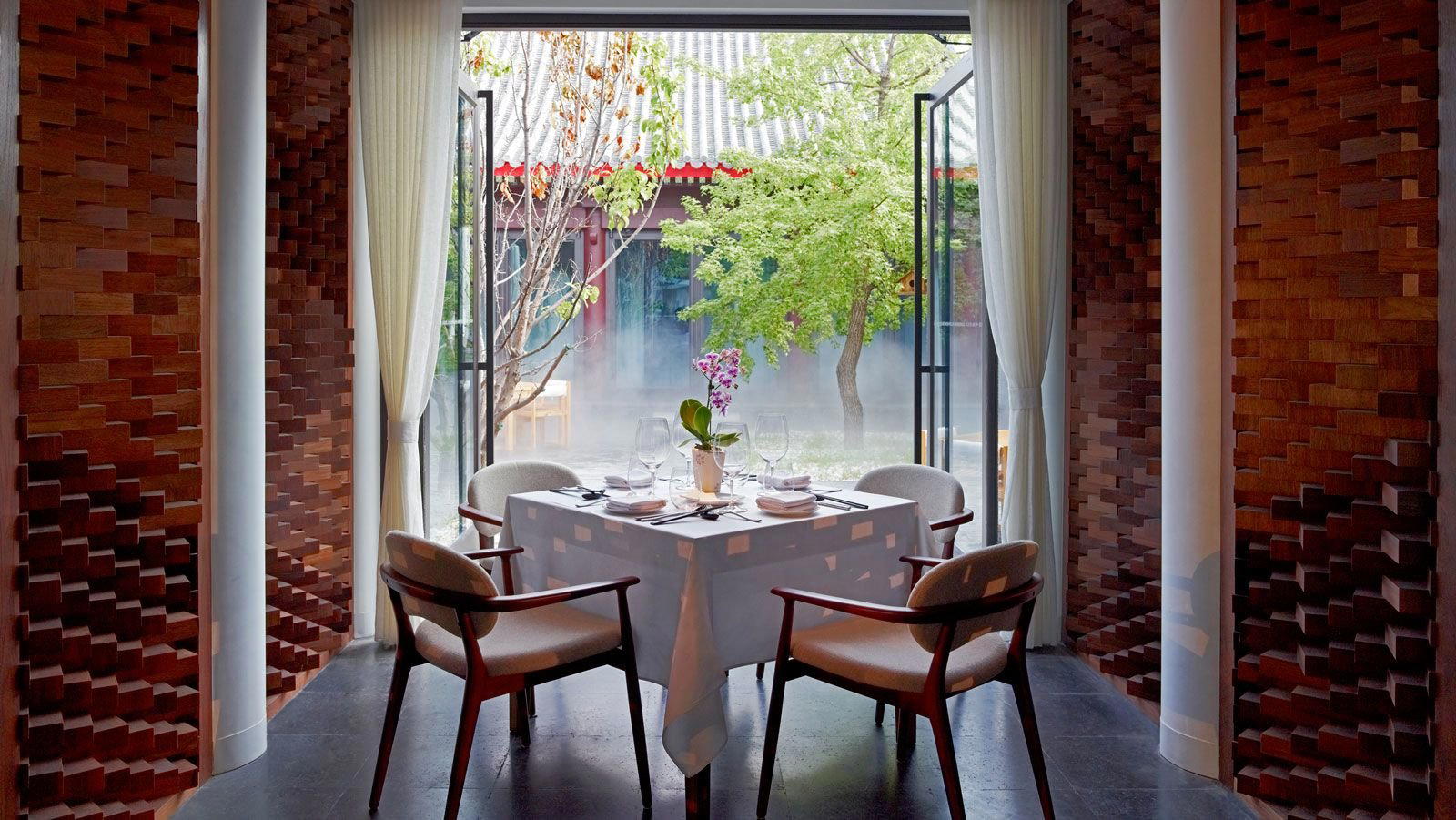
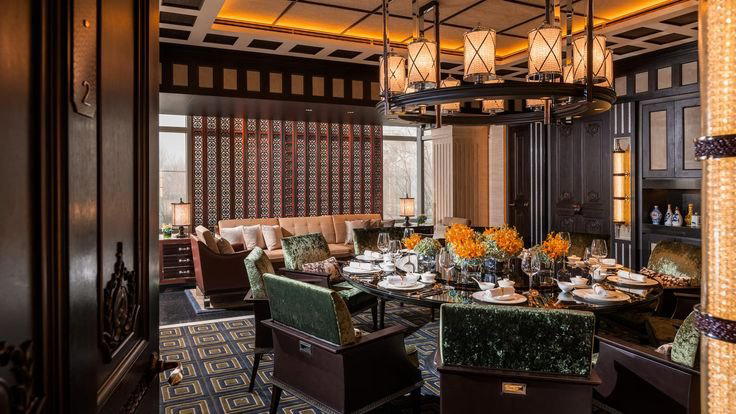
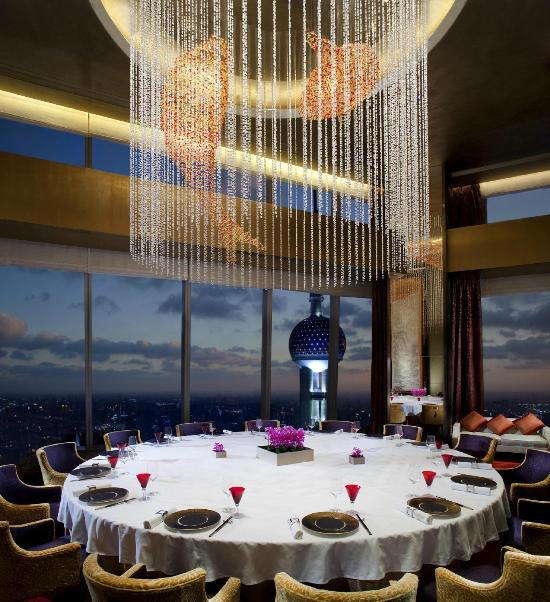
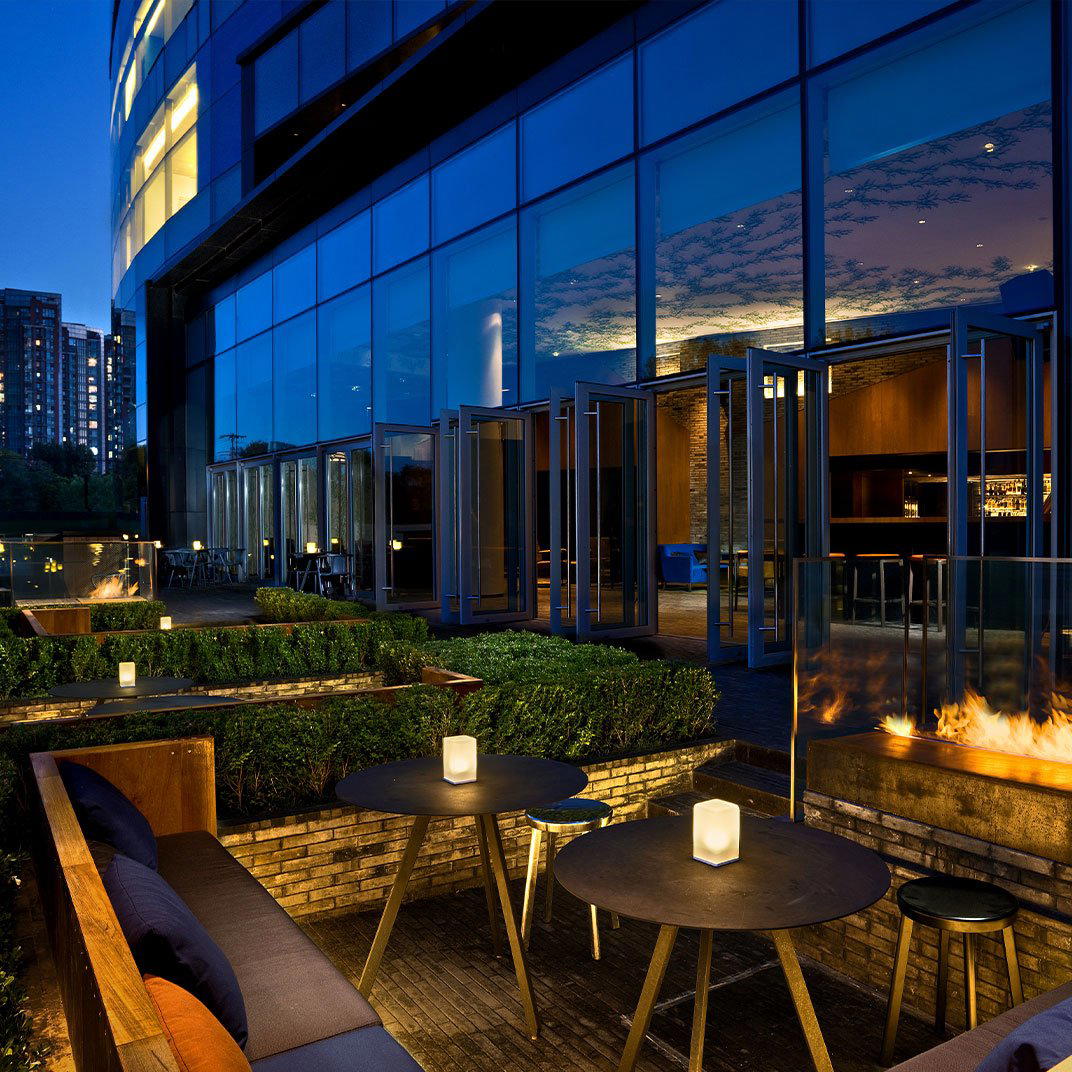
High-floor hotel restaurants in Asia's major cities occupy a specific commercial niche: they attract both hotel guests and destination diners drawn by altitude and view rather than solely by culinary programme. Grill 79 at the Summit Wing fits this pattern, offering an eclectic menu in a setting that few CBD competitors can match on physical drama alone. The hotel also operates Atmosphere, framed as a European-tradition cocktail bar in a contemporary setting, and The Lounge, which holds one of Beijing's more substantial premium tea selections and maintains an afternoon tea programme. The tea programme deserves particular note given Beijing's traditional relationship with tea culture: this is not a Western-import afternoon tea transposed to a Chinese context, but a selection anchored in premium Chinese varieties, positioned as a serious alternative to the ceremony formats available elsewhere in the city.
For guests building a broader food itinerary around their stay, our full Beijing restaurants guide covers the city's dining scene beyond the hotel's own programme. Nearby luxury properties have also invested in destination dining: the Mandarin Oriental Qianmen and the Eclat Beijing both run food programmes worth considering as part of a longer Beijing visit.
Wellness at the Summit: CHI Spa and the Infinity Pool
CHI, the Spa operates across six treatment rooms and focuses on traditional Chinese massage alongside signature therapies. In a city with a strong internal wellness culture, positioning the spa as a Chinese-modality facility rather than a generic international spa menu is a choice that reads as appropriate to context rather than marketing distinction. The indoor infinity pool, finished in grey stone with dark wood and gold trim detailing, sits at a floor level that makes it one of the higher hotel pools in the capital. An adjacent herbal steam room extends the recovery sequence. Given that Beijing's air quality and pace make a restorative in-hotel option genuinely useful rather than merely aspirational, the wellness facilities carry practical weight here beyond the usual luxury signposting.
Planning a Stay: Logistics and Timing
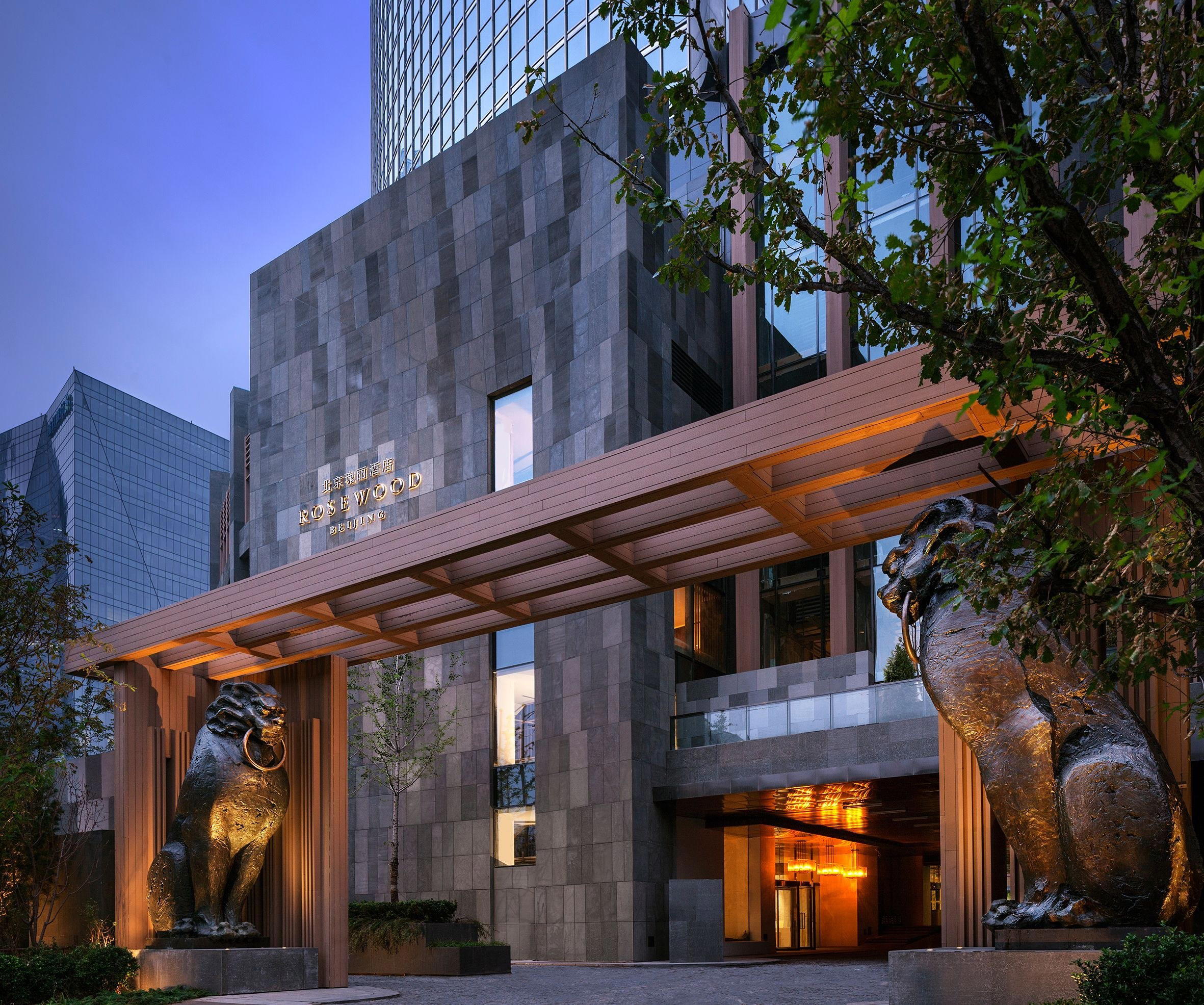
The hotel's address within the China World Trade Centre complex puts it directly on the CBD grid, close to the national financial institutions and multinational offices concentrated around the Third Ring Road corridor. Tiananmen Square and the Forbidden City are approximately 15 minutes by cab. The nearest subway access connects via the Guomao station on Lines 1 and 10, which provides efficient coverage across the city without requiring surface transport during congested periods. Beijing's peak travel windows cluster around Golden Week in early October and the spring Qingming and Labour Day holidays in late April and early May; room demand rises sharply during these periods across the market, making earlier planning prudent. Standard corporate travel patterns mean weekend rates and availability tend to open relative to weekday demand, which can be a useful lever for leisure travellers.
Guests interested in comparing the CBD hotel tier against properties with more direct access to heritage sites should consider how the Aman Summer Palace or the Brickyard Retreat at Mutianyu Great Wall position themselves against the Summit Wing's altitude-and-efficiency argument. Across China more broadly, the luxury hotel market has diversified significantly: properties like Amanfayun in Hangzhou, Amandayan in Lijiang, and 1 Hotel Haitang Bay in Sanya demonstrate how different cities and natural contexts produce entirely distinct luxury hospitality formats. The Summit Wing's particular value is specific to what Beijing's CBD demands: scale, speed, views, and logistical precision at an address that needs no explanation to any arriving international guest.
Peers You’d Cross-Shop
Comparable venues nearby, for context on price, style, and recognition.
| Venue | Cuisine | Price | Awards | Notes |
|---|---|---|---|---|
| China World Summit Wing, BeijingThis venue (the venue you are viewing) | Luxury skyscraper lifestyle sanctuary | $200–300 | Forbes 4-Star · Virtuoso Luxury Hotel Partner | Not listed |
| The Ritz-Carlton, Beijing | English manor-inspired luxury hotel | Not listed | La Liste Top Hotels · Forbes 4-Star | Balizhuang |
| Four Seasons Hotel Beijing | Contemporary luxury blending modern furnishings with traditional Chinese design elements; residential ambiance with state-of-the-art technology and bespoke wellness philosophy. | $500–750 | Michelin Selected · La Liste Top Hotels | Sanlitun |
| InterContinental Beijing Sanlitun | Contemporary luxury hotel in the heart of Sanlitun shopping district | Not listed | Michelin Selected · La Liste Top Hotels | Sanlitun |
| Hyatt Regency Beijing Wangjing | Modern urban oasis blending minimalist design with natural elements. | $200–300 | Michelin Selected · Conde Nast Best Hotels #18 | Dashanzi |
| Mandarin Oriental Qianmen, Beijing | Restored historic siheyuan courtyards with modern luxury interiors | $1,500–2,500 | 3 Michelin Keys · World's 50 Best #7 | Zhengyilu |
Recognition history
Dated appearances from independent guides and award organizations, with the underlying list record or original source where available.
Forbes 4-Star
Forbes
Virtuoso Luxury Hotel Partner
Virtuoso
Full recognition history (3 entries)
Forbes 4-Star
Forbes
Continue exploring
More in Beijing
Hotels in Beijing
All hotels in Beijing →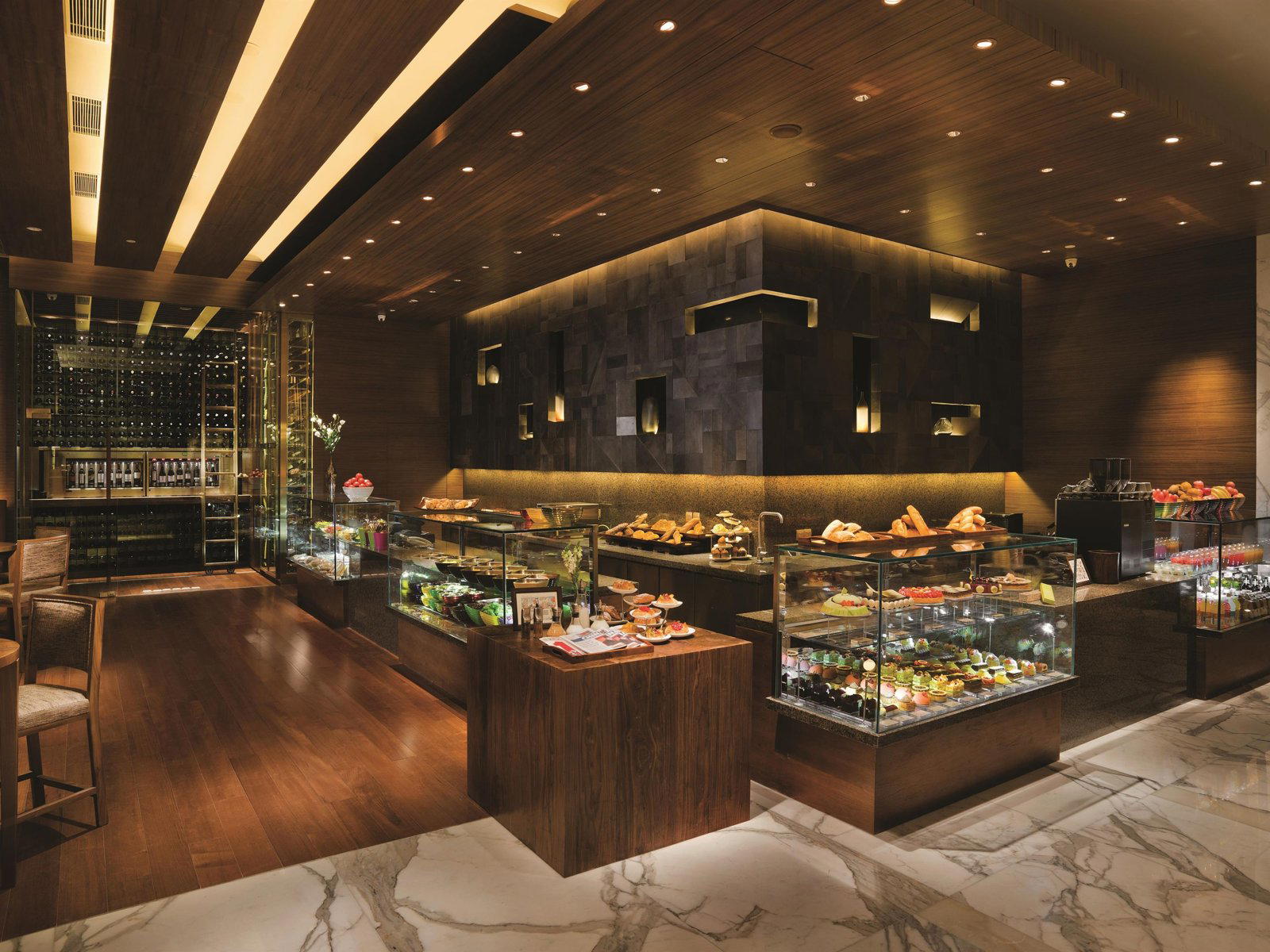
Bars in Beijing
All bars in Beijing →
Details
- Elegant
- Sophisticated
- Modern
- Ornate
- Business Trip
- Romantic Getaway
- Infinity Pool
- Rooftop Pool
- Panoramic View
- Butler Service
- Wi Fi
- Pool
- Spa
- Fitness Center
- Room Service
- Concierge
- Business Center
- Valet Parking
- Skyline
- Wheelchair Accessible
- Elevator
Luxurious and calm atmosphere with dramatic skyline views, polished cleanliness, and serene lighting in spacious, soundproofed rooms.