
Michelin Selected
Selected by the Michelin Guide Hotels 2025, moksa occupies a discreet address in Sakyo-ku's Kamitakano district, at the northern edge of Kyoto where the city's built fabric gives way to forested hillside. The property sits in a tier of design-conscious Kyoto stays that prioritise spatial restraint and neighbourhood depth over central convenience, positioning it alongside a small cohort of properties where the architecture is the argument.

Pearl is the En Primeur Club membership app — saves, bookings, and concierge access live there. Same editors, same standards.
- Address
- 65 Kamitakano Higashiyama, Sakyo Ward, Kyoto, 606-0067, Japan
- Phone
- +81 75-744-1001
- Website
- moksa.jp
- Directions
- Get directions
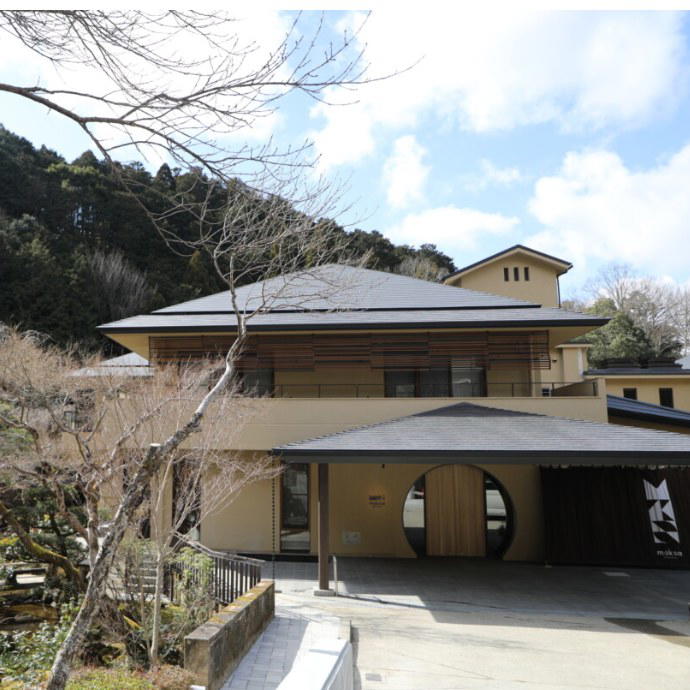
Where the City Ends and the Mountain Begins
Kyoto's most considered accommodation addresses have a tendency to cluster near the edges rather than the centre. Kamitakano, in the northeastern reaches of Sakyo-ku, is precisely that kind of address: a district where the urban grid loses confidence, residential lanes narrow, and the tree cover thickens as the Higashiyama range asserts itself. Arriving at moksa at 65 Kamitakano Higashiyama, the physical sensation is one of compression followed by release — the city falls away, and the property's envelope of greenery takes over. That transition is not incidental. It is the entire premise.
This northern edge of Sakyo-ku has become a quiet reference point for a particular kind of Kyoto stay. Unlike the more trafficked Gion or Higashiyama corridors, Kamitakano operates at a pace closer to the temple districts of Kurama and Kibune that lie further up the valley. Visitors arrive here by intent, not accident, and the properties that have chosen this address have done so precisely because the neighbourhood's character does the atmospheric work that central-city properties must manufacture.
The Design Argument: Material Restraint as Statement
Michelin's hotel selection process, when applied to properties in Kyoto, tends to reward a specific kind of spatial intelligence: the ability to hold the tension between Japanese architectural tradition and contemporary hospitality function without collapsing into pastiche. The 2025 Michelin Selected designation for moksa places it in a recognised cohort of Kyoto properties where that tension is managed with genuine discipline.
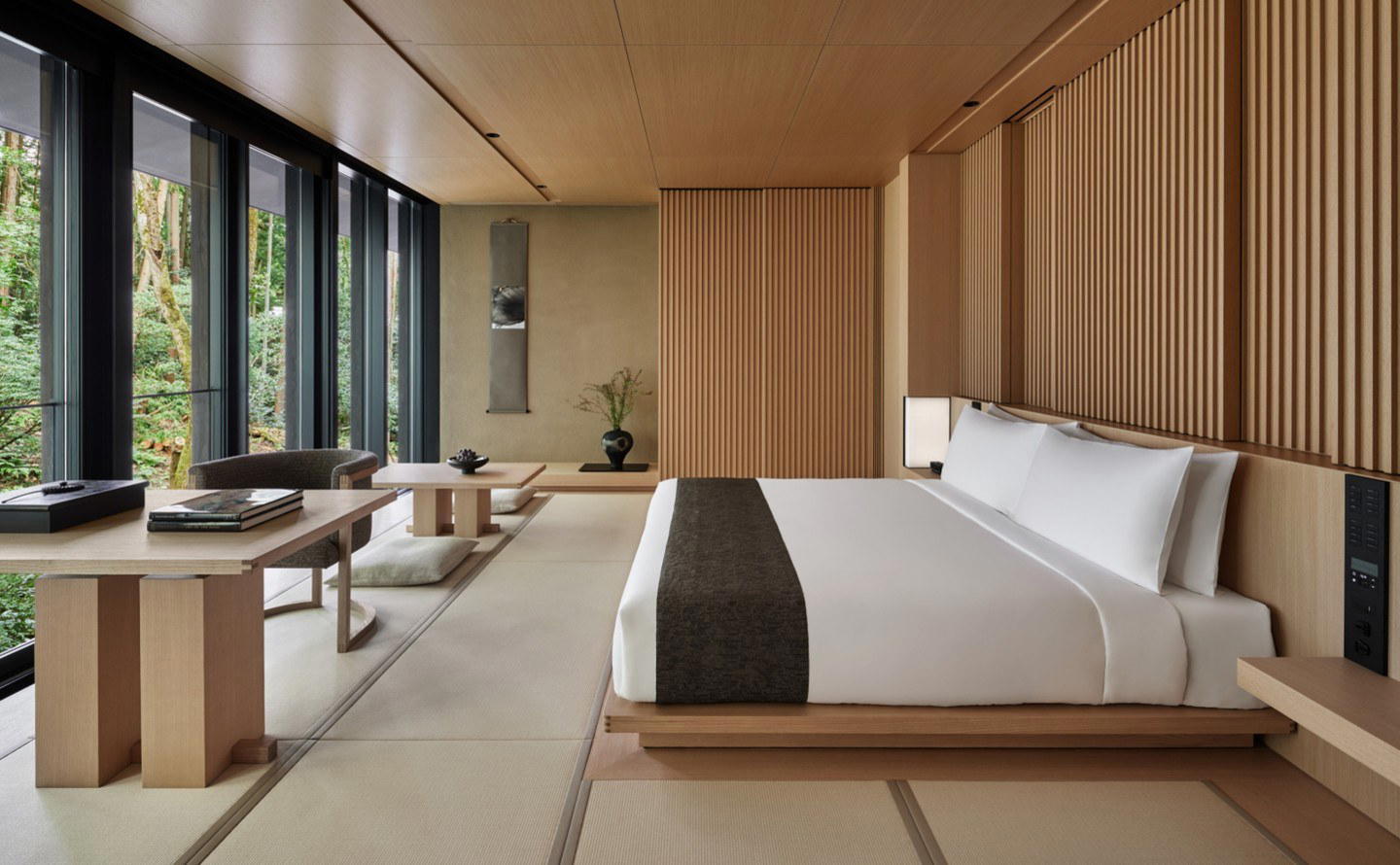
The aesthetic grammar that runs through Kyoto's most respected smaller properties — exposed natural materials, suppressed ornamentation, a deliberate relationship between interior volume and the garden or landscape outside, is a tradition with deep roots in the city's machiya and sukiya-style architecture. What separates the properties that earn external recognition from those that merely reference tradition is the degree to which spatial decisions feel structural rather than decorative. At moksa, the positioning in Kamitakano is itself a design decision: the landscape is not framed as a backdrop but treated as part of the property's architectural logic.
Kyoto's accommodation tier has split in recent years between large internationally-branded hotels occupying historic or central sites, and smaller independently positioned properties that use neighbourhood placement and material specificity as their primary differentiator. Aman Kyoto, in the northern reaches of the city near Kinkaku-ji, operates in a comparable spatial register: low density, forest adjacency, architecture that recedes rather than announces. Park Hyatt Kyoto on the Higashiyama slopes and Four Seasons Hotel Kyoto in Higashiyama-ku take a different approach, anchoring brand identity to landmark proximity. moksa sits closer to the former model: the property's value proposition is inseparable from its physical setting.
Across Japan, the properties that operate most convincingly in the design-led, nature-adjacent tier share a recognisable set of characteristics: limited room counts, deliberate landscape integration, an aesthetic coherence that extends from architecture to objects to the quality of light in a corridor. Zaborin in Kutchan achieves this in a Hokkaido forest context. Asaba in Izu uses a historic ryokan structure and a noh stage to hold the same register. Gora Kadan in Hakone frames volcanic landscape through rooms whose material palette echoes the stone and cedar of the surrounding terrain.
In Kyoto specifically, SOWAKA and The Shinmonzen occupy the design-conscious smaller-property tier but with a Gion orientation that brings different neighbourhood energy: more curated art-and-dining density, less spatial remove. HOTEL THE MITSUI KYOTO leans into heritage estate architecture with a central address near Nijo Castle. moksa's Sakyo-ku placement defines a different relationship with the city altogether, less about access to Kyoto's cultural infrastructure, more about physical distance from it as a considered choice.
Sakyo-ku as Context
Sakyo-ku is Kyoto's largest ward by area and contains some of the city's most significant temple and shrine addresses: Nanzen-ji, Heian Shrine, Fushimi Inari's northern rival Shimogamo Shrine, and the philosophical gardens of Ginkaku-ji. The ward stretches from central Kyoto up into protected mountain landscape, and the northern reaches around Kamitakano sit at the point where those two conditions, city and mountain, are most evenly balanced. Properties here benefit from relative quiet and immediate access to hillside trails, while the central city's subway and bus infrastructure remains reachable.
The Eizan Electric Railway, running from Demachiyanagi station north toward Kurama and Kibune, is the primary transit artery for this part of Sakyo-ku. The rail connection links Kamitakano into the broader city grid without dissolving the neighbourhood's separation from it, a practical consideration that matters when selecting accommodation in this district. Guests choosing properties in this northern corridor should expect to travel fifteen to twenty minutes by transit to the central Gion or Kawaramachi areas, a trade-off that the leading properties in the neighbourhood make legible rather than apologise for.
Planning a Stay
Practical details for moksa, room categories, rates, booking channels, and specific availability, are best confirmed directly given the property's scale and positioning. For a property of this type and Michelin selection status, advance planning of four to eight weeks is typically prudent for high-demand periods, particularly the spring cherry blossom window (late March to mid-April) and the autumn foliage season (November), when Kyoto's accommodation inventory tightens considerably across all tiers. The Sakyo-ku northern corridor, with its forest proximity, tends to draw particular interest during the latter season when the hillside colour is at its most concentrated.
Travellers building a wider Japan itinerary around design-led properties might consider pairing a moksa stay with Amanemu in Mie or Benesse House in Naoshima for a consistent thread of architecture-as-experience. For those approaching from Tokyo, Bvlgari Hotel Tokyo anchors the urban end of a trip before the quieter register of northern Kyoto. Further regional options with comparable spatial philosophies include Nishimuraya Honkan in Kinosaki-cho, Kamenoi Besso in Yufu, and Fufu Nikko in Nikko.
For a full orientation to Kyoto's accommodation and dining options across all price tiers and neighbourhoods, see our full Kyoto guide. Comparable Kyoto hotel options for different priorities include Ace Hotel Kyoto for a design-meets-cultural-programming approach, and Dusit Thani Kyoto for a larger-footprint international brand experience.
Fast Comparison
| Venue | Price | Awards |
|---|---|---|
| moksaThis venue — the venue you are viewing | $100–200 | Michelin Selected |
| Aman Kyoto | Not listed | 2 Michelin Keys · World's 50 Best #74 |
| Park Hyatt Kyoto | $500–750 | 1 Michelin Key · World's 50 Best #37 |
| The Ritz-Carlton, Kyoto | $500–750 | 1 Michelin Key · La Liste Top Hotels |
| Four Seasons Hotel Kyoto | $1,000–1,500 | 1 Michelin Key · La Liste Top Hotels |
| Ace Hotel Kyoto | $200–300 | 1 Michelin Key · Mr & Mrs Smith Seal of Approval |
Recognition history
Dated appearances from independent guides and award organizations, with the underlying list record or original source where available.
Michelin Selected
Michelin
Continue exploring
More in Kyoto
Hotels in Kyoto
Browse all →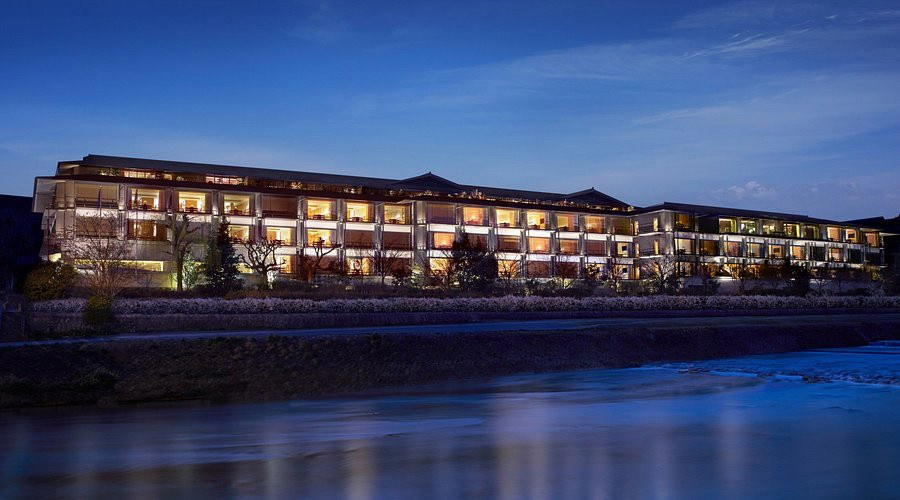
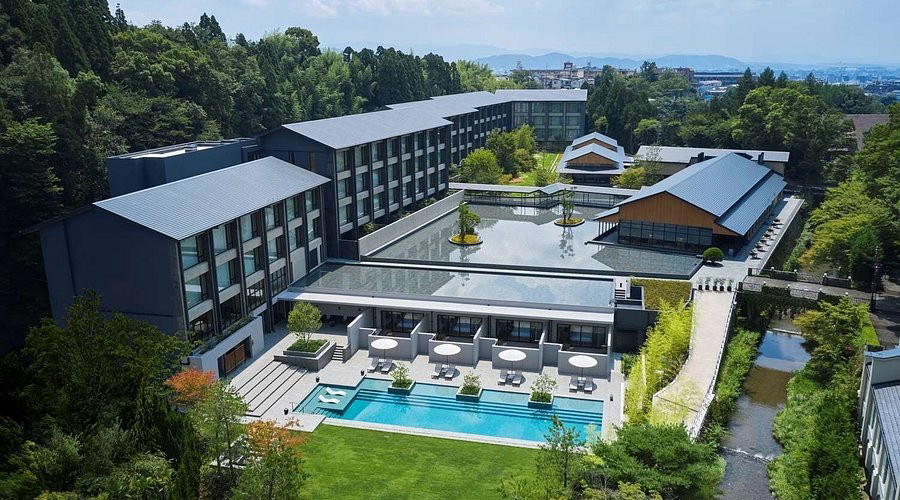
Bars in Kyoto
Browse all →
Restaurants in Kyoto
Browse all →
Wineries in Kyoto
Browse all →
Details
- Quiet
- Scenic
- Sophisticated
- Intimate
- Wellness Retreat
- Weekend Escape
- Romantic Getaway
- Group Retreat
- Destination Spa
- Garden
- Historic Building
- Design Destination
- Waterfront
- Wi Fi
- Restaurant
- Bar
- Sauna
- Garden
- Concierge
- Parking
- Spa
- Waterfront
- Garden
- Mountain
- Accessible Parking
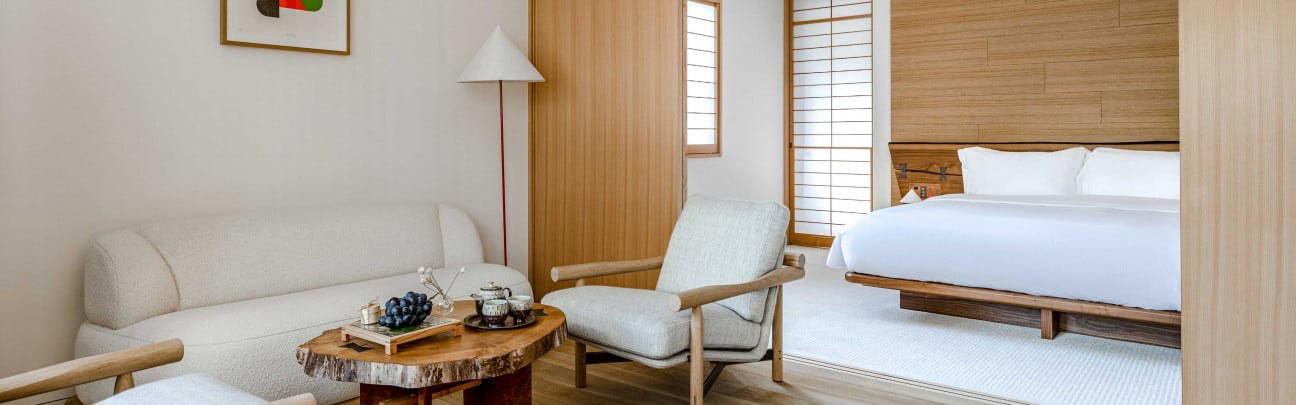
Quiet, restorative, and nature-immersed, with soft light, wood interiors, moss gardens, river sounds, and contemporary art creating a calm retreat atmosphere.