L'Escape Hotel Seoul


Michelin Selected · Forbes Recommended
Positioned in Myeongdong, Seoul's most active shopping corridor, L'Escape Hotel brings a commission by French architect Jacques Garcia to the Jung District: 204 rooms styled after 19th-century Parisian aristocracy, flower installations rotated quarterly by London florist Tony Marklew, and a library reserved exclusively for suite guests. The result is a design-led property that operates at deliberate distance from Seoul's international chain tier.

Pearl is the En Primeur Club membership app, where members save venues, book tables and use the concierge.
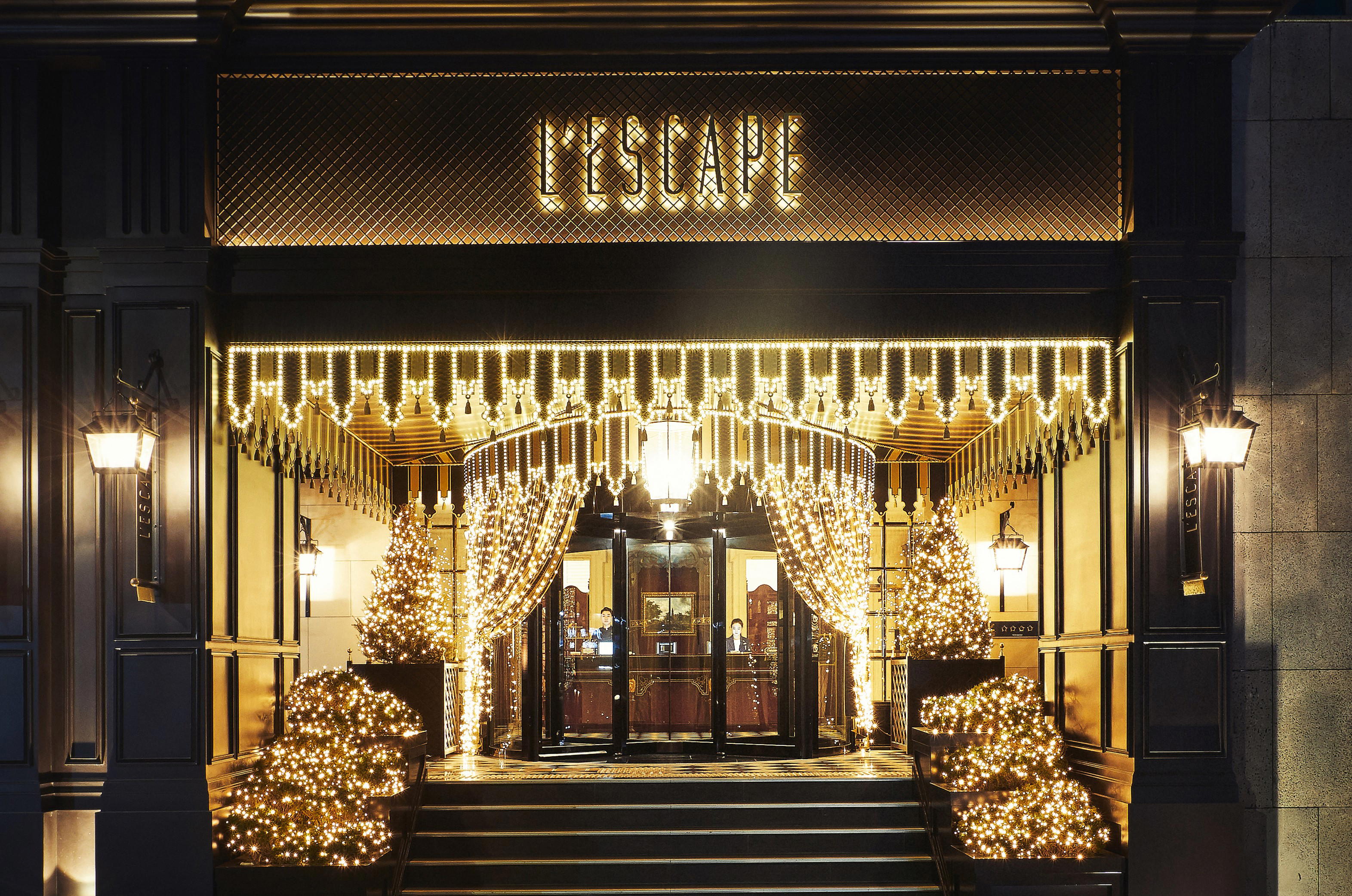
Ornate Details in an Unlikely Address
Myeongdong is not where Seoul's quieter luxury plays out. The neighbourhood runs loud and commercial: multilevel department stores, street food vendors filling the alleyways, tour groups moving in formation across the pedestrian corridor. Into this setting, Shinsegae, one of Korea's dominant retail conglomerates, commissioned French architect Jacques Garcia to design a hotel that pointedly refuses its surroundings. The tension is deliberate, and inside L'Escape Hotel Seoul, it resolves decisively in Garcia's favour.
Garcia's brief, carried out across 204 rooms at 67 Toegye-ro, was to recreate the opulence of 19th-century Parisian aristocracy, and the execution extends to the ornate doorknobs and fringed lampshades. Peacock motifs appear throughout, on wallpaper, in sculptures, embedded in logo details, positioning bird imagery as the hotel's visual signature. The elevator announces each floor in both French and Korean. These are not superficial gestures; they signal the level of specificity applied to every surface of the build.
Design hotels in Seoul's premium tier divide broadly between properties that adopt a contemporary Korean minimalism and those that import a European register entirely. For reference, properties such as Four Seasons Hotel Seoul and Conrad Seoul represent the international-chain end of that split; L'Escape occupies a more singular position in its category.
What the Rooms Actually Deliver
The 204 rooms are organised around three colour concepts: red, green, and a smaller allocation of yellow. Each uses elaborate fabric wallpaper and floor-length curtains to create an interior atmosphere more theatre than hotel room, deliberately moody, heavy on textile, historically referential. The amenities track a different timeline: a GiGA Genie smart hub, operable by touch or voice, controls lighting, connects to housekeeping, and provides local tourism information. The combination of 19th-century French decorative vocabulary and contemporary Korean technology infrastructure appears throughout the property as a consistent formal choice rather than an inconsistency.
Bathrooms are executed with the same commitment to the visual brief: black-and-white tiled floors, porcelain claw-foot bathtubs in most rooms, double glass doors designed to open dramatically. Washroom amenities come from Atelier Cologne, the French perfume house. These details matter because they indicate where the hotel has chosen to spend its design budget, on sensory specificity rather than generic premium finishes.
Corner Suites face the Myeongdong streetscape directly, with floor-to-ceiling windows that frame the full neighbourhood below. Suite guests receive a separate set of privileges: daily breakfast for two, afternoon tea, valet parking, nightly drinks, and access to the hotel's library. The library is reserved exclusively for suite occupants and features live performances on an irregular schedule. Given the concentration of benefits in the suite tier, the Corner Suite represents the more complete argument for the property's concept. Among guests already familiar with the hotel, the suite category tends to draw repeat bookings over the standard room configuration.
The Flowers and the Floor Plan
Quarterly flower installations throughout the hotel are designed by Tony Marklew, a London-based florist with commissions from Givenchy and the Hotel Paris behind him. The installations are rotated four times a year, meaning the property's atmosphere shifts across seasons in a way that photographs and reviews from one period do not fully capture. For guests returning to the property, the change in floral design provides a material difference between visits rather than a static decorative environment.
The pet-friendly designation extends to a dedicated floor for guests travelling with animals. That floor provides dog beds and associated amenities, a configuration uncommon in Seoul's central luxury properties and one that reflects Shinsegae's retail understanding of consumer segmentation. A meeting room accommodates up to 80 people, giving the property a limited corporate events capacity alongside its leisure orientation.
Programming for the Property's Creative Register
Seoul's premium hotel programming has shifted in recent years toward experience-led offerings that extend beyond in-room amenities into organised guest activities. L'Escape runs workshops aligned with its aesthetic premise: flower arranging, drawing classes, and styling workshops. The programming is coherent with the hotel's design identity rather than generic wellness or local cultural add-ons. It addresses a guest who is interested in applied aesthetics, which aligns with the Myeongdong location, Shinsegae department store and Lotte Department Store are both within walking distance, and the district draws visitors whose agenda includes fashion, beauty, and retail alongside accommodation.
The property's creative programming and its position within Seoul's busiest retail corridor place it in a specific kind of guest circuit. Properties like Banyan Tree Club and Spa Seoul and Grand Hyatt Seoul operate from different neighbourhood footprints and address different guest priorities. For those whose Seoul itinerary is weighted toward central shopping, cultural institutions, and design, the Myeongdong address is a functional advantage rather than a compromise.
Guests coming from internationally comparable boutique hotel contexts, those familiar with properties like Aman Venice or Aman New York, where design specificity defines the stay, will recognise the operating logic at L'Escape even if the aesthetic vocabulary differs. The hotel draws a clear point of distinction through its French decorative commitment in a Korean commercial district, and maintains that distinction down to the level of doorknob design and elevator voice announcements.
Planning the Stay
L'Escape Hotel sits at 67 Toegye-ro in the Jung District, directly within Myeongdong's retail core, making it accessible on foot from major transit connections in the area. Suite guests should account for the library performance schedule when planning their stay, as these events are not daily. The quarterly floral rotation means that visitors in spring and autumn will encounter different atmospheric conditions from those visiting in summer or winter, worth considering for guests who have previously stayed and are returning.
For those building a broader South Korea itinerary, EP Club covers a range of properties across the country: from Ananti at Busan Cove on the southeast coast to Grand Hyatt Jeju and JW Marriott Jeju Resort and Spa in the south, as well as Kensington Hotel Seorak for those heading into Gangwon Province. Within Seoul, additional options across the premium tier include Aman Seoul Cheongdam, Fairmont Ambassador Seoul, and Casino Hotel Seoul. The full Seoul guide covers the city's dining and hospitality options in greater depth for those building a complete itinerary.
Budget Reality Check
Comparable venues nearby, for context on price, style, and recognition.
| Venue | Cuisine | Price | Awards | Notes |
|---|---|---|---|---|
| L'Escape Hotel SeoulThis venue (the venue you are viewing) | Not listed | $200–300 | Michelin Selected · Forbes Recommended | Not listed |
| Walkerhill Douglas House | Not listed | Not listed | Michelin Selected | 암사동, Nature-integrated urban retreat with modern woodsy design |
| Andaz Seoul Gangnam | Not listed | $300–500 | Michelin Selected | 압구정동, Luxury lifestyle boutique hotel blending contemporary design with local Korean cultural heritage, positioned as a design destination in Seoul's most fashionable district. |
| Casino Hotel Seoul | Not listed | $300–500 | Not listed | Gwangjin-gu, Luxury integrated resort with Art Deco design elements and contemporary gaming facilities |
| LOTTE HOTEL WORLD | Not listed | Not listed | La Liste Top Hotels | Jamsil-dong, Luxury urban resort-style hotel connected to a major theme park |
| JW Marriott Dongdaemun Square | 이화동, Modern luxury tower | $200–300 | Michelin Selected | Not listed |
Recognition history
Dated appearances from independent guides and award organizations, with the underlying list record or original source where available.
Michelin Selected
Michelin
Forbes Recommended
Forbes
Continue exploring
More in Seoul
Hotels in Seoul
All hotels in Seoul →
Bars in Seoul
All bars in Seoul →
Details
- Elegant
- Sophisticated
- Modern
- Romantic
- Romantic Getaway
- Business Trip
- Anniversary
- Rooftop Pool
- Wi Fi
- Spa
- Fitness Center
- Room Service
- Concierge
- Restaurant
- Pool
- Hot Tub
- Skyline
- Wheelchair Accessible
- Elevator
- Step Free Entrance
- Accessible Parking
Sumptuous interiors evoking 19th-century Paris with dramatic, luxurious decor, soundproofed rooms, and a tranquil retreat atmosphere despite central location.