JW Marriott Jeju Resort & Spa



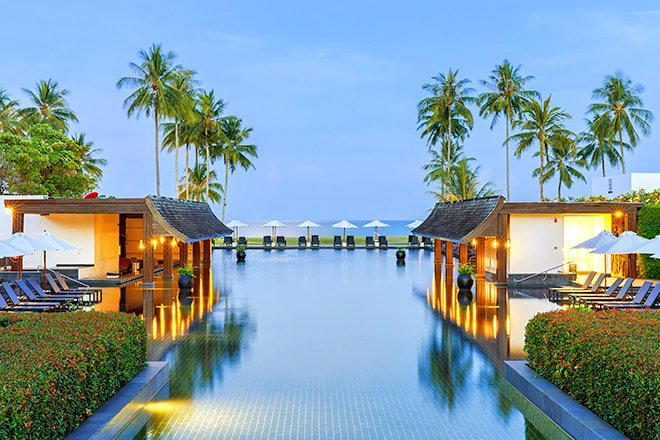
Opened in 2023 as the JW Marriott brand's first South Korean resort, this 189-room clifftop property in Seogwipo is built from Jeju basalt and timber, with interiors by Bill Bensley referencing hanok architecture and the island's canola fields. La Liste awarded it 90 points in its 2026 Top Hotels ranking. Rates start from $775 per night.
Pearl is the En Primeur Club membership app — saves, bookings, and concierge access live there. Same editors, same standards.
- Address
- 399 Hogeun-dong, Seogwipo, Jeju-do
- Phone
- +82 64-803-7777
- Website
- marriott.com
- Directions
- Get directions
 Saves & bookings on Pearl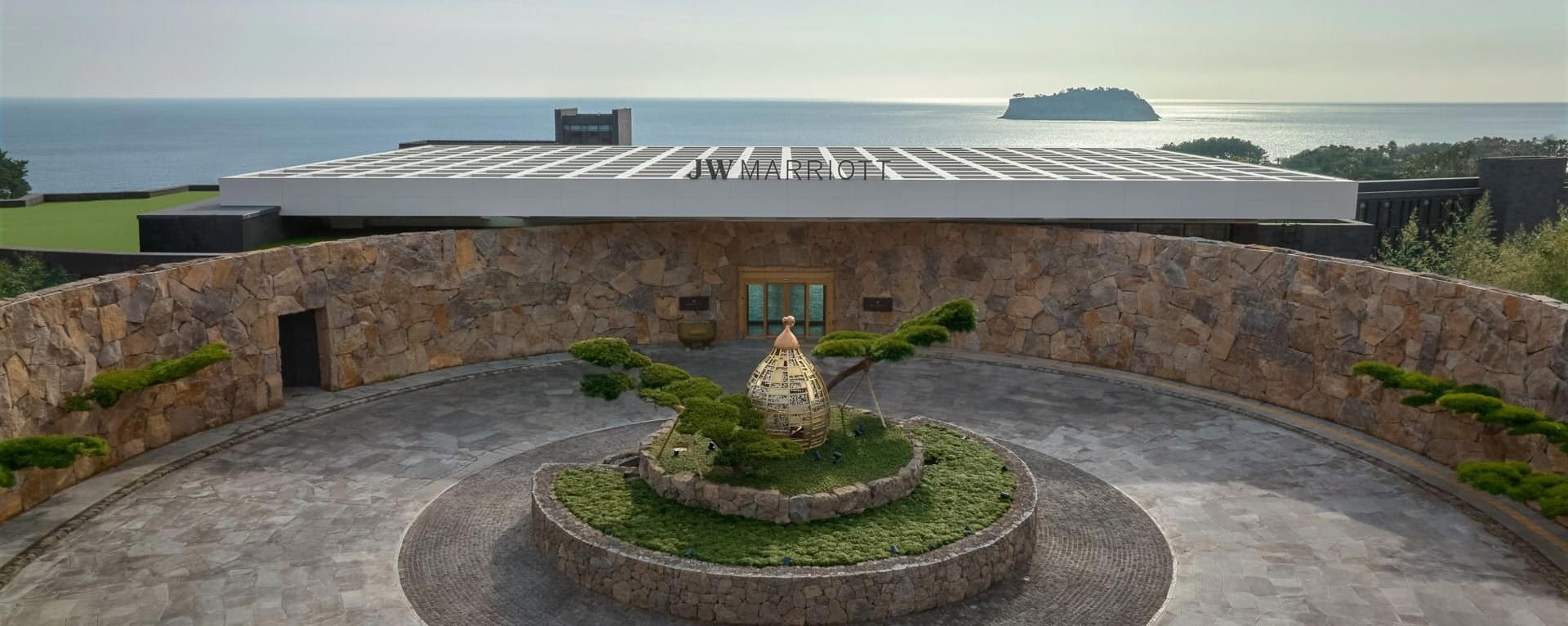
Architecture at the Edge of the Island
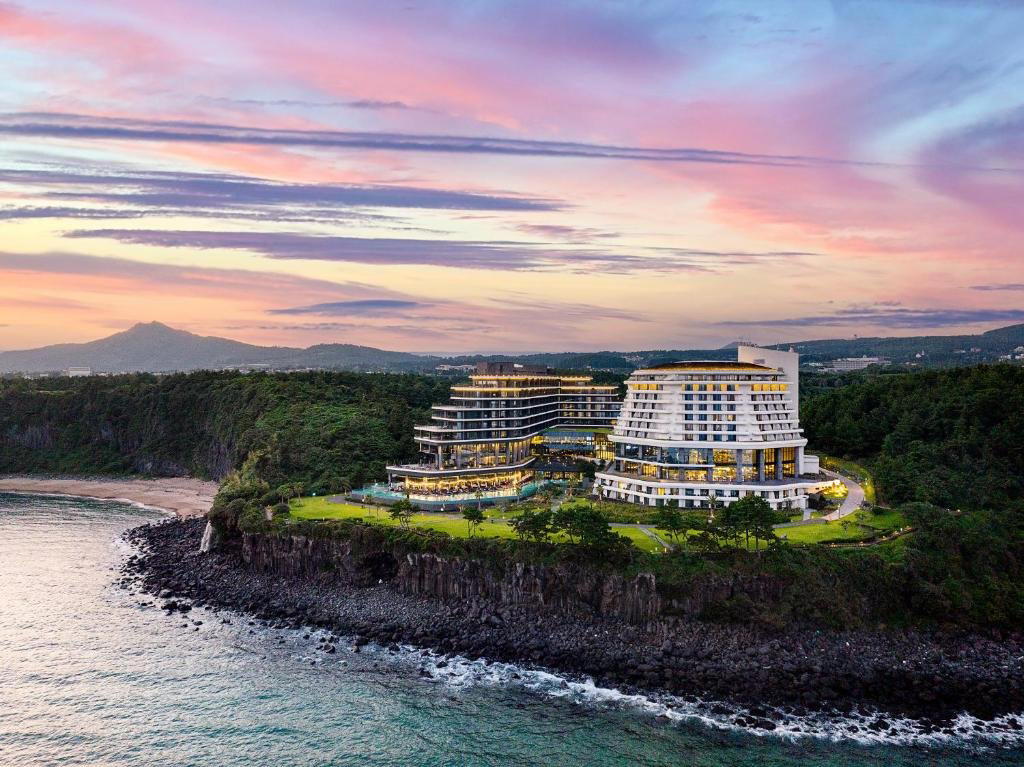
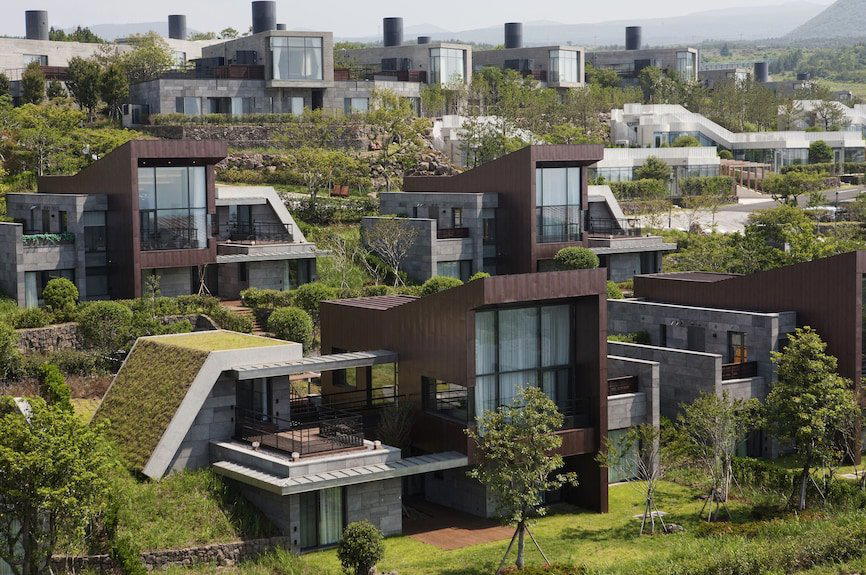
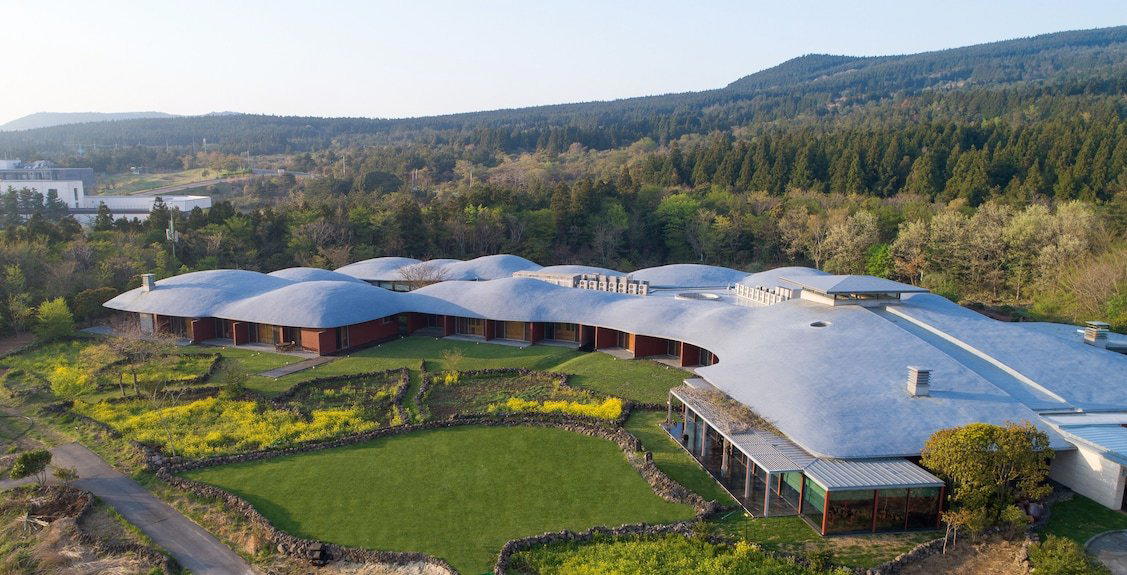
Approaching the southern cliffs of Jeju, the scale of the JW Marriott Jeju Resort & Spa becomes apparent before the entrance does. The resort sits low against the headland, its basalt-and-timber construction reading less like an imposed structure than a continuation of the volcanic terrain below. That restraint is deliberate: the design draws from Korean heritage materials and forms, placing the building in dialogue with the lava-rock coastline rather than above it.
The lobby sets the architectural argument most clearly. Modeled on the hanok, the traditional Korean timber house, it pairs decorative woodwork with floor-to-ceiling windows that frame unobstructed views of the sea. Light does most of the work here: the room shifts character across the day as the southern exposure catches different angles. American architect Bill Bensley, whose portfolio runs from Bali to Bangkok, was responsible for the interiors, and his signature instinct for cultural specificity rather than generic luxury shows in the warm yellow tones of the guestrooms, a deliberate reference to the canola fields that blanket Jeju's plateau in spring.
That calibration between international design experience and local material reference is what separates this property from the older resort tier on the island. Where earlier clifftop hotels on Jeju defaulted to generic coastal-international aesthetic, the JW Marriott opened in 2023 with a different brief: 189 rooms built from the island outward, not imposed onto it.
Where the JW Marriott Sits in the Jeju Accommodation Market
Jeju's accommodation market has long occupied two poles: mass-market resorts clustered around Jeju City in the north, and a smaller tier of design-conscious properties concentrated in Seogwipo on the southern coast. The JW Marriott entered this second category directly, and its 2026 La Liste Leading Hotels recognition at 90 points placed it inside a narrow comparable set of properties where design execution and service depth matter more than room count or branded familiarity.
The price tier reflects its place at the upper end of Jeju's market, above mid-market international brands and far above the pension-and-guesthouse tier that still defines much of the island's capacity. For comparison, properties like Grand Hyatt Jeju in Jeju-si and Haevichi Hotel & Resort Jeju in Seogwipo-si occupy the same coastal resort category, but the JW Marriott's 2023 opening date, La Liste recognition, and Bensley-designed interiors place it in a more recent and more design-specific cohort. Elsewhere on Jeju, Podo Hotel in Seogwipo operates as a smaller, architecture-forward alternative for travelers prioritising intimacy over scale.
Within the broader South Korean luxury hotel conversation, the property holds a distinct position as the JW Marriott brand's first South Korea resort (the brand's Seoul presence is urban and business-oriented). For those tracking that broader national tier, Ananti at Busan Cove offers a coastal resort comparison on the mainland, while the Seoul five-star cluster at Conrad Seoul, Four Seasons Hotel Seoul, and Josun Palace operates in an entirely different market context.
Dining: The Yeoumul Model
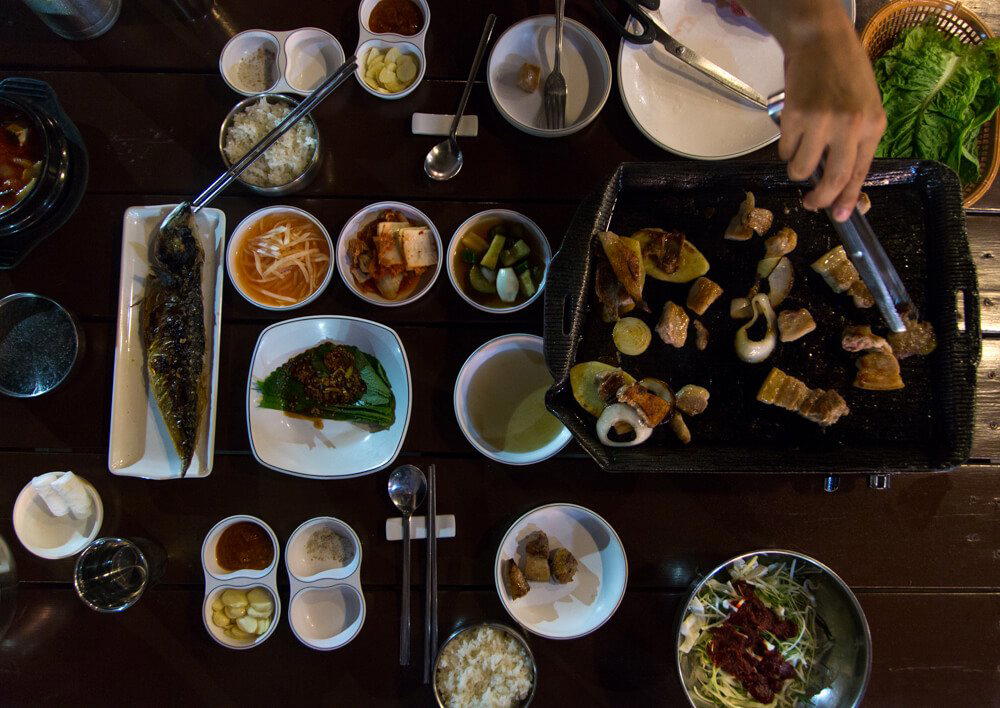
Jeju's culinary identity has always depended on its haenyeo: the female free-divers whose practice of harvesting shellfish, abalone, and sea urchin without breathing equipment is both a UNESCO-listed intangible heritage and a living supply chain for the island's restaurants. The resort's Yeoumul restaurant takes an omakase format built around that supply chain, with seafood sourced from the divers. This matters structurally: omakase formats place the sequencing and selection in the kitchen's hands, which suits haenyeo-sourced product because availability shifts with the season and the dive conditions. Guests at Yeoumul are eating what the sea has yielded, not what a menu has promised.
That format places Yeoumul in a different register than the casual seafood restaurants of Jeju's port towns, and also different from the Korean fine-dining formats of Seoul, where tasting menus draw on broader national culinary traditions. This is specifically Jeju seafood, structured for a luxury context.
Planning the Stay
The resort is located at 399 Hogeun-dong in Seogwipo, on the island's southern coast, which is accessible from Jeju International Airport in the north by car or taxi in roughly 40 to 50 minutes depending on traffic. Seogwipo sits closer to Jeju's major natural sites, including Cheonjeyeon Falls and the Olle Trail network, making it the more practical base for guests whose interest extends beyond the property itself. The clifftop position also means southern ocean exposure, and Jeju's spring canola season, which typically peaks in April, aligns with the warm yellow tones Bensley built into the room palette.
At 189 rooms, the property is not boutique in scale, but it is smaller than the large-format resort compounds that define the northern coast. Travelers comparing resort scales across South Korea's coastal destinations can reference South Cape Owners Club in Namhae or Oakwood Lagoon Town Gangneung for different regional coastal formats. For those extending a trip beyond Korea, the design-led coastal resort format has peers internationally: Amangiri in Canyon Point offers a comparable architecture-into-landscape approach, and Aman Venice demonstrates the same design philosophy applied to a heritage urban setting.
Side-by-Side Snapshot
Comparable venues nearby, for context on price, style, and recognition.
| Venue | Cuisine | Price | Awards | Notes |
|---|---|---|---|---|
| JW Marriott Jeju Resort & SpaThis venue — the venue you are viewing | Contemporary luxury resort blending Jeju's natural elements with sophisticated design. | $$$$ | Michelin 1 Key | Not listed |
| Parnas Hotel Jeju | Luxury beachside resort blending history and modern luxury. | $$$$ | 5-Star | Jungmun |
| Podo Hotel | Contemporary boutique hotel with charming design inspired by traditional Jeju architecture and natural volcanic landscape. | $$$$ | 4-Star | Jungmun |
| Around Follie | glamping resort with modern cabins and vintage Airstreams | $$$ | 3-Star | Seongsan-eup |
| Four Seasons Hotel Seoul | Contemporary Korean luxury with traditional influences and spacious accommodations | $$$$ | Michelin 1 Key | Sajik-dong |
| Fairmont Ambassador Seoul | Modern luxury hotel with panoramic river and city views | $$$$ | Michelin 1 Key | 용강동 |
Recognition history
Dated appearances from independent guides and award organizations, with the underlying list record or original source where available.
Forbes Recommended
Forbes
La Liste Top Hotels
La Liste
Michelin 1 Key
Michelin
At a Glance
- Elegant
- Sophisticated
- Scenic
- Modern
- Honeymoon
- Family Vacation
- Wellness Retreat
- Romantic Getaway
- Infinity Pool
- Beachfront
- Destination Spa
- Panoramic View
- Pool
- Spa
- Fitness Center
- Room Service
- Concierge
- Wi Fi
- Kids Club
- Restaurant
- Garden
- Pool
- Spa
- Fitness Center
- Room Service
- Concierge
- Wi Fi
- Kids Club
- Restaurant
Sophisticated and serene with natural light from massive ocean-view windows, warm neutral palettes, and spa-like marble bathrooms evoking tranquility.