

Star Wine List · Forbes Recommended
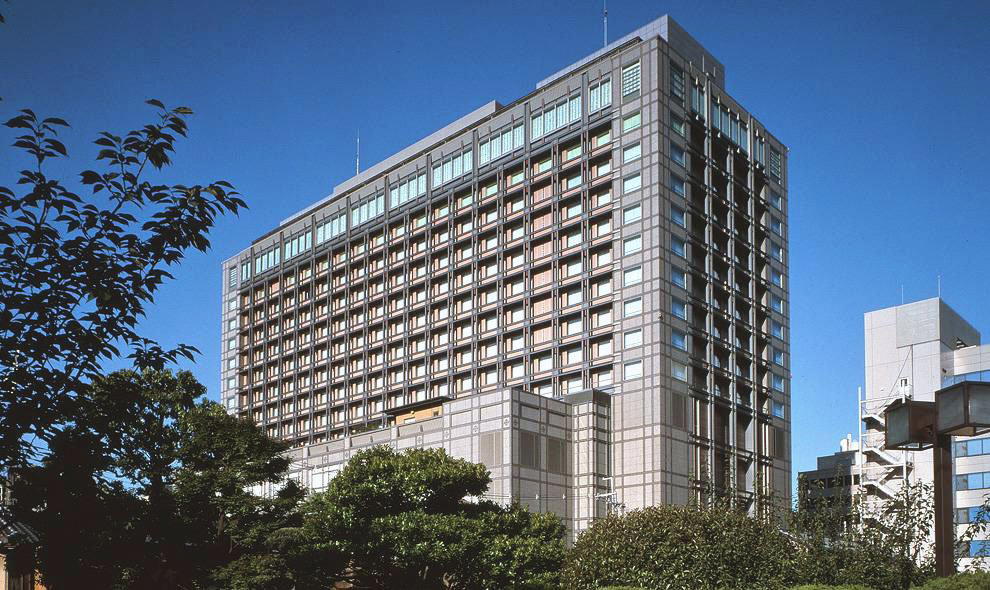
Operating from its Kawaramachi-Oike address since 1888, Hotel Okura Kyoto carries more institutional history than almost any other property in the city. Its marble-columned lobby signals a particular kind of grand hotel confidence, and its wine program has earned Star Wine List recognition for 2026. For travellers who want Kyoto's former-capital gravitas rather than its newer boutique energy, the Okura remains a serious reference point.

Pearl is the En Primeur Club membership app — saves, bookings, and concierge access live there. Same editors, same standards.
- Address
- Kawaramachi-Oike
- Phone
- 81-75-211-5111
- Website
- okura.kyotohotel.co.jp
- Directions
- Get directions
A Grand Hotel in a City That Measures Time Differently
Kyoto's hotel market has fractured sharply over the past decade. On one side sit the newer design-led independents, properties like The Shinmonzen and SOWAKA, which draw authority from local craft and deliberate restraint in scale. On the other, international flags have moved in with confidence: Park Hyatt Kyoto, Four Seasons Hotel Kyoto, and Aman Kyoto all arrived within recent years, each staking out a distinct position in the premium tier. Hotel Okura Kyoto occupies a different category entirely. Dating to 1888, it predates the modern luxury hotel conversation altogether, and that longevity shapes what the property represents rather than what it aspires to.
In a city whose identity is inseparable from preservation, a hotel with more than 130 years of continuous presence in the urban fabric carries a specific kind of weight. The Kawaramachi-Oike address places it near the Kamogawa River, a corridor that has defined Kyoto's social geography for centuries. That proximity to the river is less a selling point than a geographic fact: the Kamogawa runs through the city's cultural memory as much as its physical centre.
The Lobby as Argument
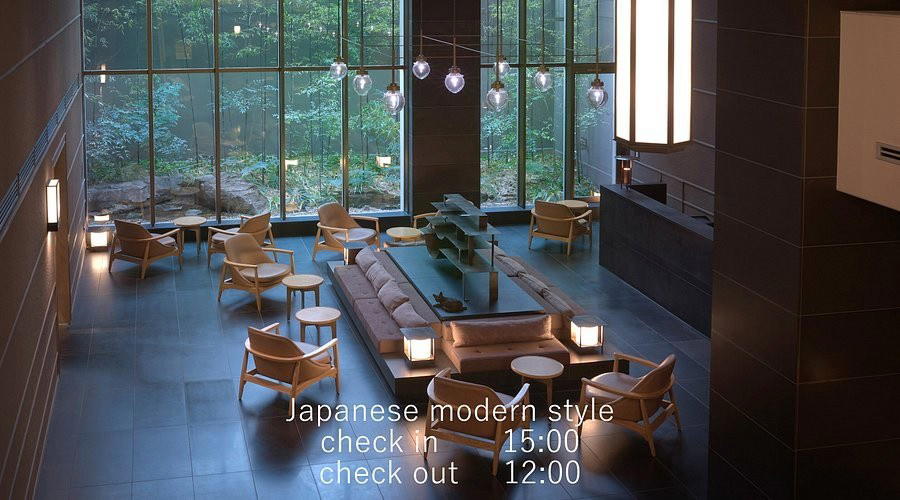
The interior language of the grand hotel is one that Kyoto's newer properties have largely stepped away from. Ace Hotel Kyoto deploys Kengo Kuma's grid-and-lattice vocabulary; Dusit Thani Kyoto layers Thai hospitality codes over a Japanese spatial sensibility. Hotel Okura Kyoto takes a different position. Its lobby works in marble and height, with columns that direct the eye upward and forward in the classical tradition of grand hotel design. This is not nostalgic in the ironic, postmodern sense. It is a building that was designed to impress in a particular register and has continued to do so without revision for the simple reason that the register still functions.
That kind of institutional confidence is increasingly rare in Japanese hospitality, where the dominant premium trend runs toward either the ryokan's studied intimacy or the international brand's globally calibrated modernism. The grand hotel in the European or North American tradition, with its public grandeur and ceremonial arrivals, occupies a narrower niche here than it does in Tokyo, where Bvlgari Hotel Tokyo and comparable properties have found a ready market. In Kyoto, Hotel Okura is closer to a singularity.
Wine Recognition and What It Signals
Star Wine List operates as an industry recognition programme for wine programs across hotels and restaurants, and its inclusion criteria emphasise depth, curation, and structural quality across a list rather than headline trophy bottles alone. For a hotel of this vintage, recognition from a programme that also tracks newer, more aggressively curated programs elsewhere in Japan represents a meaningful data point.
Japan's premium wine culture has matured considerably over the past fifteen years. High-end ryokan in destinations like Gora Kadan in Hakone and Asaba in Izu have developed wine programs that match the ambition of their kaiseki kitchens. Boutique art properties like Benesse House in Naoshima have built lists that reflect curatorial identity. Hotel Okura Kyoto's 2026 Star Wine List recognition positions it within this broader elevation of hotel wine in Japan, not as a late arrival but as an established institution whose program has kept pace with, and earned recognition alongside, a newer generation of wine-serious properties.
Where It Sits in the Kyoto Market
The Kyoto premium hotel market currently occupies several distinct competitive tiers. At the design-architecture end, HOTEL THE MITSUI KYOTO draws on a heritage site and restored Meiji-era materials. At the international-luxury end, Four Seasons and Park Hyatt compete on service infrastructure and global loyalty ecosystems. The ryokan tradition continues to define its own tier, with properties like Nishimuraya Honkan in Kinosaki-cho representing the form at its most sustained.
Hotel Okura Kyoto does not compete squarely in any of these brackets. Its 1888 founding date means that its heritage predates the heritage revival; it is the original, not the restoration. That positioning appeals to a guest profile that values institutional continuity over designed authenticity, a distinction that matters in Kyoto more than in most cities, precisely because the city's relationship with authenticity is sophisticated enough to hold both at the same time.
For travellers building a wider Japan itinerary, the Okura's position in Kyoto sits within a broader network of serious properties: Amanemu in Mie, Zaborin in Kutchan, Halekulani Okinawa, ENOWA Yufu in Yufu, Fufu Kawaguchiko in Fujikawaguchiko, Fufu Nikko in Nikko, Jusandi in Ishigaki, and Sekitei in Hatsukaichi-shi. Each occupies a different register of Japanese hospitality; Hotel Okura Kyoto is the grand hotel node in that network.
Planning Your Stay
The Kawaramachi-Oike location gives direct access to central Kyoto, with the city's main transit arteries close at hand and the cultural districts of Gion and Higashiyama reachable without a car. Booking is leading made directly or through premium travel agents who work with the Okura portfolio; lead times for peak periods, particularly cherry blossom season in late March through early April and autumn foliage in November, run long in a city where demand consistently outpaces supply across all tiers. Those who want more context on how the Okura fits into the broader dining and accommodation scene can consult our full Kyoto restaurants guide.
For travellers whose frame of reference extends beyond Japan, the grand-hotel register here shares a sensibility with properties like Aman Venice or The Fifth Avenue Hotel in New York City and Aman New York: properties where age and address are part of the product rather than incidental to it. In Kyoto's specific context, that formula has proven durable across more than a century.
Cuisine-First Comparison
Comparable venues nearby, for context on price, style, and recognition.
| Venue | Cuisine | Price | Awards | Notes |
|---|---|---|---|---|
| Hotel Okura KyotoThis venue — the venue you are viewing | Classic luxury hotel harmonizing European architecture with Kyoto traditions | $200–300 | Star Wine List · Forbes Recommended | Not listed |
| THE HIRAMATSU Kyoto | Historic machiya townhouse blending 120 years of Kyoto architecture with contemporary comfort | Not listed | Michelin Selected | Nakagyō |
| Nazuna Kyoto Gosho | Modern luxury ryokan preserving traditional Kyoto architectural heritage with contemporary amenities and refined hospitality. | $300–500 | Michelin Selected | Nakagyō |
| Kanamean Nishitomiya | Traditional family-owned ryokan blending 19th-century wooden architecture with contemporary luxury. | $500–750 | 2 Michelin Keys · Relais Chateaux Award | Nakagyō |
| Noku Kyoto | Medium-sized boutique hotel blending traditional Japanese aesthetics with modern comforts adjacent to Kyoto Imperial Palace. | $1–100 | Michelin Selected | Nakagyō |
| moksa | Modern ryokan rebirth hotel blending tradition with contemporary wellness. | $100–200 | Michelin Selected | Yase |
Recognition history
Dated appearances from independent guides and award organizations, with the underlying list record or original source where available.
Star Wine List
Star Wine List
Forbes Recommended
Forbes
Continue exploring
More in Kyoto
Hotels in Kyoto
Browse all →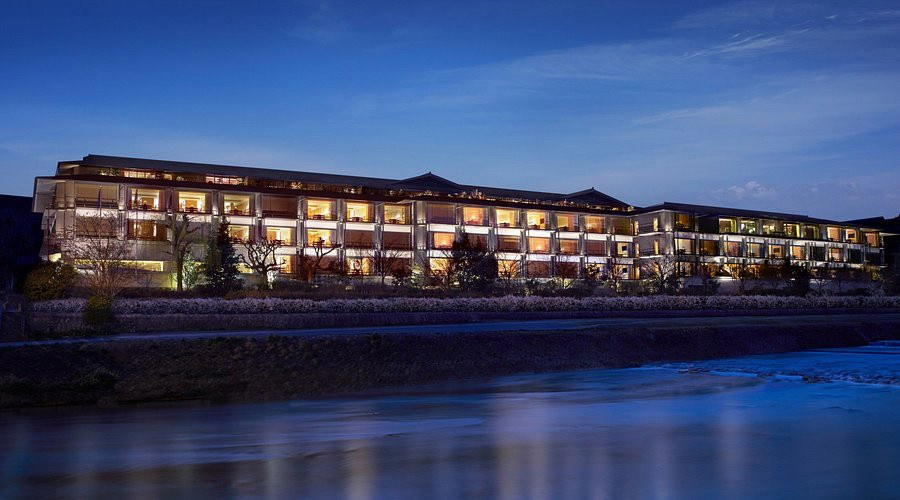
Bars in Kyoto
Browse all →
Restaurants in Kyoto
Browse all →
Wineries in Kyoto
Browse all →
Details
- Elegant
- Sophisticated
- Classic
- Business Trip
- Romantic Getaway
- Historic Building
- Panoramic View
- Wi Fi
- Pool
- Spa
- Fitness Center
- Room Service
- Concierge
- Business Center
- Mountain
- Elevator
- Wheelchair Accessible
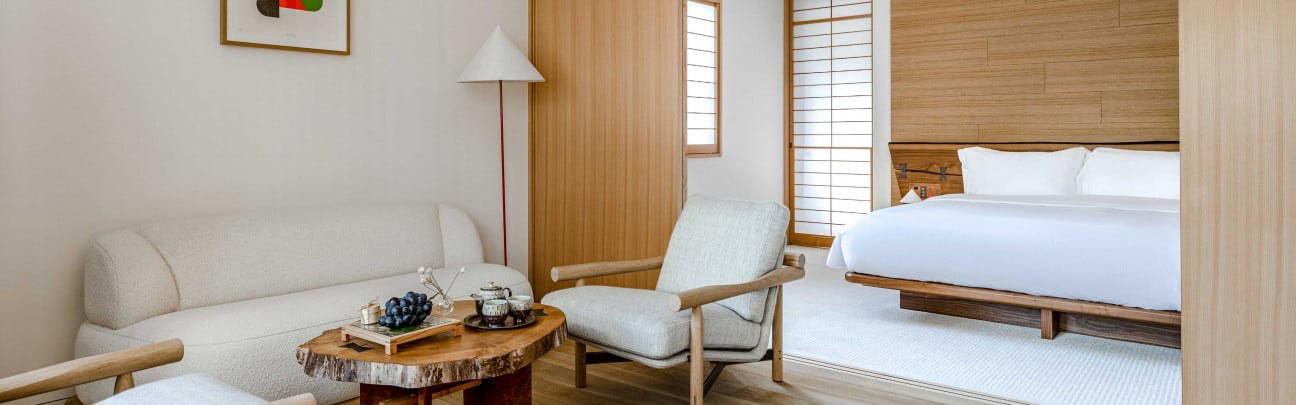
Classic grandeur with marble pillars, understated elegance, ambient lighting, and a tranquil atmosphere praised for cleanliness and comfort.