Farmerhaus Lodge

Michelin Selected
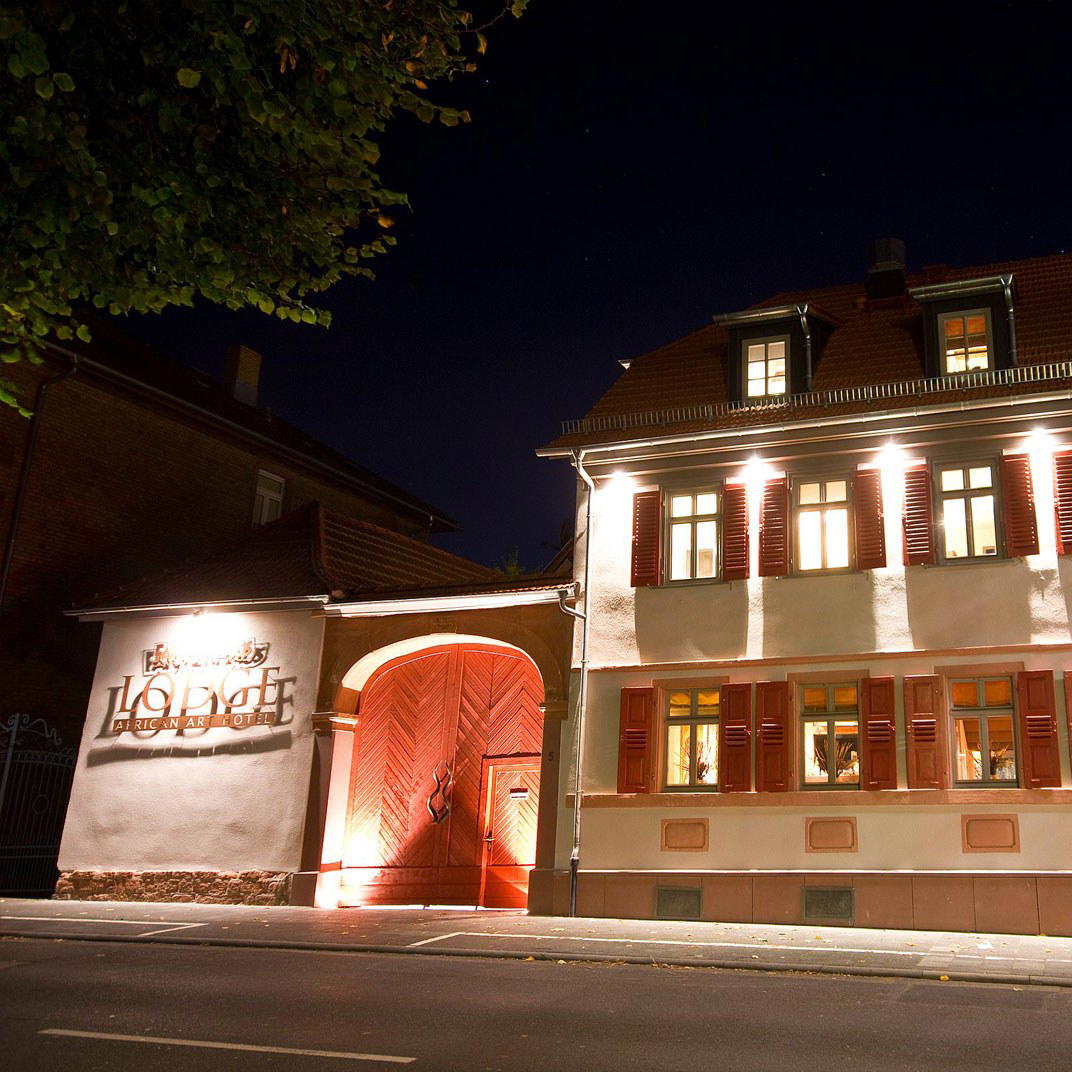
Farmerhaus Lodge in Groß-Umstadt holds a MICHELIN Selected distinction for 2025, placing it among a small cohort of recognised lodging properties in the Odenwald region south of Frankfurt. The property sits outside the major urban hotel circuits, offering a rural counterpoint to city-based stays for travellers exploring Hesse's quieter interior.

Pearl is the En Primeur Club membership app — saves, bookings, and concierge access live there. Same editors, same standards.
- Address
- Carlo-Mierendorff-Straße 5, 64823 Groß-Umstadt, Germany
- Phone
- +49 6078 9307570
- Website
- farmerhaus-lodge.de
- Directions
- Get directions
Rural Hesse on Its Own Terms
Germany's hotel recognition map tends to cluster around the obvious poles: Frankfurt's financial district, Munich's inner ring, Hamburg's waterfront. The MICHELIN Selected Hotels list for 2025 tells a more distributed story. Among its entries is Farmerhaus Lodge in Groß-Umstadt, a small town in the Odenwald foothills roughly 35 kilometres southeast of Frankfurt. That placement is itself an editorial statement. MICHELIN's hotel selection process does not chase scale or brand affiliation; it tracks character, consistency, and a sense of place. A rural lodge in southern Hesse earning that distinction sits in the same conversation as properties far larger in profile and resources, and that asymmetry is worth examining.
For context on what MICHELIN Selected means within the broader tier structure: it sits below the starred MICHELIN Key designations but represents active editorial endorsement rather than passive listing. Properties in this bracket are assessed against hospitality standards, design coherence, and the degree to which a stay delivers something the traveller cannot replicate elsewhere in the same price and geography band. For properties like those in our full Groß-Umstadt guide, that assessment carries weight precisely because the surrounding area offers little competitive noise.
The Architecture of the Rural Lodge Format
The farm-to-lodge conversion is a distinct typology in central European hospitality. It draws from a tradition of agricultural estates repurposed as guest accommodation, a model that has matured significantly over the past two decades. Where early conversions often retained working farm infrastructure at the expense of guest comfort, the current generation tends to resolve that tension more deliberately: structural elements of the original building (timber framing, stone foundations, pitched rooflines) are retained as aesthetic anchors, while interiors are reconfigured around contemporary expectations of space, warmth, and material quality.
The Farmerhaus Lodge name signals this lineage directly. "Farmerhaus" carries the vocabulary of the traditional German farmhouse, the Bauernhaus, which in the Odenwald region typically means half-timbered construction, steeply pitched roofs designed for heavy snowfall at elevation, and an orientation toward the working landscape rather than street-facing presentation. Approaching a property in this mould, the visual sequence is generally the inverse of a city hotel: you read landscape before architecture, architecture before threshold, and the threshold itself is usually modest in scale. What registers first is the agricultural horizon, then the silhouette of the building against it.
This physical grammar matters because it conditions the guest's entire interpretive frame. A stay in a converted farmhouse lodge asks you to calibrate to a slower rhythm from the moment of arrival. The design is working to communicate something about pace and intention before a single hospitality interaction takes place. Properties in this category that get the spatial sequencing right, the approach, the exterior, the entry moment, create an atmospheric compression that urban hotels achieve only with considerable artifice and expense. Those that get it wrong, by over-renovating toward boutique-hotel sameness or under-investing in the transition between outdoor and indoor registers, lose the core proposition.
Where Farmerhaus Lodge Sits in the German Boutique Hotel Map
Germany's recognised boutique and character hotel tier spans a wide stylistic range. At the upper end of the spectrum sit properties like the Althoff Seehotel Überfahrt in Rottach-Egern, the Hotel Traube Tonbach in Baiersbronn, and Schloss Elmau in Elmau, all of which operate at high key counts, carry multiple MICHELIN Keys or dining stars, and price accordingly. Further along the scale, design-led rural properties like Weissenhaus Private Nature Luxury Resort and Söl'ring Hof in Sylt anchor a middle tier defined by landscape integration and editorial curation rather than resort amenity stacking.
Farmerhaus Lodge operates in a different register from all of these. Its competitive set is not the grand Bavarian resort or the North Sea island escape; it is the cluster of independently run, smaller-format rural properties that serve a traveller looking for proximity to a major city, in this case Frankfurt, without the city's density, noise, or pricing floor. The Sofitel Frankfurt Opera and the Fairmont Hotel Vier Jahreszeiten in Hamburg represent the urban grand hotel category; Farmerhaus Lodge is its deliberate spatial opposite, 35 kilometres and an entirely different sensory grammar away.
Other German properties worth cross-referencing for understanding the rural retreat tier include Luisenhöhe in Horben, Gut Steinbach Hotel Chalets Spa in Reit im Winkl, Seezeitlodge Hotel & Spa in Gonnesweiler, and Das Kranzbach Hotel & Wellness Retreat in Kranzbach. Each positions itself around a natural or agricultural setting and a smaller guest count. The MICHELIN Selected distinction that Farmerhaus Lodge carries places it within this recognised cohort rather than outside it.
The Odenwald Context
Groß-Umstadt sits within the Odenwald, a low mountain range that stretches across parts of Hesse, Bavaria, and Baden-Württemberg. The region is less trafficked than the Black Forest or the Bavarian Alps, which means its food and hospitality infrastructure has developed with less external pressure toward tourist-facing standardisation. Wine production around Hessische Bergstraße, the vineyard zone immediately west of the Odenwald, gives the area a credible agricultural identity beyond scenery alone. Travellers arriving from Frankfurt by car reach Groß-Umstadt in under an hour, making it a workable base for exploring both the Odenwald trails and the Bergstraße wine route without the logistical complexity of a longer journey.
For those building a broader German itinerary, other MICHELIN-recognised properties worth considering include Villa Contessa in Bad Saarow, Esplanade Saarbrücken, LA MAISON in Saarlouis, Telegraphenamt in Berlin, BUDERSAND Hotel in Hörnum, Seesteg Norderney, Breidenbacher Hof Düsseldorf, Der Öschberghof in Donaueschingen, Excelsior Hotel Ernst in Cologne, and Spa & Golf Hotel Weimarer Land in Blankenhain. For travellers extending beyond Germany, reference points in the same quality tier include Badrutt's Palace Hotel in St. Moritz, Hôtel de Paris Monte-Carlo, and The Fifth Avenue Hotel in New York City.
Planning a Stay
Farmerhaus Lodge is located at Carlo-Mierendorff-Str. 5, Groß-Umstadt. Travellers arriving from Frankfurt can reach Groß-Umstadt by regional rail or car; the town is well-connected to the Frankfurt S-Bahn network, and the lodge's address in the town means no extended rural transfer is required on arrival. The MICHELIN Selected designation for 2025 provides an independent quality signal, but travellers should verify current availability and rate structure through the property directly.
A Quick Peer Check
Comparable venues nearby, for context on price, style, and recognition.
| Venue | Cuisine | Price | Awards | Notes |
|---|---|---|---|---|
| Farmerhaus LodgeThis venue — the venue you are viewing | Farmhouse-turned-boutique with African colonial influences | $100–200 | Michelin Selected | Not listed |
| Waldhaus Ohlenbach | Family-run wellness hotel in country house style on mountain hillside | Not listed | Michelin Selected | Ohlenbach |
| me and all hotel Ulm | Modern urban lifestyle hotel blending old and new. | $100–200 | Michelin Selected | Bahnhofplatz |
| The Westin Leipzig | Modern high-rise business hotel fusing local history with contemporary luxury. | Not listed | Michelin Selected | city centre |
| Arthotel Heidelberg | Boutique design hotel blending historic facade with modern puristic interiors. | $100–200 | Michelin Selected | Old Town |
| ATLANTIC Hotel Frankfurt am Main | Modern 4-star superior high-rise business hotel with event facilities and skyline-facing leisure spaces. | $100–200 | Not listed | Europaviertel |
Recognition history
Dated appearances from independent guides and award organizations, with the underlying list record or original source where available.
Michelin Selected
Michelin
Continue exploring
More in Groß-Umstadt
Hotels in Groß-Umstadt
Browse all →
Bars in Groß-Umstadt
Browse all →

Restaurants in Groß-Umstadt
Browse all →

Details
- Rustic
- Cozy
- Modern
- Scenic
- Romantic Getaway
- Weekend Escape
- Garden
- Terrace
- Wi Fi
- Free Parking
- Garden
- Room Service
- Pet Friendly
- Garden
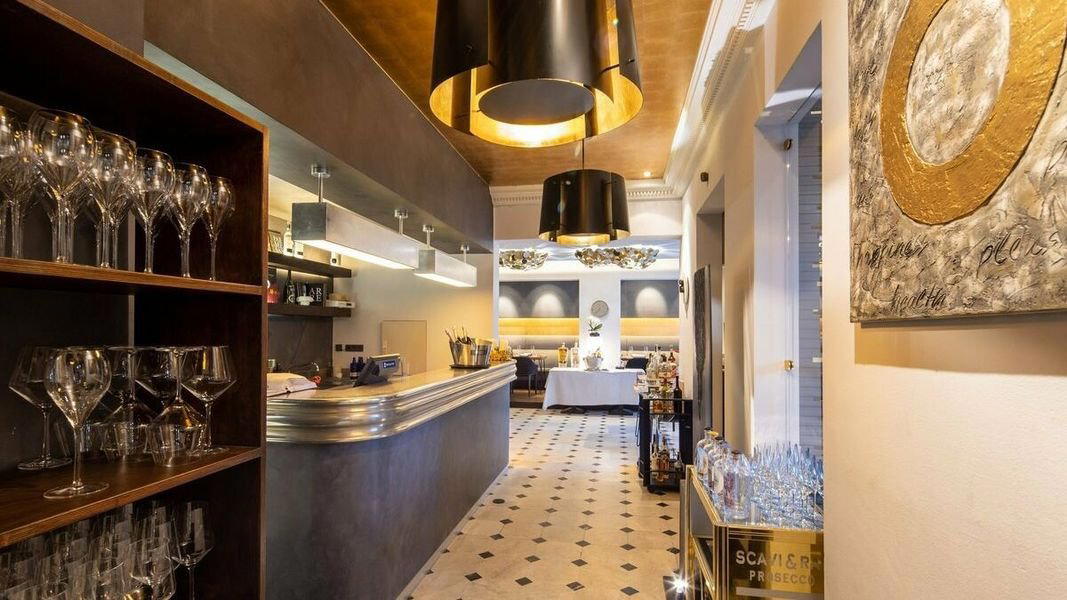
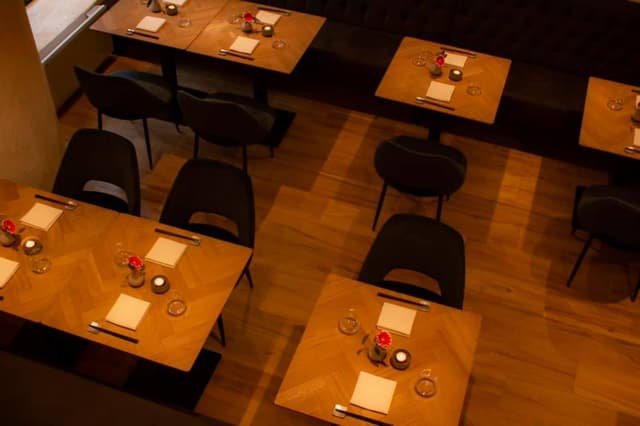
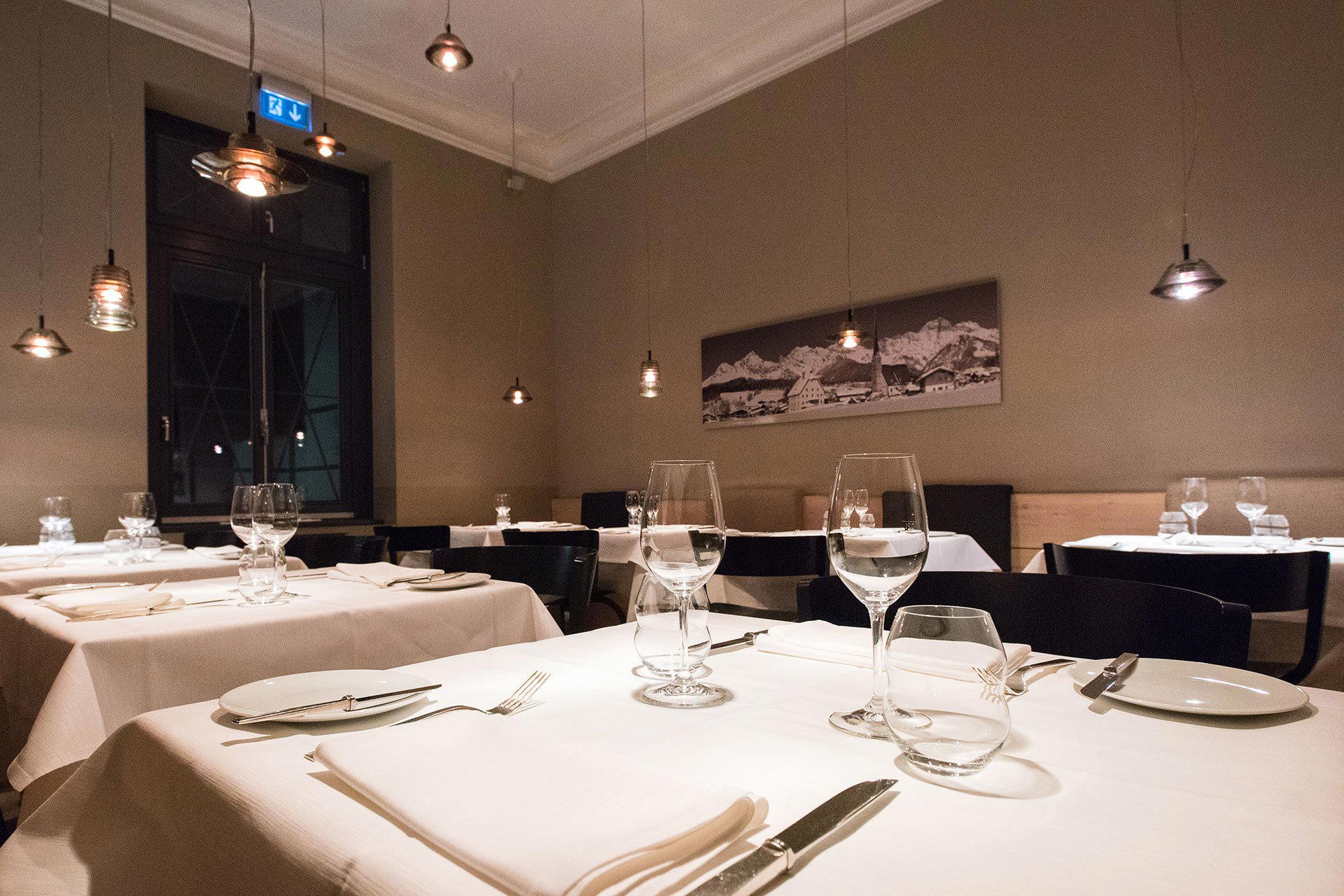
Warm African lodge ambience with modern design touches, bold fabrics, colors, and rustic wood accents creating a mysterious, peaceful retreat