One of the Rheingau's most historically charged wine estates, Kloster Eberbach occupies a Cistercian monastery complex in Eltville am Rhein that has shaped German Riesling culture since the twelfth century..

Pearl is the En Primeur Club membership app — saves, bookings, and concierge access live there. Same editors, same standards.
- Address
- Kloster Eberbach, 65346 Eltville am Rhein
- Phone
- +49 6723 9178100
- Website
- kloster-eberbach.de
- Directions
- Get directions
Where Stone and Slate Define the Wine
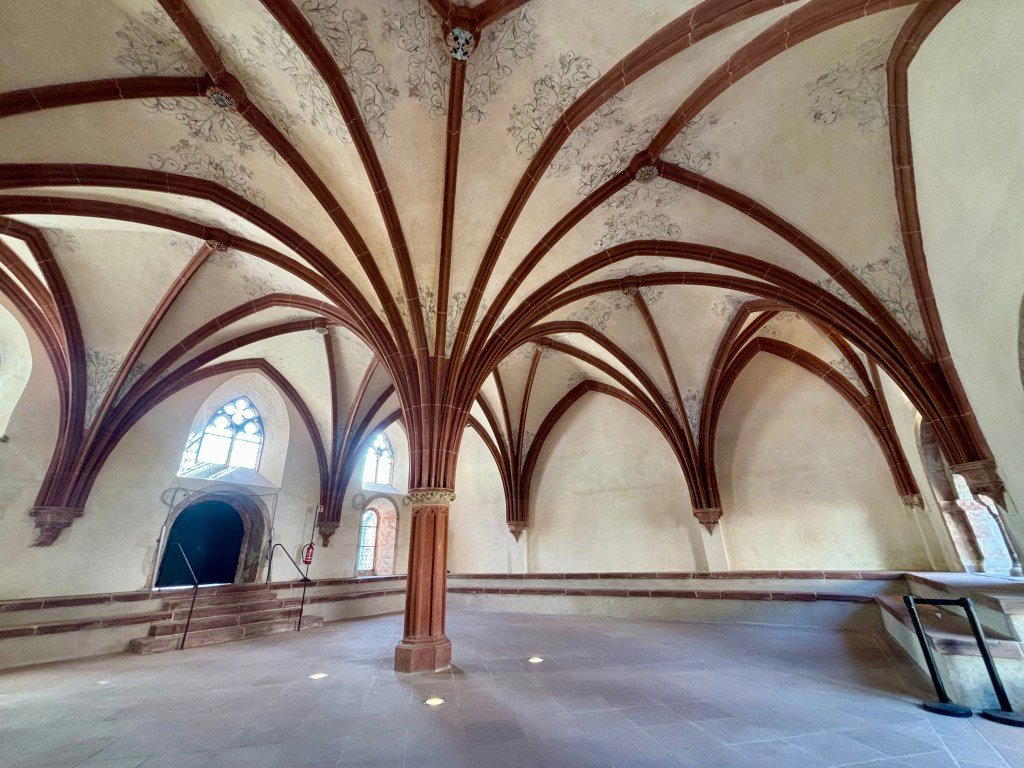
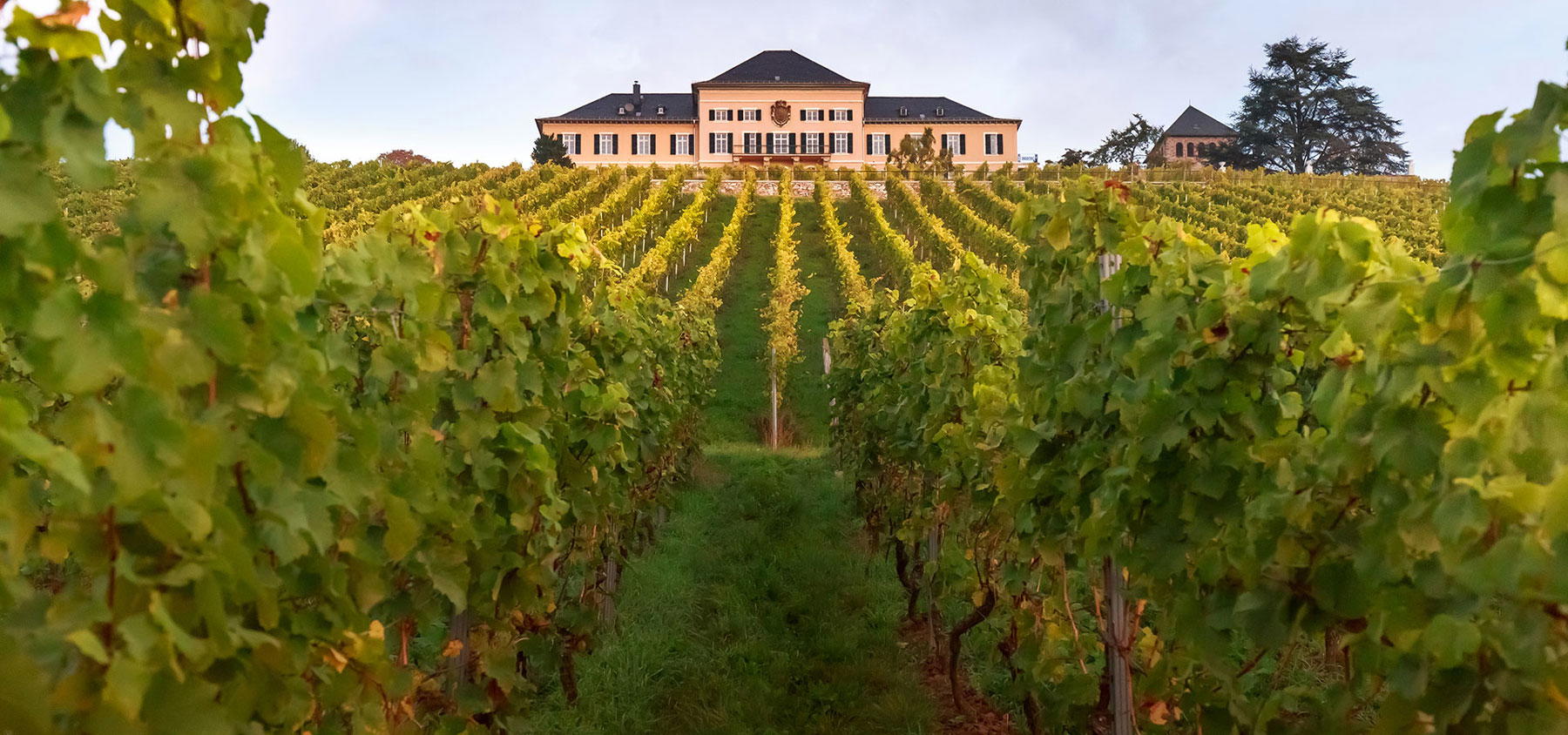
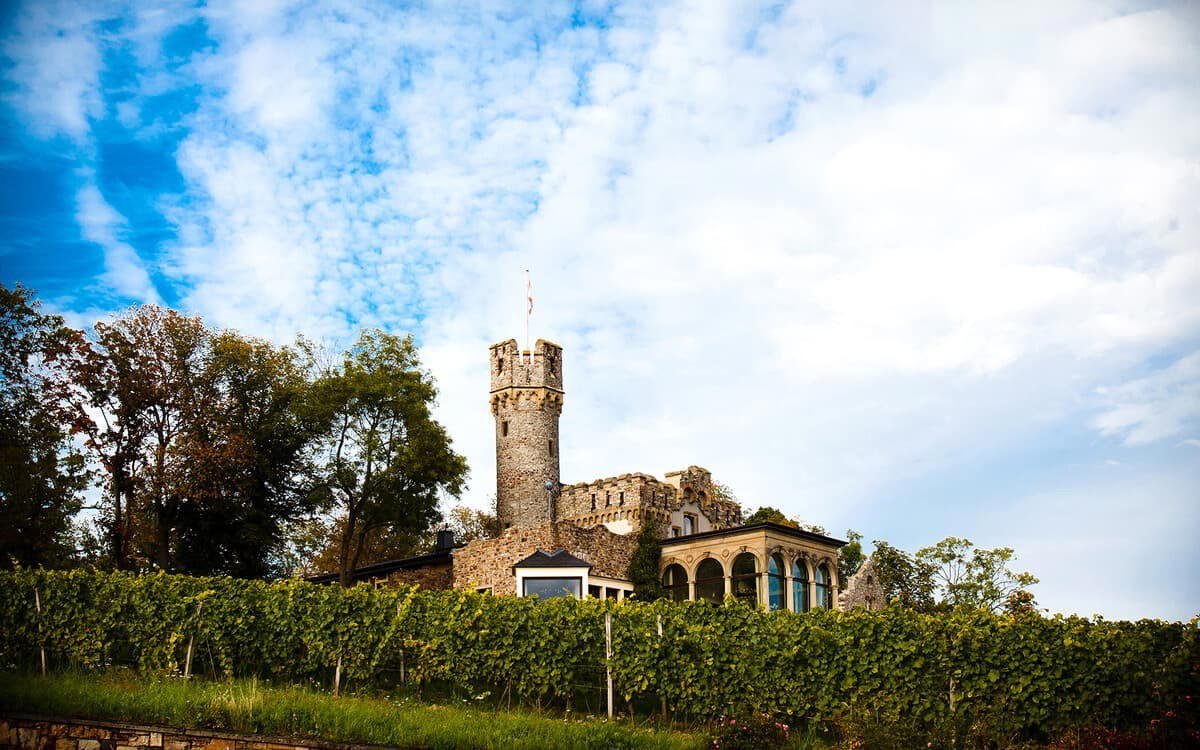
Approaching Kloster Eberbach through the Rheingau forest, the monastery materialises before any vineyard does. The twelfth-century Cistercian complex sits in a wooded valley above Eltville am Rhein, its Romanesque nave and vaulted cellars suggesting an institution built for permanence rather than commercial convenience. That architectural logic was always inseparable from the agricultural one: the monks who cleared these slopes understood, through generations of observation, that proximity to the Rhine, a hillside aspect facing south and southeast, and the region's particular combination of quartzite, slate, and phyllite soils produced Riesling of a character found nowhere else in Germany. The site doesn't merely host wine production; it is a living argument about what terroir means in a northern European context.
The Rheingau occupies a geographically anomalous stretch of the Rhine, where the river runs east to west rather than north to south. That reorientation places the north bank, where Kloster Eberbach's vineyards spread across the hillside, in direct southern exposure. The Taunus mountains to the north act as a windbreak. The Rhine below reflects heat upward. The result is a microclimate that allows Riesling to ripen fully even in marginal vintages, while retaining the acidity that gives the region's wines their structural longevity. This interplay of geography and climate has been documented in monastic records stretching back to the twelfth century, making Kloster Eberbach one of the oldest continuous records of viticultural observation anywhere in the wine world.
The Cistercian Logic of Site Classification
German wine's formal hierarchy of Grosse Lage and Erste Lage classifications under the VDP (Verband Deutscher Prädikatsweingüter) has deep medieval antecedents, and Kloster Eberbach sits at the root of that tradition. Cistercian monks operated on the principle that observation and record-keeping were forms of devotion, and their systematic mapping of which parcels produced superior wine established a proto-classification system centuries before Burgundy codified its own. The Steinberg vineyard, enclosed by a stone wall built in the twelfth century and still standing, is the Rheingau's most legible surviving expression of that logic: a single, walled site selected for its specific soil and exposure, managed as a unified block, its output treated as categorically distinct from wine produced on lower or less favourable ground.
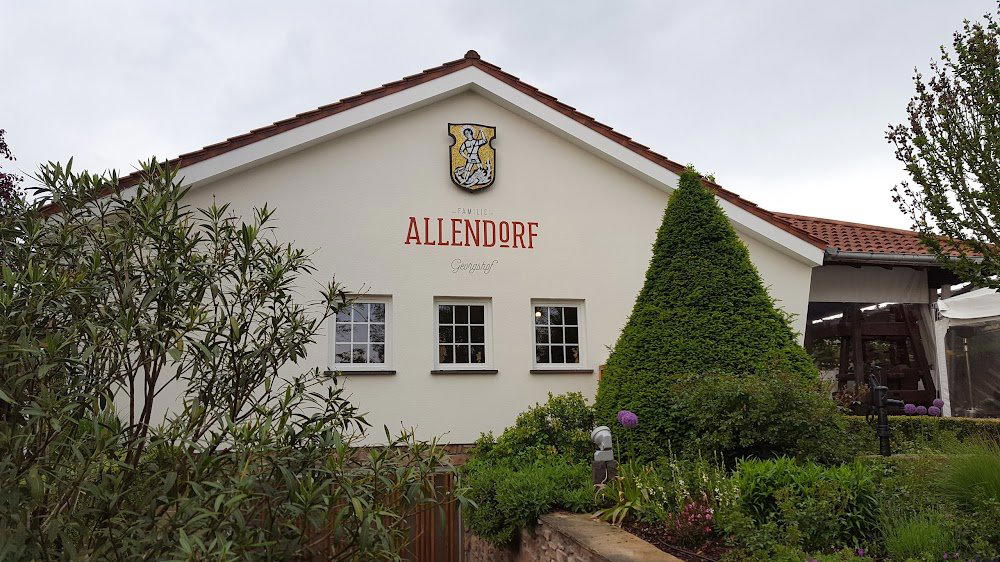
That approach aligns the estate with the broader German tradition of site-specific viticulture that distinguishes producers like Weingut Georg Breuer in Rüdesheim am Rhein and Weingut Allendorf in Oestrich-Winkel, both of which operate within the same Rheingau arc. The shared commitment to named-site Riesling across these estates reflects a regional philosophy that land, not label, is the primary unit of quality. Kloster Eberbach, as the oldest continuous institutional winemaker in the area, represents the historical origin point of that philosophy rather than simply one practitioner among many.
Steinberg and the Grammar of Rheingau Riesling
The Steinberg vineyard remains the clearest case study for understanding how the Rheingau's soils express themselves through Riesling. The site's slate and quartzite subsoil retains heat during the day and releases it at night, moderating the diurnal temperature swing in a way that preserves aromatic complexity while supporting even ripening. Riesling grown on such mineral-dense, low-fertility soils tends toward restraint: lower yields, higher natural acidity, wines that develop rather than simply age. The contrast with Riesling from loess-heavy or alluvial ground is substantial, and tasting across Kloster Eberbach's site-specific offerings demonstrates that gradient in a single flight.
This mineral-driven character connects the estate to a broader conversation happening across Germany's premium Riesling regions. In the Mosel, producers like Weingut Fritz Haag in Brauneberg, Weingut Clemens Busch in Pünderich, and Weingut Heymann-Löwenstein in Winningen work with steep slate slopes where the terroir argument is similarly geologically concentrated. The Rheingau's warmer, broader hillside geology produces a structurally different result: more body, often more texture, the acidity present but integrated rather than razor-edged. Understanding where Kloster Eberbach sits within that regional comparison requires placing its Steinberg Rieslings alongside Mosel slate wines and Pfalz sandstone-driven examples from estates like Weingut A. Christmann in Neustadt an der Weinstraße, Weingut Bassermann-Jordan in Deidesheim, or Weingut Dr. Bürklin-Wolf in Wachenheim an der Weinstraße.
A Regional Network of Excellence
Weingut Balthasar Ress, based in Eltville itself, shares the same immediate terroir and offers a useful local comparison. Further afield, Franken-based institutions like Weingut Bürgerspital zum Heiligen Geist in Würzburg provide a parallel model of historically grounded, estate-scale winemaking with deep regional roots. The Rheinhessen offers its own premium tier through producers such as Weingut Battenfeld-Spanier in Hohen-Sülzen, whose limestone-driven approach contrasts with the slate and quartzite logic of the Rheingau hillsides. Tasting across these producers, rather than treating any single estate as self-contained, is the most instructive way to map what German terroir actually means across its principal regions.
For visitors to the area, our full Eltville restaurants guide covers the broader food and wine scene across the town and the surrounding Rheingau villages, including context on where to eat before or after a cellar visit.
Planning a Visit
Kloster Eberbach is located at Kloster Eberbach, 65346 Eltville am Rhein, in the forested hills above the Rhine valley. The estate is accessible by car from Frankfurt in under an hour, and by a combination of regional rail to Eltville followed by a short drive or taxi up into the valley. The monastery complex itself functions as a cultural destination as well as a wine estate, and visit durations vary depending on whether the focus is cellar tours, tastings, or the broader architectural experience of the medieval buildings.
The wider Rheingau wine calendar includes the Rheingau Musik Festival in summer and various harvest events in September and October, when access to individual producers and special bottlings is often easier to arrange. First-time visitors often underestimate how much ground the region covers; pairing a Kloster Eberbach visit with stops at other Rheingau estates and a meal in the valley makes for a better-structured day than attempting to cover multiple regions in a single trip.
That recognition reflects the estate's combination of historical significance, site quality, and continued production relevance rather than novelty. For anyone building a serious understanding of how German Riesling relates to its land, a visit here functions less as a luxury experience and more as a primary source: the cellars, the walled vineyard, and the wines themselves constitute the evidence base for a set of ideas about terroir, classification, and longevity that has shaped how the entire region thinks about wine.
Comparable Venues
Comparable venues nearby, for context on price, style, and recognition.
| Venue | Cuisine | Price | Awards | Notes |
|---|---|---|---|---|
| Kloster EberbachThis venue — the venue you are viewing | Riesling, Pinot Noir | $20–30 | Not listed | Not listed |
| Weingut Balthasar Ress | Riesling, Pinot Noir | $20–30 | Falstaff Winery - 3 Stars | Hattenheim |
| Weingut Eric Manz | Riesling, Spätburgunder | $30–50 | Not listed | Weinolsheim |
| Evening Land Vineyards | Winery | $30–50 | Not listed | Salem |
| Domdechant Werner’sches Weingut | Riesling, Spätburgunder | $20–30 | Falstaff Winery - 3 Stars | Hochheim am Main |
| Weingüter Wegeler | Riesling, Pinot Noir | $50–100 | Falstaff Winery - 4 Stars | Oestrich-Winkel |
Continue exploring
More in Eltville
Wineries in Eltville
Browse all →
Bars in Eltville
Browse all →

Restaurants in Eltville
Browse all →
Details
- Historic
- Elegant
- Scenic
- Classic
- Well Known
- Wine Education
- Special Occasion
- Group Outing
- Historic Building
- Vineyard Tour
- Cave Tasting
- Barrel Room
- Vineyard
- Garden
- Riesling
- Pinot Noir
- Chardonnay
- Still White
- Still Red
- Cave Tasting
- Historic Cellar Tasting
- English
- German
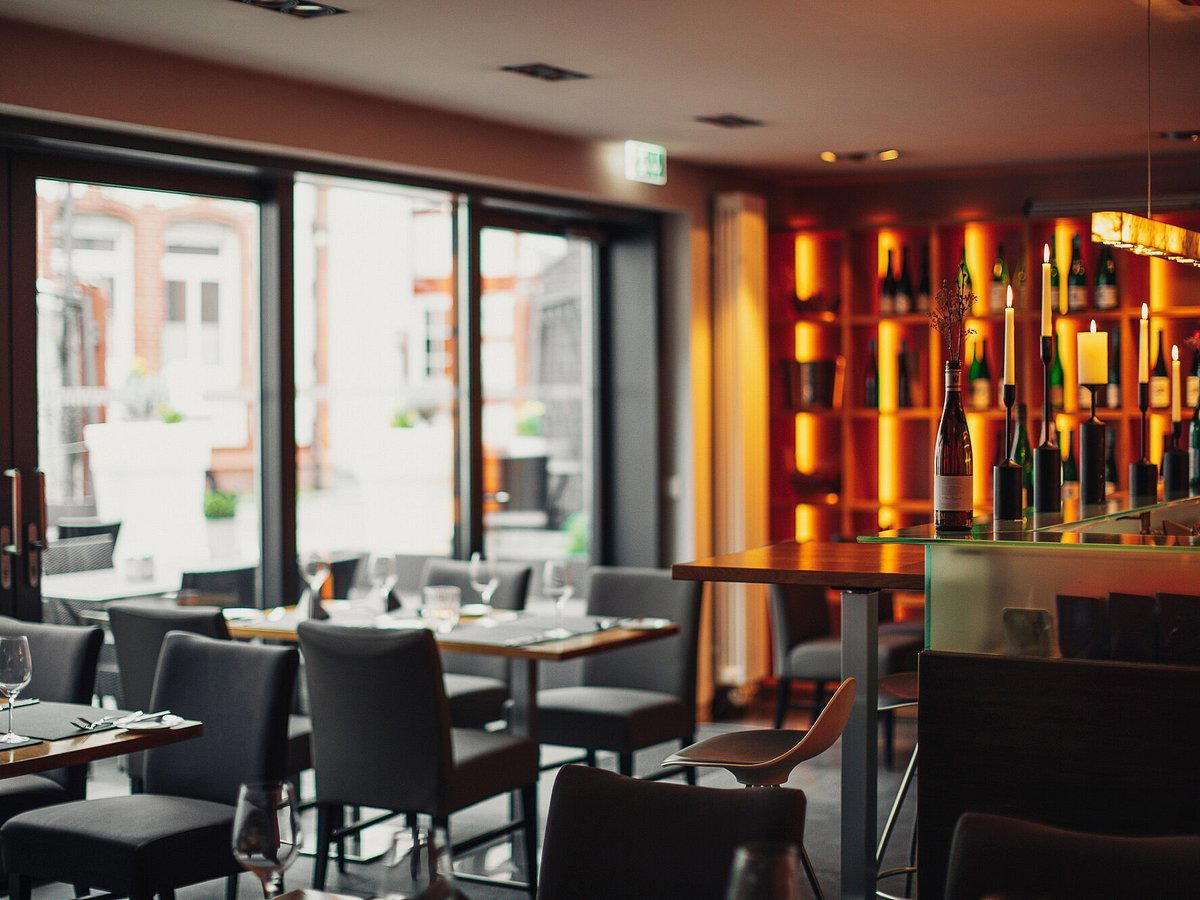
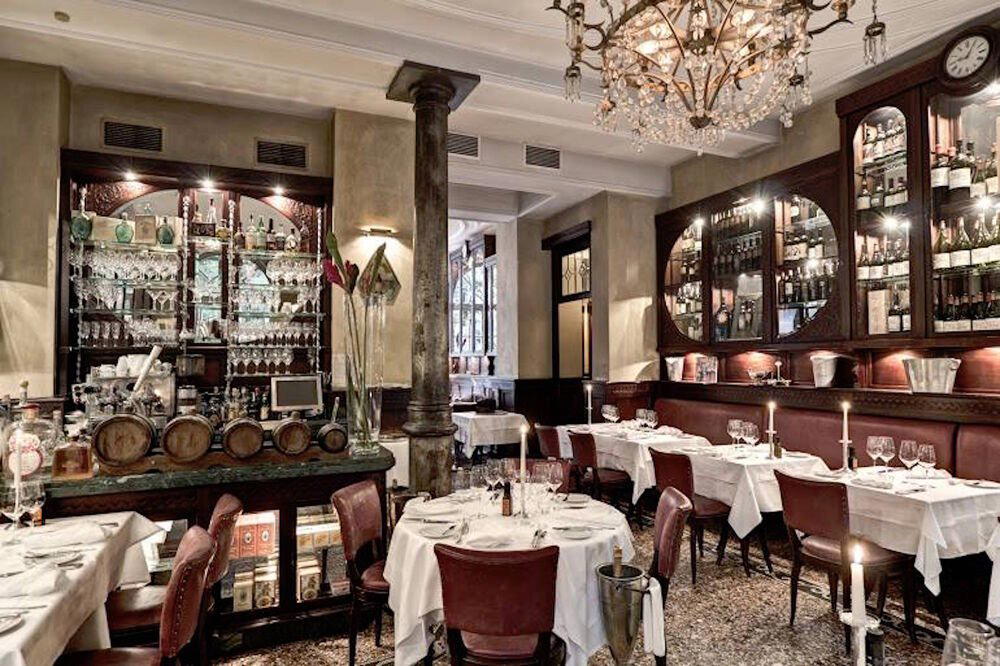
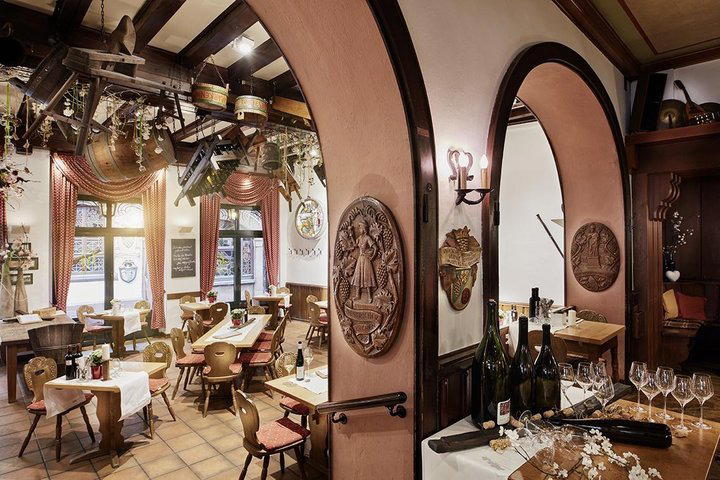
Atmospheric stone architecture blending Romanesque simplicity and Gothic grandeur, with cool, dimly lit historic cellars evoking medieval monastic life amid vineyard surroundings.