Esplanade Saarbrücken

A converted 19th-century school building on Max Ophüls Square in Saarbrücken's Nauwieser district, Esplanade offers 16 rooms that reference modernist design touchstones from Bertoia to Le Corbusier. At around $286 per night, the property also houses a two-Michelin-starred restaurant under Chef Silio del Fabro, earning Michelin 2 Keys recognition in 2024, an unusual concentration of serious credentials for a city of this scale.
Pearl is the En Primeur Club membership app — saves, bookings, and concierge access live there. Same editors, same standards.
- Address
- Nauwieserstraße 5, 66111 Saarbrücken
- Phone
- +49 681 84499120
- Website
- esplanade-sb.de
- Directions
- Get directions
 Saves & bookings on Pearl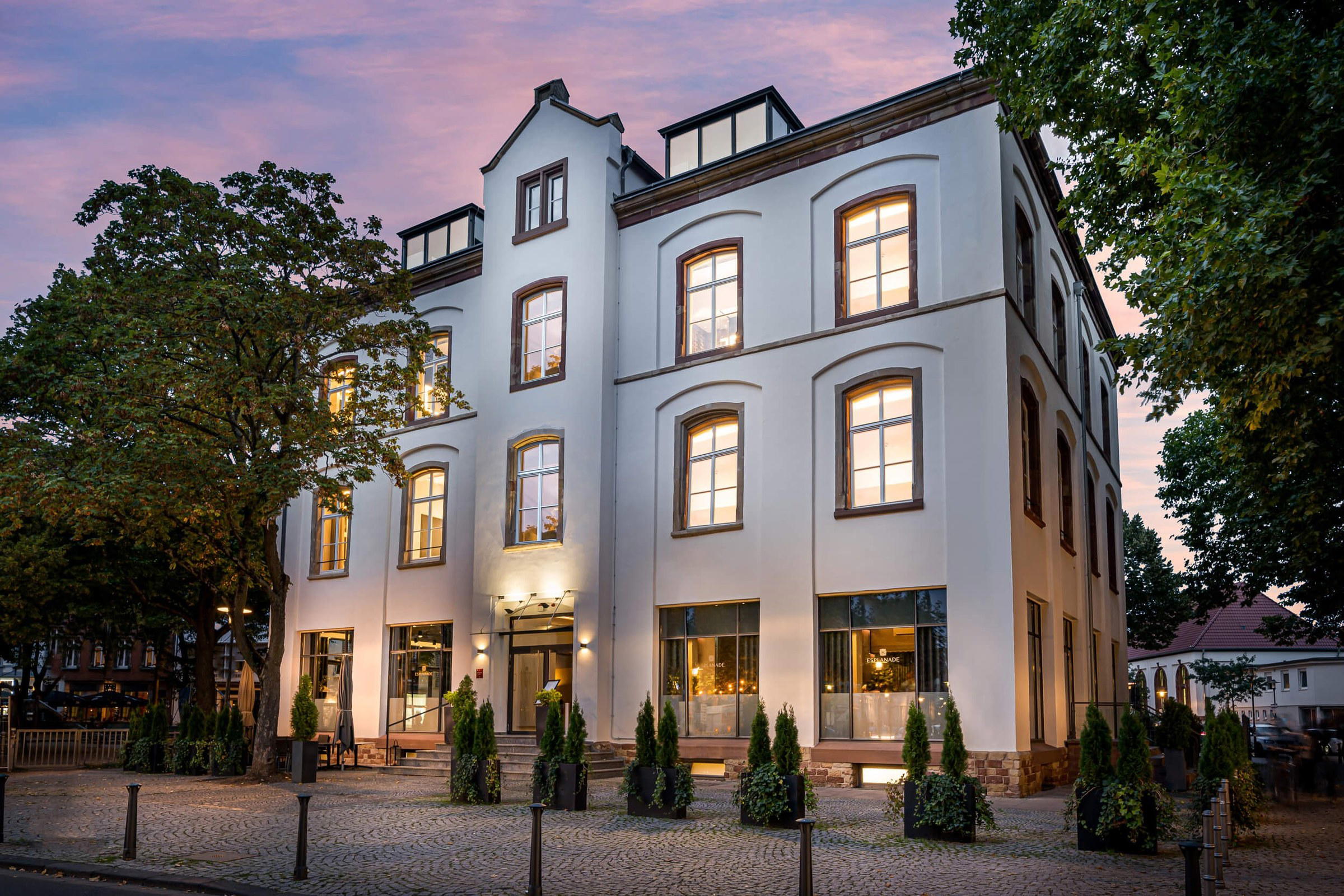
A Converted Schoolhouse and What It Says About Boutique Hotels in 2020s Germany
The broader shift in European boutique hospitality over the past decade has been unmistakable: adaptive reuse of civic and institutional buildings, stripped of their original function and recast as design-forward small hotels, has become one of the more reliable formats for serious independent operators. Former banks, convents, post offices, and schools have all entered the rotation. What makes Esplanade Saarbrücken worth noting is where this particular conversion has landed, geographically and conceptually. Saarbrücken, the capital of Germany's smallest state, is not the city that typically anchors conversations about German luxury hospitality. That conversation usually runs through Hamburg, Munich, or Berlin, where properties like the Fairmont Hotel Vier Jahreszeiten in Hamburg or the Mandarin Oriental Munich set the reference points. Esplanade operates on a different register entirely, which is part of what makes it interesting.
The Building and Its Design Logic
Esplanade occupies a 19th-century Gründerzeit school building on Max Ophüls Square in Saarbrücken's Nauwieser district, a neighbourhood that sits just east of the riverside town centre and carries the kind of atmospheric density that older German residential quarters tend to develop over generations. The Gründerzeit period, roughly the three decades following German unification in 1871, produced a particular strain of civic and residential architecture characterised by heavy ornamentation, high ceilings, and a confidence in permanence that reads clearly in the building's exterior today.
The renovation has taken a deliberate position on how to hold that exterior. Rather than softening the original structure into something generically contemporary, the design approach keeps the Gründerzeit bones visible while pushing the interiors toward a specific modernist reference set. The names invoked are significant: Harry Bertoia and Le Corbusier represent different poles of 20th-century design thinking, Bertoia's wire and sculptural metalwork, Le Corbusier's functionalist geometry, and placing both within the same interior signals a curation that has editorial intent rather than mere decoration. This is not a hotel that has sourced period-appropriate antiques and called it character. It has made a considered argument about design lineage.
For the broader category of design-led boutique conversions in Germany, Esplanade's approach sits closer to the cerebral end of the spectrum. Compare it with something like Bülow Palais in Dresden, where the reference frame is Baroque grandeur, or Hotel de Rome in Berlin, where the Beaux-Arts bank building provides the structural drama. Esplanade's drama is quieter and more internally directed.
Sixteen Rooms and the Compact-Hotel Argument
Sixteen rooms is a specific kind of constraint. It places Esplanade firmly in the category of hotels where the ratio of staff attention to guest is high and the property's personality is not diluted by scale. The German boutique segment has developed a number of properties in this footprint, Hotel Ketschauer Hof in Deidesheim runs a similarly tight operation, as does LA MAISON in Saarlouis, which is close enough geographically to function as a regional peer. At 16 rooms, operational consistency is achievable in a way that becomes genuinely difficult at 50 or 80 keys.
The rooms themselves are described as stopping short of full luxury-hotel opulence, a distinction worth preserving. Esplanade is priced at around $286 per night and positions itself as quietly luxurious rather than maximalist. Nespresso machines and rain showers represent the comfort floor here, which is appropriate for the tier. The property earned Michelin 2 Keys recognition in 2024. Two Keys at this room count and price point is a meaningful signal about consistency and the overall guest experience.
The Restaurant as Anchor
Within European boutique hospitality, the hotel-restaurant relationship tends to fall into one of two patterns. Either the restaurant is a service amenity, good enough not to embarrass the rooms, or it is the primary reason for the property's existence, with the accommodation almost incidental. Esplanade Saarbrücken belongs unambiguously to the second category. The restaurant, which shares the hotel's name and operates under Chef Silio del Fabro, holds two Michelin stars. In a 16-room property at this price level, two Michelin stars at the attached restaurant is not a minor detail. It reframes what the hotel is: not primarily a place to sleep in Saarbrücken, but a destination built around a serious kitchen that happens to offer beds.
This structure has precedent across Germany. Hotel Bareiss in Baiersbronn built its reputation around a similar dynamic, where the culinary program drives the destination argument. The difference at Esplanade is compression: far fewer rooms, a city rather than a resort context, and a price point that keeps the experience accessible relative to the star-count. For guests focused primarily on the restaurant, the accommodation becomes an obvious extension rather than a secondary consideration.
Saarbrücken and the Case for Secondary Cities
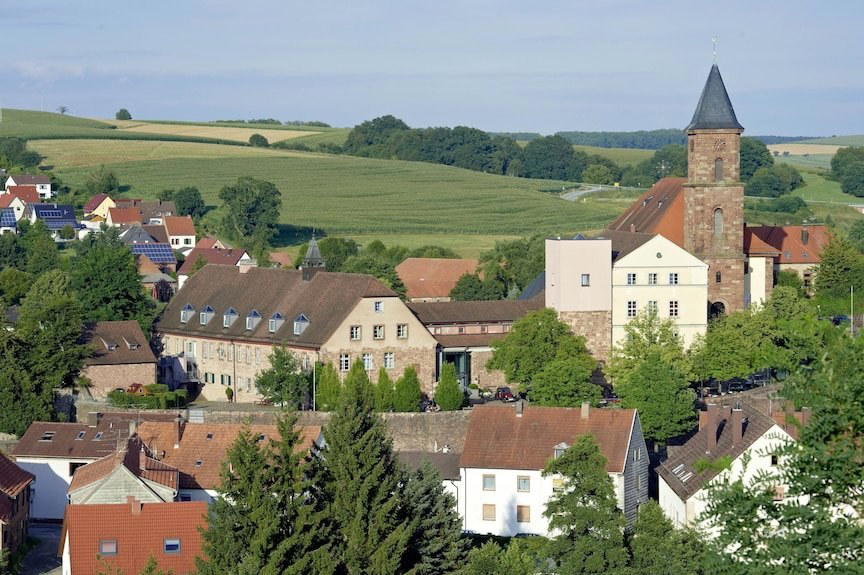
The more interesting editorial question that Esplanade raises is about Saarbrücken itself. Germany's secondary and tertiary cities have hosted serious hospitality projects with growing frequency over the past decade, not only boutique hotels but fine dining programs that would read credibly in any major European capital. The Saar region's proximity to France (the French border sits within easy reach) has historically inflected the local food culture with cross-border influences that do not apply in the same way in comparable-sized German cities further east or north. That context matters when evaluating why a two-starred kitchen might find an audience in a city of this scale.
For visitors approaching Saarbrücken as a destination rather than a transit point, the Nauwieser district is a reasonable base. It has the character of an established residential neighbourhood, denser and more atmospheric than the administrative centre, while remaining close enough to the riverside to access the town's principal sights without inconvenience. Properties like Villa Contessa in Bad Saarow or Weissenhaus Private Nature Luxury Resort demonstrate how German boutique properties have developed distinct regional identities outside the major metros; Esplanade participates in that pattern from a border-region perspective.
Planning a Stay
At 16 rooms, availability can be limited, particularly around weekends. Anyone intending to dine at the restaurant on the same night as their stay should reserve both in advance. The hotel's address, Nauwieserstraße 5, 66111 Saarbrücken, places it within the Nauwieser district, walkable from the town centre. For those building a wider itinerary through the region's accommodation options, Althoff Seehotel Überfahrt in Rottach-Egern, Schloss Elmau Luxury Spa Retreat & Cultural Hideaway in Elmau, and Breidenbacher Hof Düsseldorf represent the broader German premium tier that provides useful comparison. Further afield, Aman Venice and Aman New York set the international reference point for what boutique-scale luxury looks like at its most capital-intensive, context that clarifies exactly where Esplanade has chosen to position itself.
Side-by-Side Snapshot
Comparable venues nearby, for context on price, style, and recognition.
| Venue | Cuisine | Price | Awards | Notes |
|---|---|---|---|---|
| Esplanade Saarbrücken | Chic boutique in renovated historic school building with modernist interiors. | $$$$ | Michelin 2 Key | Nauwieser |
| Der Öschberghof | Modern luxury golf resort in the Black Forest | $$$$ | Michelin 2 Key | Donaueschingen |
| Excelsior Hotel Ernst | Grand European heritage hotel blending 160+ years of tradition with contemporary luxury and modern amenities. | $$$$ | Michelin 2 Key | Altstadt/Nord |
| LA MAISON | Historic villa with modern extension and guest house; design-forward boutique hotel emphasizing architectural character and contemporary comfort. | $$$$ | Michelin 2 Key | Saarlouis city center |
| Seesteg Norderney | luxury beachfront boutique in historic building | $$$$ | Michelin 2 Key | beachfront |
| Gut Steinbach Hotel Chalets Spa | rustic country house with modern wellness chalets | $$$$ | Michelin 2 Key | Reit im Winkl |
Recognition history
Dated appearances from independent guides and award organizations, with the underlying list record or original source where available.
Michelin 2 Keys
Michelin
Michelin 2 Keys
Michelin
Continue exploring
More in Saarbrücken
Hotels in Saarbrücken
Browse all →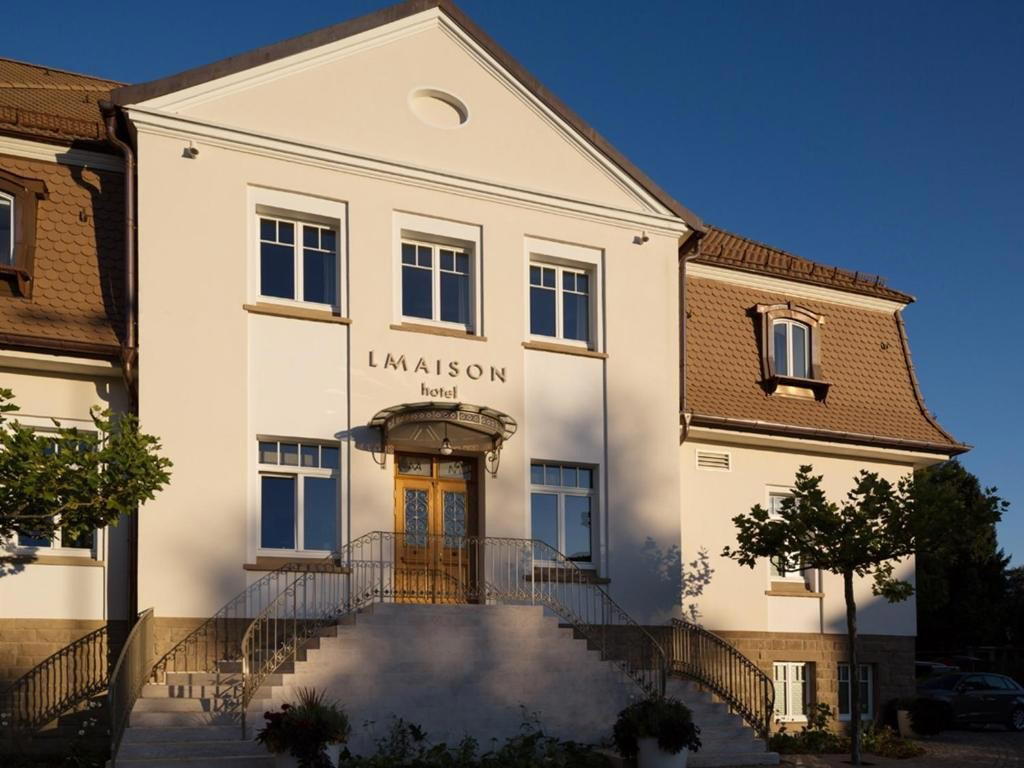
Bars in Saarbrücken
Browse all →
Restaurants in Saarbrücken
Browse all →
At a Glance
- Modern
- Elegant
- Sophisticated
- Intimate
- Romantic Getaway
- Business Trip
- Celebration
- Historic Building
- Design Destination
- Wi Fi
- Room Service
- Concierge
- Restaurant
- Bar
- Wi Fi
- Room Service
- Concierge
- Restaurant
- Bar
Sophisticated and relaxing with precise modern design, soundproofed rooms, and a quiet, comfortable atmosphere praised in guest reviews.