Gut Steinbach Hotel Chalets Spa


2 Michelin Keys · Relais Chateaux Award
Set on a high plateau in the Bavarian Alps, Gut Steinbach Hotel Chalets Spa operates as a certified organic farm and mountain retreat in one of Germany's quieter Alpine corners. Rates start from US$233 per night across 60 rooms, suites, and chalets, with a 21,500-square-foot spa anchoring the wellness offer.

Pearl is the En Primeur Club membership app, where members save venues, book tables and use the concierge.
Where the Bavarian Alps Meet Considered Design
Arriving at Gut Steinbach requires commitment. The property sits on a high plateau above Reit im Winkl, a small Alpine town in the Chiemgau region, accessible from Salzburg W. A. Mozart International Airport (roughly 64 km) or from Munich International (approximately 141 km), with the nearest rail connection at Prien am Chiemsee, around 32 km away. That geographic remove is not incidental to the experience; it shapes it. The Bavarian Alps have long drawn visitors seeking distance from urban noise, and properties that succeed here tend to be ones that lean into the terrain rather than impose on it. Gut Steinbach belongs to that category.
When the current ownership acquired an aging hotel on this site in 2011, the design brief was not to build something new so much as to restore coherence to a place already shaped by its surroundings. What followed was a rethinking of the main building and the construction of a collection of alpine chalets across the grounds, work carried out by local craftsmen using native materials. The result is a property that reads as architecturally grounded rather than transplanted. Across Germany's premium hotel tier, that distinction matters: compare the Alpine rural approach here with the grand urban formality of Fairmont Hotel Vier Jahreszeiten in Hamburg or the civic grandeur of Hotel de Rome in Berlin, and Gut Steinbach occupies an entirely different register.
The Architecture of the Main Building
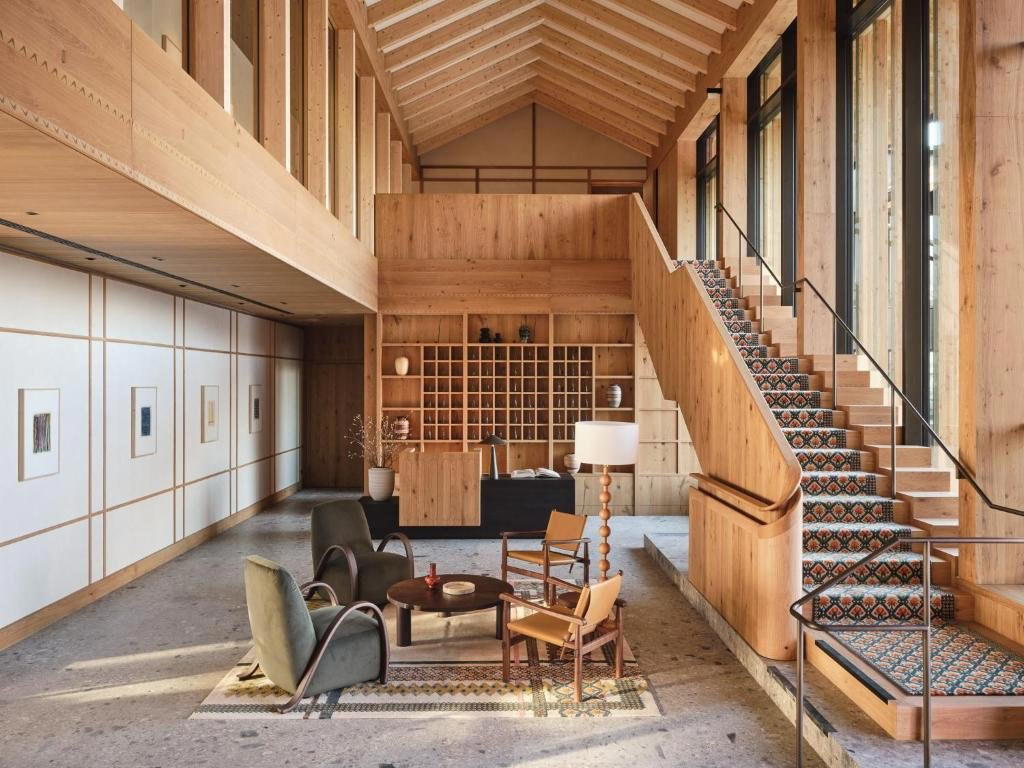
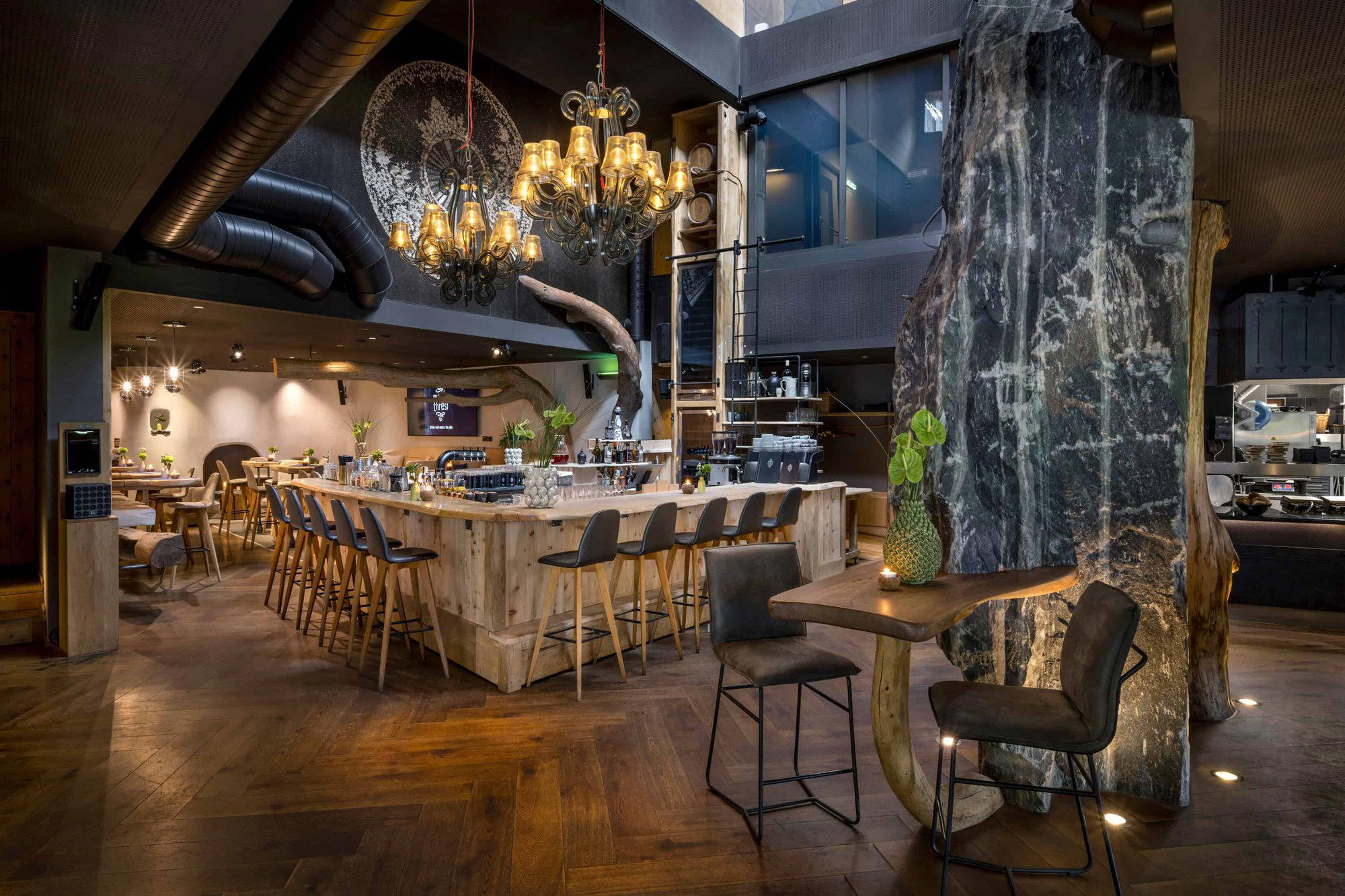
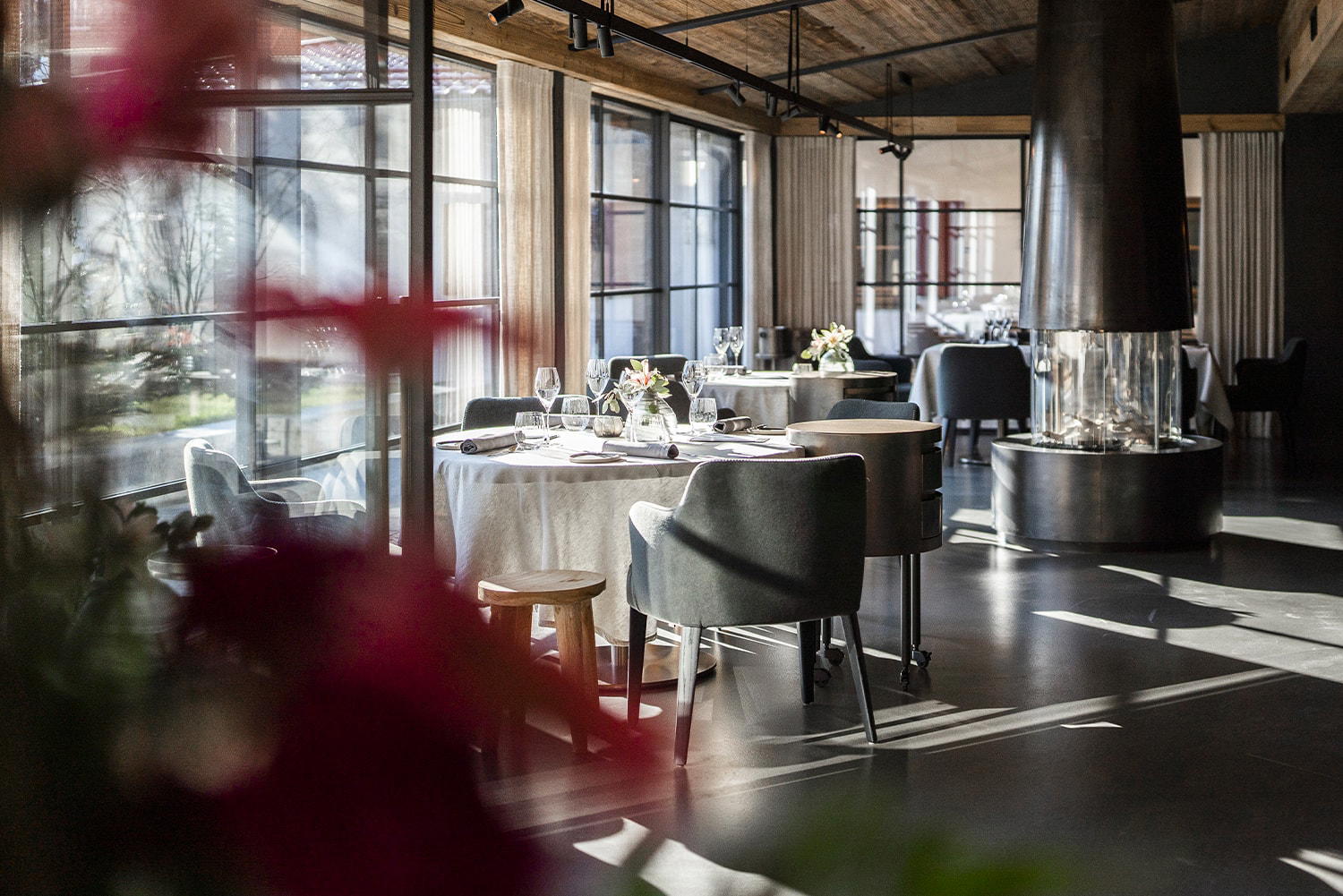
The main building's interior language is defined by two materials in productive tension: native timber and large-format glass. Walls and ceilings lined in local wood bring warmth and acoustic softness to the spaces, while floor-to-ceiling glass panels open the interior toward the surrounding plateau and its mountain backdrop. The fireplace bar operates as a social anchor, a space that functions in the way Alpine fireplace rooms have always functioned, as a gathering point after physical exertion in cold air, though here the furnishings read more contemporary than rustic-heritage.
The room aesthetic throughout the main building is described as rustic-chic with a hunting-inspired sensibility. This is a design language common across premium Bavarian mountain properties, but execution separates the better examples from the formulaic ones. The 60-room inventory includes rooms, suites, and the separate chalet accommodations, giving the property a range of spatial experiences within a single site. Rates begin from US$233 per night, placing Gut Steinbach in a mid-to-upper bracket for the region that reflects its certification status, spa infrastructure, and 2024 Michelin 2 Keys recognition, an award that signals the guide's assessment of hospitality quality rather than dining, making it a meaningful benchmark for the overall guest experience.
For a sense of how the Chiemgau and wider Bavarian Alpine hotel tier is structured, Kempinski Hotel Berchtesgaden represents the international luxury-brand end of the spectrum, while Schloss Elmau Luxury Spa Retreat & Cultural Hideaway in Elmau occupies the design-led cultural retreat tier. Gut Steinbach sits closer to Schloss Elmau's independent, place-specific character, though at a lower price point and smaller scale. See our full Reit im Winkl restaurants guide for broader context on the area.
The Chalets and the Farm Grounds
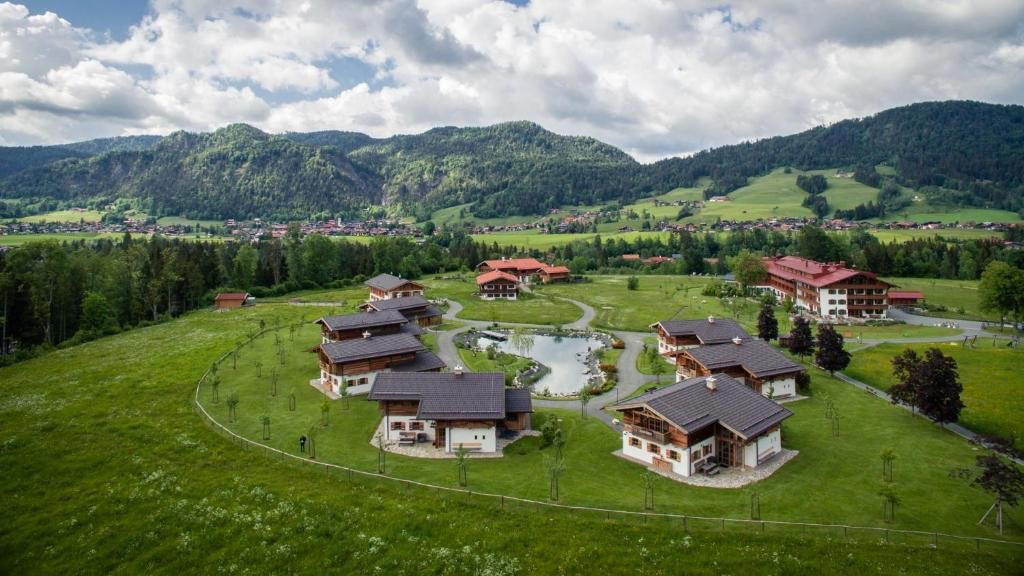
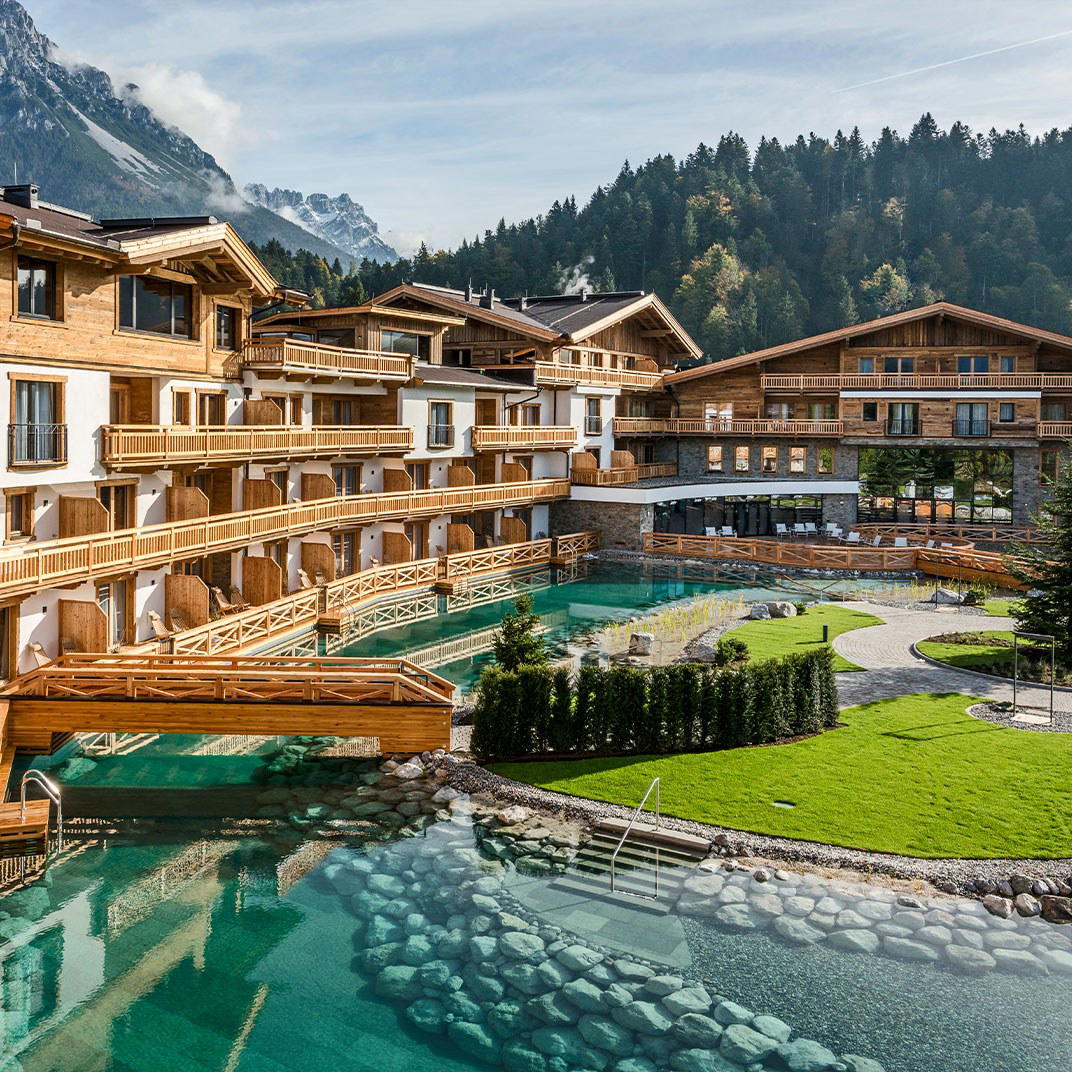
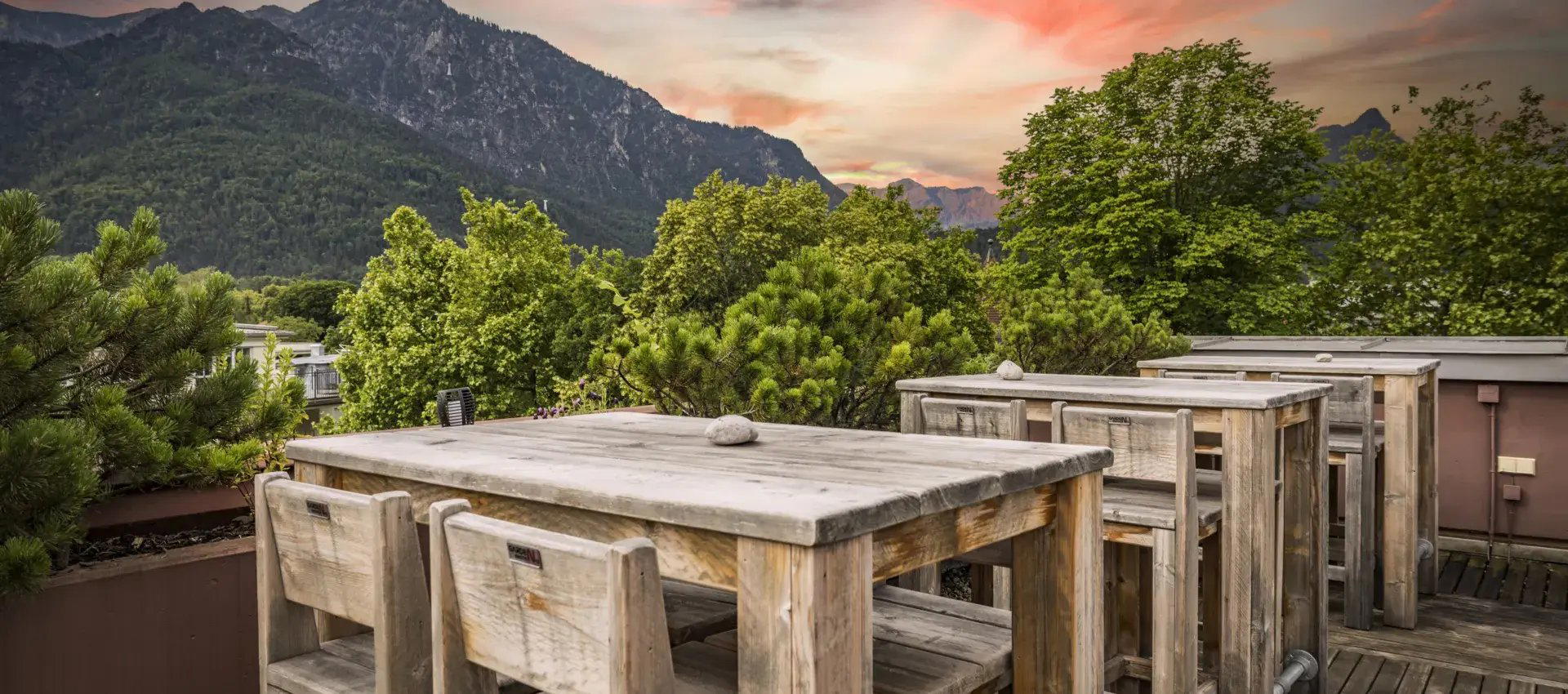
The chalet cluster is architecturally distinct from the main building and arguably more interesting as a spatial proposition. Built around a natural pond, the individual chalets were constructed by local craftsmen, a sourcing decision that connects the structures to regional building tradition rather than to generic Alpine resort vernacular. In the broader German luxury hotel conversation, locally commissioned craft at this level is less common than the marketing of such approaches, and the fact that the grounds themselves are a certified organic farm gives the property a physical coherence that design-only retreats tend to lack.
Deer, chickens, and goats populate the farm grounds, which operate as a working agricultural site rather than decorative countryside. The mindful sourcing that results from that setup connects directly to the restaurant's supply chain, though specific menu details are not available for independent verification here. What the farm model does establish is a clear architectural and agrarian logic to the grounds: the chalets, the pond, the working farm, and the surrounding plateau form a site that has been shaped by a consistent set of decisions rather than assembled from available luxury components.
This farm-integrated approach to mountain hospitality has a precedent across the Alpine regions of Germany and Austria, where the Berggasthof tradition of combining accommodation with working land has deep roots. Gut Steinbach updates that tradition into a contemporary luxury register rather than abandoning it, a different approach from properties like Das Kranzbach Hotel & Wellness Retreat in Kranzbach, which draws more explicitly from the English Arts and Crafts model in its design references.
The Spa as Architectural Statement
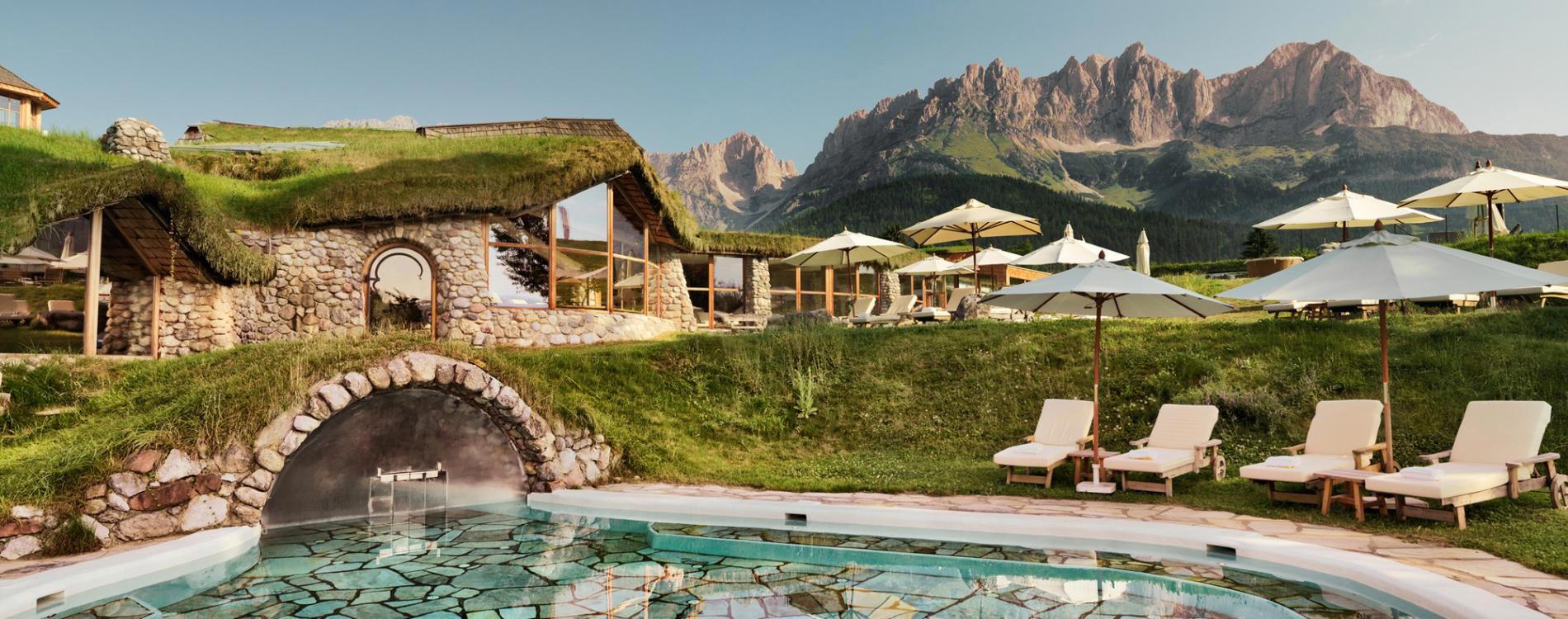
At 21,500 square feet, the spa at Gut Steinbach is large relative to a 60-room property. Mountain wellness hotels in Bavaria typically anchor their offer around spa infrastructure, and the square footage here places it in the upper tier of regional provision. The design language of the spa, mirrored ceilings, exposed stone walls, modern daybeds surrounding a large indoor pool, creates deliberate contrast with the timber-and-hunting aesthetic of the rooms. Where the accommodation spaces lean into Alpine heritage, the spa reads as more contemporary in its material choices, using reflective surfaces and stone to produce a different spatial mood.
That contrast is not unusual in high-investment spa design: the separation of the recovery environment from the accommodation environment allows each to operate at its own register. Properties like Hotel Bareiss in Baiersbronn and Wellness & Sport Hotel Jagdhof in Röhrnbach pursue similar strategies in the Black Forest and Bavarian Forest regions respectively, each using large spa footprints to anchor a wellness-led positioning that functions independently of the dining program.
Planning a Stay
Gut Steinbach is reached most directly by car from Salzburg or Munich, with GPS coordinates 47.6668, 12.4816 for navigation. The nearest rail connection at Prien am Chiemsee serves visitors arriving without a vehicle, though onward transport to the property will require a transfer. Rates from US$233 per night across 60 rooms and chalets place this in a tier that competes on experience and setting rather than price alone, a positioning reinforced by the 2024 Michelin 2 Keys recognition, which the guide reserves for properties demonstrating consistent hospitality standards. For comparable independent retreats across Germany, Luisenhöhe in Horben and Der Öschberghof in Donaueschingen offer useful reference points in terms of format and positioning, as do Villa Contessa in Bad Saarow and Weissenhaus Private Nature Luxury Resort in Weissenhaus for those comparing across Germany's independent luxury tier more broadly. Those traveling internationally and looking for reference points in a different register might also consider Aman Venice in Venice or Aman New York in New York City, though both represent a substantially different price point and urban context. Additional German options at different price and style registers include Excelsior Hotel Ernst in Cologne, Breidenbacher Hof Düsseldorf, Bülow Palais in Dresden, Esplanade Saarbrücken, LA MAISON in Saarlouis, Hotel Ketschauer Hof in Deidesheim, Landhaus Stricker in Sylt, BUDERSAND Hotel in Hörnum, and the Althoff Seehotel Überfahrt in Rottach-Egern, the last of which, on Lake Tegernsee, represents the most geographically proximate luxury comparator for Gut Steinbach within the Bavarian Alpine corridor. Those planning further afield might also look at The Fifth Avenue Hotel in New York City and Mandarin Oriental Munich for international and regional urban contrasts.
In Context: Similar Options
Comparable venues nearby, for context on price, style, and recognition.
| Venue | Cuisine | Price | Awards | Notes |
|---|---|---|---|---|
| Gut Steinbach Hotel Chalets SpaThis venue (the venue you are viewing) | rustic country house with modern wellness chalets | Not listed | 2 Michelin Keys · Relais Chateaux Award | Not listed |
| Kempinski Hotel Taschenbergpalais | Historic royal palace reimagined as a contemporary luxury hotel with custom-made furnishings and curated artworks reflecting Dresden's cultural heritage. | $300–500 | 2 Michelin Keys · Virtuoso Luxury Hotel Partner | Dresden Old Town |
| Rocco Forte Charles Hotel | Contemporary luxury with traditional Bavarian hospitality; modern design that complements Munich's architectural heritage without excessive opulence. | $300–500 | 2 Michelin Keys · La Liste Top Hotels | Isarvorstadt |
| Kempinski Hotel Berchtesgaden | Modern alpine resort blending minimalist design with pristine Bavarian landscape | $500–750 | 2 Michelin Keys | Berchtesgaden |
| Das Kranzbach Hotel & Wellness Retreat | Contemporary classic design blending a 1913 English country house with modern wood-and-glass architecture set in pristine alpine meadow. | $500–750 | 2 Michelin Keys · The Longevity Hotels Longevity Hotel Member | Kranzbach |
| Hotel Engel Obertal - Wellness & Genuss Resort | Luxury wellness resort set in the Black Forest mountains | Not listed | 1 Michelin Key | Buhlbach Valley |
Recognition history
Dated appearances from independent guides and award organizations, with the underlying list record or original source where available.
Michelin 2 Keys
Michelin
Relais Chateaux Award
Relais Chateaux
Full recognition history (5 entries)
Michelin 2 Keys
Michelin
Relais Chateaux Award
Relais Chateaux
Michelin 2 Keys
Michelin
Continue exploring
More in Reit im Winkl
Hotels in Reit im Winkl
All hotels in Reit im Winkl →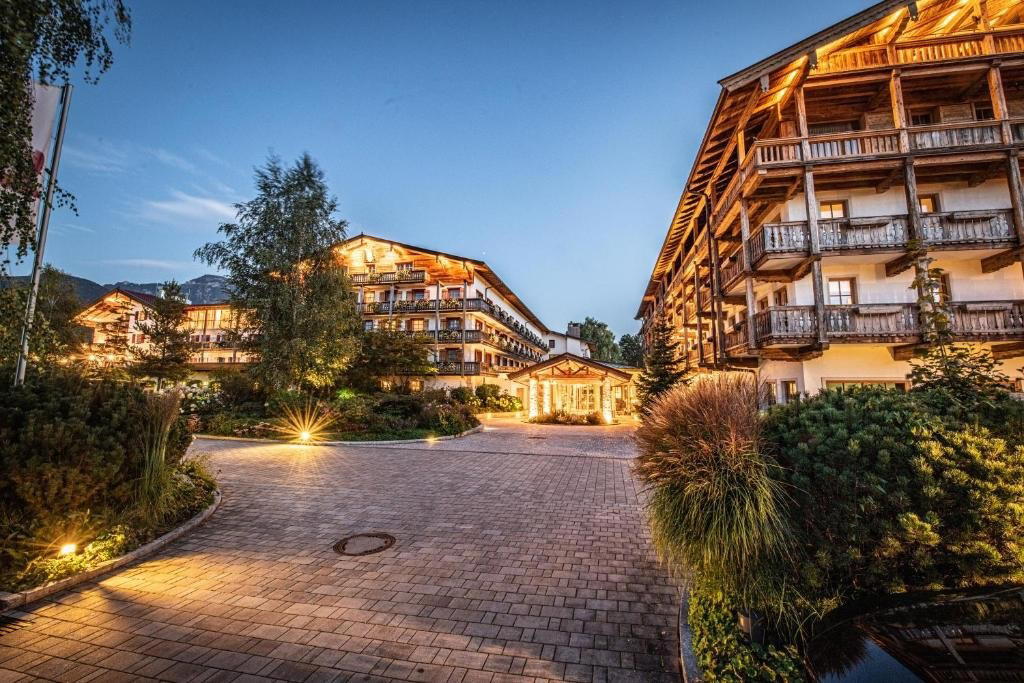
Bars in Reit im Winkl
All bars in Reit im Winkl →
Details
- Cozy
- Scenic
- Rustic
- Elegant
- Quiet
- Romantic Getaway
- Family Vacation
- Wellness Retreat
- Weekend Escape
- Panoramic View
- Destination Spa
- Terrace
- Spa
- Pool
- Sauna
- Fitness Center
- Wi Fi
- Room Service
- Concierge
- EV Charging
- Mountain
- Garden
Tranquil and relaxing with natural light, cozy wooden interiors, and soothing spa atmospheres praised for calm and rejuvenation.