
1 Michelin Key
Fugaku Gunjo occupies a remote stretch of the Izu Peninsula's east coast, with all eight rooms oriented toward an unobstructed view of Mount Fuji. Each room includes a private open-air soaking tub, tatami sections, and a private terrace. At around $1,013 per night, it sits in the upper tier of Japan's intimate ryokan-adjacent properties, where scale is deliberately constrained and the view does most of the work.

Pearl is the En Primeur Club membership app, where members save venues, book tables and use the concierge.
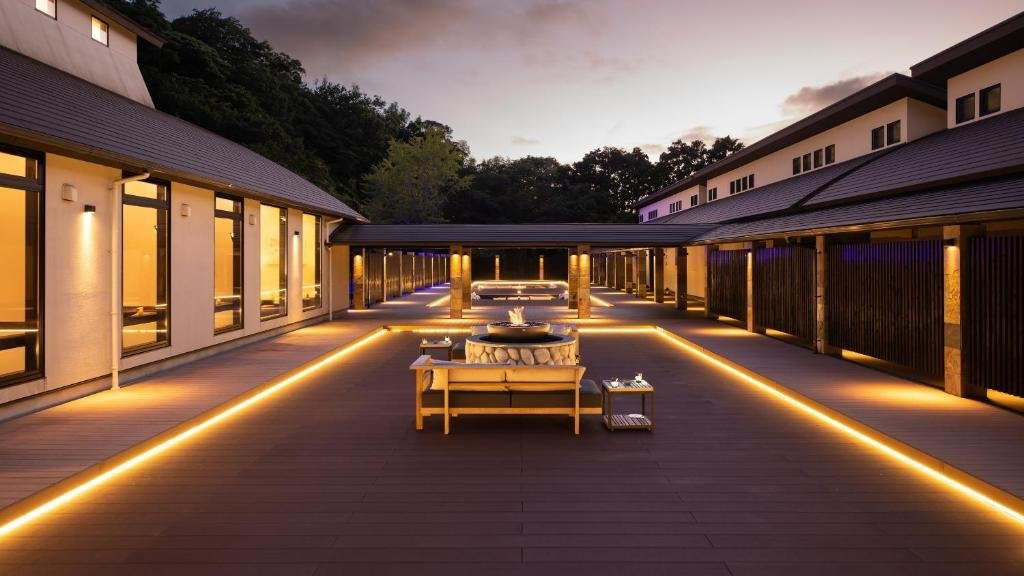
A View That Organises Everything
On the Izu Peninsula, the most deliberate properties don't compete on amenity lists. They compete on orientation. Fugaku Gunjo, positioned on the remote east coast of Izu, has made a single geographic fact the structuring logic of the entire property: a clear sightline north to Mount Fuji across open water. Every design decision, from room placement to the positioning of open-air soaking tubs, follows from that choice. At properties of this scale, eight rooms in total, that kind of single-minded editorial clarity is either the whole point or a liability. Here, it's the point.
The Izu Peninsula has long drawn a specific kind of Japanese traveller: someone trading the density of Tokyo for deliberate slowness, thermal water, and coastal air. Properties like Asaba, Arcana Izu, and Ochiairo each occupy a distinct niche within that demand. Fugaku Gunjo sits at the end of the peninsula's remote east coast rather than in its more trafficked onsen towns, which means the setting is quieter and the commitment to getting there is higher. That self-selection process is part of the product.
Eight Rooms, One Logic
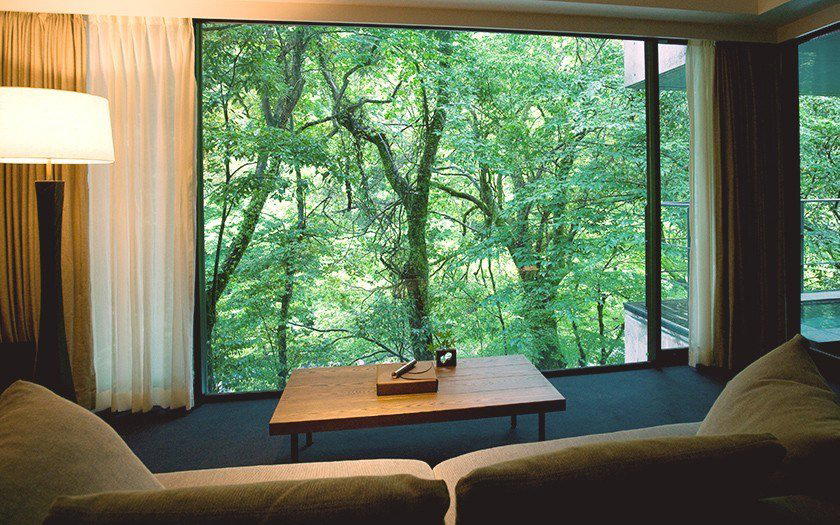
Japan's premium small-property category has developed a vocabulary of restraint: limited keys, locally sourced materials, rooms that function as destinations rather than sleeping quarters. Fugaku Gunjo works within that tradition, with eight rooms that each include their own private open-air soaking tub, a private terrace, tatami sections, and what the property describes as luxe furniture. The configuration matters: the tub and terrace aren't incidental additions but the primary interface between guest and view. You soak while facing Fuji. The architecture insists on it.
At around $1,013 per night, the property prices against Japan's top-tier intimate ryokan and design-led boutique properties, a cohort that includes celebrated names elsewhere in the country, such as Zaborin in Kutchan and Gora Kadan in Hakone. There is no spa wing, no conference facility, no large restaurant open to outside guests. The property functions as a contained world for the eight rooms it holds.
Service at This Scale
Properties with eight rooms operate under a different service logic than larger hotels. The staff-to-guest ratio at this scale makes genuine personalisation structurally possible in a way that a 50-room property cannot reliably replicate. The ryokan tradition in Japan already encodes this: anticipatory attention, the understanding that a guest's preference, once expressed, should not need repeating, and the assumption that the guest has come to be released from decision-making rather than confronted with it. Fugaku Gunjo's format positions it within that tradition, even if its aesthetic is more design-hotel than classical ryokan.
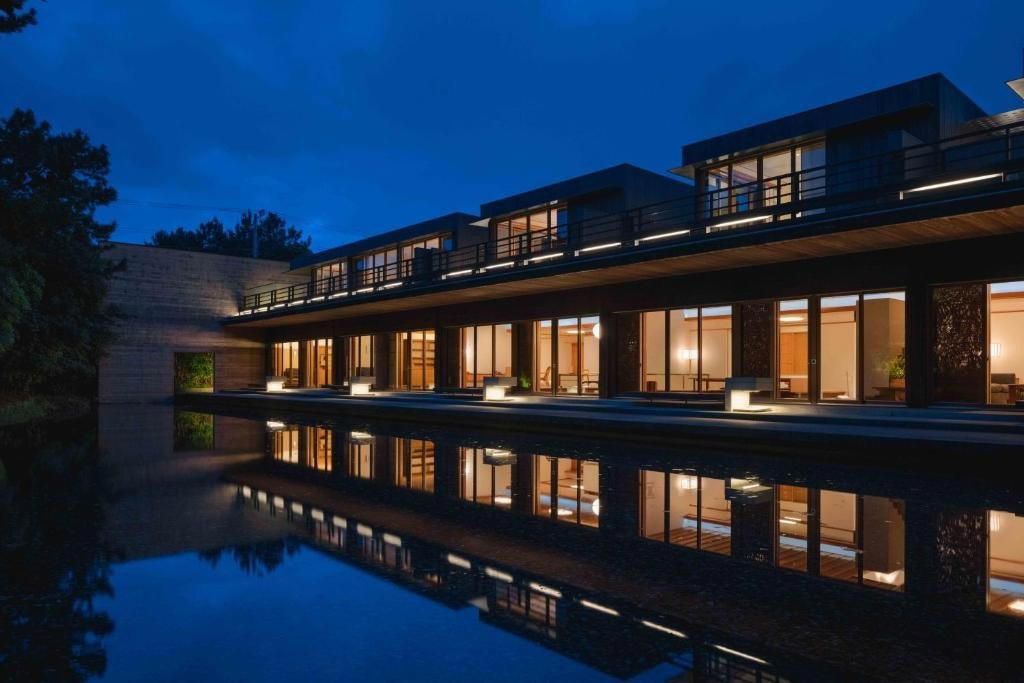
The public spaces at Fugaku Gunjo consist of water gardens with a bar and cherry blossom plantings, elements that signal a particular pace of engagement. The bar doesn't need to be large when the room count is eight. The gardens aren't meant to anchor a resort experience but to give guests somewhere to move between meals and the soaking tub. The cherry blossoms are a seasonal detail with significant consequences for planning: visiting during sakura season, typically late March through April in Izu depending on the year, means the property's character shifts in a way that justifies timing a trip around it. Properties at this price point tend to fill well in advance during peak bloom periods, and Fugaku Gunjo's room count makes availability thin quickly.
Where This Fits in Japan's Premium Property Spectrum
Japan's premium accommodation tier has widened considerably. On one end sit the grand international hotels: Bvlgari Hotel Tokyo in Tokyo, HOTEL THE MITSUI KYOTO in Kyoto. On the other sit the intimate, scenically anchored properties that trade scale for concentration, places like Amanemu in Mie, ENOWA Yufu in Yufu, or Benesse House in Naoshima, where the setting or concept does the heavy lifting and the room count stays deliberately low. Fugaku Gunjo belongs to this second group. Its case rests on geography and quietude rather than brand recognition or amenity depth.
For international travellers, the property sits in a less obvious position than the Fuji Five Lakes area, where properties like Fufu Kawaguchiko in Fujikawaguchiko have built stronger name recognition on similar Fuji-view propositions. The difference is remoteness: the east coast of Izu Peninsula requires more deliberate routing from Tokyo than a Kawaguchiko property, but the payoff is a setting that sees considerably fewer visitors and a coastal dimension that the inland lake options don't offer. That trade-off is the central decision a guest has to make.
Other comparably priced, scenically committed properties across Japan's wider ryokan and boutique spectrum, including Araya Totoan in Kaga, Nishimuraya Honkan in Kinosaki-cho, and Atami Izusan Karaku in Atami, each offer their own geographic concentration. The Izu coast format, water on one side and mountain silhouette on the other, is a distinct proposition within that field. For those orienting a Japan trip around the interplay of onsen culture and natural landscape, the Izu Peninsula generally, and Fugaku Gunjo specifically, deserves consideration alongside the more circulated names.
For a fuller picture of what Izu offers across dining and accommodation, see our full Izu restaurants guide.
Planning a Stay
At eight rooms and $1,013 per night, Fugaku Gunjo is not a spontaneous booking. Properties at this scale tend to operate on advance reservation windows of several weeks minimum outside peak season and several months during cherry blossom and autumn foliage periods. Izu is accessible from Tokyo by the Odoriko limited express train to Ito or Shimoda, followed by local transport to the property's address in Yagisawa, Izu City, Shizuoka Prefecture. The journey is part of the transition from city to deliberate slowness, and guests who treat it as such tend to arrive better calibrated for what the property offers. Room rates at this level typically include dinner and breakfast in the ryokan tradition, though individual booking terms should be confirmed directly. Guests with specific room preferences, given the variations possible even within eight rooms, should communicate those preferences at the time of reservation rather than on arrival.
Cuisine and Recognition
| Venue | Cuisine | Price | Awards |
|---|---|---|---|
| Fugaku GunjoThis venue (the venue you are viewing) | This venue | Not listed | 1 Michelin Key |
| Asaba | Michelin 2 Key | $750–1,000 | 3 Michelin Keys · La Liste Top Hotels |
| Arcana Izu | Michelin 1 Key | Not listed | 1 Michelin Key |
| Ochiairo | Michelin 1 Key | $1,000–1,500 | 1 Michelin Key |
Recognition history
Dated appearances from independent guides and award organizations, with the underlying list record or original source where available.
Michelin 1 Key
Michelin
Full recognition history (2 entries)
Michelin 1 Key
Michelin
Continue exploring
More in Izu
Hotels in Izu
All hotels in Izu →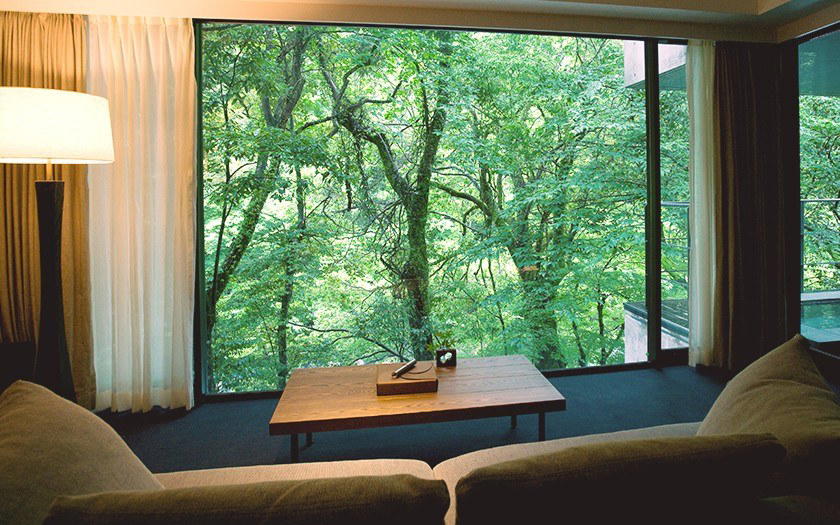
Bars in Izu
Browse all →
Restaurants in Izu
All restaurants in Izu →
Wineries in Izu
Browse all →
Details
- Quiet
- Elegant
- Scenic
- Intimate
- Sophisticated
- Romantic Getaway
- Honeymoon
- Wellness Retreat
- Weekend Escape
- Panoramic View
- Private Villa
- Wi Fi
- Spa
- Massage
- Air Conditioning
- EV Charging
- Mountain
- Waterfront
- Wheelchair Accessible
Serene and elegant with peaceful terrace, water gardens, and luxurious rooms featuring tatami areas and private outdoor hot tubs.